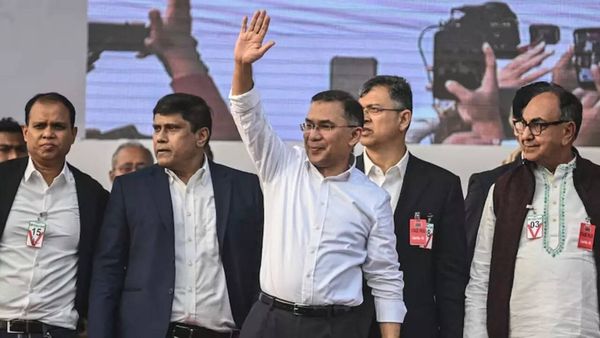
In the 16 November 1981 issue of Sports Illustrated, there’s a brief profile of Isiah Thomas, then a rookie guard with the Detroit Pistons entitled “Finding a Profit in Isiah.”
The bulk of the piece explores the myriad ways in which Thomas’ otherworldly point guard skills were dragging the then-moribund Pistons towards basketball respectability. There’s the usual passel of glowing quotes from coaches and teammates, like an administrative assistant to the general manager kvelling, “Sinatra was made to sing, Jesse Owens was made to run, and Isiah Thomas was made to play basketball.”
But Sports Illustrated also makes particular note of the devilish perma-grin that’s plastered on Thomas’ cherubic mug even while he’s shredding opposing defenses, one that “starts with a pair of deeply set dimples and sneaks up each side of his face to his shining, almost sparkling eyes.”
Said smile would become Thomas’ trademark throughout his career, even as he plummeted from a perennial All-Star to a series of execrable post-playing career stints in various front offices. The nadir came when he was running the Knicks: an ugly sexual harassment lawsuit in which he and his employer were found liable and forced to pay out $11.5m in punitive damages.
In retrospect, one line in particular from the article scans as jarringly out-of-place, and imbued with an ironically bleak, wholly different meaning by recent events.
“That ‘Angel with the Dirty Face’ look,” Anthony Cotton wrote, “is the reason why women, young and old, want to cuddle Thomas.”
That rictus of a smirk was still in place on Friday evening, if worn with an odd, obtuse brand of defiance, minutes before Thomas kicked off his tenure as president of the WNBA’s New York Liberty. He was there for a somewhat hastily organized, less-than-formal chat with a gaggle of reporters.
The press, sad to say, had amassed not just to cover the team, but to see if Thomas might be willing to address the fact that twenty-odd protesters from Br{ache the Silence , an organization dedicated to ending homophobia and sexism in women’s and girls’ sports, were outside the arena wearing “I Am Anucha Browne” shirts and were demanding that Thomas and his employers admit to a scintilla of culpability for their crimes.
Of course, he didn’t do either of those things. “I’m not here to talk about the past, I’m only here to talk about the New York Liberty,” Thomas said. “I hope you watch the players. They have very interesting stories. I hope you cover their stories as well as you cover mine.”
He’s right in a sense. The Liberty have an exciting collection of veterans, a dynamic rookie guard in Brittany Boyd, and have rattled off two impressive wins in their first three games. This shouldn’t be about Isiah Thomas.
The Liberty players shouldn’t bedragooned into participating in what was described as an “open conversation” about sexual harassment not just with Thomas, who allegedly called Browne a “bitch” and a “ho”, but also the team’s owner, James Dolan. Dolan was asked during the trial whether calling a woman a “Black bitch” was appropriate.
Here’s his response: “It is also not appropriate to murder anyone. I don’t know that that happened, either.”
But Thomas’ presence means that that conversation isn’t going to end any time soon, not when the Madison Square Garden Company continues to stoke the flames of indignation.
A few hours prior, MSG released a statement in a ham-fisted attempt to rebuke an open letter released by the Women’s Sports Foundation that implored the WNBA to do something about not only Thomas’ current job, but also to reject his bid for part ownership. (That’s right. Not only did MSG executive chairman James Dolan name a wholly unrepentant sexual harasser as president, he’s also trying to give him a stake in the team.)
The Women’s Sports Foundation has continued to rely on erroneous and exaggerated media reports regarding Isiah Thomas and MSG. They are misinformed. In fact, the case was never concluded. Anucha Browne Sanders voluntarily dismissed her complaint. Ms Sanders accepted that MSG and Mr Thomas did not admit guilt or concede any wrongdoing. MSG agreed to forego any additional legal action and agreed to a payment covering past and future salary and legal expenses. Isiah Thomas did not pay anything.
No, that’s not true. It’s a marvelous example of blatant PR spin, to be sure, as long as you’re not tethered to the idea that words have actual meaning. Yes, Browne’s lawsuit was eventually settled out of court (for approximately $100,000 less than the jury had originally awarded her, according to the New York Times). But to say “the case was never concluded” and that she “voluntarily dismissed her complaint” is a laughable attempt at misdirection, as if finding the tamest synonym in their trusty ol’ thesaurus could warp reality enough to suggest some kind of win for or vindication of Thomas and MSG.
Yes, it is technically correct that Thomas and MSG never admitted any guilt, but again, that’s the norm when two parties agree to a settlement. Furthermore, to end this mini-screed with “Isiah Thomas didn’t pay anything” is a straw man argument; at no point does the Women’s Sports Foundation allege that Thomas himself made any payments.
It’s a flabby deflection from the facts at hand – that the jury found by a preponderance of the evidence that MSG had “intentionally discriminated against the plaintiff by subjecting her to a hostile work environment based on sex” and that Thomas “intentionally discriminated against the plaintiff by aiding and abetting in a hostile work environment based on sex.”
Thomas was also questioned about MSG’s statement. His response: “The statement speaks for itself.”
It does, but probably not in the way that Thomas intended. It speaks to a thudding arrogance and naïve belief that if Thomas and MSG keep humping the same patently false talking points, everyone will eventually grow weary of trying to get them to burble something that resembles responsibility.
This has been their strategy since the announcement of Thomas’ hiring on 5 May, when an equally churlish presser was released, insisting on Thomas’ innocence in direct defiance of the actual facts at hand: “We did not believe the allegations then, and we don’t believe them now. We feel strongly that the jury improperly and unfairly held Isiah Thomas responsible for sordid allegations that were completely unrelated to him, and for which MSG bore responsibility.”
During Thomas’ initial press conference, he too hammered away this theme, saying, “I’ve always maintained my innocence. I’ve moved on from that, our organization has moved on from that.”
As reported by Greg Howard at Deadspin, Thomas also went on ESPN’s Mike and Mike Show and was asked, “How should fans of the New York Liberty reconcile your position with that team and the sexual harassment history of you back in your days with the Knicks?”
“When the jury had an opportunity to fine,” Thomas began. “They fined Madison Square Garden. I was not liable or personally held for anything. The jury found no findings.”
“’Anyone who’s vetted this has looked at it, has come out and found that – as the jury found – that there were no findings in terms of Isiah Thomas.’”
Again, no. A settlement doesn’t mean that Thomas gets to rewrite history, and the name that’s printed on the check is totally irrelevant. Thomas can proclaim his innocence all he likes, but that doesn’t make him Jean Valjean. Either Thomas is so deluded that he really what he believes, or this is the line of spin that he and his corporate masters have settled on, and nothing’s going to stop from repeating it ad nauseum.
If their grim, haughty tone sounds familiar, it’s because this reaction to criticism is the standard operating procedure for the House of Dolan – a better spelled and punctuated version of the nasty, vindictive e-jeremiad that he directed at a season ticket holder back in February.
The question of Thomas’ ownership has yet to be resolved and the WNBA did not respond to a request for comment on the protests. I emailed Nevin Caple, the Executive Director and Co-founder of Bra{che the Silence. She said that she hasn’t decided whether or not there will be further demonstrations during the Liberty’s season because “our primary goal is to empower players, coaches and fans to break the silence and speak for themselves whether I’m there or not.”
“I hope the WNBA Board of Governors takes a leadership role and denies Thomas ownership of the Liberty,” Caple wrote. “And ultimately that the Liberty realize Thomas’ presence comes at a cost to the team.
“When a jury of your peers finds you responsible for creating a hostile work environment, you don’t get to make believe it never happened and publicly shame the victim. Those who fail to learn from history are doomed to repeat it.”