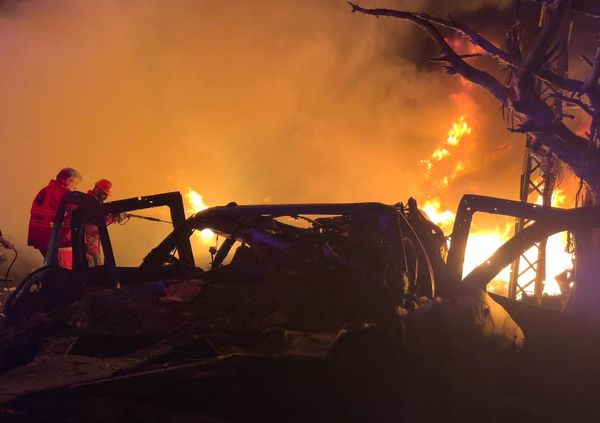
In a matter of days in February, 1941, hundreds of civilians in Swansea were killed or wounded in a relentless bombing campaign - and you can now easily find out if your relative was among them.
The full list of the 390 civilian casualties from Second World War bombing raids on Swansea has been digitised in time for the 80th anniversary of the Three Nights Blitz today (February 19, 2021).
Many families in Swansea have stories to tell from those infamous nights - February, 19 - 21 - when 230 people were killed and hundreds more wounded as thousands of high explosive bombs and incendiary devices were dropped. indiscriminately, on Swansea by the German Luftwaffe (air force).
Louise Davies, 60, from Mayhill, is one of those whose family was torn apart by the bombing that night. She said her late mother, Mary Cooke, "never got over" the death of her father, Thomas Charles Rees, on the night of February 20, 1941, when she was just eight years old.


Thomas, a butchers van driver who lived in Eigin Crescent, Mayhill, was an Air Raid Warden assigned to Teilo Crescent, one of the Swansea streets hardest hit during the Three Nights Blitz.
On the second night of the blitz, Thomas entered a home in Teilo Crescent that had been bombed, to check for survivors. Tragically, as he searched the rubble for signs of life, another bomb hit the shell of the building. His body was never recovered.
See amazing pictures of Wales' past here:
"The family lost their home the same night as well. They were taken in by a family in Cecil Street in Manselton as there was no financial support at that time because they couldn't prove that he had died, they were literally destitute," said Louise.
"My mum never got over the loss of her beloved father. How would you feel if you lost your father and your home in the same night?
"My grandmother, Alice, always said she saw him waving to her from the end of the road after it happened that night. I don't know whether people believe in the afterlife but I remember my mother telling me that."

Thomas Rees's is one story among hundreds and the legacy of those three nights lives on in the tales told by those who saw it and the new city that sprung up from the ashes.
Read the diary of James R John, a Fire Warden who recorded the Three Nights Blitz in vivid detail in his notebook.
Ron and Maureen Jones both have memories of the nights the bombs fell on Swansea. Maureen's grandfather and uncle are amongst those named in the register of civilians killed in Swansea in the Second World War.
The A-Z register of the civilians killed in Swansea during the conflict can be found here.
People from every part of the city are in the list, each one with their own story to tell and family left behind.
Eighty years on we may feel removed from the events of those three nights but the sacrifices made by the ordinary men and women of Swansea are kept alive by those who still remember their stories.
Swansea Council has teamed up with West Glamorgan Archive Service, Swansea Libraries, Glynn Vivian Art Gallery, Dylan Thomas Centre, Swansea Museum and Swansea Fusion for a series of events including live time tweets and Facebook posts to highlight events as they happened during the Three Nights Blitz.
Three Nights Blitz expert, Dr John Alban, will be presenting an online talk via teams at 7pm on Friday, February 19, the evening of the first night of the raids. To find out more about the Three Nights Blitz and to register your interest for the online talk go to: enjoyswanseabay.com.