On Larry Page’s return to running Google four years ago, one of the most thought-provoking explanations described the co-founder as a wartime tactician best placed to lead the company into the coming battle with social media rivals. After Tony Hall’s second speech in as many weeks, it seems as good a time as any to ask whether the director general of the BBC is a wartime general or a peacetime chief executive.
In his analysis of the Google move, Silicon Valley investor Ben Horowitz divided corporate leaders into two camps; those happier focusing on expansion and making people feel good about themselves who tend to excel in times of plenty, and those who relish the challenge of war be it with competitors or change.
As with so many American cultural observations, there’s a Godfather analogy to match. When Michael Corleone dismisses Tom Hagen his distraught childhood friend asks why: “You’re not a wartime consigliere,” says Corleone. “Things may get tough with the move we’re trying.”
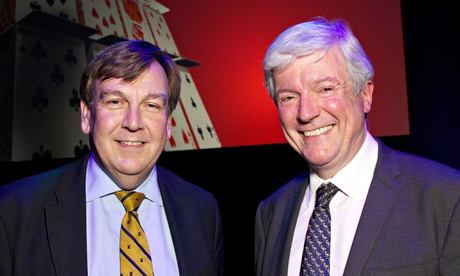
Things are certainly getting tough for the BBC. The first chapter of the government’s green paper poses a pretty existential question: why the BBC? And comments made by culture secretary John Whittingdale, most recently in Cambridge last week, suggest that the discussion about what the BBC is actually for is a very real one.
What is interesting about Hall’s first two public responses to the green paper to date is that he is attempting to redraw the lines of battle by putting the BBC on the same side as the government. Both at the Science Museum and then again last Thursday Hall stressed that the BBC is both an economic powerhouse and force for good in an increasingly fragmented country.
In that bastion of a certain historical Englishness which is Cambridge, Hall said: “The Britishness of British broadcasting matters. It isn’t isolationist or backward looking to say that.” He went on to say, “The Britishness of British broadcasting is under challenge. ”
For our American friends, the adjective is bizarre in a world where it’s just “television” or “content” and strawberries are never better because they are “American”. Replace the word British with “local” and it makes more sense where “Californian avocados” are premium products and only dreams or ideals are national.
Britishness when it is equated with nationalism has long been an uncomfortable idea for those outside the right wing of politics where “us” is very clearly differentiated from “them”. And yet, the term when used about television is having a bit of a moment.
The cry is mainly coming from state-owned broadcasters who feel under attack from international competition and technological change and sense a lack of support from a government which, from a terms of trade review to comments about “imperial” ambitions, seems less than supportive of expansion. Yet when Channel 4’s David Abraham used his MacTaggart lecture last year to lambast the Americans taking over British content, it was partly seen as special pleading. The industry now seems ready to discuss what the British Broadcasting Corporation should stand for, not just now but in 10 years’ time.
Hall’s argument is both political and economic. Home-produced content from Britain’s Got Talent to Bake Off and EastEnders occupies not just the top five most watched programmes on TV channels so far this year but the top 3,400, according to Barb. Yet the volume of new UK content broadcast each year outside news and sport has gone down by around 13%.
Enders Analysis research suggests that the BBC accounts for 25-50% of investment in the UK’s “creative economy”, a slightly annoying construct which includes high-growth industries from broadcasting to fashion.
Hall is hoping to win the economic argument that suggests owning the rights to top shows and then selling them abroad is not just good for the BBC but for the British economy. Hence, his plans to spin off the BBC’s production arm which, though he admits it is not a cost cutting measure, is a way of making more money and also attracting top talent.
The move is potentially risky, not to mention opaque, partly because spun-off companies are more likely to be seen as privatisation candidates. Hall was also moved to say that Worldwide was “indivisible” from the BBC just in case the government was running the rule over the corporation’s commercial arm as it seems to be doing for C4. There are risks for the state-owned, commercial-funded broadcaster of course. If terms of trade allow C4 to own its content it would instantly become more attractive to an external investor, remit or not.
The argument that homegrown profits have to remain at home has been made by much British manufacturing open to global competition, so why should broadcasting be any different? The best answer perhaps came from Sharon White, the impressive head of media regulator Ofcom, when she said that the media had a role in reflecting our fast-changing society.
And yet of course the record of public service broadcasters in reflecting our increasingly multicultural and non-homogenous British society is pretty woeful, or has been found “wanting” in White’s words.
Hall’s description of Britain’s great success in building an “empire of the imagination” is a dangerous gambit in some ways – especially given the chancellor’s view of BBC “imperalism” as a bad thing. And yet it could be politically astute among licence fee payers who respond to the triumphalism of the Last Night of the Proms, for example.
Asked in Cambridge if he was a great peacetime leader in a time of war, Hall was initially flummoxed before he said he was relishing the challenge ahead. With the battle still to come, the next year will tell.