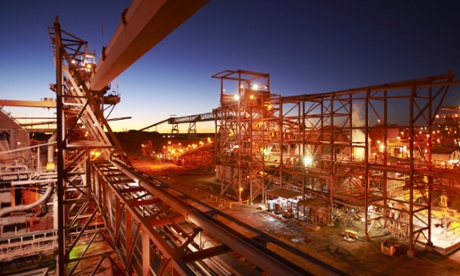
It was BHP Billiton wot did it. A 6% whoosh in the share price of the world’s biggest miner, blowing warmer breezes through its sector, gave a lift to the FTSE 100 on Tuesday. The result: a new record close for the blue-chip index of 6949. It has taken a decade and a half to surpass the old 1999 high. Will we now make up for lost time? Is it onwards and upwards for the stock market?
Don’t bank on it. That 1999 party, fuelled by dotcom intoxication, always seemed slightly unreal to those of us who wrote “Footsie soars through 3000” stories a mere six years earlier. Today’s market also contains an unreliable ingredient – quantitative easing.
Stock markets were first spiked with QE in late 2008, when the US Federal Reserve started buying Treasury bonds in the aftermath of the banking crash. One aim was to tickle risk appetites by pushing investors out of safety-first assets. It worked. As bond yields fell, investors turned to shares for income.
The Bank of England joined the QE game in 2009 and the US Fed subsequently launched QE programmes 2 and 3. Now Japan, and soon the European Central Bank, are trying to keep the show going.
It may work for a while. But, as lauded fund manager Neil Woodford was arguing the other day, central banks’ money-printing machines may be losing their potency. First, QE worked when shares were cheap by historical standards; but it’s hard to make that claim today as corporate earnings are plainly slowing. Second, the eurozone remains in the mire and the latest Greek fudge is far from being a permanent fix.
To that list, one should add China. Growth there has slowed but consensus opinion still thinks 7% will be as bad as it gets. That may be another unreliable prop. Last year’s plunge in the prices of industrial commodities – from iron ore to coal to oil – may suggest that real demand in China is weakening far faster than assumed.
BHP, a big supplier of raw materials to China, illustrates the two-way investment pull. Its half-year underlying profits collapsed by almost a third to $5.3bn. But the shares rose because the level of cost-cutting was impressive and investors liked the commitment to invest less to protect a dividend that yields 5%.
In BHP’s case, self-help measures may indeed save a proud dividend record. But it’s not the only major multinational taking multi-billion dollar chunks out of its investment programme; the oil companies are the same. Less capital spending and very low inflation are not normal backdrops to a strong stock market. After a six-year bull run, common sense says the risks to share prices are rising.
What did Douglas Flint know about Swiss private bank?
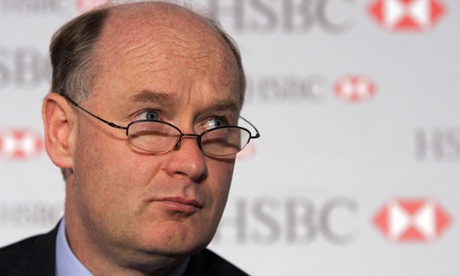
When Douglas Flint, HSBC chairman, appears before the Treasury select committee today, MPs’ most important task is to establish a clear account of what the bank’s top brass knew about practices within the Swiss private bank in 2005-2007.
The bank has offered little insight so far. HSBC has apologised for past control and compliance failures but it has also presented the episode as if it belonged to another era when senior group directors didn’t trouble themselves with local matters.
It has said the Safra and Republic banks, which were bought in 1999 and formed the core of Swiss private bank, were “not fully integrated into HSBC, allowing different cultures and standards to persist”. It has also said: “HSBC was run in a more federated way than it is today and decisions were frequently taken at a country level.”
But what does “not fully integrated” actually mean? HSBC paid $10bn for Safra and Republic, a chunky sum then and now. HSBC must have inspected the books in detail before and after purchase. This was an important strategic move – a way to join “the world’s top five private banks”, as HSBC boasted at the time.
As for the idea that Republic and Safra were left to do their own thing, are you sure? “These new members of the HSBC Group have been successfully integrated to form our international private banking arm, which bears the name HSBC Republic,” said the 2000 annual report proudly.
Flint was finance director then so should be able to give the full picture. Was he involved in due diligence on the purchases? How much scrutiny of customers was undertaken as a matter of course? When did alarm bells ring? What action was taken?