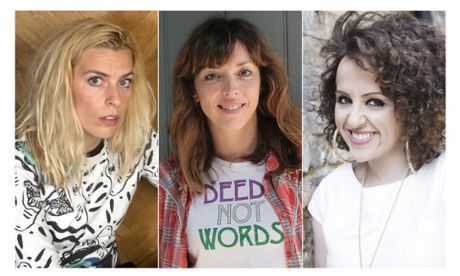
This week, it was announced that comedian Luisa Omielan has got a book deal. A fortnight back, Sara Pascoe broke news of her own book. The release date approaches, meanwhile, for Bridget Christie’s A Book for Her, the attempt to trap between soft covers the all-conquering success of her recent feminist standup work. The book deal, it would seem, is now an established part of the comedian’s career curve. But is it a straightforward transition? And can the pen ever be mightier than the microphone?
Of course, the three books mentioned above aren’t just books by comics – they’re feminist books by comics. Three years ago, the New York Times discussed the boom in comedians’ books, and traced its current spasm of popularity to Tina Fey’s memoir Bossypants. The headline wasn’t complimentary (Following Tina Fey, Comedians Churn Out Books) but the article enthused about Fey’s lit debut: “[an] effortless balance of genuine insight with candid personal vignettes”. In the minds of UK publishers, the progenitor of Christie, Pascoe and Omielan’s books is less likely to be Fey than Caitlin Moran, whose How to be a Woman established a market for funny books that bolshily assert women’s rights.
Time was, the trend was for comedians writing novels – and much mocked they were for it, too. Sean Hughes, Alexei Sayle and Ben Elton were in the first wave; Mark Watson and Russell Kane (with a novel about a humourless comedy critic, of all things!) have been at it more recently. But the current boom is for breezy memoirs – John Bishop’s How Did It All Happen; Peter Kay’s mega-selling The Sound of Laughter – or, increasingly, comedians as popular sociologists: Aziz Ansari’s Modern Romance, Dara O Briain’s Tickling the English, or for that matter, Russell Brand’s Revolution.
How good can these books be? Are they (like so many celebrity books) just merch, there to capitalise on an opportunity, boost a brand, sell more tickets? Does the verbal art of standup easily translate to the printed page? Even Tina Fey’s memoir, wrote the Observer’s Carole Cadwalladr, fell prey to the obvious comedian-writes-book pitfalls: it was deceptively unrevealing; and it read “less like prose non-fiction than a sketch comedy in book form, with a disproportionate number of one-liners, not all of which work”. Of all the non-fiction books written by comedians, few have broken through, or established a reputation for literary merit. The majority sink without trace, via Christmas stockings and a short stint in that grimmest section of any bookshop, the one marked Humour.
But there are exceptions. I can think of Spike Milligan’s Hitler: My Part in His Downfall, maybe Stewart Lee’s How I Escaped My Certain Fate. David Walliams’ children’s books, obviously, and maybe even Richard Ayoade’s latest book of faux-interviews with himself, which has just won a Chortle award.
Recent examples in the Guardian demonstrate that Omielan, Pascoe and Christie all write with style and personality; and to varying degrees, their standup is underwritten by a serious-mindedness, and an urge to communicate, that bodes well for their books.
Three to see
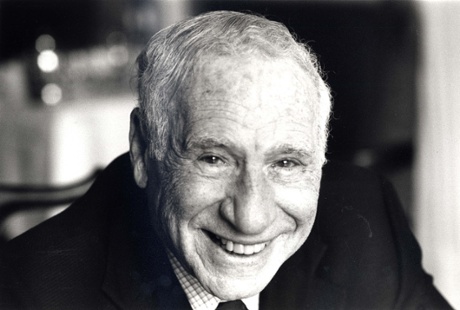
Mel Brooks
Mel Brooks’s first (and only?) West End solo show is this weekend, and tickets are still available – including the notorious top price ones at a cool £502.25.
Prince of Wales theatre, London, 22 March.
Glasgow comedy festival
Already up-and-running, this year’s feast of standup, sketch and more features Simon Amstell (18 and 19 March), Nina Conti (likewise), and a first live stage outing for the cult Scottish TV sketch show Burnistoun (25 March.)
Friday Night Experience
“An eccentric, high-adrenaline, new variety show,” it says here, at indie comedy outpost the Invisible Dot in King’s Cross, London. The regular team features unstable anti-comic Luke McQueen alongside Mae Martin, musical comic David Elms and Joseph Morpurgo.
Invisible Dot, London, Fridays from 20 March.