
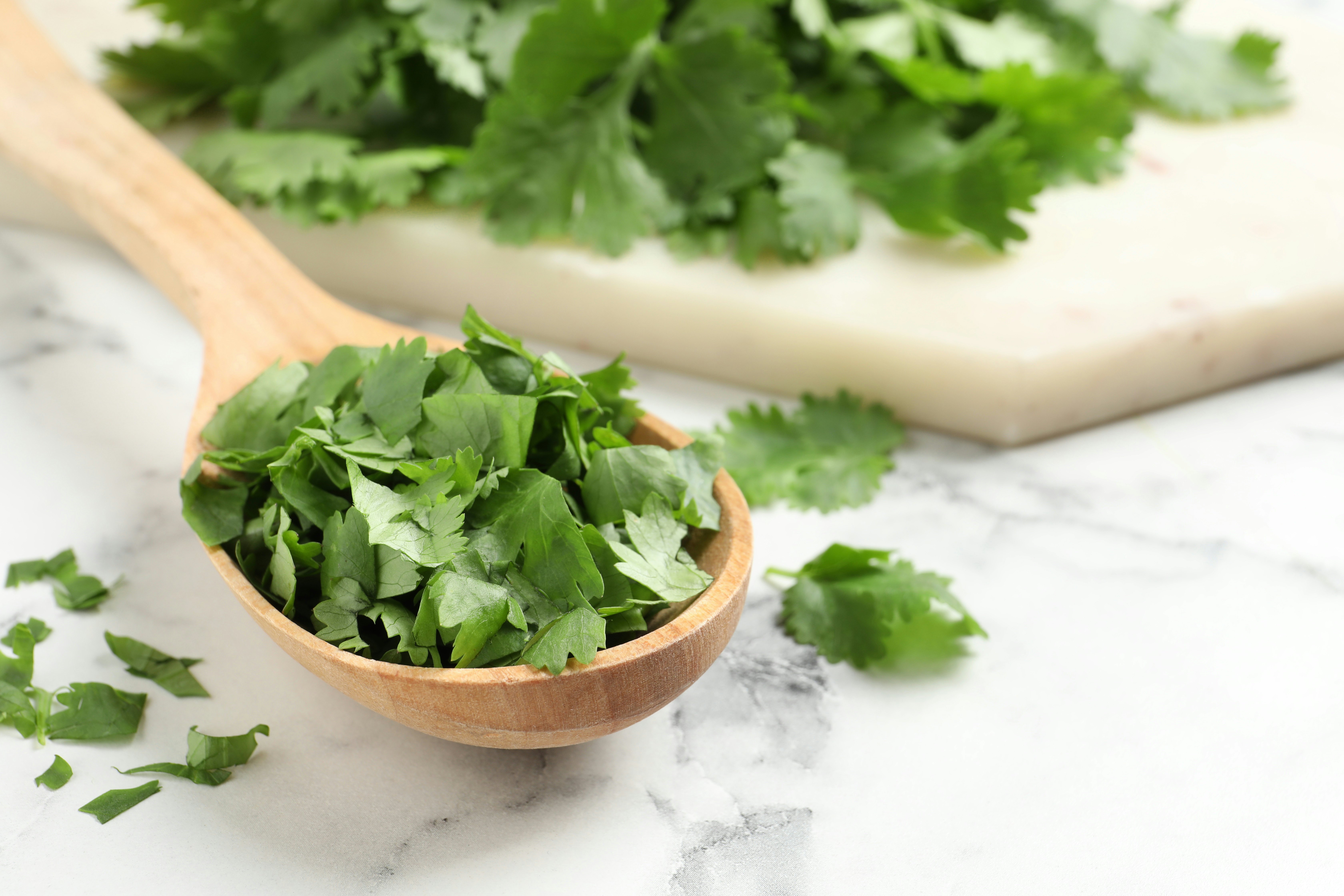
Few leafy greens garner as many polarized opinions as cilantro (known outside the U.S. as coriander). The herb, which has seasoned foods since around 2 B.C.E., flavors cuisines worldwide from fajitas to curries. But for all its staying power and goodness, a significant portion of the human population can’t stand the taste. What’s the reason for these polarizing tastes? It might come down to genetics.
There’s no such cultish praise or scorn for basil or thyme, but cilantro gets special attention. One website publishes haikus denigrating the plant. Julia Child detested it, often quoted that she would pick it out and throw it on the floor.
The explanation that has permeated popular thought is that a gene makes cilantro taste ghastly. While it’s most commonly described as “soapy,” here are a few other descriptions floating around:
- bitter
- moldy
- similar to wet dirt
- like dead bugs
Indeed, there’s reason to believe that at least one gene variant can help determine how a person perceives cilantro, but it’s more nuanced. Neuroscientist Joel Mainland helps flesh out the science behind the popular explanation of cilantro hatred.
Is there a cilantro gene?
The most accurate way to put this is that there’s strong evidence for gene variants that affect how one perceives cilantro.
“A region of DNA happens to fall in the midst of a bunch of odor receptors that are highly correlated with your liking of cilantro,” Mainland says. The genomics and biotech company 23andMe surveyed about 25,000 people on whether they liked cilantro or thought it smelled soapy. They used the survey results to pinpoint the association with this brain region.
Some researchers suspect a particular olfactory receptor gene could be the culprit, but that’s as certain as it gets. One study from 2012 published in the journal Flavour identifies the gene OR6A2 as a possibility. It binds to several molecules, called aldehydes, that give cilantro its signature scent. However, evidence also suggests that it might not be so black and white. There might be other factors involved.
How does the gene work?
Part of the soapy smell also comes from cilantro’s composition. The leaf contains aldehydes, organic materials with a unique chemical structure. This cilantro-negging gene, OR6A2, likely detects these aldehydes.
The presence of aldehydes helps explain the soapy or buggy taste that so many describe. Aldehydes, for one, are a byproduct of the process of fragmenting fat molecules with alkaline lye to create soap. They also fragrant insect body fluids to attract or repel creatures. But why are some people, it seems, more sensitive to aldehyde than others?
Mainland references the late chemist George Preti, who he said surmised that it’s crucial to recognize that smells comprise many different molecules. Preti believed that everyone smells this soapy compound in cilantro, but others are more receptive to the good smell, so the soapiness isn’t overpowering.
Can I dislike cilantro without the gene?
It’s not all genetic. There’s an ethnocultural component to whether someone dislikes cilantro. People from cultures that frequently use cilantro in food, such as Mexican and Indian, have far fewer people that say cilantro has this soapy taste. The soapy cilantro opinion is more likely to come from someone of European descent, the 2012 paper found.
It’s also a matter of exposure to the leafy green. For example, someone might be born with this specific olfactory reception cluster, but if they’re raised on meals flavored with cilantro, they could overcome what seems like an innate dislike. On the other hand, if somebody doesn’t like cilantro, it doesn’t mean they’re genetically predisposed to dislike it; it could mean they’re not used to its taste.
The team from the 2012 study calculated that genetic variants determine less than 10 percent of cilantro responses.
Are there cilantro alternatives?
Indeed there are some alternatives if you can’t stand this particular green.
It’s worth crushing cilantro leaves and mixing them into food rather than eating them whole; this accelerates aldehyde deterioration, which could lessen the foulness. Another option is to try Thai basil, parsley, other common herbs, or lime.
There’s also a recipe credited to food science writer Harold McGee that creates a mild, pesto-like sauce. It does incorporate cilantro but is perhaps more palatable. You be the judge, though.
.jpg?w=600)