

More than half of Americans who make New Years resolutions resolve to eat healthier. If youre one, you might be confused about the role meat should play in your health.
Its no wonder youre confused. One group of scientists says that reducing red and processed meat is a top priority for your health and the planets. Another says these foods pose no problems for health. Some of your friends may say it depends, and that grass-fed beef and nitrite-free processed meats are fine. At the same time, plant-based meat alternatives are surging in popularity, but with uncertain health effects.
As a cardiologist and professor of nutrition, Id like to clear up some of the confusion with five myths and five facts about meat.
First, the myths.
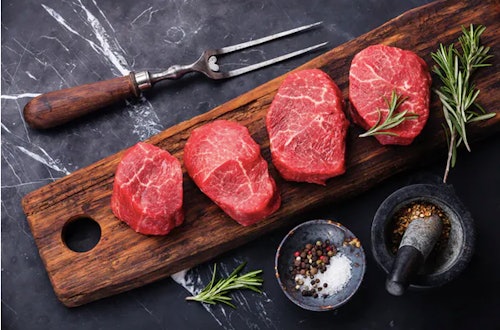
Myth: Red meat is good for health
Long-term observational studies of heart disease, cancers or death and controlled trials of risk factors like blood cholesterol, glucose and inflammation suggest that modest intake of unprocessed red meat is relatively neutral for health. But, no major studies suggest that eating it provides benefits.
So, while an occasional serving of steak, lamb, or pork may not worsen your health, it also wont improve it. And, too much heme iron, which gives red meat its color, may explain why red meat increases risk of Type 2 diabetes. Eating red meat often, and eating processed meat even occasionally, is also strongly linked to colorectal cancer.
Myth: You should prioritize lean meats
For decades, dietary guidance has focused on lean meats because of their lower fat, saturated fat, and cholesterol contents. But these nutrients dont have strong associations with heart attacks, cancers or other major health outcomes.
Other factors appear more important. Processed meats, such as bacon, sausage, salami, and cold cuts, contain high levels of preservatives. Sodium, for example, raises blood pressure and stroke risk, while the body converts nitrites to cancer-causing nitrosamines. Lean or not, these products arent healthy.
Myth: Focus on a plant-based diet
Plant-based has quickly, but somewhat misleadingly, become a shorthand for healthy. First, not all animal-based foods are bad. Poultry and eggs appear relatively neutral. Dairy may have metabolic benefits, especially for reducing body fat and Type 2 diabetes. And, seafood is linked to several health benefits.
Conversely, many of the worst foods are plant-based. Consider white rice, white bread, fries, refined breakfast cereals, cookies and so on. These foods are high in refined starch and sugar, representing 42% of all calories in the U.S., compared to about 5% of U.S. calories from unprocessed red meats, and 3% from processed meats.
Either a plant-based or omnivore diet is not healthy by default. It depends on what you choose to eat.
Myth: Grass-fed beef is better for your health
Conventional livestock eat a combination of forage (grass, other greens, legumes) plus hay with added corn, soy, barley or grain. Grass-fed, or pasture-raised, livestock eat primarily, but not exclusively, forage. Grass-finished livestock should, in theory, only eat forage. But no agency regulates industrys use of these terms. And free range describes where an animal lives, not what it eats.
Grass-fed may sound better, but no studies have compared health effects of eating grass-fed versus conventional beef. Nutrient analyses show very modest differences between grass-fed and conventionally raised livestock. You might eat grass-fed beef for personal, environmental or philosophical reasons. But dont expect health benefits.
Myth: Plant-based meat alternatives are healthier
Products like Impossible Burger and Beyond Meat are clearly better for the environment than conventionally raised beef, but their health effects remain uncertain. Most nutrients in plant-based alternatives are, by design, similar to meat. Using genetically engineered yeast, Impossible even adds heme iron. These products also pack a lot of salt. And, like many other ultra-processed foods, they may lead to higher calorie intake and weight gain.
So, what are the facts?

Fact: Processed meats are bad for health
Processed meats contain problematic preservatives. Even those labeled no nitrates or nitrites added contain nitrite-rich fermented celery powder. A current petition by the Center for Science in the Public Interest asks the FDA to ban the misleading labeling.
Besides the sodium, nitrites and heme, processed meats can contain other carcinogens, produced by charring, smoking, or high-temperature frying or grilling. These compounds may not only harm the person who eats these products; they can also cross the placenta and harm a fetus.
Fact: A meatless diet is not, by itself, a healthy diet
Most diet-related diseases are caused by too few health-promoting foods like fruits, nuts, seeds, beans, vegetables, whole grains, plant oils, seafood, and yogurt. Additional health problems come from too much soda and ultra-processed foods high in salt, refined starch or added sugar. Compared to these major factors, avoiding or occasionally eating unprocessed red meat, by itself, has modest health implications.
Fact: Beef production is devastating the environment
In terms of land use, water use, water pollution and greenhouse gases, unprocessed red meat production causes about five times the environmental impact of fish, dairy, or poultry. This impact is about 20 times higher than that of eggs, nuts or legumes, and 45 to 75 times higher than the impact of fruits, vegetables or whole grains. A 2013 UN report concluded that livestock production creates about 15% of all global greenhouse gas emissions, with nearly half coming from beef alone.
Fact: Plant-based meats are better for the environment
Production of plant-based meat alternatives, compared to conventional beef, uses half the energy, one-tenth of the land and water, and produces 90% less greenhouse gas. But, no studies have yet compared plant-based meat alternatives to more natural, less processed options, such as mushrooms or tofu.
Fact: Many questions remain
Which preservatives or other toxins in processed meat cause the most harm? Can we eliminate them? In unprocessed red meats, what exactly increases risk of Type 2 diabetes? What innovations, like feeding cows special strains of seaweed or using regenerative grazing, can reduce the large environmental impacts of meat, even grass-fed beef? What are the health implications of grass-fed beef and plant-based meat alternatives?
Like much in science, the truth about meat is nuanced. Current evidence suggests that people shouldnt eat unprocessed red meat more than once or twice a week. Grass-fed beef may be modestly better for the environment than traditional production, but environmental harms are still large. Data dont support major health differences between grass fed and conventional beef.
Similarly, plant-based meat alternatives are better for the planet but not necessarily for our health. Fruits, nuts, beans, vegetables, plant oils and whole grains are still the best bet for both human and planetary health.
This article was originally published on The Conversation by Dariush Mozaffarian. Read the original article here.