What’s open and closed on Juneteenth 2026? Walmart, Costco, Target, banks, USPS and stock market schedules explained: Juneteenth lands on Friday, June 19, 2026, and if you're staring at a closed bank lobby wondering what happened, you're not alone. This is one of the newest entries on the federal calendar, signed into law by former US President Joe Biden in 2021, yet its roots stretch back 161 years to a single announcement in Galveston, Texas.
On June 19, 1865, Major General Gordon Granger told the enslaved people of that city they were free — a full two and a half years after the Emancipation Proclamation had already said so on paper. That gap between the law and the living of it is the whole story of Juneteenth, and it's why the holiday still hits differently than most three-day weekends.
Is Juneteenth a Federal Holiday? What’s Open and Closed on Friday, June 19, 2026, Including Walmart, Costco, Target and Banks
Yes, Juneteenth is a federal holiday, which means federal offices, courts, and the Federal Reserve all shut down for the day. That last one matters more than people expect, because when the Fed closes, the banking system mostly closes with it. Wells Fargo, Chase, Bank of America, Citibank, PNC, and Truist will all be dark on Friday, along with the New York Stock Exchange and Nasdaq. The U.S. Postal Service won't deliver mail either, so anything time-sensitive in your mailbox will have to wait until Monday.
It's worth pausing on why a federal designation doesn't automatically mean everything stops. Federal holidays set the rules for federal employees and federal institutions — they don't legally bind private companies. That distinction trips a lot of people up every single year, Juneteenth included, and it's the reason your bank is closed while your grocery store down the street is running a full Friday shift.
Are Stores Like Walmart, Target, Costco, and Kroger Open on Juneteenth?
For the most part, yes. Major retailers tend to treat Juneteenth the way they treat most federal holidays that aren't Thanksgiving or Christmas — as a normal business day. Walmart, Target, Costco, Kroger, Aldi, Trader Joe's, Food Lion, and Giant Eagle are all expected to keep their usual hours on June 19. Fast food chains like McDonald's and Chick-fil-A will also be open as usual, so lunch plans are safe.
UPS and FedEx are following a similar script. Pickup, delivery, and retail store operations will continue as normal at both companies, even though the Postal Service is standing down for the day. If a package is moving through UPS or FedEx right now, expect it to keep moving Friday. The split isn't random — private logistics companies set their own holiday calendars independent of the federal schedule, and both have decided Juneteenth doesn't pause operations.
Do You Get Juneteenth Off Work, and Is Trash Pickup Delayed?
This is where things get genuinely uneven, and there's no single answer that applies to everyone. Federal employees get a paid day off. Many state and city government workers do too, though this depends heavily on where you live, since several states have only adopted Juneteenth as an official state holiday in the past few years. Private employers, on the other hand, are under no legal obligation to give workers the day off, paid or otherwise. Some companies treat it as a full company holiday. Others treat it like any other Friday. If you're not sure which camp your employer falls into, that's a question for HR, not a safe assumption either way.
Trash and recycling pickup tends to follow local government decisions rather than federal ones, so it varies city by city. Some municipalities run their normal Friday routes without any disruption. Others push collection back a day, which can cascade through the rest of the weekend's schedule. The safest move is checking your specific city or county's sanitation department directly, since guessing wrong means a curb full of bins nobody empties.
There's an old saying that freedom delayed is still freedom denied for every day of the delay, and Juneteenth is built almost entirely around that idea. The people in Galveston in 1865 weren't waiting on a technicality — they were enslaved for two and a half extra years after a presidential order had already declared them free on paper. That's not a footnote in American history; it's a lesson about the distance between a law existing and a law actually reaching the people it's meant to protect. It's a pattern that shows up again and again, far beyond 1865, anytime policy outruns practice.
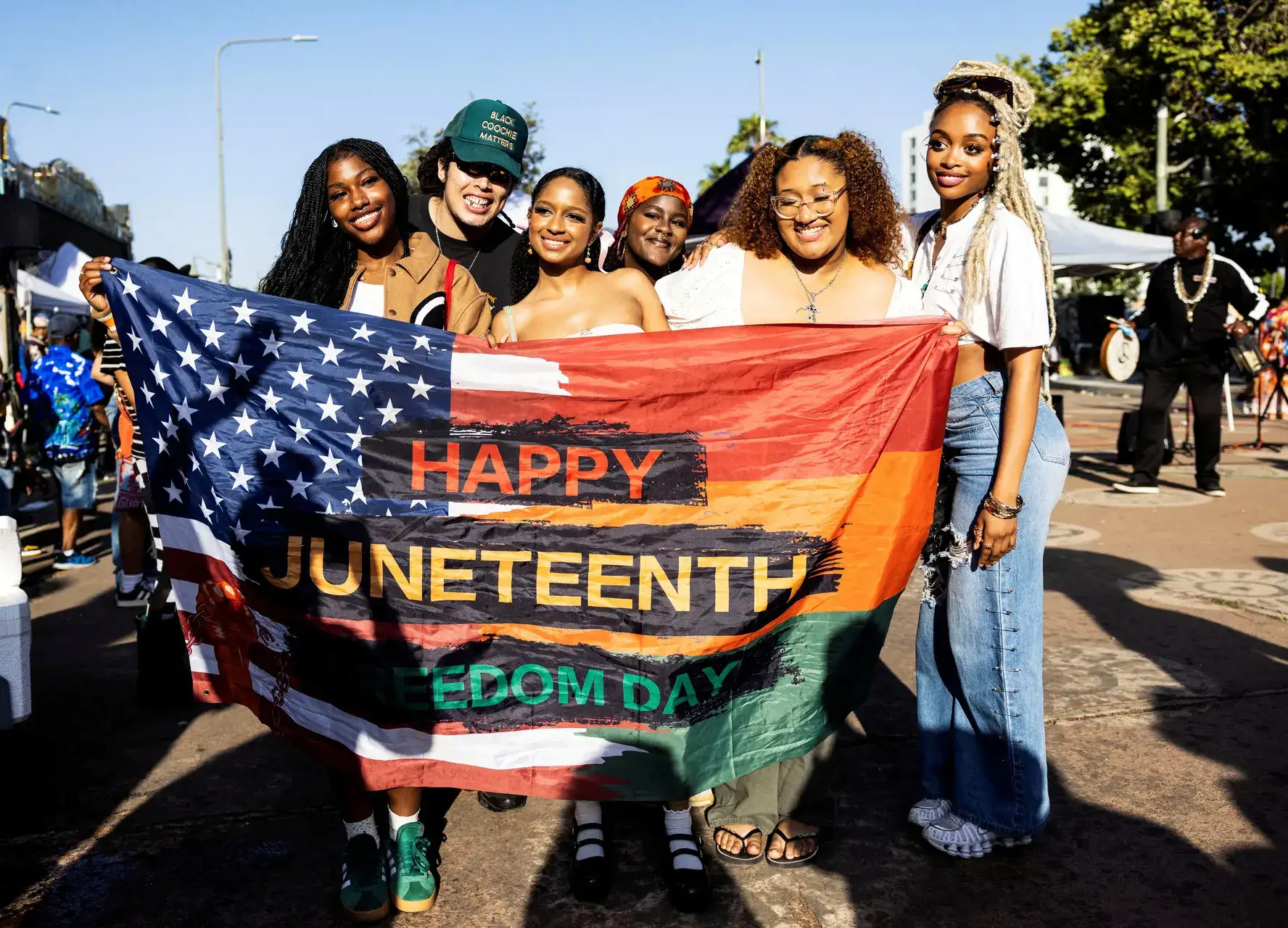
That's part of why Juneteenth has outlasted nearly every other commemorative date tied to emancipation. It didn't start as a government holiday. It started as something Black communities in Texas built themselves — cookouts, church gatherings, red drinks, and storytelling passed down because no one else was going to preserve that memory for them.