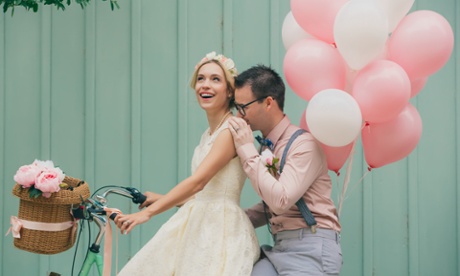
White weddings might be traditional in western cultures, but once upon a time a bride’s fairytale wedding dress could be any colour of the rainbow. White hasn’t necessarily become a less popular choice, but the approach to colourful wedding dresses is definitely shifting.
Each colour means something different to certain cultures and certain brides. Blue was once very popular for weddings because it was seen to be the colour of purity, whereas red has its tradition in Western roots steeped as far back as Celtic ceremonies, where it was a sign of fertility. Thought to bring the bride good luck, it’s still the shade of choice in Eastern cultures and practically obligatory in Indian ceremonies. Black might have even been worn in some cultures if the bride is a widower.
So what changed? When did brides start favouring a white gown over a more colourful number? The answer has a great deal to do with a popular monarch and, surprisingly, improved processes in the printing industry.
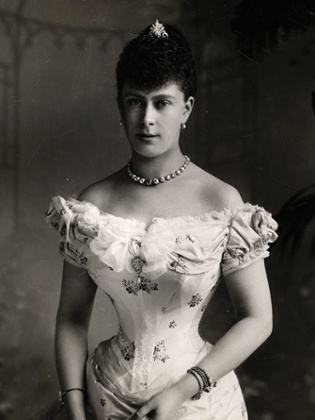
When Queen Victoria married Prince Albert in 1840, she wore a dress of white lace and this seems to be the origin of the traditional ‘white wedding’ so enjoyed by Billy Idol. Although its popularity can certainly be attributed to Victoria, she wasn’t the only royal to walk down the aisle in white. Philippa of England is thought to have opted for a train of white satin, and Mary Queen of Scots opted for a white gown in 1559 when she married Francis Dauphin of France. Mary chose her favourite colour but it was deemed an odd – and largely unpopular – choice as white was the colour of mourning in France.
However, the impact of Queen Victoria’s white wedding dress wasn’t down to her sartorial choice alone. Around the same time, newspapers and printing were taking off and fashion was becoming more commercial as a result. Fashion plates and adverts played a huge part in the instant appeal of her bridal outfit. Queen Victoria had recently announced that she was making her vows as Albert’s wife, not as the monarch, and as she would not wear the traditional red robe of the state. This romantic image of the queen was hugely publicised and the romantic notion and white dress was a look, and a story, that dressmakers could sell. It truly captured the hearts and imaginations of future brides.
White has always been a colour linked to money and class and that also played a part in its popularity. Choosing a white gown symbolised the wealth of a family. With a lack of efficient dry cleaning options, white came to symbolise a type of conspicuous consumption; by wearing a dress that could be ruined with the slightest spill the family of the bride gave the impression that they could spend as they pleased. On the other hand, re-wearing dresses was popular (it wasn’t unusual for a bride to wear her best dress for her wedding rather than buying something new) and a simple white cotton dress was much easier to incorporate into a wardrobe than a bright colour.
We’re much more relaxed about wedding colours these days, with Vivienne Westwood and bridal designer Ian Start creating dramatic black numbers season upon season. In turn our weddings are often much more relaxed affairs. A small ceremony with a reception in a village pub doesn’t quite feel grand enough for a huge white train, and white satin seems out of place on a beach. And let’s not forget that it’s also a very tricky colour to wear. So, while a white wedding might suit one woman, if another wants to wear bright red, purple or pink, or even all three at once, then history, it would seem, may be on her side as well.
Introducing Valspar paint
Valspar can create as many colours as the eye can see – that’s 2.2 million shades, so if your heart is set on a colour, Valspar can match it. What’s more you can save your colour preferences on Valspar’s system, so whether it’s the ideal shade for Laura’s bathroom, or dad’s study, you’ll remember for future reference.
Available exclusively at B&Q, Valspar’s Premium paints feature a super scrub formula so paint won’t fade or chip off when cleaned and it comes in a range of wide range of high quality interior and exterior paints in a variety of finishes. Visit valsparpaint.co.uk to see how you can start colouring outside the lines, or see the range at B&Q.