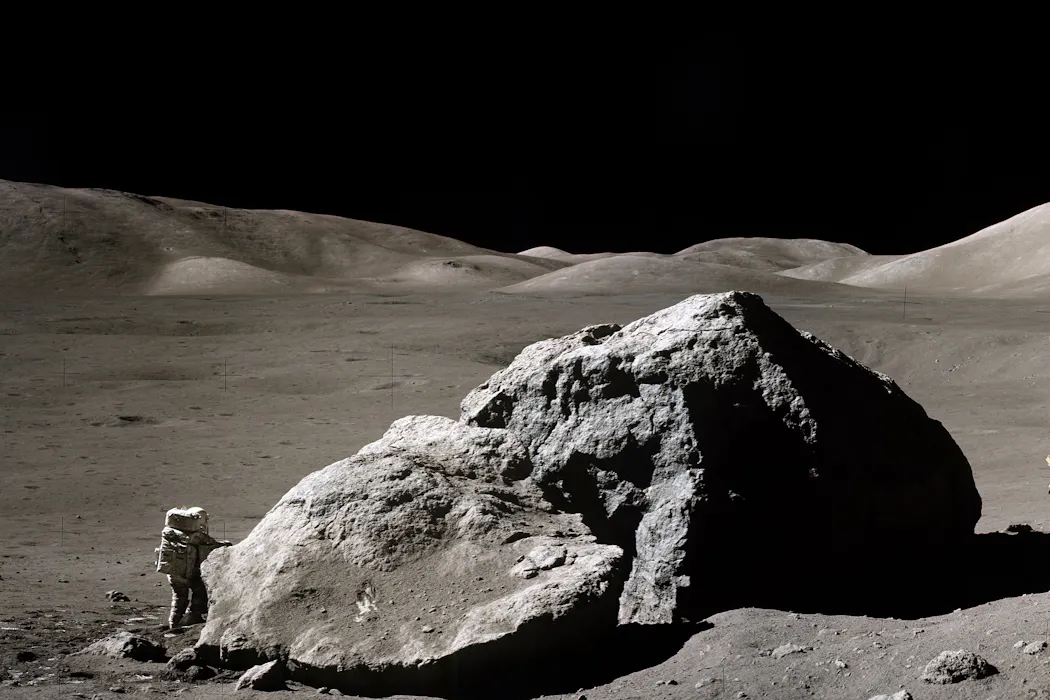
A new race to the Moon is emerging between the United States and China. Unlike fifty years ago, the goal is no longer just about landing and leaving, but establishing a base that allows for a sustainable presence and extended stays on the surface of our natural satellite. The objective is now to use the Moon as a testing ground for technologies that will enable us to travel further, particularly to Mars.
One of these key technologies is in-situ resource utilization (ISRU), which involves using available resources on-site to produce the consumables necessary for human activities: oxygen, water, rocket fuels, or construction materials. By producing these essentials directly on the Moon, it will be possible to significantly reduce the mass of cargo sent from Earth, thereby reducing the logistical and financial costs of space exploration. Instead of importing these resources from Earth, the goal is to learn how to live on the Moon.
Breaking down lunar dust to extract oxygen
At the dawn of humanity’s sustainable return to the Moon, ISRU is emerging as a strategic pivot. One of the major challenges is producing oxygen from regolith, the layer of soil covering the Moon, primarily composed of small rock fragments and dust. The composition of regolith is complex, mainly consisting of several minerals (plagioclase, pyroxene, olivine) themselves made up of a mixture of metal oxides – chemical compounds that combine oxygen with another element such as silicon, iron, or calcium.
Approximately 40 to 45% of the mass of regolith is composed of oxygen, making it the most abundant element on the lunar surface. Oxygen is ubiquitous, but it does not exist in gaseous form as it does in Earth’s atmosphere. To release the oxygen, the chemical bonds that attach it to other elements in the oxides of the lunar soil must be broken.
One of the methods considered is pyrolysis, a type of chemical reaction that decomposes materials using high temperatures to produce volatile compounds. When applied to regolith, it is possible to heat it until the metal oxides vaporise and decompose into oxygen and metals.
On the Moon, thermal energy would be provided through solar concentration, a process that uses mirrors or lenses to focus sunlight onto a small area. The rays then converge into a beam, focusing energy at a focal point where temperatures can reach several thousand degrees. This method also plans to take advantage of the lunar vacuum, an environment that favours gas-releasing reactions. This would reduce the amount of energy required for the reaction.
The solar furnace: an effective and low-cost method
The Moon has an environment particularly conducive to solar pyrolysis. Lacking atmosphere, the pressure on its surface is extremely low, on the order of 10-15 bar. The absence of atmosphere offers a second advantage: solar radiation cannot be absorbed by it or blocked by clouds. This allows for higher concentrated solar fluxes than those on Earth. Additionally, certain geographic areas at its South Pole are exposed to sunlight up to 90% of the time. Thus, by combining the lunar vacuum with solar concentration systems, a relatively simple, robust, and potentially effective process for extracting oxygen from regolith can be designed.
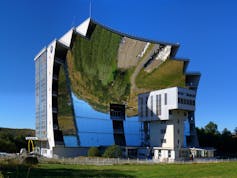
At the Laboratory of Processes, Materials, and Solar Energy (PROMES-CNRS), a leader in solar concentration technologies, researchers have successfully demonstrated the basic concept of pyrolysis [1], paving the way for its potential future deployment on the Moon. Located at the site of the world’s largest solar furnace in Odeillo in the French Pyrenees (Occitanie region), the laboratory has unique experimental facilities dedicated to the study of high-temperature processes. Among these facilities are parabolas two metres in diameter that can concentrate sunlight 10,000 times onto a spot about 2 cm in diameter, reaching temperatures of over 3,000°C.
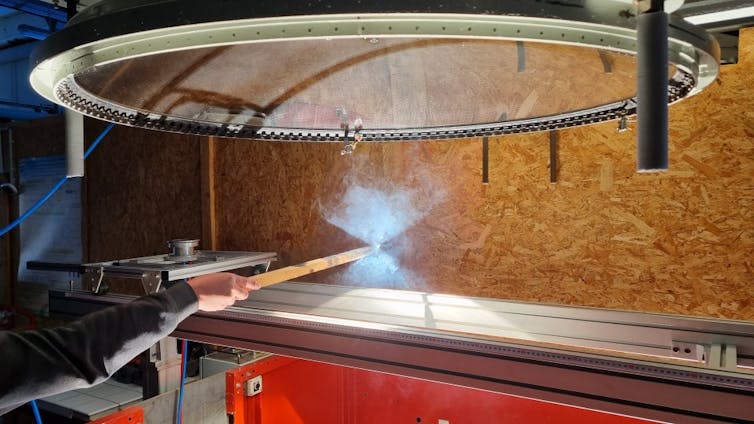
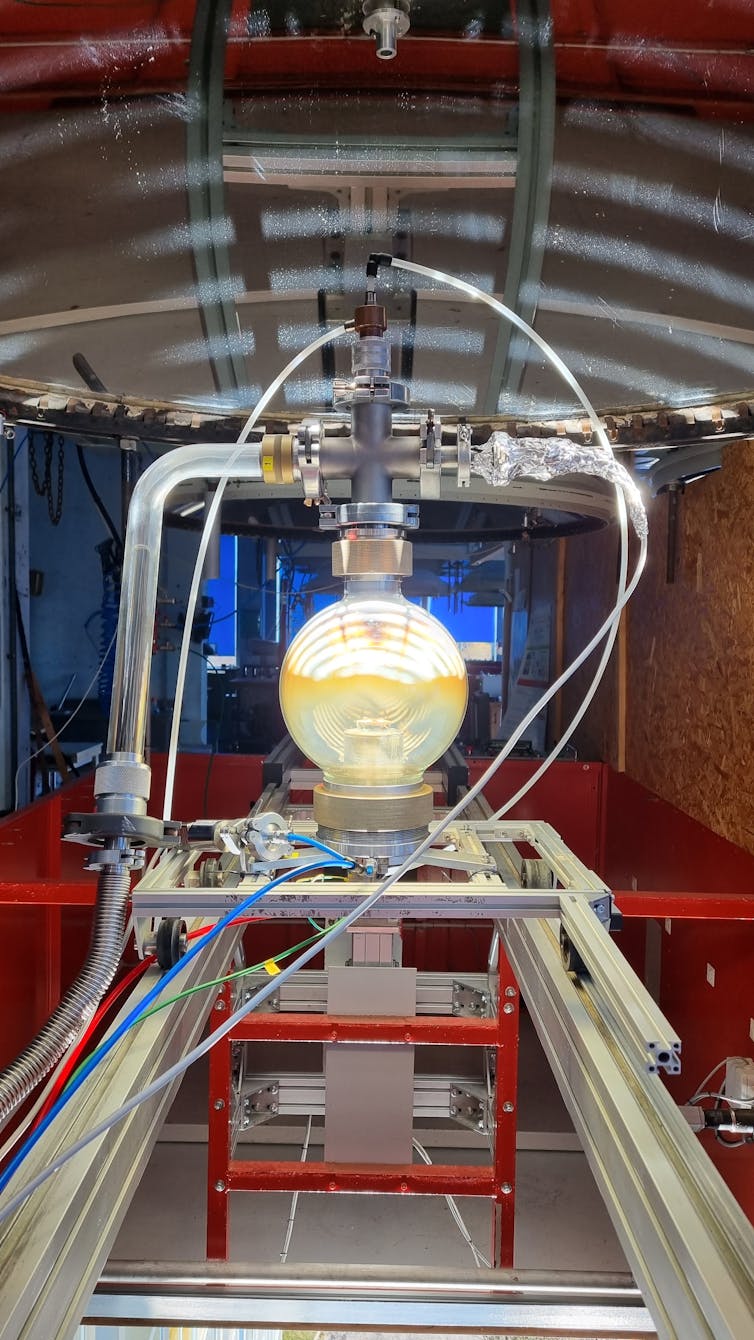
This energy powers the pyrolysis reactor, a vacuum chamber designed to expose samples of materials simulating lunar regolith to concentrated solar flux. The simulant pellets are placed on a copper support, while a parabola focuses sunlight inside the reactor to heat them. A vacuum pump maintains a pressure of about 10 millibars. An electrochemical cell continuously measures the oxygen concentration in the reactor.
The sample is then gradually heated and begins to melt at around 1,200°C. The regolith subsequently reaches temperatures of about 2,000°C. Under these conditions, the oxides in the sample begin to vaporise and dissociate, releasing oxygen.
Other products besides oxygen
In the initial tests, 35mg of oxygen was extracted from a 3.38g pellet, representing about 1% of the total mass. This corresponds to 2.5% of the oxygen contained in the regolith simulant. Once the experiment is completed, a glass bead is obtained instead of the regolith pellet. The fraction of regolith that vaporised during the experiment condenses on the cold walls of the reactor in the form of mineral compounds. These species are collected to characterise them and determine their chemical composition.
After pyrolysis, the glass bead that is formed has a different chemical composition from the initial regolith simulant. The volatile oxides, which escaped during the process, are less concentrated, while non-volatile oxides are more concentrated. The most volatile species were found in the deposits collected on the reactor walls, where they condensed during pyrolysis.
This observation suggests that pyrolysis could also be used as a method to separate oxides in regolith through a distillation-like principle. These byproducts could be used to manufacture structures, tools, or construction materials directly on the Moon, thereby enhancing the autonomy of future lunar missions.
Moving from proof of concept to real conditions
These initial tests determined a yield, but it remains low. The next development steps will aim to reduce the pressure inside the reactor to approach lunar conditions. Reduced pressure should lower the temperatures required for pyrolysis, allowing the sample to vaporise completely and increase yield.
Subsequently, it will also be relevant to test different types of regolith, as well as the individual minerals and oxides that compose them, to better understand the chemistry of the reactions. The pyrolysis reactor will need to operate continuously during most of the lunar day. The process can still be optimised. More precise temperature control would allow better management of reactions and improve their yield. More efficient gas collection would aim to minimise oxygen loss. We also hope to reduce thermal losses by using a crucible and insulating it. Finally, better condensation of byproducts would help identify and utilise the materials formed during pyrolysis in addition to oxygen.
The entire system (reactor, mirrors, and solar concentration devices) must also be robust and reliable, capable of withstanding the extreme conditions of the lunar environment: abrasive dust, radiation, and significant thermal variations. Finally, the generated oxygen must be stored, purified to separate it from other elements that may be present in the gas, and used. Thought must also be given to the logistics of supplying the reactor with regolith, whether for its extraction, transport, or use after processing.
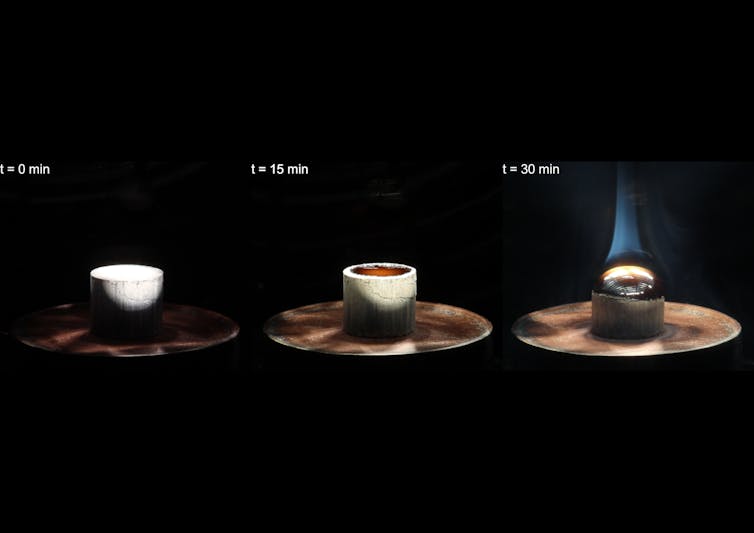
Solar vacuum pyrolysis is a method particularly well suited to lunar conditions. It takes advantage of the moon’s natural vacuum, requires few imported resources, and uses solar energy, which is abundant on the Moon without an atmosphere. Tests at Odeillo have already proven the feasibility of the concept, but yields still need to be improved, and technical challenges remain significant. By producing oxygen and materials locally, the process would support future lunar bases and reduce their dependence on Earth.
[1] Robinot, J., Rodat, S., Abanades, S., Bêche, E., Paillet, A., & Cowley, A. (2026). Quantification of Oxygen Production from Solar Pyrolysis of Lunar Regolith. Advances in Space Research.

A weekly e-mail in English featuring expertise from scholars and researchers. It provides an introduction to the diversity of research coming out of the continent and considers some of the key issues facing European countries. Get the newsletter!
This article was originally published on The Conversation. Read the original article.