Regulation of the third sector is a contentious issue. Many argue that the sector is over regulated and some say not enough information is provided for smaller organisations to ensure they are on top of their legal requirements. Mix this with the fact the sector’s regulator the Charity Commission was deemed not fit for purpose in 2014, is it no wonder the sector is concerned.
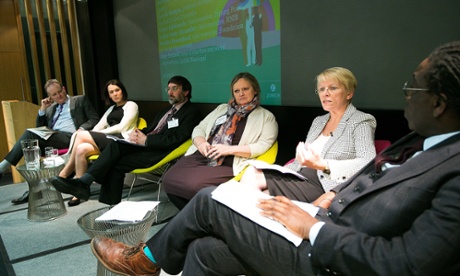
To find out more the Guardian Voluntary Sector Network convened a panel of charity leaders and charity law experts to discuss the state of regulation in the sector, and to ask if charities understand their statutory obligations. Five major talking points emerged from the seminar, which was sponsored by Zurich Insurance.
1. The Charity Commission is “complicit” in an “insidious” narrative
Charitable activities are regulated by numerous bodies, from HMRC to the Fundraising Standards Board, but it was the Charity Commission’s change programme, back by millions in additional government funding, which dominated the debate.
“There is a newspaper-ish view of the state of affairs in the sector,” said Philip Kirkpatrick, managing partner and joint head of charity at Bates Wells & Braithwaite. “If you were an impressionable person, you might gather that charities are rife with fraud and scandal. The commission is under immense political pressure to be more flinty faced, more robust.
“I want to see a commission that upholds public trust by showing the good work charities do, not one that is complicit in a narrative that is damaging the sector.”
His sentiments were echoed by Lord Victor Adebowale, chief executive of Turning Point, who said the climate of regulation is “more insidious now than it ever has been”, and that the commission had “to some degree” gone along with it. He mentioned the Lobbying Act as a key example. “There is a political fear when it comes to charities, because charities change society,” he said. “We face massive opposition from the establishment because they fear that charities, especially those that campaign, might get somewhere.”
2. Is regulation in a “state of crisis”?
This was the claim put forward by Gareth Morgan, professor of charity studies at Sheffield Hallam University. He said this crisis was the result of fundamental problems that caused confusion and a “lack of joined-up thinking”.
He raised the “extraordinary reluctance” by government to implement straightforward secondary legislation, such as making implementation of the new accounting Sorp (standard of recommended practice) mandatory for all charities. He also said that exempting some charities from registering with the commission, such as academy schools, museums and universities, is “ludicrous” and that “compulsory regulation, as we have in Scotland, is the only way to go”.
Lesley-Anne Alexander, chief executive of the RNIB, said the sector was held to disproportionate standards of transparency. “Charities are propping up government services, but when was the last time that Serco had to publish how much it earned from a government contract?”
3. Small charities trustees don’t know the rules
Understanding legal obligations is a struggle for small charity trustees, who often never undergo proper inductions, said Pauline Broomhead, chief executive of the Foundation for Social Improvement (FSI). Trustees are ultimately held liable for a charity’s actions, yet many wrongly assume it is up to the chief executive and other staff to take care of things on the regulatory front.
“Most regulatory offences are not due to malice, but to misunderstanding,” she said. “How can you know the information that you don’t know you need to know?”
Amy Brettell, head of charities and social organisations at Zurich Insurance, said that understanding rules around liability were vital. “Trustees can be held accountable for the actions of their employees and volunteers, or if care services are outsourced to a third party,” she said. “But there can be a misunderstanding of that duty, especially knowing where liability sits.”
4. The draft protection of charities bill - political grandstanding?
The draft protection of charities bill is a hot topic in the sector. Announced by David Cameron during a meeting with his extremism taskforce, the bill will ostensibly crack down on terrorist organisations exploiting charities for fundraising.
Morgan said he was very concerned that Cameron’s motivation is linked to an anti-terrorism agenda rather than an actual threat. “The commission already has the resources to deal with the rare circumstances where this occurs. This bill is just tinkering around the edges when the problem of regulation is much bigger.”
Kirkpatrick went further, calling it little more than “political grandstanding”. Adebowale said the implication that charities were more vulnerable to exploitation was “quite insulting to the leadership of charities”.
5. Charities need “a critical friend, not a policeman”
No one denied that independent regulation is good for the sector. As Brettell pointed out, regulation can act as a “badge of quality” and “engender public confidence”. So what is the regulator’s ideal role?
Alexander said she would be proud of a commission that “supports and nurtures our sector”, rather than acting as “another police force”. Broomhead concurred, summarising: “We are a pretty mixed bunch. A modern regulator needs to understand the sector’s diversity, acting as a caring but critical friend.”
Morgan reinforced the importance of education as a more effective tool than policing. “Helping those who want to follow the law to do so properly is a far more efficient use of resources.”
Event speakers
- Lord Victor Adebowale, chief executive of Turning Point
- Lesley-Anne Alexander, chief executive of the RNIB
- Amy Brettell, head of charities and social organisations at Zurich Insurance
- Pauline Broomhead, chief executive of the Foundation for Social Improvement (FSI)
- Philip Kirkpatrick, managing partner and joint head of charity at Bates Wells & Braithwaite
- Gareth Morgan, professor of charity studies at Sheffield Hallam University
For more news, opinions and ideas about the voluntary sector, join our community – it’s free!