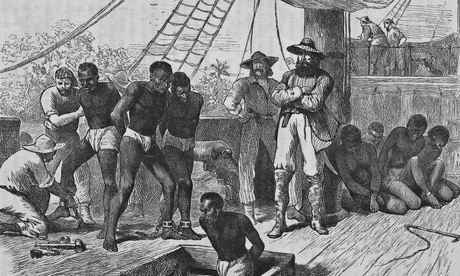
“Why has the memorial to slaves quietly been dropped?” asks David Olusoga (“Jamaica, reparations and a lost chance for a memorial to slavery”, Comment). I can suggest reasons: Britain does not want to acknowledge, never mind publicise, that it was the major trader in enslaved Africans.
The estimated number of women, children and men shipped across the Atlantic varies from 11 million to more than 12 million. The death rate is estimated at 10-15%. The number killed has been impossible to estimate, but it is believed that about 4 million died while being walked to the coast and while awaiting shipment.
At least some historians have argued that the Industrial Revolution in Britain was financed by the profits from this “nefarious trade”; certainly, my research indicates that Lancashire became the wealthiest county in England by processing slave-grown cotton. If our government can spend about £50m on Holocaust memorials and teaching materials, it should spend at least the same on memorials for the enslaved and on education materials. And even fund reparation for slave descendants.
Marika Sherwood
Hon senior research fellow,
Institute of Commonwealth Studies
London WC1
When one reads yet another attack on the British over the 18th-century slave trade one has to feel frustrated. There is a statute of limitations in all civilised systems of law so that actions for debt or reparations are time-barred.
When Olusoga says Britain “has spent one and a half centuries airbrushing slavery out of our national story”, one has to wonder where he has been: far from being airbrushed out, it has not even been neglected.
Indeed, one might feel that it is the very remorse shown by the British over slavery, and its history of positive action, which encourages the insults against us, while countries that were more complicit and care much less than we do are left well alone.
Tony Pointon
Portsmouth
The solution is relatively simple. As a UK citizen, my ancestors from the first half of the 19th century came from Wales, Ireland, Germany, Russia and Essex. They were all economic migrants; that is, desperately poor individuals escaping conditions from pogroms to malnutrition, and experiencing Victorian, working-class conditions in London. Their neighbours doubtless included many who had had their land stolen from them by the wealthy through the various 19th-century enclosure acts. I, personally therefore, don’t owe a penny.
Reparations to the victims of slavery should simply be calculated using the records showing the slave owners who received “compensation” for loss of human “property”, tracing their living descendants and presenting them with the bill.
As the total number of descendants will be more numerous than the ancestors, and inherited wealth has accumulated far more rapidly than the average rise in living standards, there will be plenty of money left over for the current beneficiaries to continue their privileged lifestyles. There will also be ample money left over for memorials.
Greg Levitt
Maidstone