/Bank%20Of%20America%20Corp_%20location%20sign-%20by%20artran%20via%20iStock.jpg)
Charlotte, North Carolina-based Bank of America Corporation (BAC) provides a range of financial products and services to individual consumers, small- and mid-market businesses, institutional investors, large corporations, and governments worldwide. The company has a market cap of $360.3 billion and operates through four segments: Consumer Banking, Global Wealth & Investment Management (GWIM), Global Banking, and Global Markets.
Companies with a market cap of $200 billion or more are typically referred to as "mega-cap stocks." BAC Energy fits squarely into that category, with its market cap exceeding this threshold and reflecting its substantial size and influence in the diversified banks industry.
BAC stock reached its 52-week high of $57.55 on Jan. 5, and has slipped 11.8% from that peak. The stock has grown 1.9% over the past three months, underperforming the Nasdaq Composite ($NASX), which rose 18.8% during the same time frame.
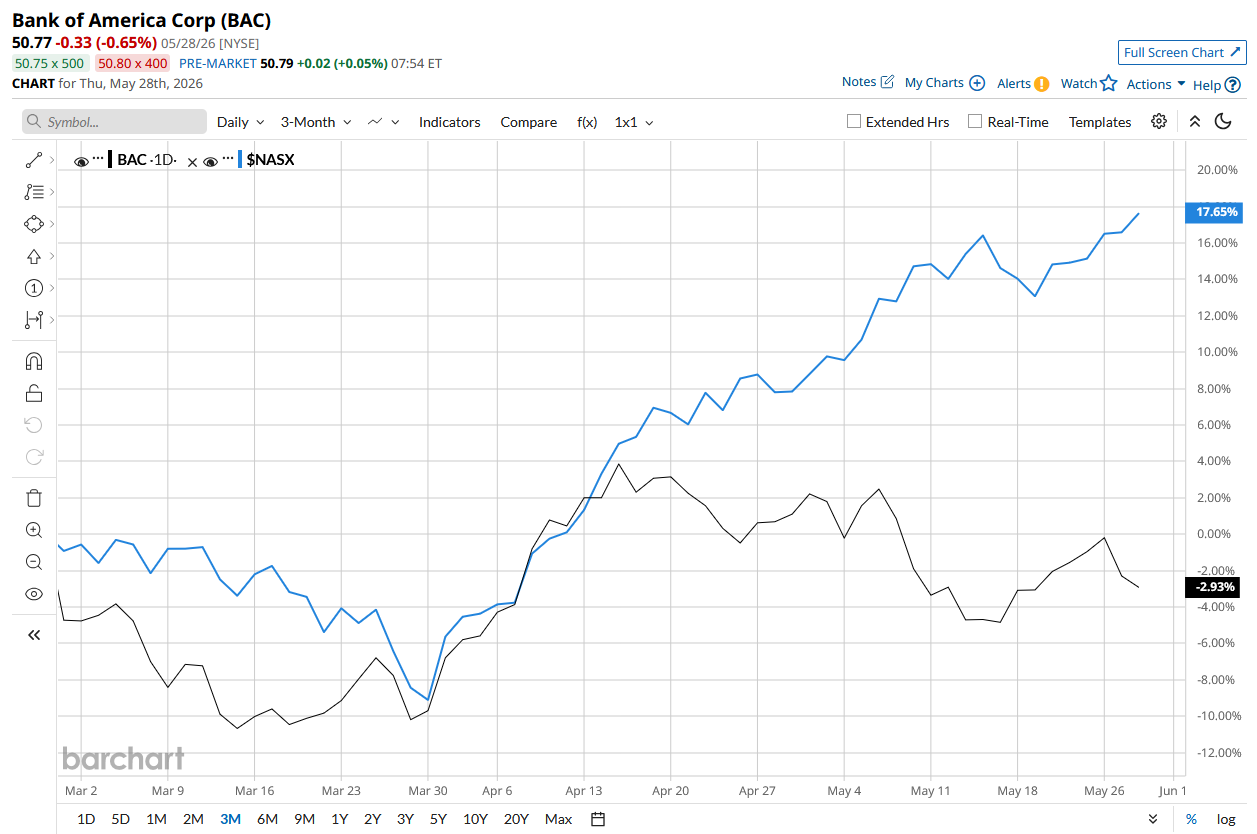
Over the longer term, however, the scenario remains the same. BAC is up nearly 15.2% over the past 52 weeks, underperforming the 40.9% return of the NASX over the same period.
BAC has been trading mostly below its 200-day moving average since this month, and also below its 50-day moving average since the last trading session.
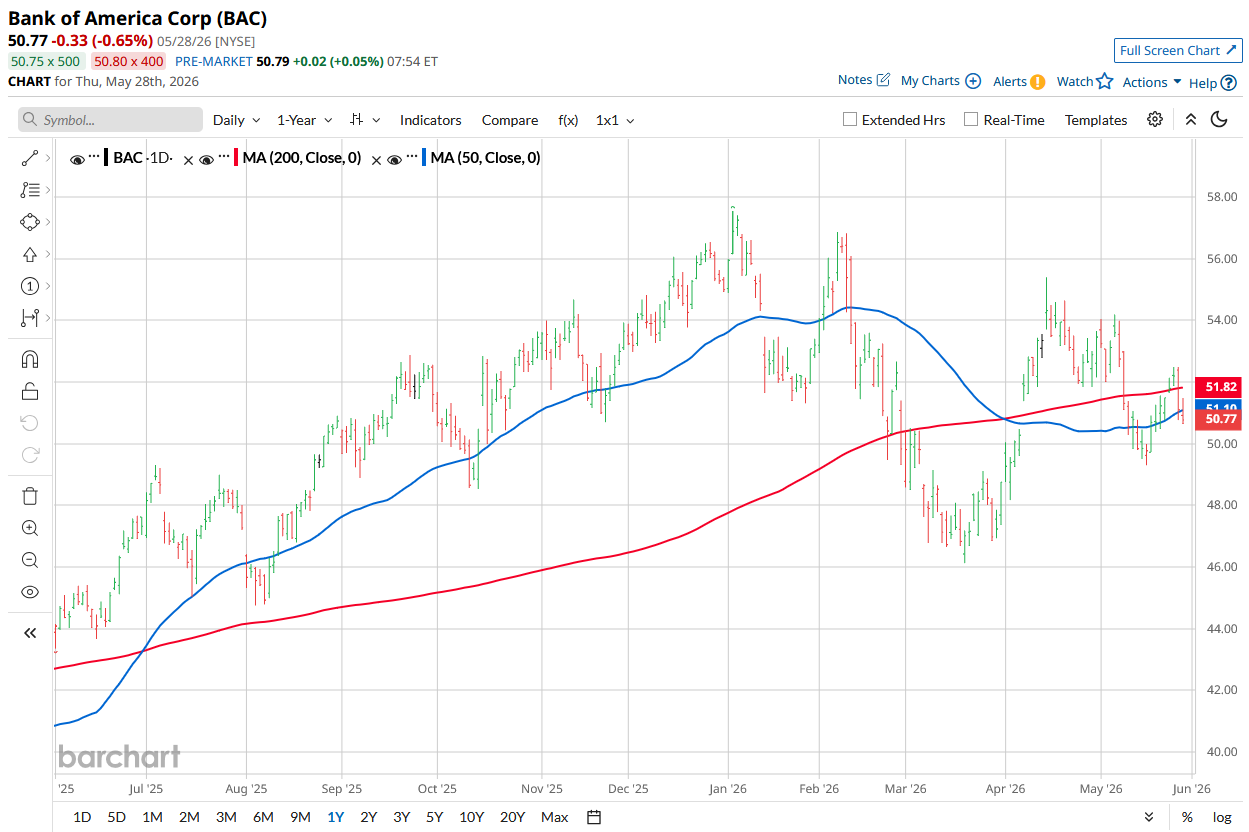
On Apr. 15, BAC stock rose 1.8% following the release of its Q1 2026 earnings. The company’s revenue for the quarter amounted to $30.3 billion, surpassing Wall Street’s estimates. Moreover, its adjusted EPS came in at $1.11, also coming in on top of the Street’s forecasts.
When stacked against its closest peer in the diversified banks industry, JPMorgan Chase & Co. (JPM) shares have climbed 12.6% over the past 52 weeks, underperforming COST stock.
Wall Street’s view of BAC stock is moderately optimistic. Among the 26 analysts covering the stock, the overall consensus rating is “Strong Buy.” Its mean price target of $61.52 suggests 21.2% upside potential from current price levels.