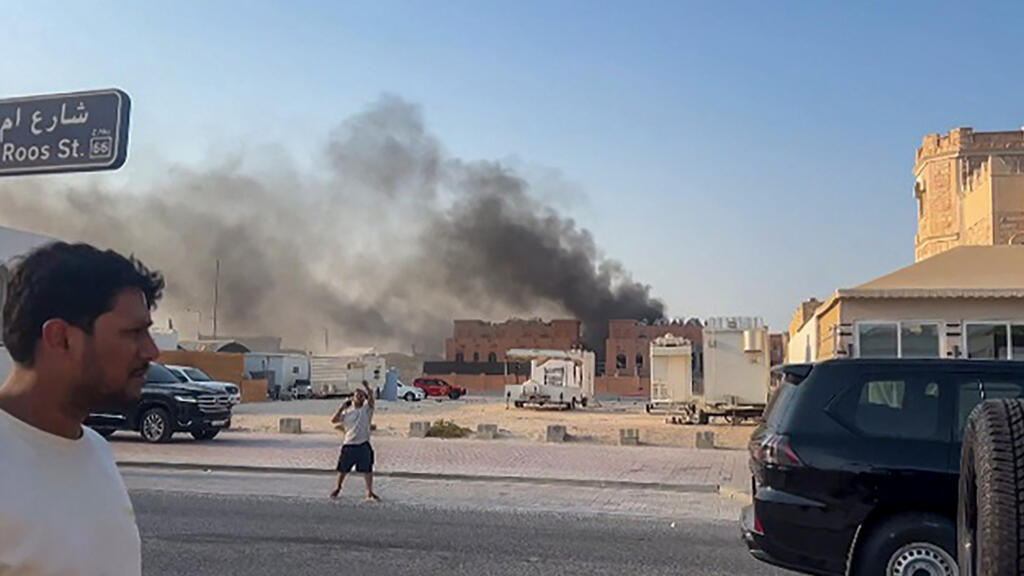
Arab and Muslim countries are once again debating the creation of a NATO-style military alliance, as Israeli strikes on Doha and wider regional tensions sharpen concerns about collective security and outside protection. The idea has surfaced many times in the past and gained fresh momentum in recent months – but despite renewed political interest, it still appears more aspirational than achievable.
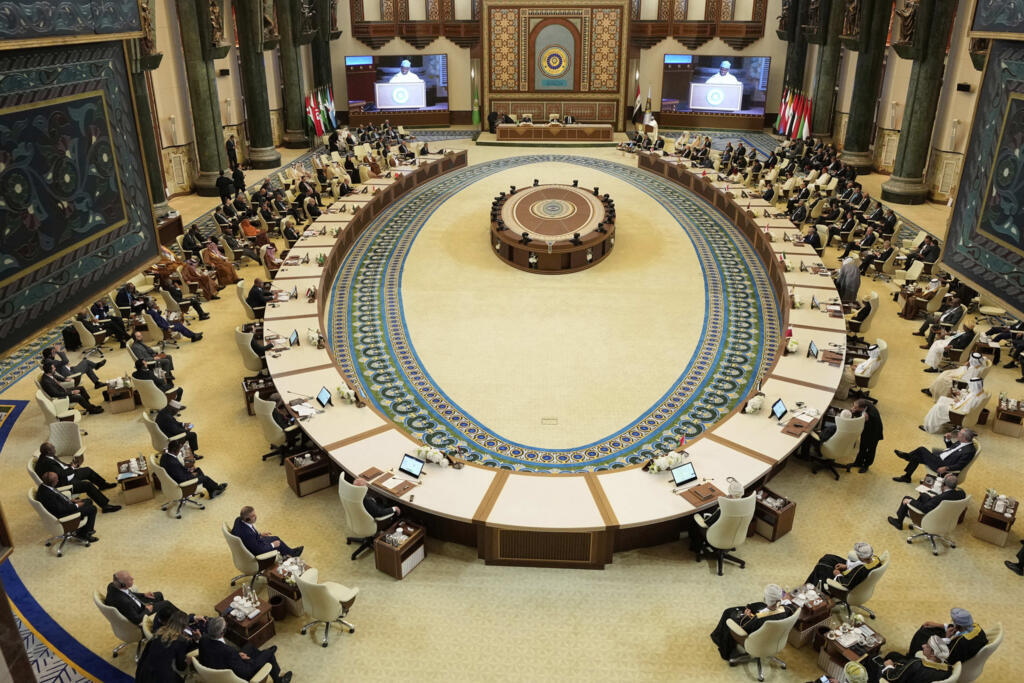
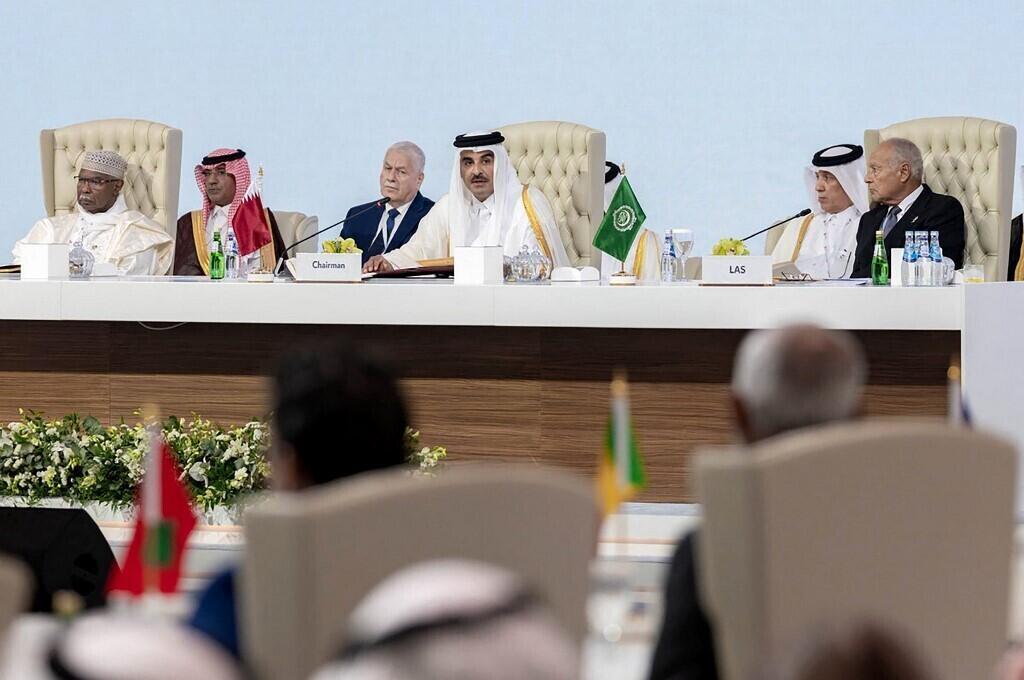
Egypt revived the proposal during an emergency Arab-Islamic summit in Doha, held less than a week after Israeli strikes hit the Qatari capital on 9 September.
Cairo suggested uniting the armed forces of the 22 member states of the Arab League into a single alliance, with pooled resources, rotating leadership, a civilian secretary-general and consultations among members before any use of force.
At the same time, the Gulf Cooperation Council – made up of Saudi Arabia, Bahrain, the United Arab Emirates, Kuwait, Oman and Qatar – said it intended to activate a clause in its joint defence agreement signed in 2000, which treats an attack on one member as an attack on all.
Speaking at the summit on 15 September, Pakistan’s Defence Minister Khawaja Asif urged Muslim countries to “form an Islamic NATO” to confront shared challenges. He said the goal should be mutual defence and not to target any specific country.
Soon after, Gulf defence ministers agreed to strengthen intelligence sharing, speed up work on a regional warning system for ballistic missiles and carry out joint military exercises, signalling a desire for a more coordinated response to external threats.
Turkey and Egypt's joint naval drill signals shifting Eastern Med alliances
History of failed attempts
The idea of a collective defence organisation inspired by NATO is not new in the region.
In 1955, Iraq, Turkey, Pakistan, Iran and the United Kingdom created the Baghdad Pact. The United States joined in 1958 and it was renamed the Central Treaty Organization, or Cento, after Iraq withdrew on 24 March 1959.
Formed during the Cold War, the alliance aimed to contain communism by creating a belt of allied states along the Soviet Union’s southern and south-western borders.
In June 1957, French daily Le Monde described it as building “an effective barrier against a possible Soviet advance” and “a kind of Middle Eastern NATO” that would unify the defence resources of its members.
The pact was widely criticised, including by Arab states such as Syria and Egypt, and eventually collapsed in 1979.
Another alliance still exists.
The Islamic Military Counter Terrorism Coalition (IMCTC) was launched in 2015 at Saudi Arabia’s initiative and today brings together 43 states from Bangladesh to Nigeria, as well as Turkey and Morocco. Iran and its Iraqi and Syrian allies were excluded from the outset.
At its creation, Saudi defence minister and deputy crown prince Mohammed bin Salman said the coalition reflected “the vigilance of the Islamic world in fighting [the] disease” of extremist ideology.
A joint statement said it was based on “the duty to protect the Islamic nation from the evils of terrorist groups and organisations... that spread death and corruption on Earth and aim to to terrorise the innocent”.
The coalition has shown that coordination between Muslim-majority states is possible, but its scope remains limited.
“The IMCTC shows that a pan-Islamic framework can exist and produce coordinated action through information sharing, training and ad hoc initiatives,” Yassine El Yattioui, a researcher at France's Université Lumière Lyon II, told RFI.
The alliance was built around a narrow objective “focused on counter-terrorism”, he said. “There is no integrated military command, no mutual defence guarantee and no generalised interoperability.”
El Yattioui described it as “a useful precedent, but insufficient to reproduce an Arab NATO or an Islamic NATO”.
Military service: what does conscription look like across Europe?
Persistent divisions
The idea resurfaced again in the summer of 2022, when King Abdullah of Jordan said his country would support a NATO-style alliance among Middle East partners. He said such an alliance would need a “very, very clear mission” to avoid “confusion”.
The project never materialised.
Building a true Arab or Islamic NATO would be extremely difficult, El Yattioui said, because it would require ideological alignment, complimentary economies, compatible military equipment and political unity.
Arab states, though fewer than Muslim-majority countries overall, remain highly diverse and divided. A NATO-style structure would also require states to give up part of their military sovereignty, which for many is closely linked to how power is exercised at home.
Some countries look towards Brics, while others remain aligned with the Western bloc.
Despite these obstacles, looser alliances continue to form as the region adapts to new security challenges, pointing to a broader reshaping of the regional security order.
Europe’s 'Truman Show' moment: is it time to walk off Trump’s set?
Doubts about Washington
Since the Israeli strikes on Doha, Arab countries – especially in the Gulf – have increasingly questioned how far they can rely on the United States for protection, even though Gulf states host major US bases and around 40,000 US troops.
“What is the value of the American military umbrella if the United States itself is holding the knife?” the Arab Digest website asked.
Qatar’s emir Sheikh Tamim bin Hamad Al-Thani struck a sharp tone in his opening speech at the September emergency summit.
“Anyone who persistently and methodically works to assassinate the party they are negotiating with is seeking to sabotage negotiations,” he said. “For them, negotiations are just another part of the war.”
He also said Israeli Prime Minister Benjamin Netanyahu “dreams of turning the Arab region into an Israeli sphere of influence. That is a dangerous illusion”.
Two weeks later, on 29 September, US President Donald Trump signed an unprecedented defence agreement with Qatar, a day after Netanyahu issued a public apology to Doha over the strikes.
The executive order states that any attack on Qatar would be treated as a threat to US security, even as Washington remains Israel’s biggest ally in the region.
The strikes and doubts about US backing could accelerate Arab efforts to diversify their alliances, analysts warned.
Using force against a third state, especially a close US ally such as Israel, would carry “huge risks of escalation and major diplomatic consequences”, El Yattioui said.
“A military coalition can create pressure, but it will not replace negotiations, political guarantees and solutions that are acceptable to the populations concerned.”
NATO faces new threat as climate helps submarines slip beneath sonar
'Extended deterrence'
Saudi Arabia has also moved to reinforce its security ties. Riyadh signed a strategic mutual defence agreement with its longtime partner Islamabad on 17 September, committing each country to defend the other in case of aggression.
Pakistan, a nuclear-armed state, thus extends its nuclear umbrella to Saudi Arabia.
After the deal, Iran said it was interested in joining the bilateral alliance, while Pakistan said it wanted similar agreements with other Arab states.
“This strategic pact is significant,” El Yattioui said. “It shows a search for extended deterrence and a willingness to diversify security guarantees.”
But he said a bilateral agreement could not create a coherent multilateral bloc. Any expansion would depend on shared interests such as common threats, economic and military incentives, domestic political acceptance and reactions from external actors including the United States, India and Iran.
Other arrangements are also emerging, including trilateral agreements between Morocco, the United Arab Emirates and Mauritania to create maritime corridors.
The final statement from the Doha summit recalled past Arab League and Organisation of Islamic Cooperation resolutions rejecting aggression against member states and reaffirming Arab-Islamic solidarity and collective security.
But the statement stopped short of launching a common military alliance. It remains largely symbolic, signalling unity to the outside world while each state continues to pursue its own alliances and priorities.
Any meaningful shift would need to happen gradually, El Yattioui said.
“The most realistic path is not copying a Western institutional model,” he added, but building cooperation step by step through “functional interdependence” in areas such as intelligence, cyber security and the economy.
This story was adapted from the original version in French by RFI's Anne Bernas.