In news that will come as a surprise to nobody, AI was the main focus of the opening keynote at Adobe Max in Los Angeles this morning. From new generative Firefly models (including impressive custom options) to new soundtracking tools, impressive AI features have arrived to enhance pretty much every aspect of the creation process.
Among the various announcements was a phrase Adobe kept coming back to: conversational editing. With the advent of new AI assistants for Photoshop, Adobe Express and more, it seems much more of the design experience is set to be driven by prompts and chatbots. But ‘conversational editing’ also hints at a more human side of designing with AI – which, as Adobe told Creative Bloq, is no accident.
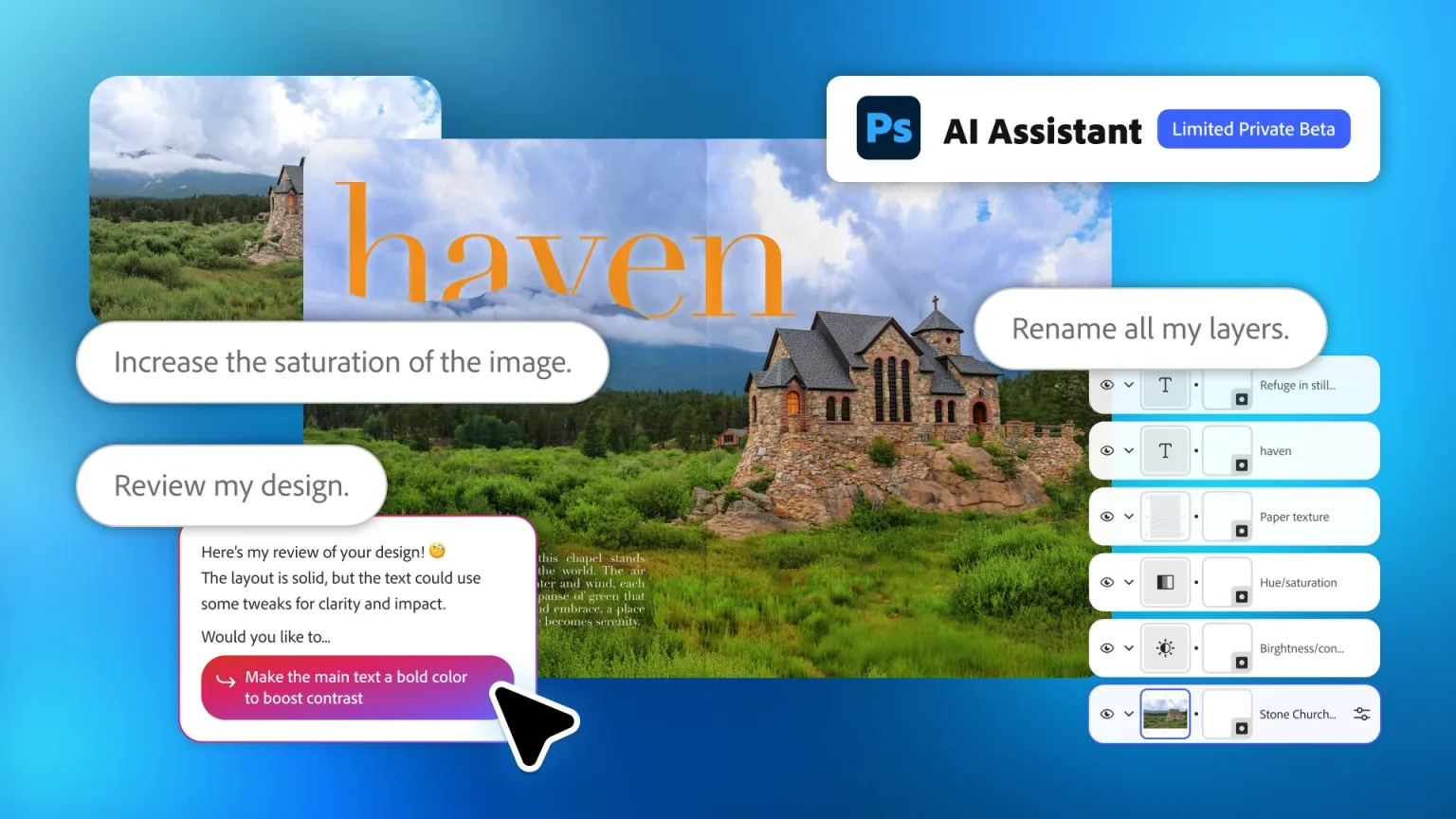
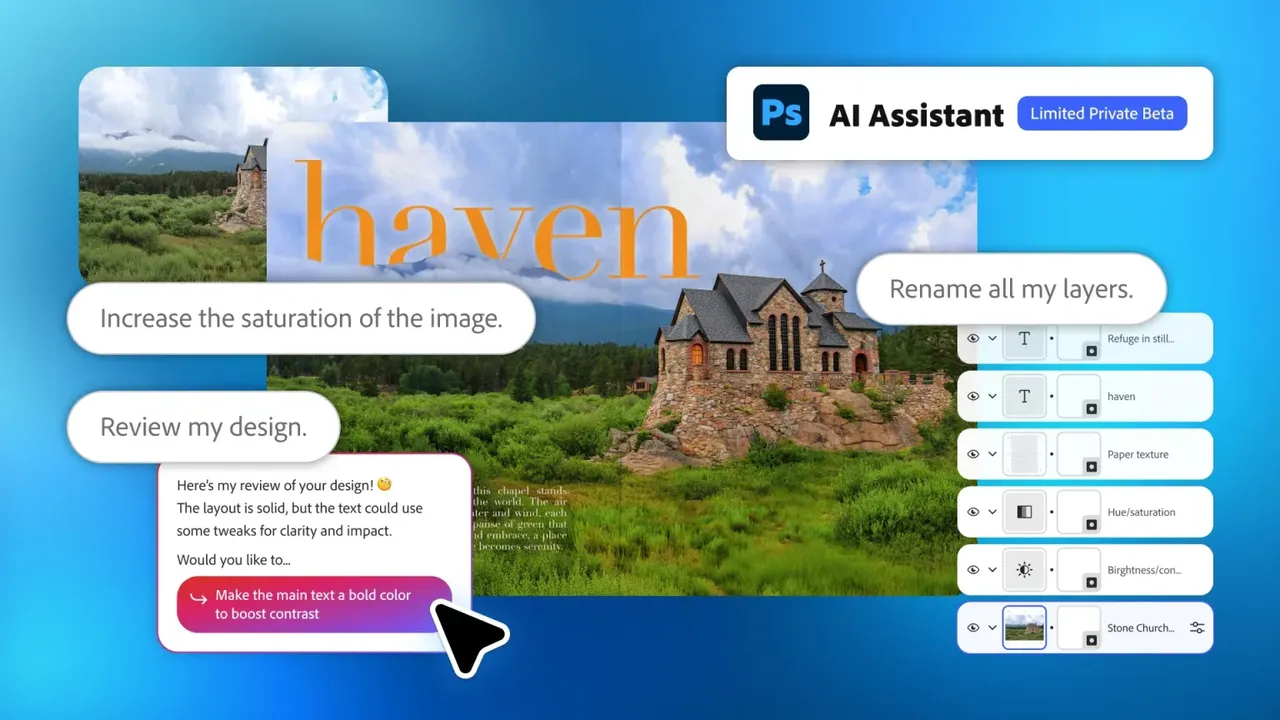
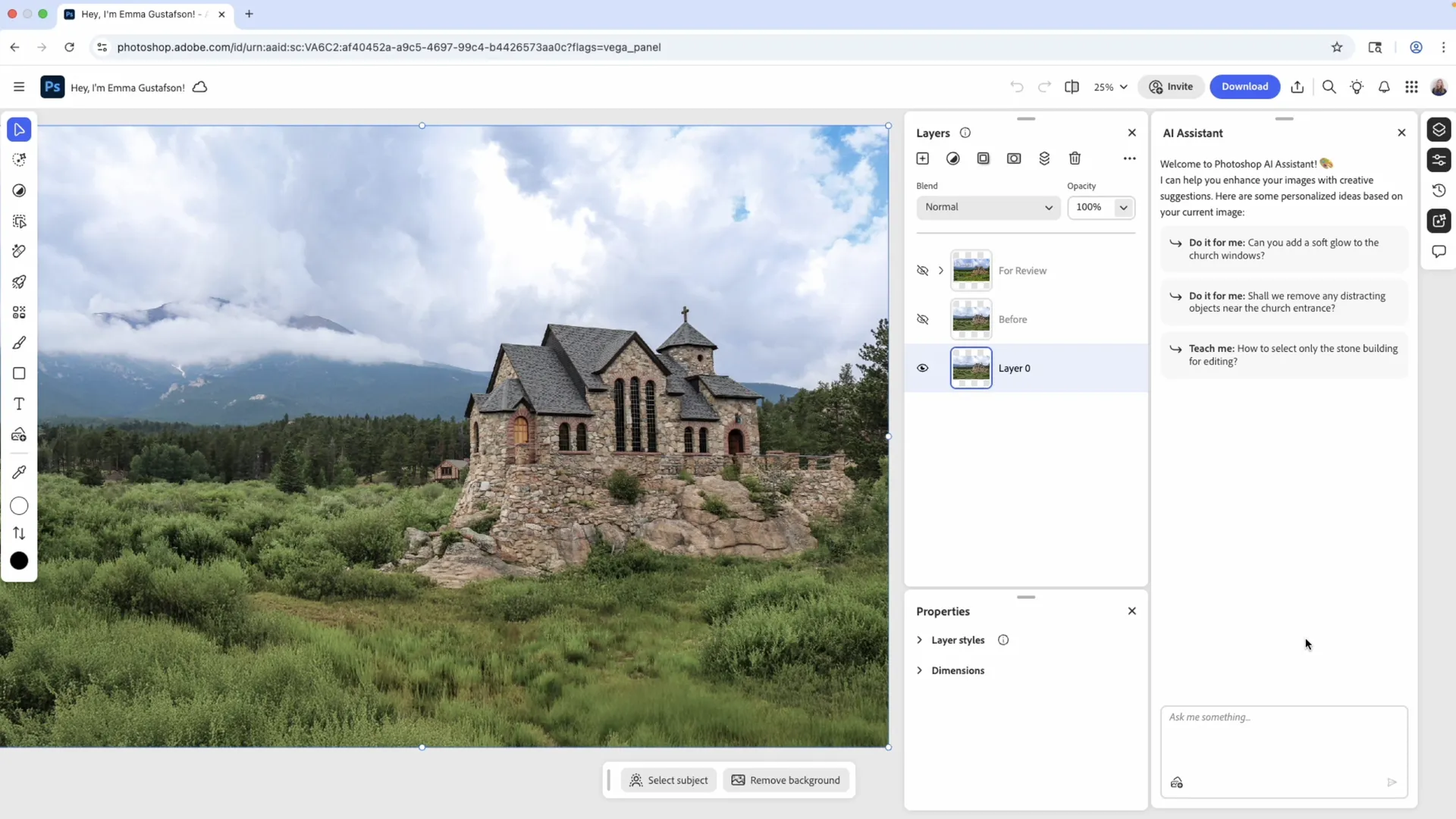
Photoshop’s new AI Assistant, powered by agentic AI, lets creatives save time by instructing it to take on series of creative tasks or provide personalised recommendations.
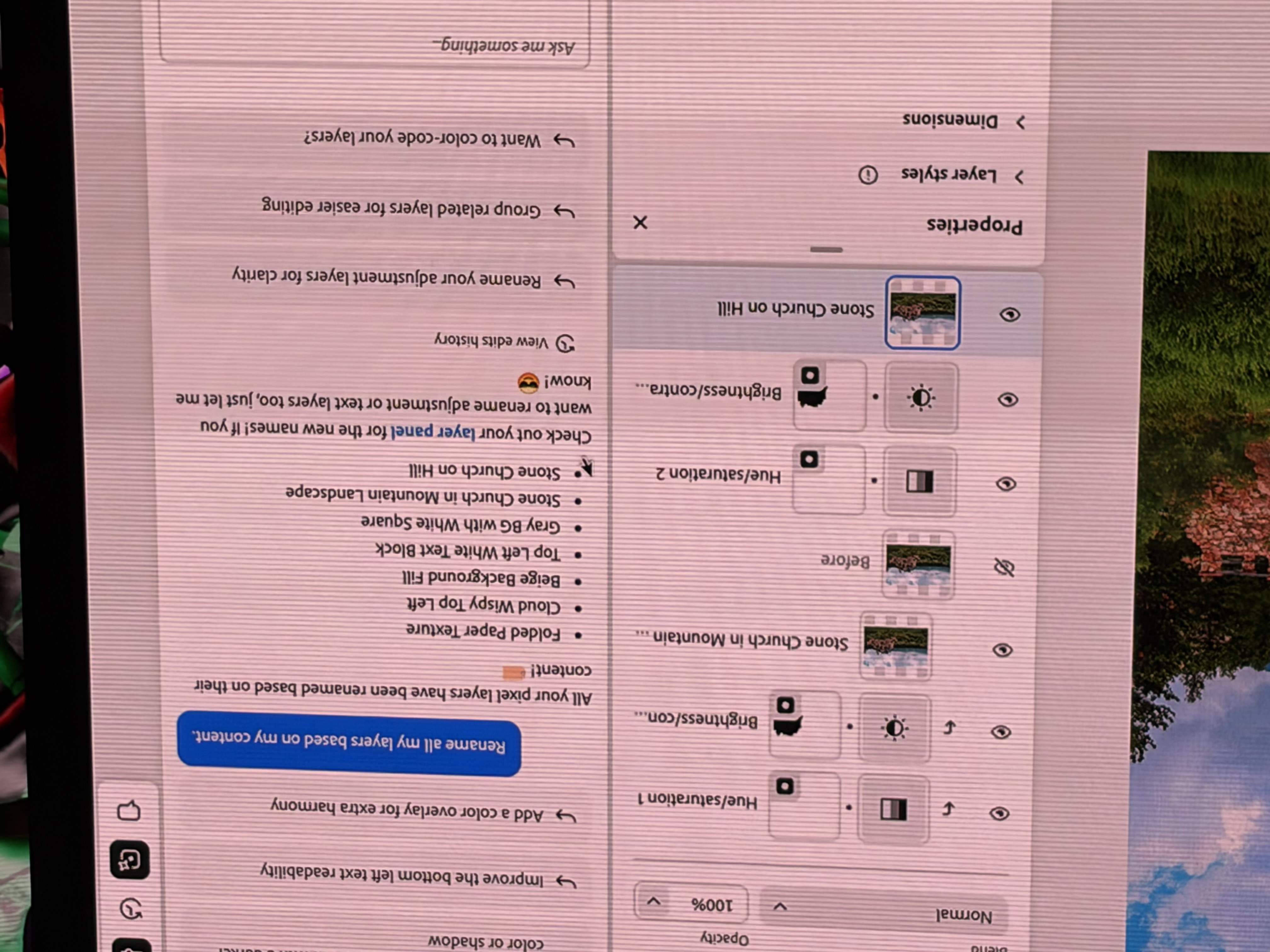
In terms of the latter functionality, Adobe described the assistant as a “second set of eyes”, offering constructive feedback on a flyer design. But perhaps the biggest cheer of the morning was awarded to the assistant’s ability to clean up messy or non-existent layer names.
Meanwhile, Adobe Express’s new AI Assistant lets users design personalised content simply by describing what they want. The non-destructive tool lets users generate edits on any layer, including fonts and images, keeping the rest of the design intact.
This natural, human style of converrational editing was a “very deliberate” focus for Adobe, Govind Balakrishnan, senior vice president and general manager at Adobe Express, told Creative Bloq. “The fact that you can converse to create a design by describing what you want to do – that’s where the magic is.”
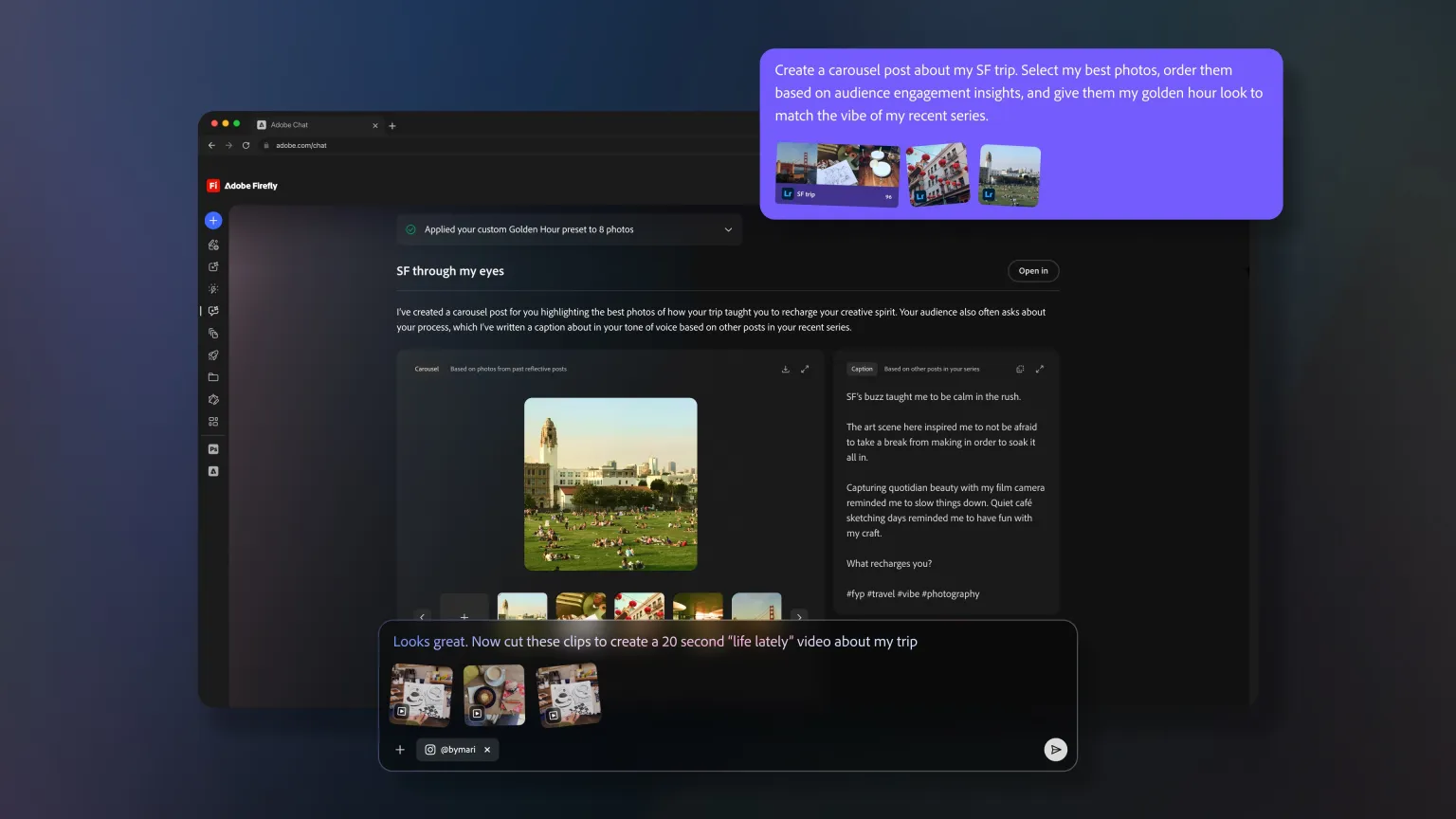
And at the end of the keynote, Adobe revealed a sneak peek of a tool that could take the idea even further. Project Moonlight serves as an AI Assistant that works as a personal social media assistant, letting users upload images from Lightroom and generate ideas for social posts.