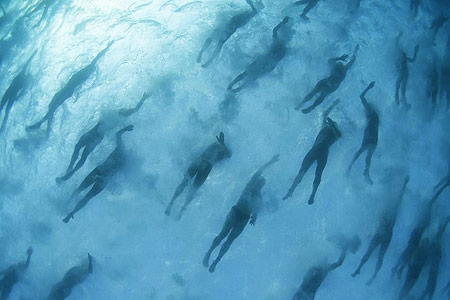
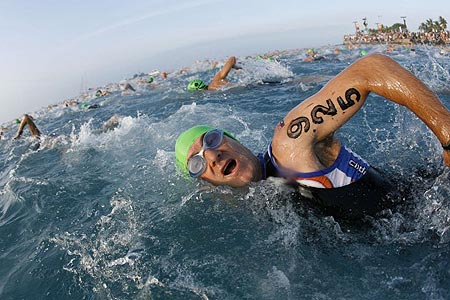
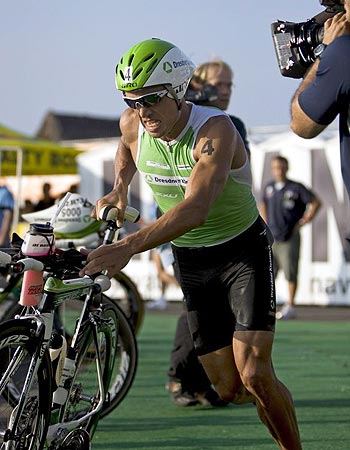
The Ironman (or 'full') triathlon is made up of a 3.8km swim, a 180km bike ride and a 42.2km run (a standard marathon)Photograph: Hugh Gentry/ReutersThe three disciplines require different techniques to those used when practising each individually. For example, the swimming section usually takes place in open water, so competitors need to see where they're heading and contend with currents and wavesPhotograph: Hugh Gentry/ReutersThe transitions between sections of the triathlon are crucial – you can lose valuable seconds putting on your shoesPhotograph: Bruce Omori/EPA
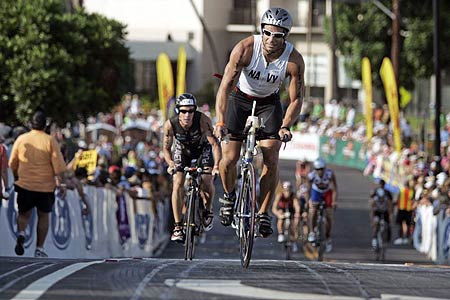
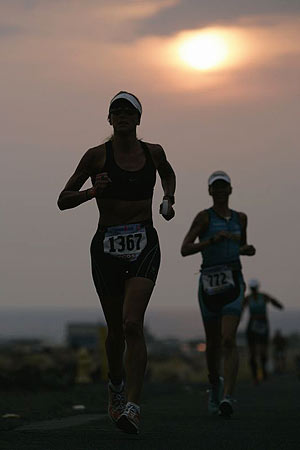
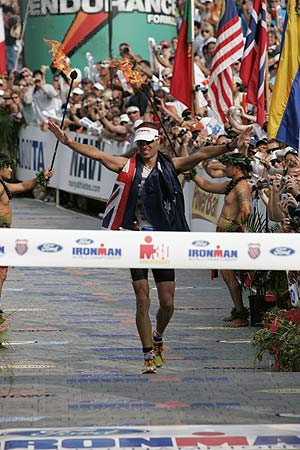
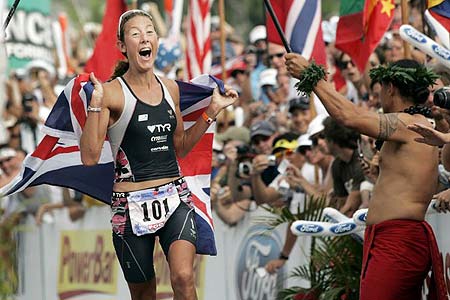
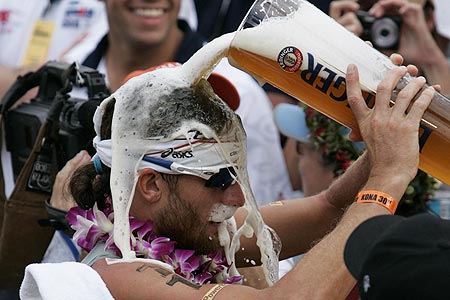
After swimming, it's important in the cycling section to make sure you conserve some energy for the final running leg of the racePhotograph: Chris Stewart/APWhile a marathon might be enough of a challenge for most people, Ironman contestants have to start theirs after the gruelling swim and bike ridePhotograph: Hugh Gentry/ReutersAfter a challenge like the Ironman, just finishing is a victory. Australian Craig Alexander did even better by winning the men's race in eight hours, 17 minutes and 45 secondsPhotograph: Hugh Gentry/ReutersBritish triathlete Chrissie Wellington crossed the finish line in nine hours, 6 minutes and 22 secondsPhotograph: Chris Stewart/APWinning for the second year in a row, Wellington overcame a flat tire to beat last year's time by more than two minutesPhotograph: Thomas Frey/EPAGiven the size of the Ironman challenge, a suitably large celebration is called for after crossing the finishing linePhotograph: Hugh Gentry/Reuters
Sign up to read this article
Read news from 100’s of titles, curated specifically for you.







.jpg?w=600)