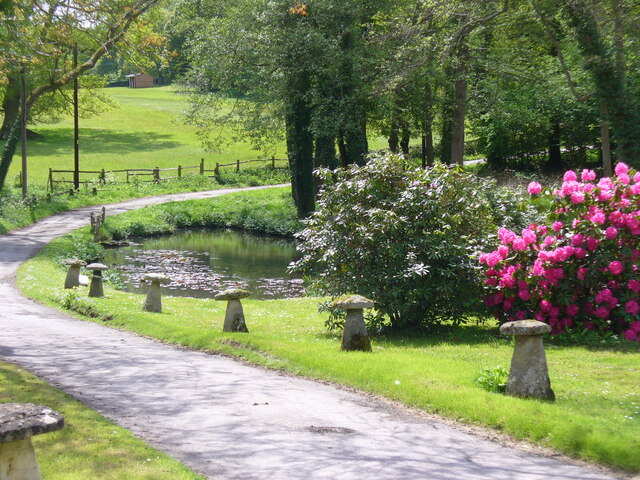
During the eighteenth century, those who controlled the country estates of Ireland were keen to alter the appearance of the land. Landscaping was an important lifestyle choice during this period, as estate owners competed to create the most beautiful and exotic gardens. Horticulturists travelled around the world to obtain plants that would flourish in the temperate, humid environment of Ireland. Among these exotic species was an evergreen shrub with glossy leaves and purple flowers that appealed to the upper classes.
Get breaking news anytime, anywhere. Download the TOI app now!
This plant was the ornamental rhododendron, specifically a robust variety known as Rhododendron ponticum, which originally hailed from the Iberian Peninsula, the Caucasus, and parts of Asia. Its vibrant violet flowers brought an explosion of dramatic colour to the manicured gardens, providing an elegant backdrop for aristocrats promenading through their vast properties. Because the shrub was hardy and grew rapidly into dense hedges, landowners planted it extensively across their estates, unaware of its later ecological impact.
What began as a fashionable nineteenth-century landscaping trend later became a major environmental challenge in parts of Ireland. According to a study titled Laurophyllisation in Ireland - the case of Rhododendron ponticum , these historic ornamental plantings laid the groundwork for a massive, slow-motion botanical takeover. The research paper explains how the plant quietly escaped the boundaries of grand estate gardens, utilising its highly efficient reproductive traits to establish a permanent, aggressive foothold in the surrounding countryside. Over more than two centuries, this single species expanded relentlessly, moving along waterways and mountain tracks to colonise some of the most precious natural habitats on the island.
The paper notes that Rhododendron ponticum had been in Ireland for about 200 years and had come to dominate extensive native vegetation, especially Killarney oakwoods, where it reduced the understorey, woodland ground flora and epiphytes. Its dense shade also suppresses tree regeneration, and the author argues that spread into scrub woods, heathlands and peatland margins was driven by disturbance as much as by the species’ own invasive traits.
The existence of this shrub has become a serious problem for conservationists, foresters and park rangers responsible for the preservation of the natural heritage of the country. It has spread in the acidic soils and wet conditions of the western counties, proving more aggressive than many had expected. With passing years, the plant, which initially was considered a symbol of luxury and top-class horticulture, turned into an aggressive invader.
How the plant forms dense shade
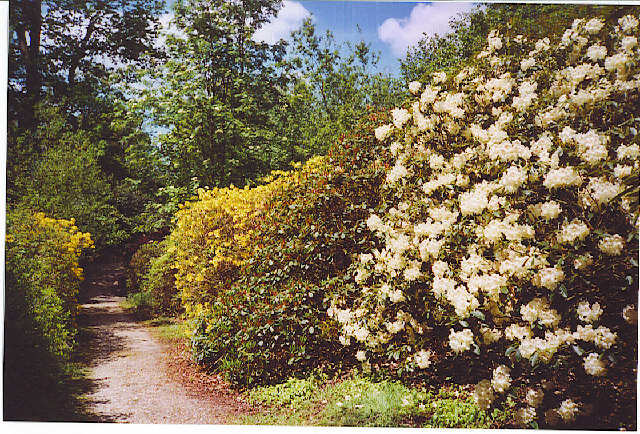
The main point that made this shrub become such a destructive organism is its ability to create an impenetrable wall which blocks off the sunlight. In the old oak forests of Ireland, including those of Killarney, light becomes the most valuable resource. Local trees, moss and other woodland plants depend on the light coming through the canopy of oaks to be alive and grow. But when the invasive plant enters the territory, it immediately starts creating a thicket of plants underneath the trees, which can be even a couple of meters high.
By creating a thick, evergreen layer just above the forest floor, the plant can block out much of the sunlight. Lacking access to sunlight, native ferns, mosses and woodland wildflowers can decline sharply, leaving the ground sparsely vegetated. More critically, the dense shade can prevent oak seedlings from establishing and slow forest regeneration.
According to the findings, the plant fundamentally transforms the properties of the forest floor, thus creating an environment which is extremely unsuitable for any kind of native life. The leaves are unpalatable to many herbivores and provide little shelter for local species. As native plants decline, birds, mammals and insects lose habitat and feeding opportunities, changing the structure of old woodlands.
The restoration of the soul of the ancient woodlands
Restoration of the centuries-old tradition of ornamental plant cultivation proved to be a very tough, exhausting, and expensive job for contemporary conservationists and volunteers. Since the plant produces millions of tiny seeds that can spread long distances in the wind, a single plant can quickly colonise an entire valley. Cutting back the plant does not guarantee success because its roots can produce new growth within a single season.
Modern restoration teams often use multi-stage clearance methods that combine manual labour with targeted environmental management. Workers often climb steep, rocky hillsides to cut back the thickets and apply treatment to the stumps to prevent regrowth. Community-led volunteer programmes now help residents clear small patches of woodland so native oak seedlings can recover.
The history of eighteenth-century gardens is a reminder of the ecological risks of introducing non-native species. This history shows that even ornamental plants can have long-term ecological consequences. Efforts to remove rhododendron from Ireland's woodlands highlight the importance of protecting native habitats.