
Parts of Ireland have narrowly missed out on matching a record heatwave amid a prolonged spell of high temperatures, according to provisional data.
Irish forecasting agency Met Éireann defines a heatwave as five or more consecutive summer days above 25C.
The longest heatwave on record for Ireland was 14 days from August 14-27 1976 at both Birr Castle, Co Offaly and Ballybrittas, Co Laois.
This was almost matched in Moore Park, Co Cork after entering the weekend on a long streak of days above 25C – with Saturday potentially becoming the 14th in a row.
However, the 50-year record remains unbroken as Moore Park recorded a provisional high of 24.9C at 3pm – and appeared set to cool off thereafter.
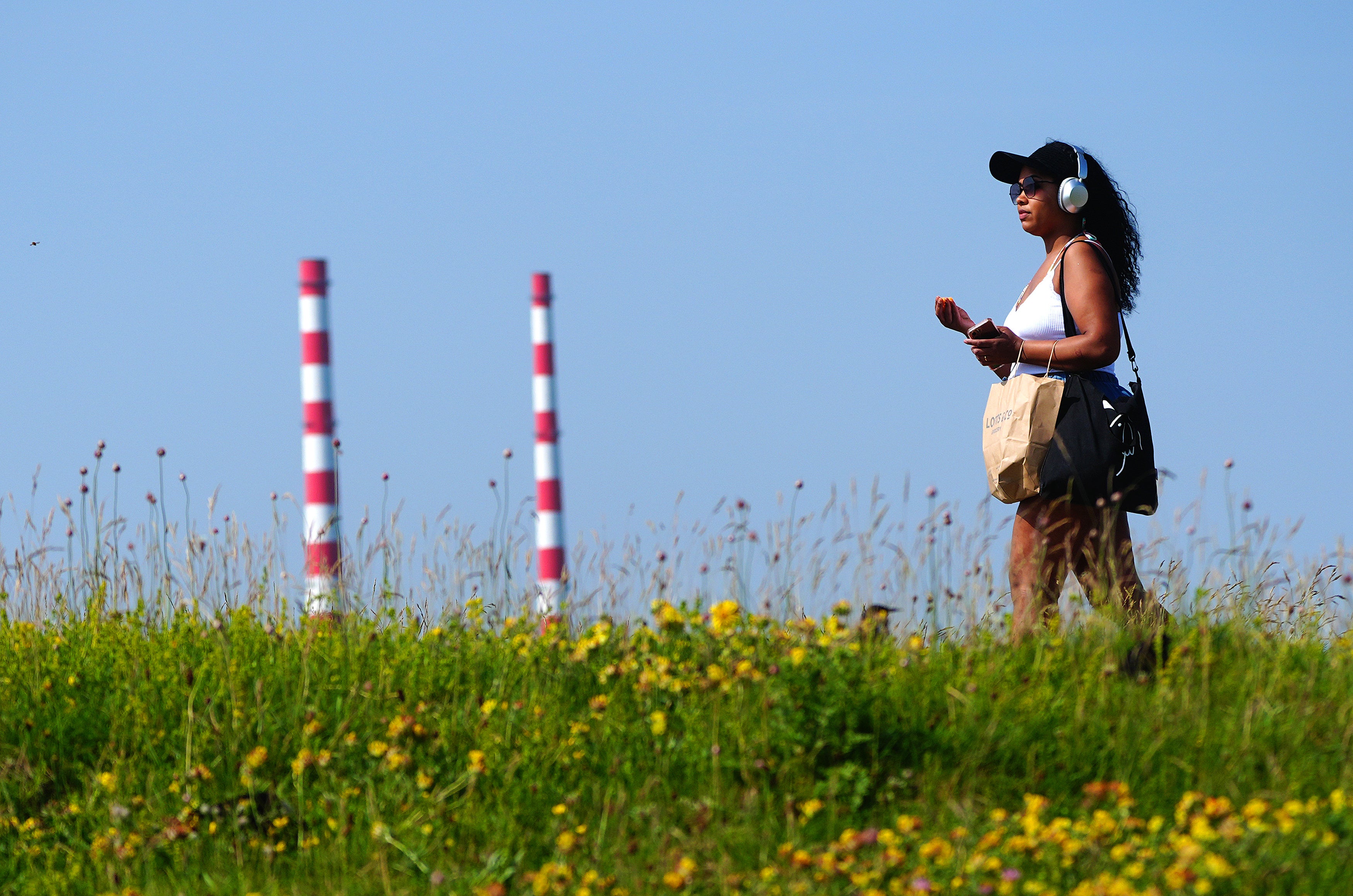
Still, a nationwide high-temperature advisory remains in place until the end of the weekend.
Potential impacts include water safety issues because of increased use of waterways, lakes and beaches; some heat stress and dehydration, especially for the vulnerable and elderly; public transport disruption; animal welfare concerns; and potential droughts.
The advisory started on Wednesday last week and has been extended to expire at the end of Sunday.
Parts of south Tipperary, Wexford, Dublin, Kildare, Meath and Wicklow were also placed under a hosepipe ban from Thursday until August 26.
Meanwhile, a fear over wildfires amid the hot and dry weather was realised in Co Kerry and the Dublin Mountains earlier in the week.
Retailers were asked to voluntarily suspend the sale of disposable barbecues following a wildfire in Killarney.
The expected maximum temperature in Northern Ireland on Saturday was 21C.

Ireland’s climate is projected to get warmer, with average temperature increasing across all seasons and on an annual basis, while the number of heatwaves is also projected to increase.
In its annual climate statement, Met Éireann said Ireland’s overall warming continues in line with the global warming trend, with seven of the top 10 warmest years in the country happening since 2005 and last year being the second warmest year on record.
Further warming means the likelihood of extreme weather events has increased.
Climate change poses risks across all sectors of the economy, society, and environment, from energy, transport and communications to water security, public health, food production and supply and ecosystems.
In addition, the country is set to become wetter overall with an increase in average rainfall.
That rainfall will come as part of increased seasonality, meaning wetter winters and drier summers, with more frequent droughts projected for summer and spring months.
The Environmental Protection Agency also said there will be an increased exposure to coastal flooding with a projected rise in sea levels.