Ireland looks to seaweed in quest to curb methane from cows
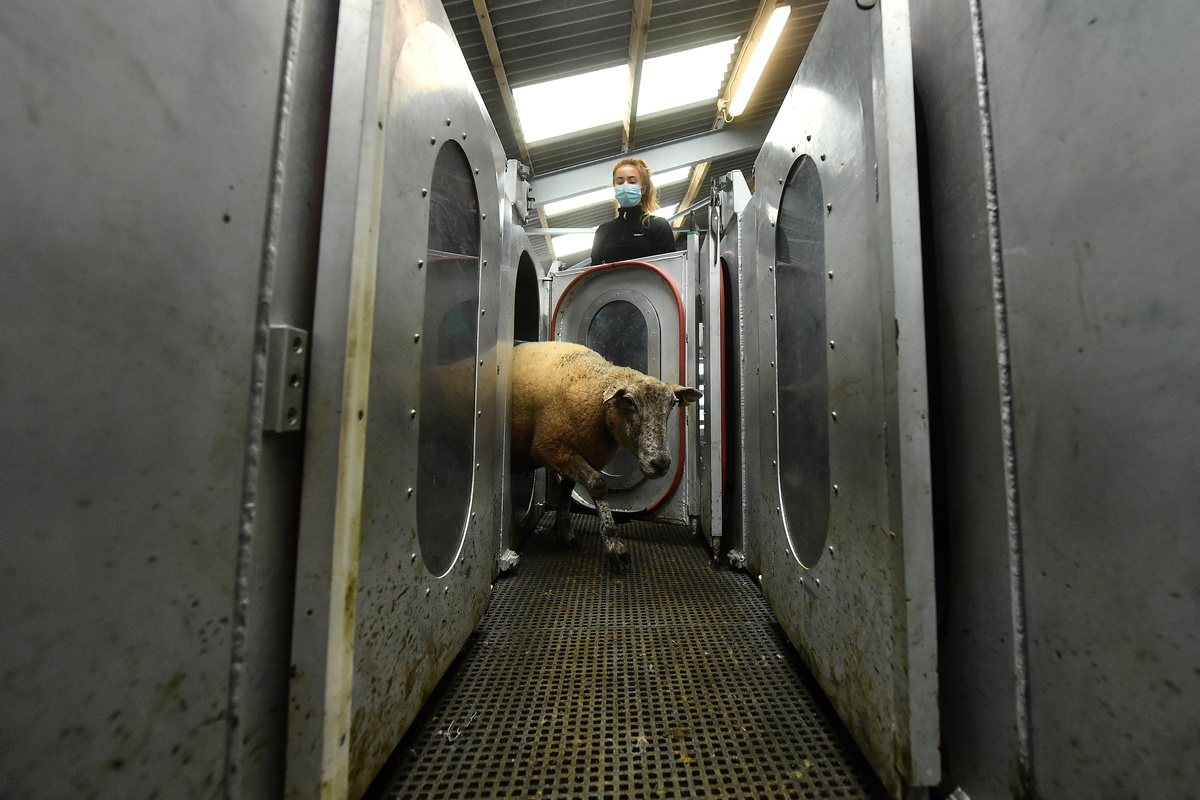
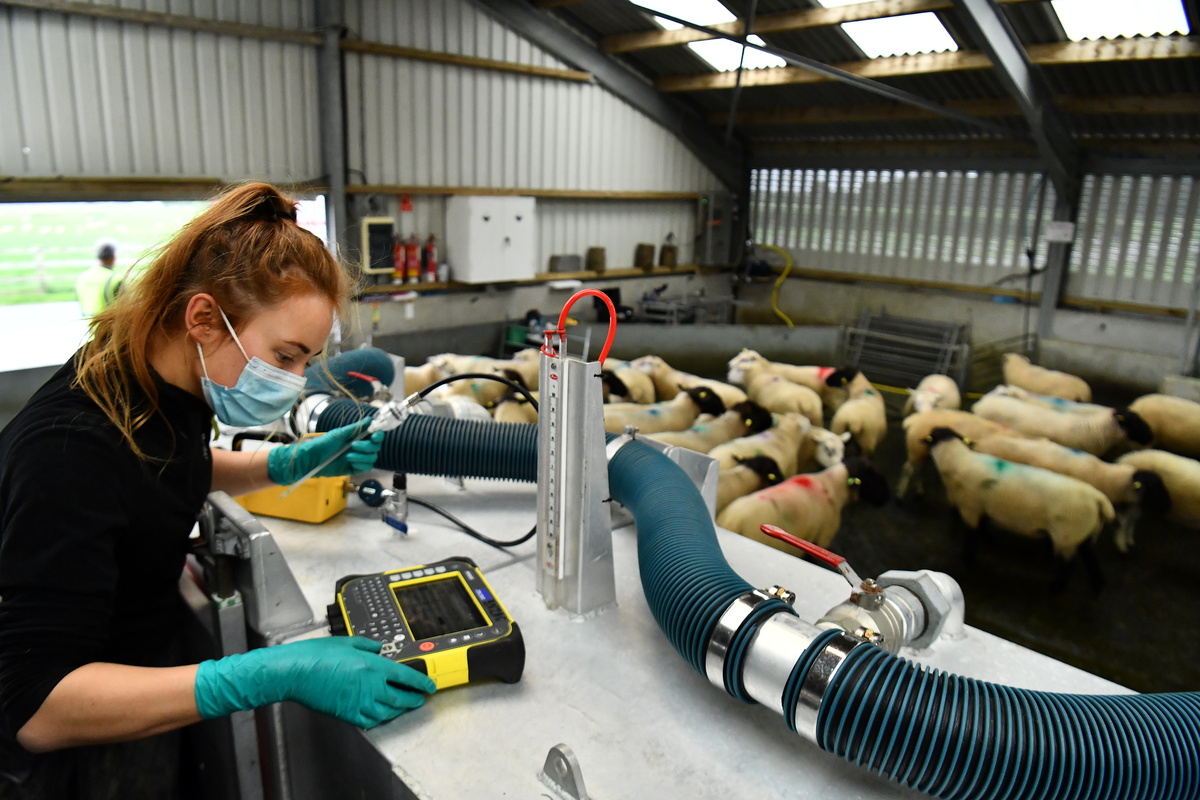
Emily Roskam, a PhD Walsh Scholar at Teagasc, lets a sheep out of a methane measuring chamber, after measuring it's methane emissions at the end of a Seasolutions trial where sheep were fed seaweed extract to reduce their methane emissions at the Teagasc Agriculture and Food Development Authority Mellows Campus in Athenry, Ireland, September 6, 2021. REUTERS/Clodagh Kilcoyne
Scientists are combing Ireland's west coast for seaweed to feed to cattle and sheep after research showed it could stop them breathing out so much climate-warming methane.
The project, coordinated by a state agriculture body, is tapping into the country's growing seaweed harvesting industry, which is seeking new markets as it revives centuries-old traditions.
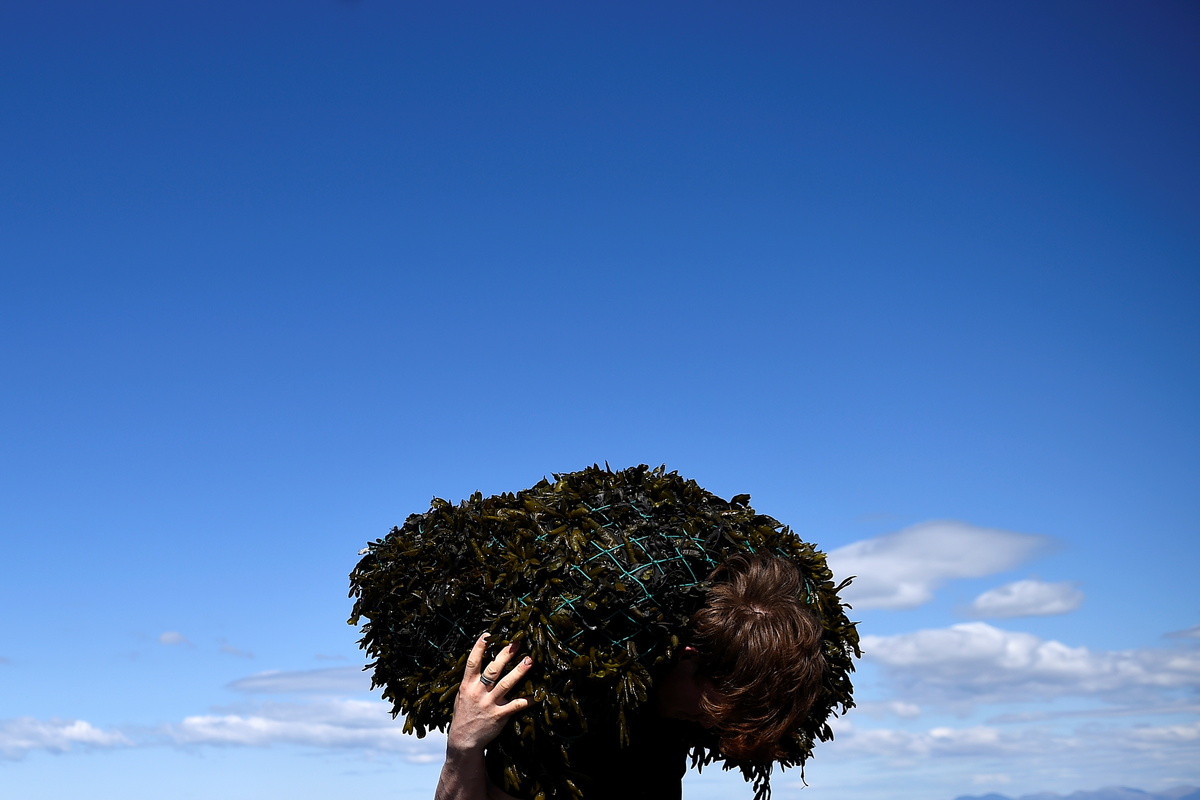
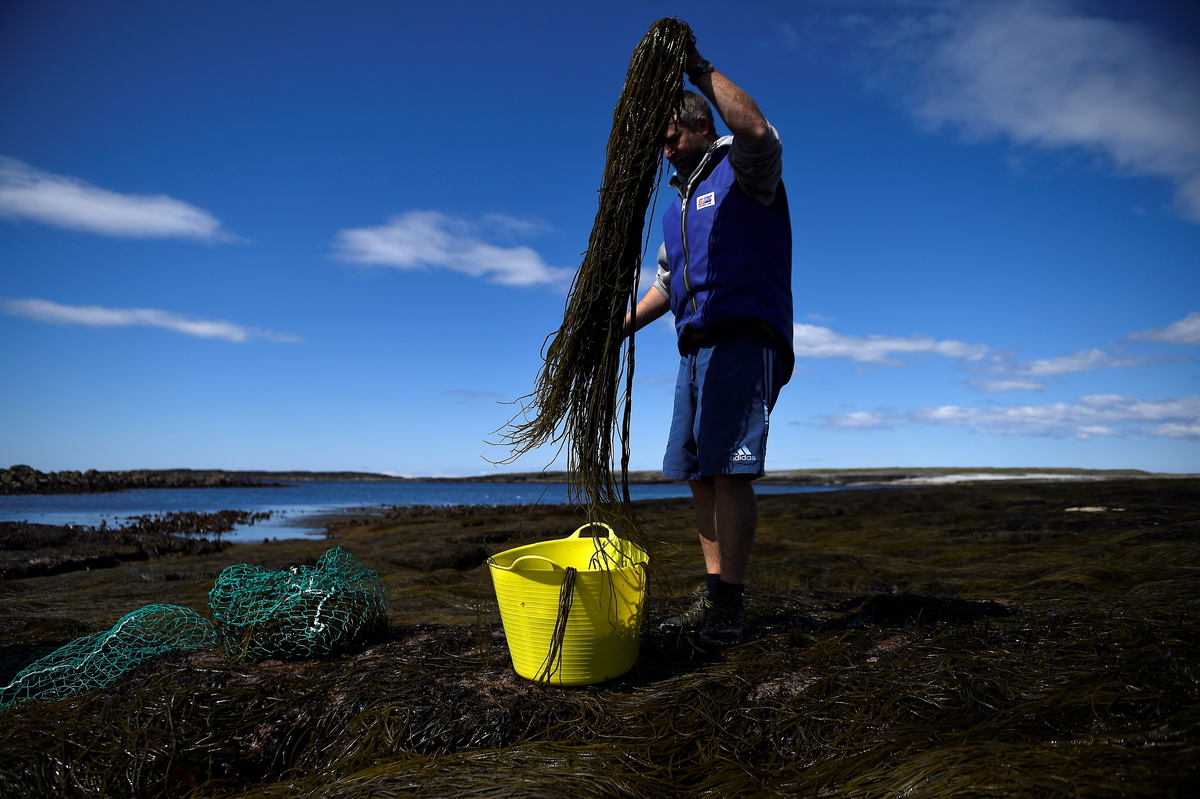
Seaweed harvester Marc O'Goill, who works for Blath na Mara seaweed company owned by Jenny and David O'Halloran, hauls a net of Serrated Rack (Fucus Serratus) seaweed across a rocky shore on Inis Mor of the Aran Islands, Ireland, April 28, 2021. REUTERS/Clodagh Kilcoyne
But some are sceptical that the seaweed feed additives - or any quick technological fix - can sidestep the need to reverse a surge in Irish cattle numbers if the country is to reduce Europe's largest per capita methane output by 2030.
Around 20 species of seaweed, most from Ireland's windswept Atlantic coast, have been tested by researchers while dozens more have been collected by the project's partners in Norway, Canada, Sweden, Germany and the United Kingdom.
Scientists in the United States and Australia have already demonstrated dramatic methane-reducing qualities from one seaweed type - Asparagopsis - when small quantities are added to feedstock.
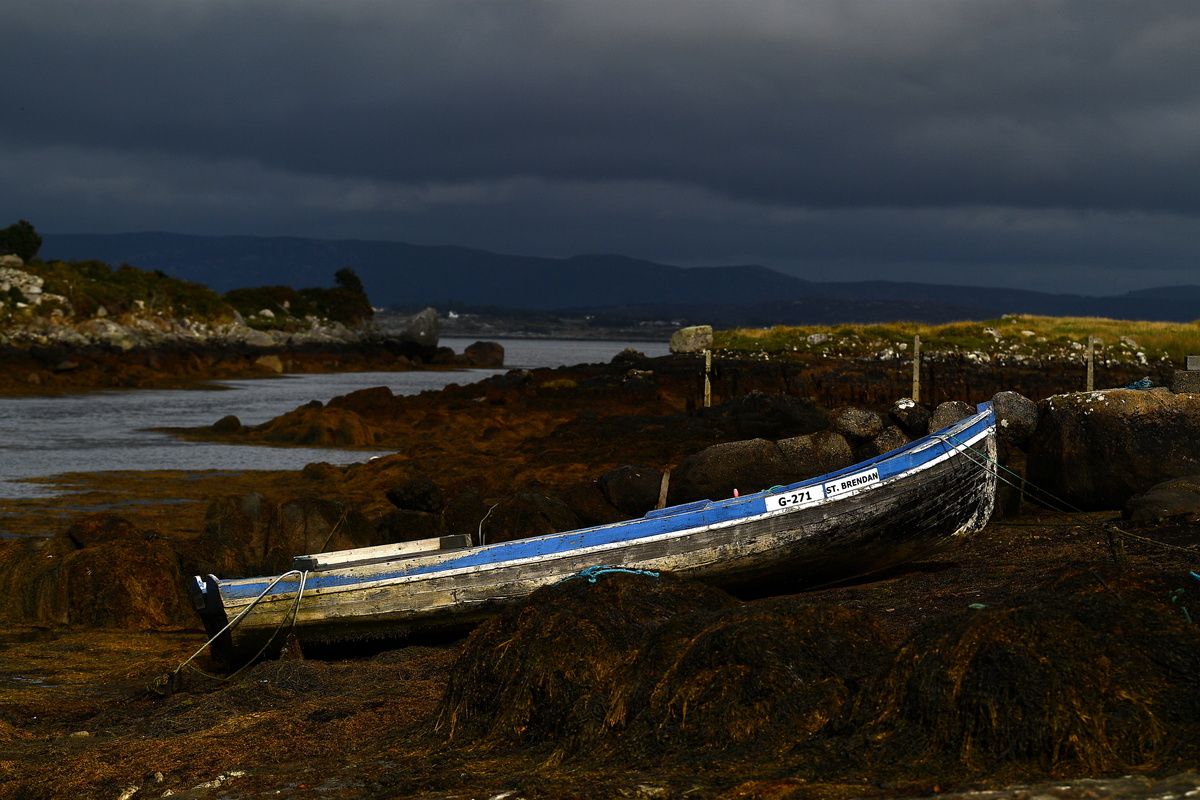
A traditional currach boat sits on the shore beside bundles of seaweed in the Connemara region of Kilkieran, Ireland, September 10, 2021. REUTERS/Clodagh Kilcoyne
But they have not yet managed to scale up production of the seaweed, which is not easy to grow in Northwest Europe.
The Irish project aims to find abundant native seaweeds to use instead, even though the researchers admit they are unlikely to match the reduction in emissions of over 80% shown with Asparagopsis.
"We have identified some brown seaweeds that are very positive and they're producing results," said Maria Hayes, Project Lead of the SeaSolutions project, whose team has achieved methane reductions of between 11% and 20% in early trials.
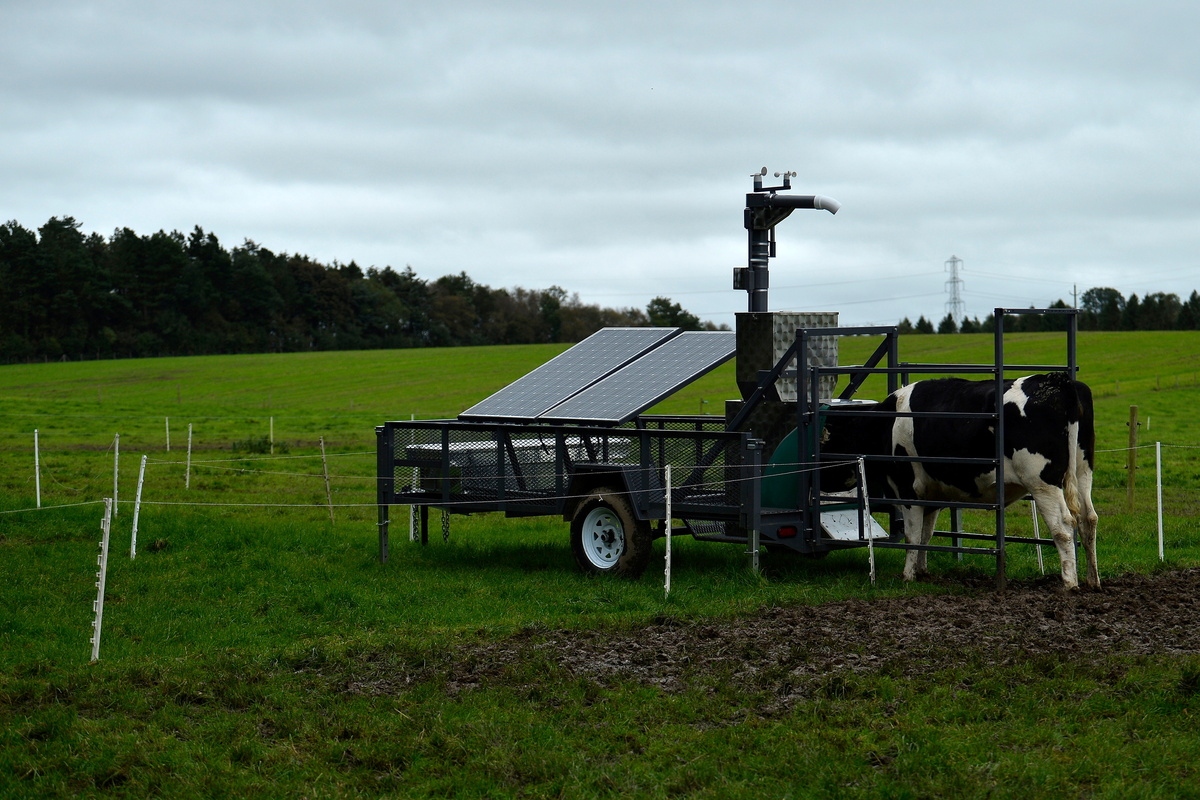
Dairy cattle that are participating in a trial of being fed seaweed to offset methane emissions gather around the solar powered methane measuring machine at the AFBI (Agri-Food and Biosciences Institute) research farm in Hillsborough, Northern Ireland, October 7, 2021. REUTERS/Clodagh Kilcoyne
"The reductions aren't going to be a silver bullet ... but it can significantly reduce emissions," said Hayes, who works for Teagasc, Ireland's Agriculture and Food Development Authority.
Researchers are also working on how to integrate the feed additives into Ireland's predominantly grass-based cattle farming system.
On a farm outside Hillsborough, southwest of Belfast, researchers use treats to coax cows to poke their heads into a solar-powered machine that measures the level of methane on their breath.
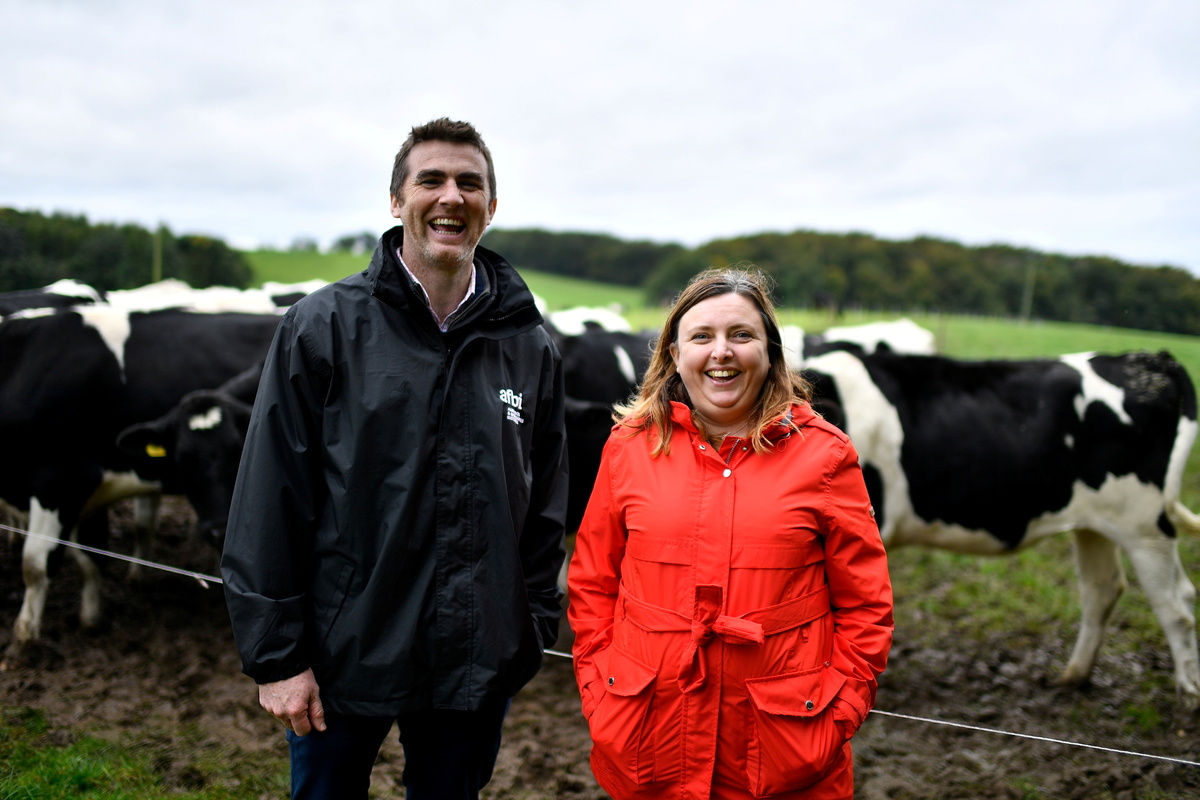
Dr Steven Morrison, Programme Leader in Sustainable Livestock Production at AFBI (Agri-Food and Biosciences Institute) in Northern Ireland, and Professor of Animal Science and Microbiology Sharon Huws at Queens University Belfast (QUB), pose for a photograph in front of dairy cattle at the AFBI (Agri-Food and Biosciences Institute) research farm in Hillsborough, Northern Ireland, October 7, 2021. REUTERS/Clodagh Kilcoyne
They will test them again using seaweed additives, said Sharon Huws, Professor of Animal Science and Microbiology at Queen's University Belfast.
"The levels that are used to feed ruminants are very, very small so you don't need to get a lot of it in order to get an impact," she said.
POLITICAL PRESSURE
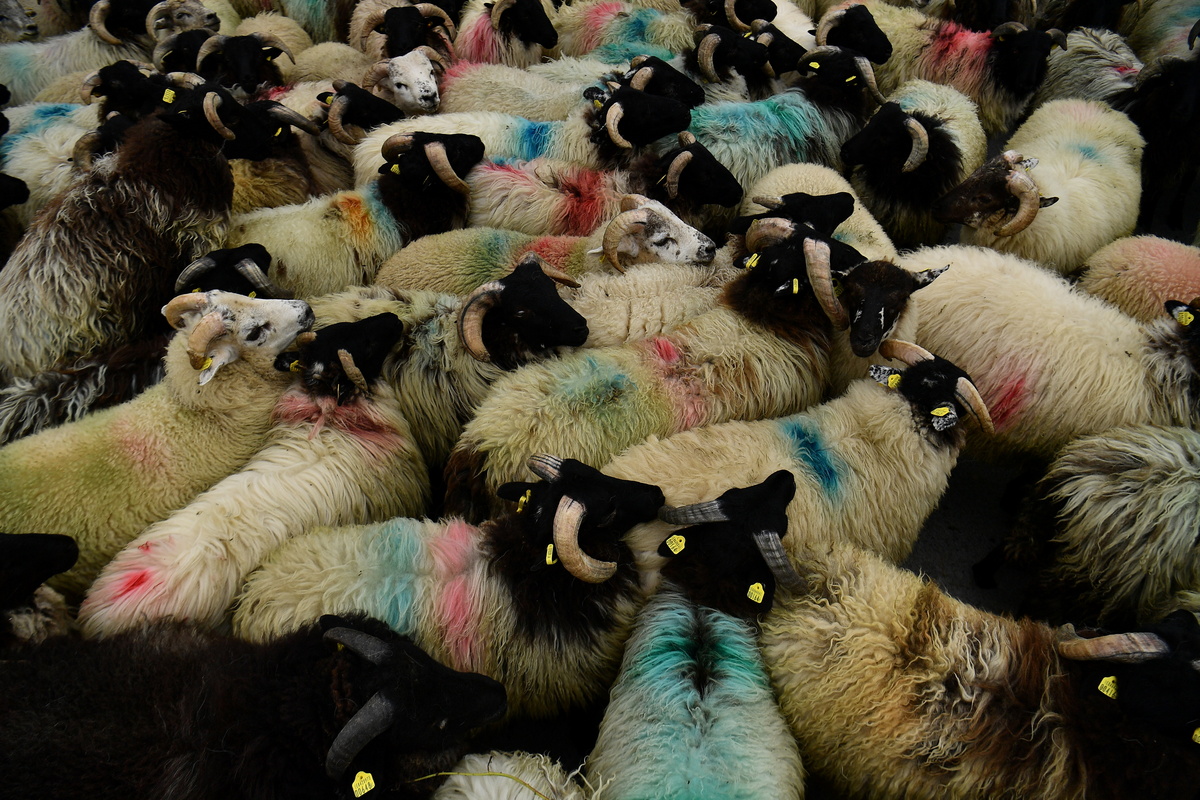
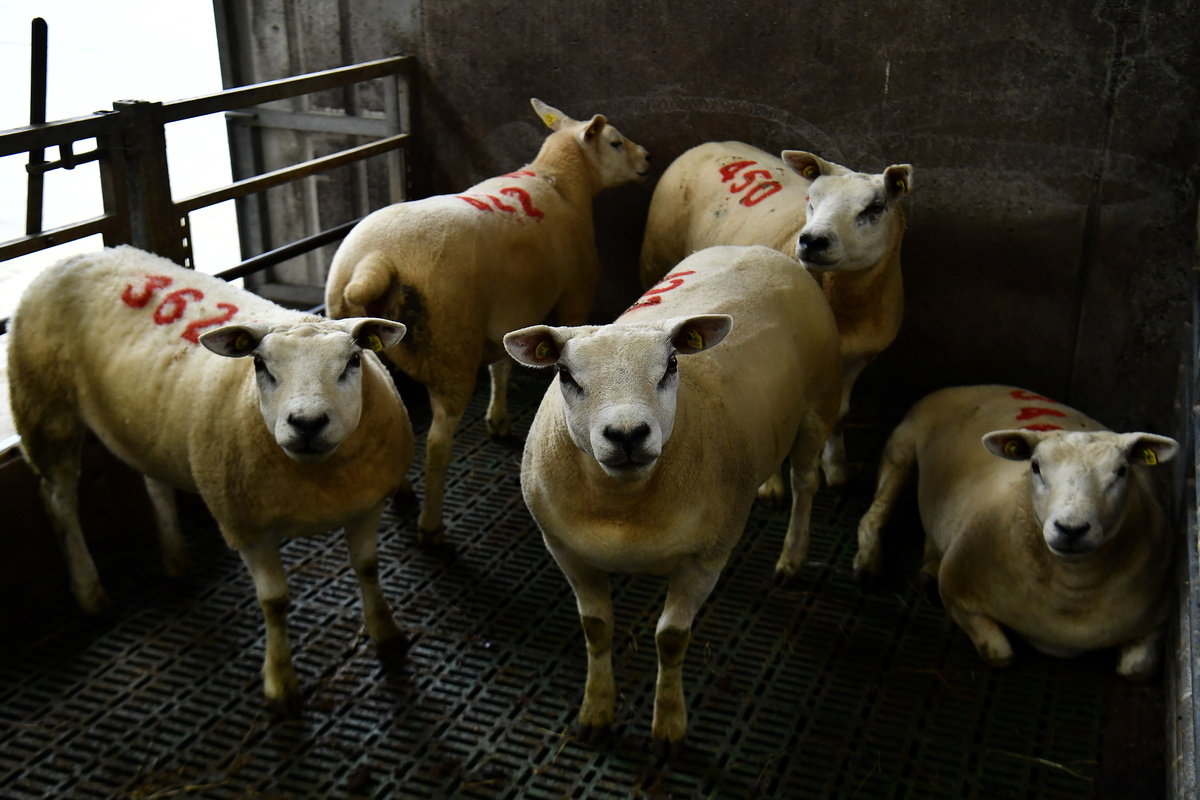
Sheep are herded at the Teagasc Agriculture and Food Development Authority in it's Mellows Campus in Athenry, Ireland, August 31, 2021. REUTERS/Clodagh Kilcoyne
The technology has caught the imagination of farming groups and politicians, who insist that stringent targets for cutting greenhouse gases like methane should not mean a reduction in the size of the Irish farming sector.
After growth of over 10% in the past 10 years, Ireland has 7.4 million cattle and is one of the largest exporters of beef and dairy in Europe.
Its per capita output of methane - which has a higher heat-trapping potential than CO2 - is by far the highest in the European Union, according to the Climate Watch database.
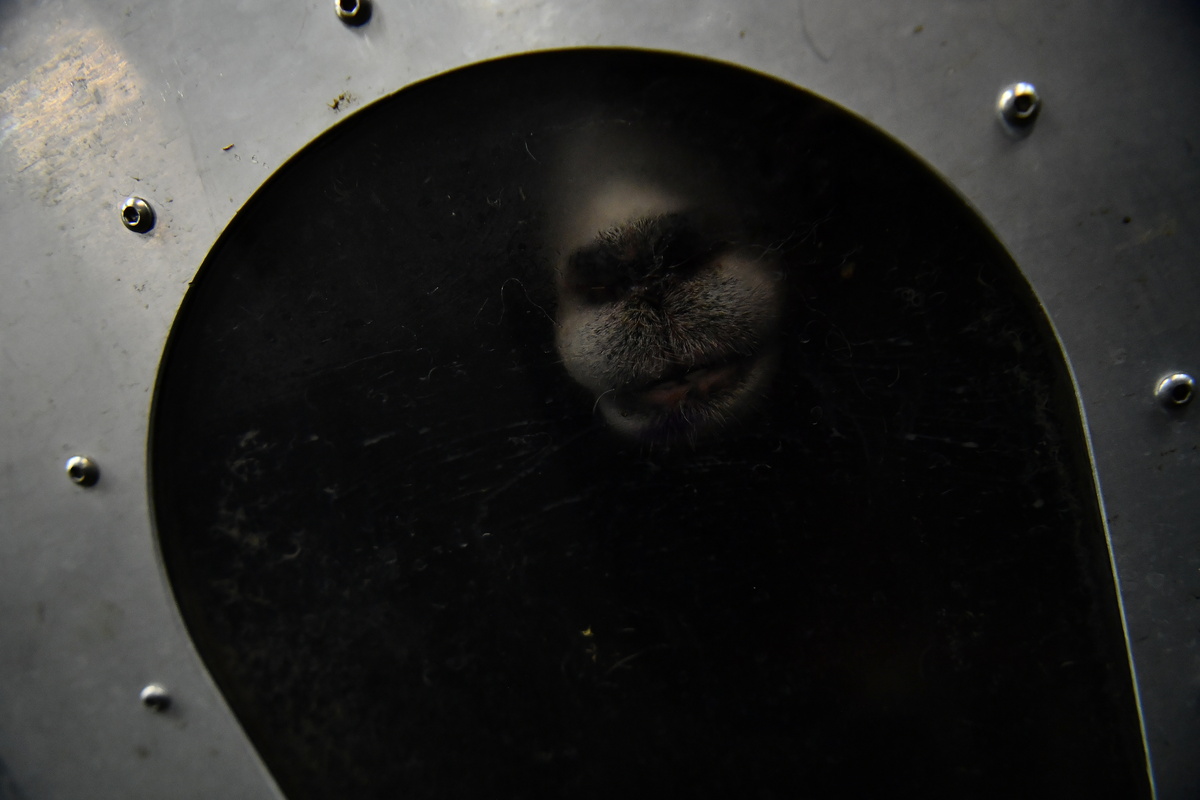
A sheep looks out from a portable accumulation chamber where Emily Roskam, a PhD Walsh Scholar at Teagasc, measures the methane emissions of the sheep, after it spends an hour in the methane measuring chamber at the end of a Seasolutions trial at the Teagasc Agriculture and Food Development Authority in it's Mellows Campus in Athenry, Ireland, September 6, 2021. REUTERS/Clodagh Kilcoyne
The colourless and odourless gas leaks from waste dumps, oil and gas infrastructure and the digestive systems of cattle and sheep.
At the COP26 U.N. Climate Change conference in Glasgow this month, Ireland signed up to a pledge to cut global output of methane by 30% by 2030 from 2020 levels.
But government ministers insist that will mostly be achieved through a 50% cut in non-agricultural methane, with a reduction of just 10% in agricultural methane by 2030.
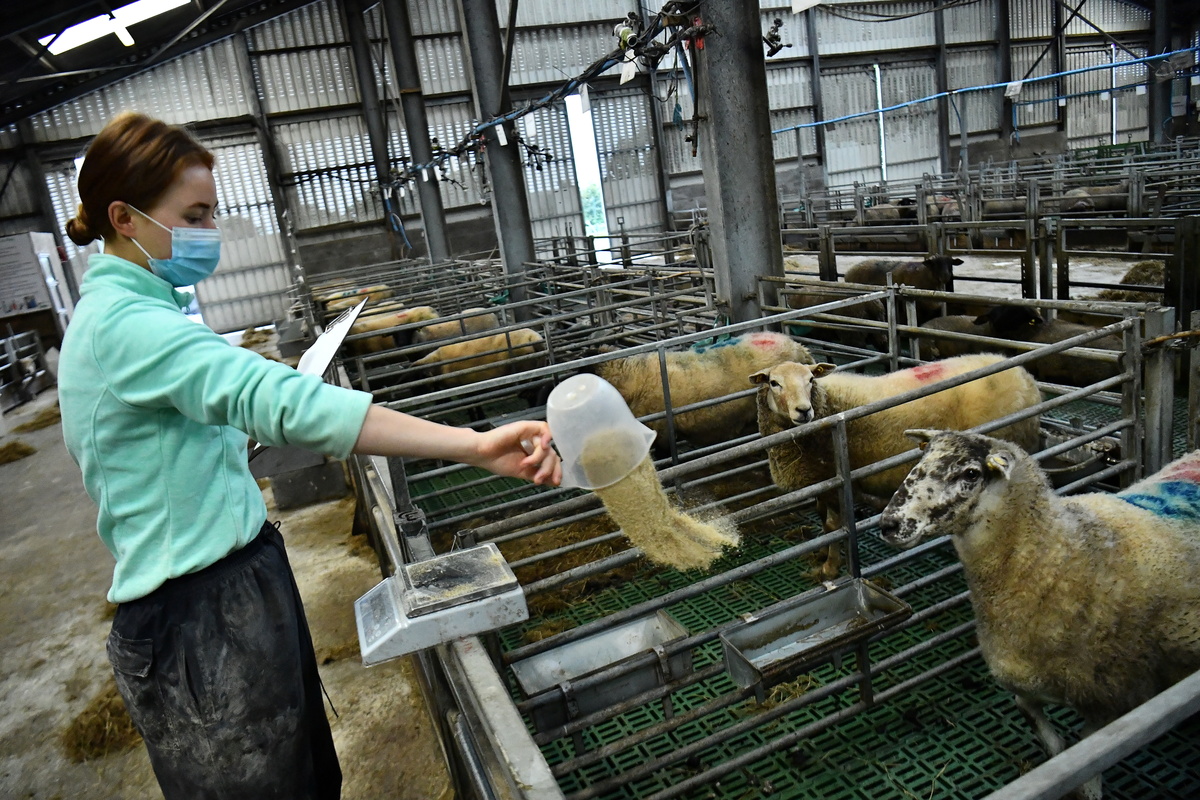
Emily Roskam, a PhD Walsh Scholar at Teagasc, feeds sheep during a Seasolutions trial where sheep are fed seaweed extract to reduce their methane emissions at the Teagasc Agriculture and Food Development Authority in it's Mellows Campus in Athenry, Ireland, August 31, 2021. REUTERS/Clodagh Kilcoyne
They point to seaweed feed additives as a way to curb emissions without downsizing the herd - with a reduction in the average age of slaughter of beef cattle and genetics research as other possible solutions.
Chemicals company Royal DSM says a rival food additive it produces can cut methane output by around 30%. The company said it had received regulatory approval in Brazil and Chile and is seeking approval in the European Union.
But not everyone is convinced the technology can meet the target.
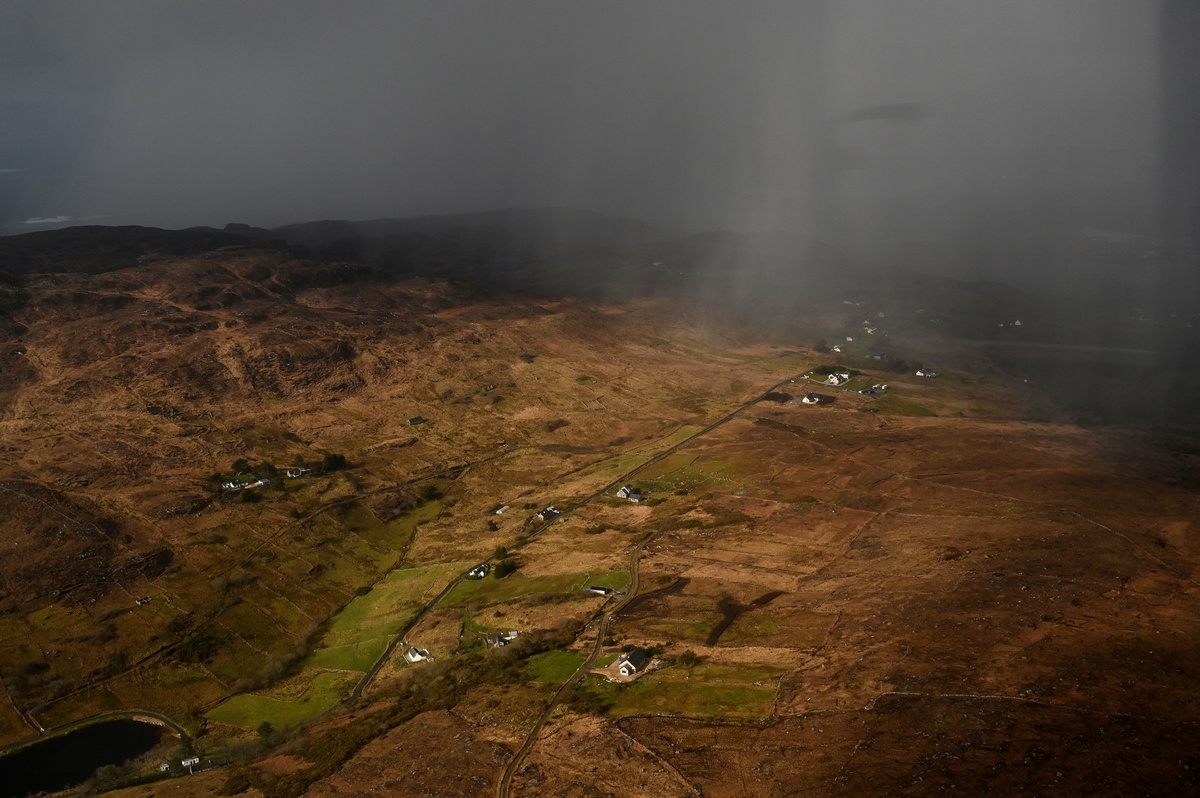
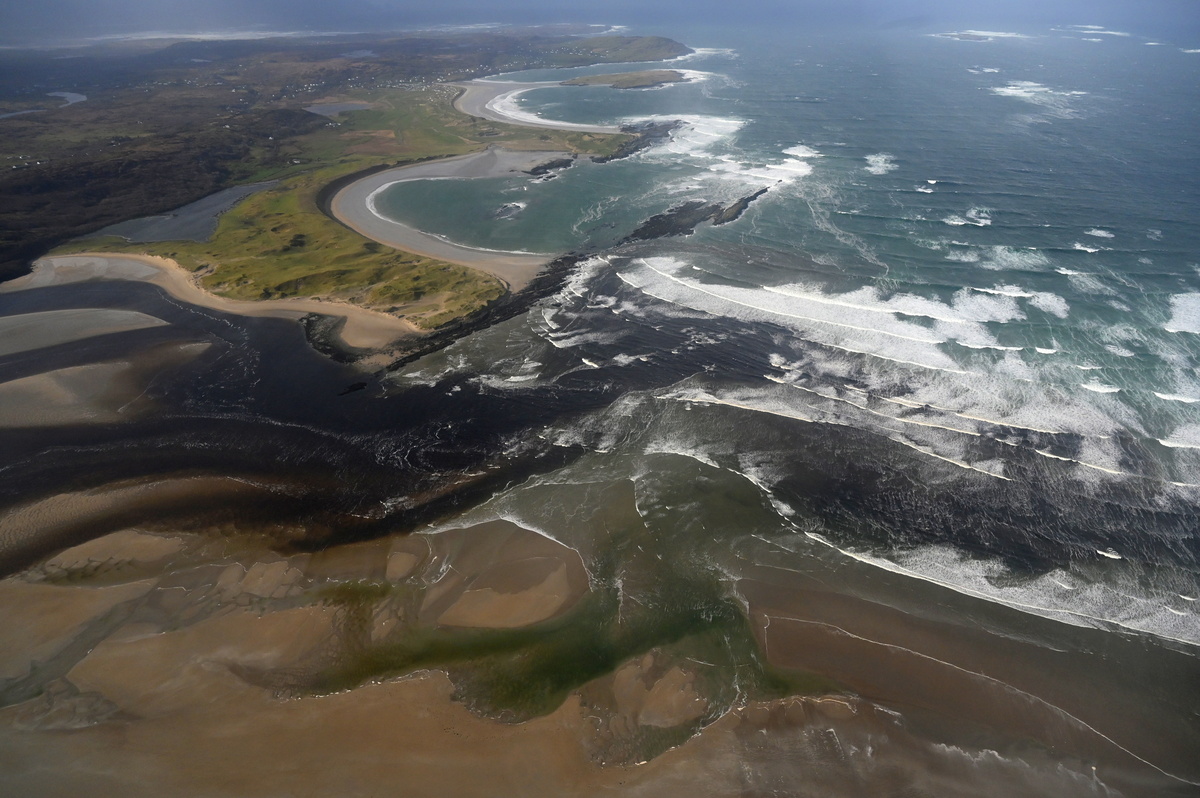
Rain falls over the Donegal coastline near County Donegal, Ireland, March 11, 2021. REUTERS/Clodagh Kilcoyne
"Scaling up these solutions takes time. We don't have time," said Sadhbh O'Neill, lecturer in climate policy and environmental politics at Dublin City University, a vocal critic of industry attempts to rely on technology rather than address the sustainability Ireland's agriculture model.
SCALING UP
The Irish researchers have tapped into a network of seaweed harvesters who are reviving a tradition mentioned in monastic writings as far back as the 5th century.
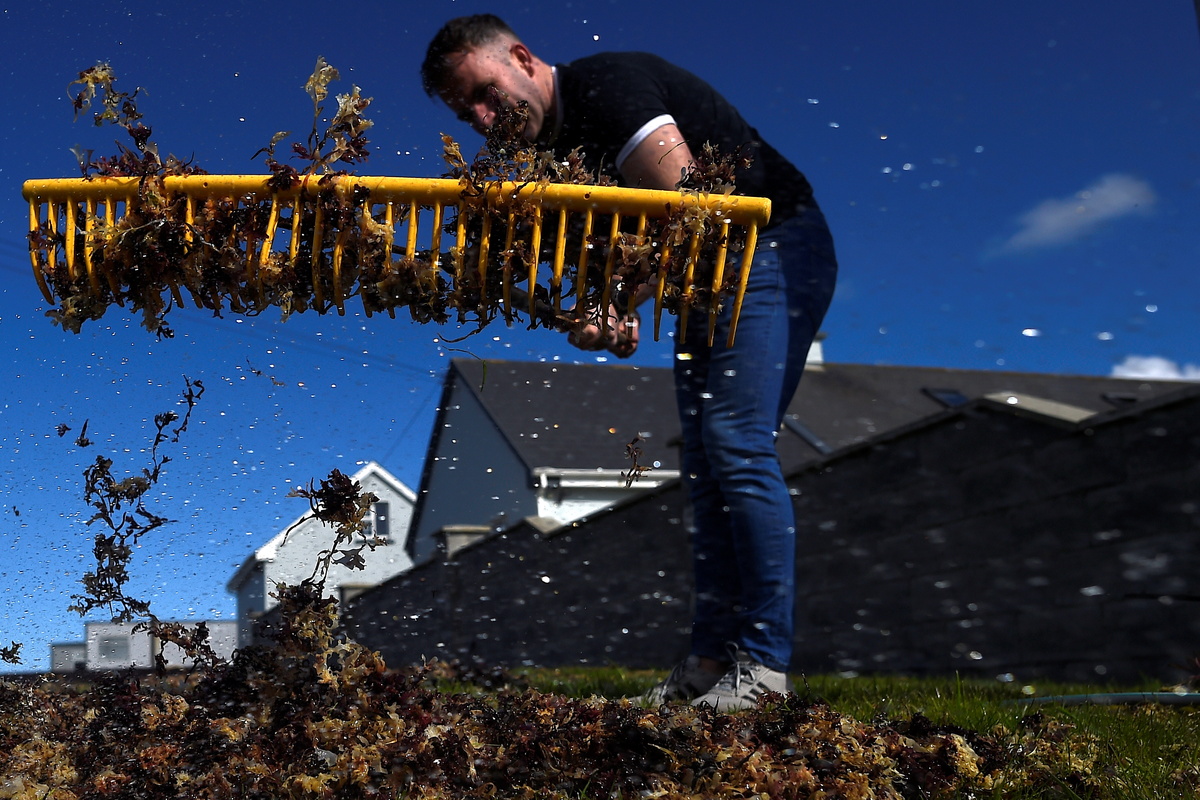
Evan Talty, the Managing Director of Wild Irish Seaweeds, turns the Carrigeen Moss (Chondrus Crispus) seaweed in a field on his seaweed farm where it has been laid out to dry in the sun, in the County Clare village of Quilty, Ireland, April 13, 2021. REUTERS/Clodagh Kilcoyne
But they do not yet have a plan to scale up production if tests are successful.
Some harvesters, who serve organic food and cosmetic markets, doubt the feed additives will be sufficiently lucrative with plenty of opportunities elsewhere.
"It's a huge market at the moment, seaweed is really thriving," said Evan Talty, managing director at Wild Irish Seaweeds, who has revived harvesting techniques used by his grandfather and focuses on food and skin care products. The methane additive market is "not on our radar", he said.
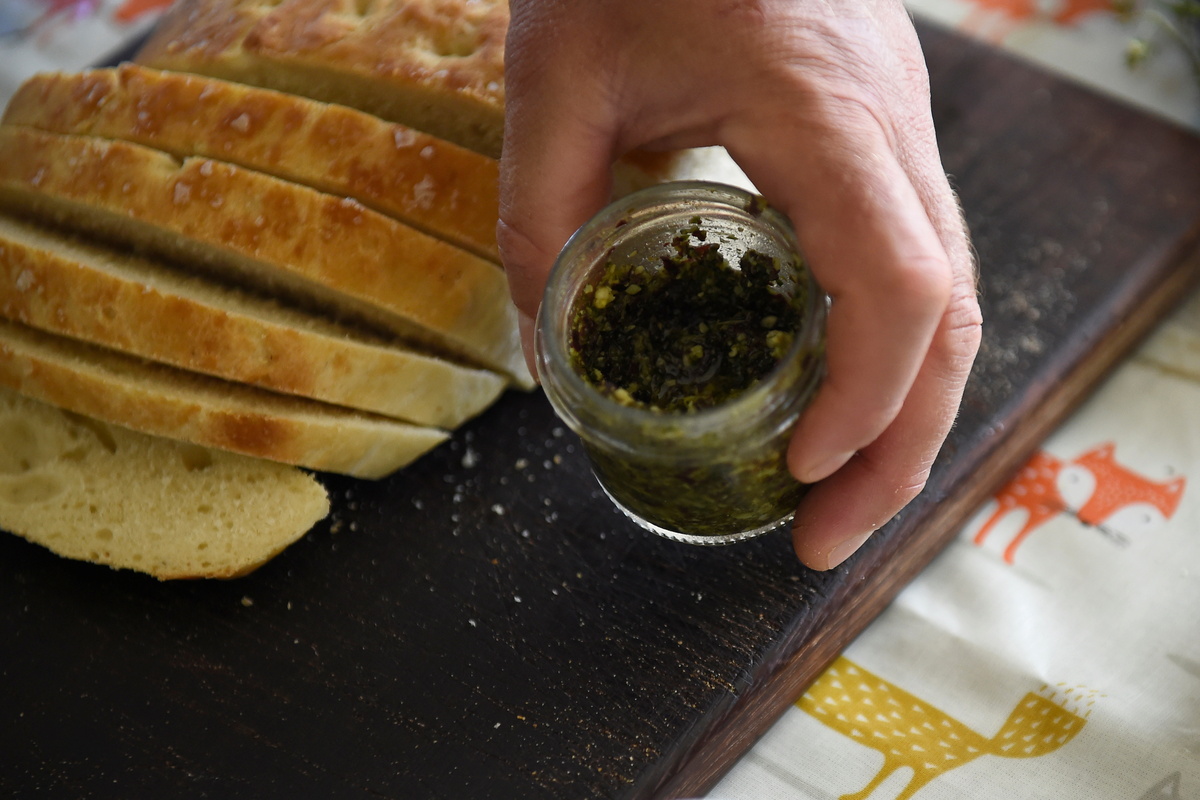
David O'Halloran picks up a pot of seaweed pesto which he has made with his wife Jenny O'Halloran, as part of a line of products that their seaweed company Blath na Mara sells using seaweed that they have harvested, as he makes lunch for his family in their home on Inis Mor of the Aran Islands, Ireland, April 28, 2021. REUTERS/Clodagh Kilcoyne
Others are more hopeful.
"Everyone keeps an eye on it," said Jenny O'Halloran of Bláth na Mara, a small-scale hand harvester on Inis Mór island off Ireland's west coast.
"Maybe the future of that is actually farming seaweed, which I think has to be part of the conversation when it comes to the future of seaweed in Ireland," she said.
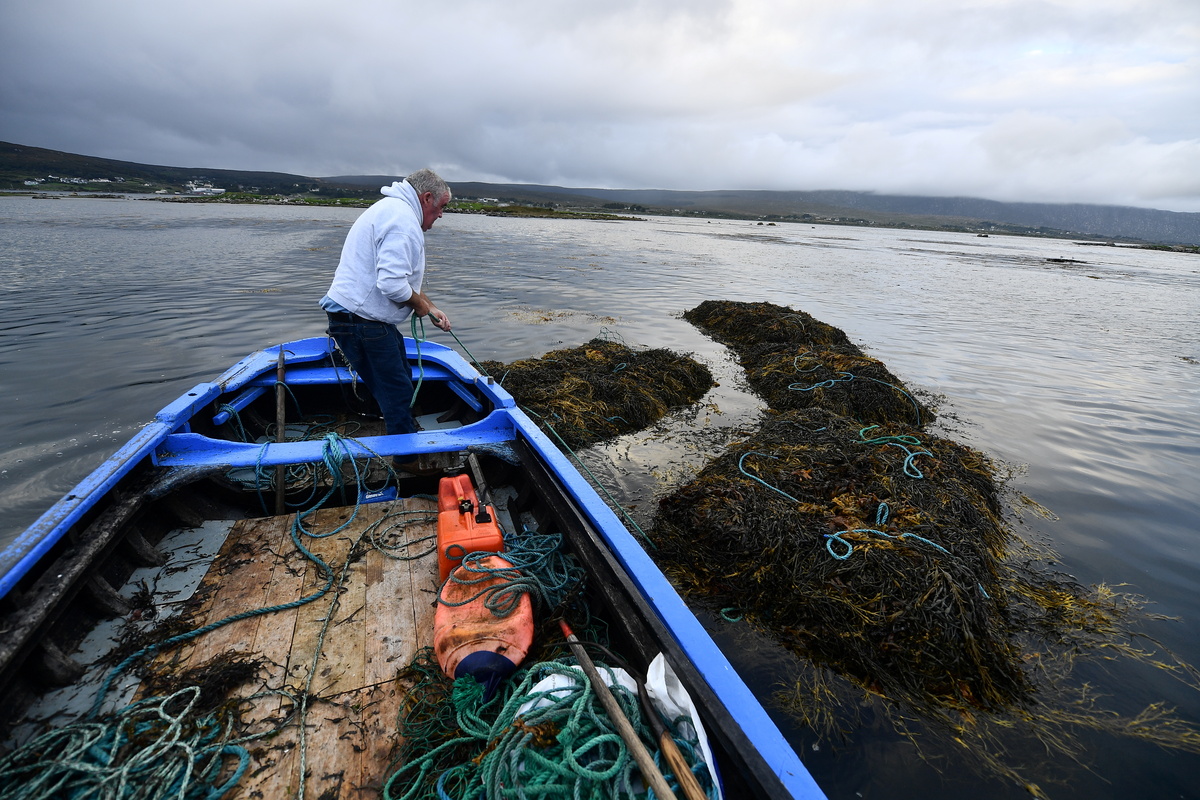
Coleman Dundass, a seaweed harvester, ties up three 'climin', each of which are a two-tonne seaweed bundle that he gathered, as he stands in his currach boat in Kilkieran, Ireland, September 10, 2021. REUTERS/Clodagh Kilcoyne
(Writing by Conor Humphries; Editing by Giles Elgood)
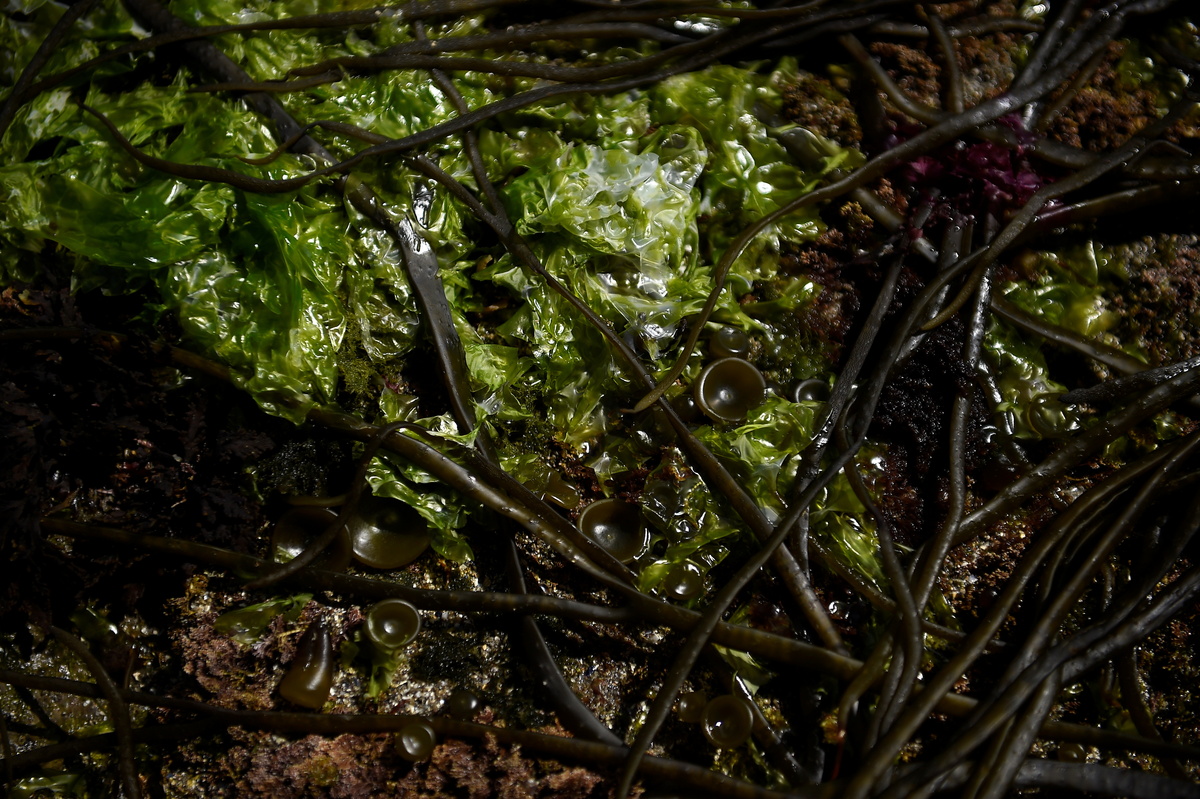
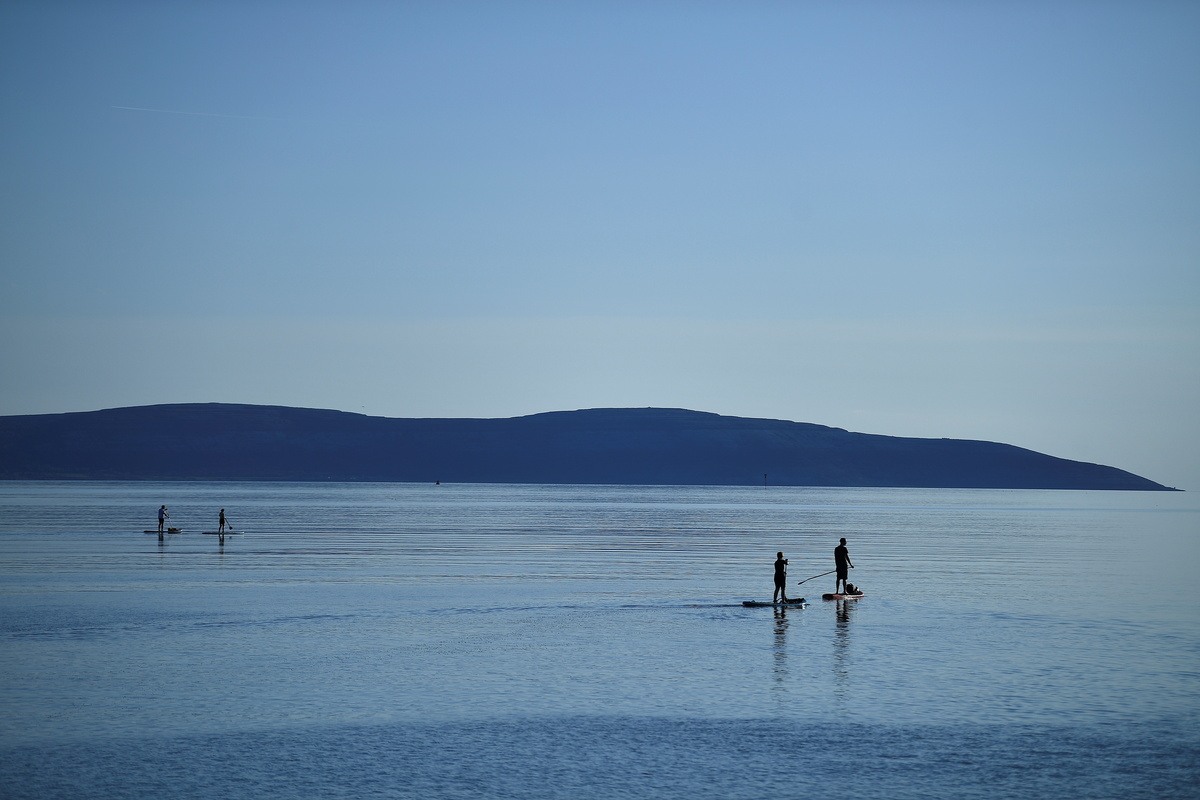
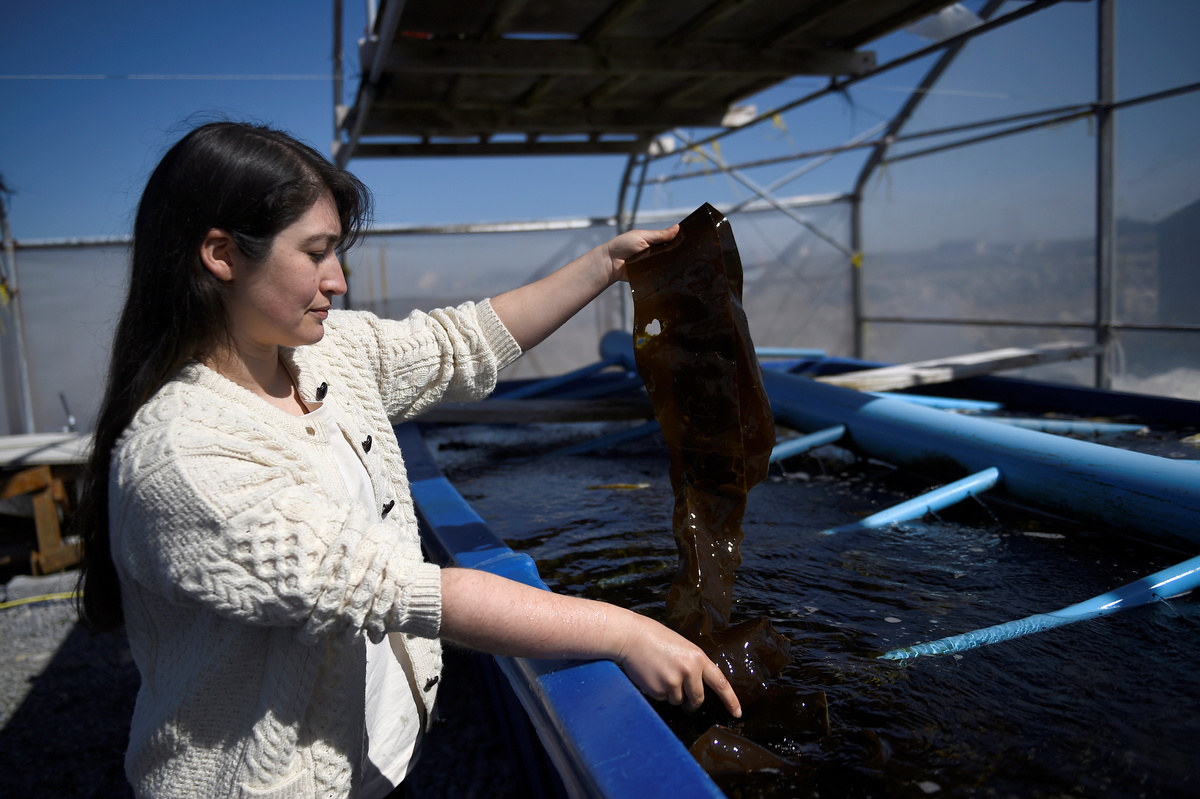
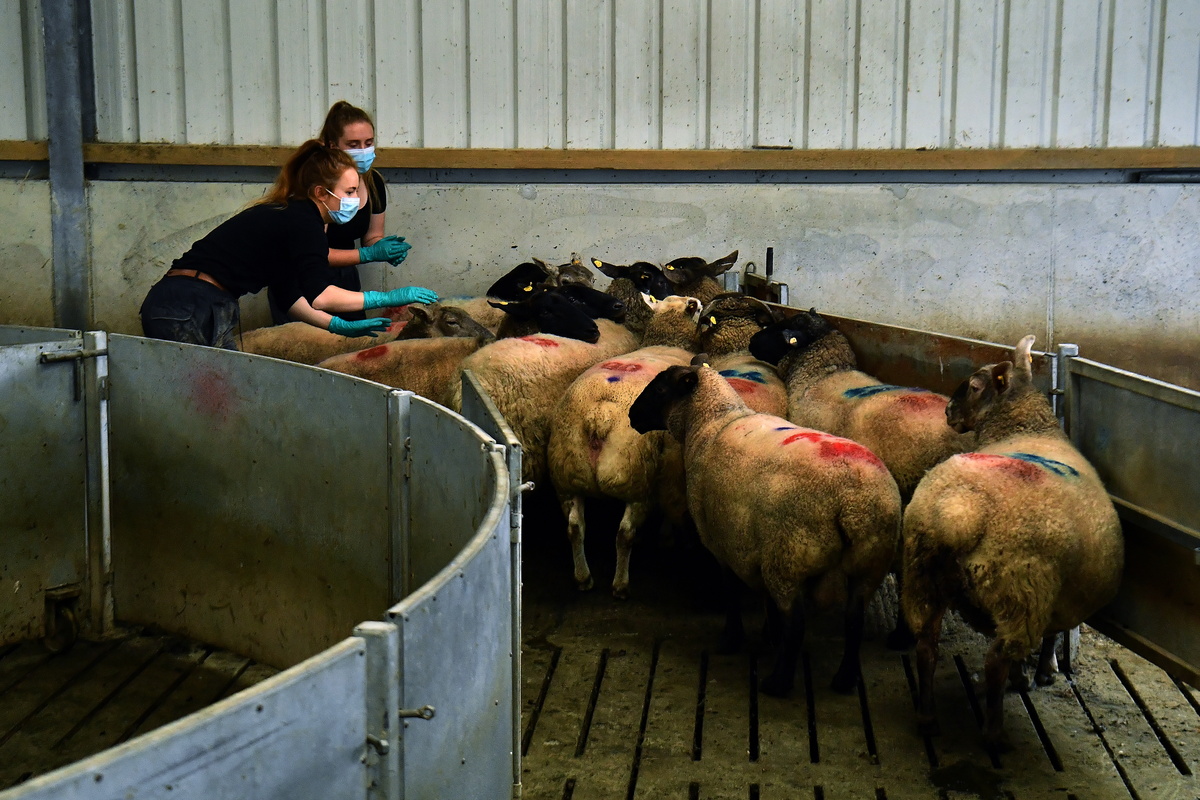
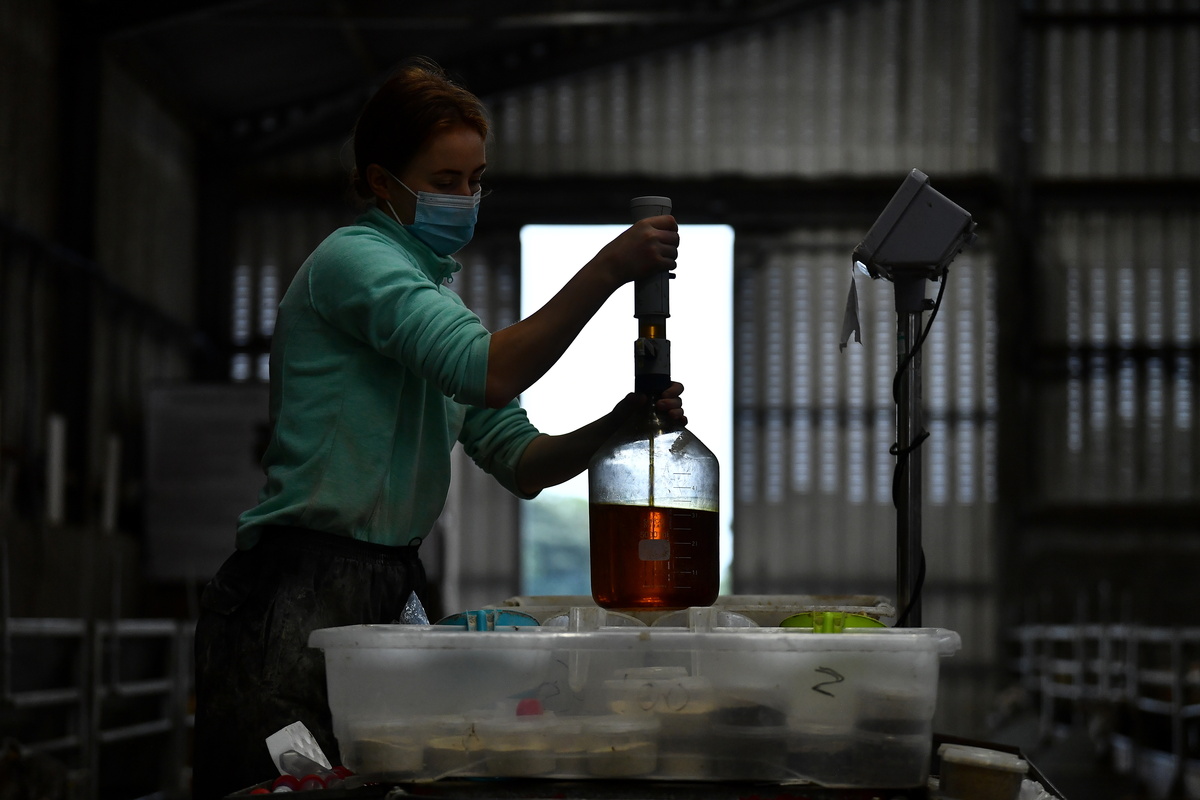
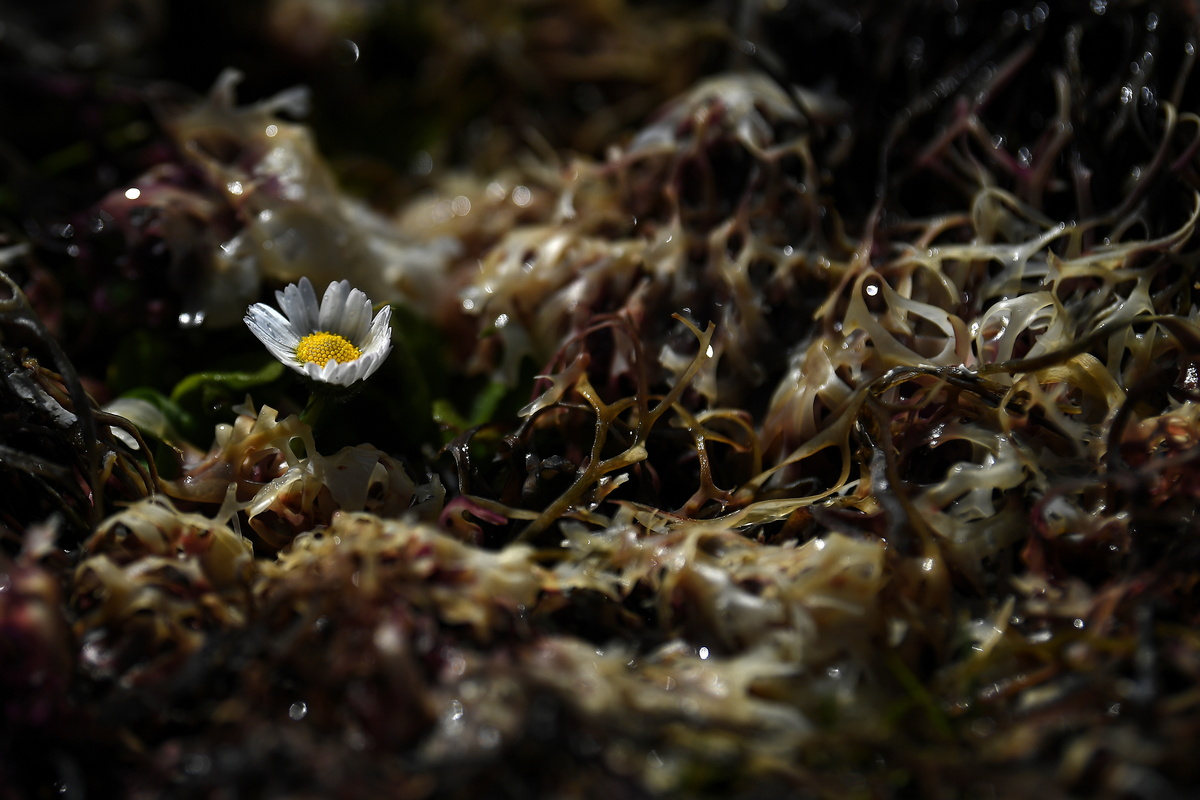
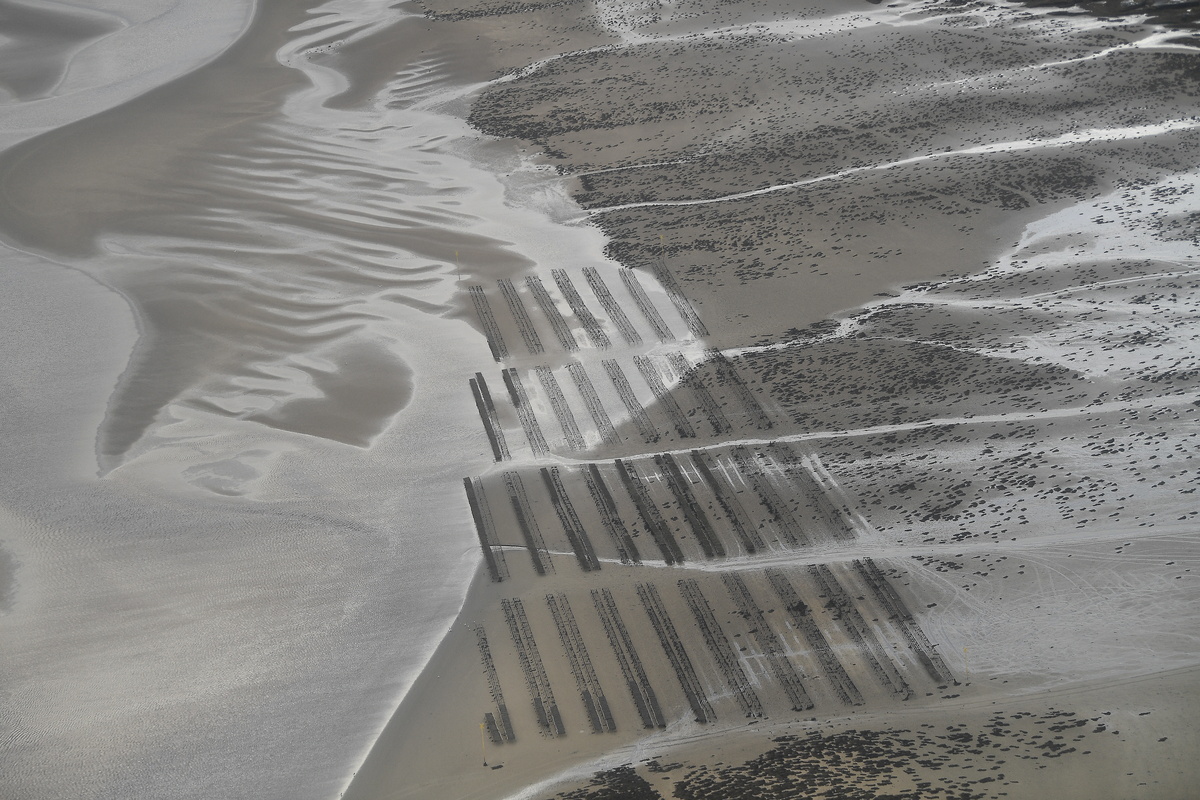
Sea Spaghetti seaweed (Himanthalia elongata) rests on top of Sea Lettuce (Ulva) while the tide is out, before it is harvested by the O'Halloran's of Blath na Mara seaweed company, on a rocky shore on Inis Mor of the Aran Islands, Ireland, April 28, 2021. REUTERS/Clodagh Kilcoyne Stand-up paddle boarders enjoy the sea in Galway bay with a view of the Burren karst landscape, seen from Galway, Ireland, April 13, 2021. REUTERS/Clodagh Kilcoyne Sinead O'Brien, the founder of Mungo Murphy's Seaweed Company, holds up a piece of kelp (laminaria) taken from a tank where abalone feed on it at her integrated multitrophic aquaculture farm where she grows the high-value abalone over a five year period for export at her boutique business in Baile na hAbhann, Ireland, April 15, 2021. REUTERS/Clodagh Kilcoyne Emily Roskam and Sarah Woodmartin, both PhD Walsh Scholars at Teagasc, shepherd sheep out of a holding pen towards the methane measuring chambers towards the end of a Seasolutions trial where sheep were fed an extract of seaweed to reduce their methane REUTERS/Clodagh Kilcoyne Emily Roskam, a PhD Walsh Scholar at Teagasc, takes measurements on top of methane chambers towards the end of a Seasolutions trial where sheep are fed seaweed to reduce their methane emissions at the Teagasc Agriculture and Food Development Authority sheep research centre in Athenry, Ireland, September 6, 2021. REUTERS/Clodagh Kilcoyne Sheep stand together in the Teagasc Agriculture and Food Development Authority in it's Mellows Campus in Athenry, Ireland, August 31, 2021. REUTERS/Clodagh Kilcoyne A cow stands near a rocky field at Coral Strand, in Carraroe, Ireland, April 15, 2021. REUTERS/Clodagh Kilcoyne David O'Halloran, who runs the seaweed company Blath na Mara with his wife Jenny O'Halloran, harvests Sea Spaghetti seaweed (himonthalia elongata) on a rocky shore on Inis Mor of the Aran Islands, Ireland, April 28, 2021. REUTERS/Clodagh Kilcoyne Emily Roskam, a PhD Walsh Scholar at Teagasc, prepares castor oil to add to sheep feed during a Seasolutions trial where sheep are fed seaweed extract to reduce their methane emissions at the Teagasc Agriculture and Food Development Authority in it's Mellows Campus in Athenry, Ireland, August 31, 2021. REUTERS/Clodagh Kilcoyne A daisy peeps through a bed of Carrageen, commonly called Irish Moss (Chondrus Crispus), seaweed laid out in a field after being harvested as Evan Talty, owner of Wild Irish Seaweeds, sprays it with water at his seaweed farm in Quilty, Ireland, April 13, 2021. REUTERS/Clodagh Kilcoyne A coastline is pictured in County Donegal, Ireland, March 11, 2021. REUTERS/Clodagh Kilcoyne An oyster farm is pictured on the coastline in County Donegal, Ireland, March 11, 2021. REUTERS/Clodagh Kilcoyne
Sign up to read this article
Read news from 100’s of titles, curated specifically for you.