Iraqi forces have entered Mosul for the first time since 2014, a milestone in the effort to reclaim the city that heralds a fierce urban battle in the weeks ahead.
Baghdad said its elite troops had breached the eastern suburbs of Islamic State’s last major urban stronghold in Iraq, creating a toe-hold in the Jdeidet al-Mufti neighbourhood after two weeks of combat.
Special forces units also entered the neighbourhood of Gogjali inside the city’s limits and took control of the local state television building.
“This is a good sign for the people of Mosul because the battle to liberate Mosul has effectively begun,” Lt Gen Talib Shaghati was quoted by Reuters as saying.
Mosul was conquered in a lightning Isis advance in the summer of 2014, falling to the militants along with much of the surrounding Nineveh plains.
Two weeks ago, Iraq announced a major campaign to liberate the city, the last in a line of urban bastions that had been taken by Isis and reclaimed over the past year, including Tikrit, Ramadi, and Fallujah.
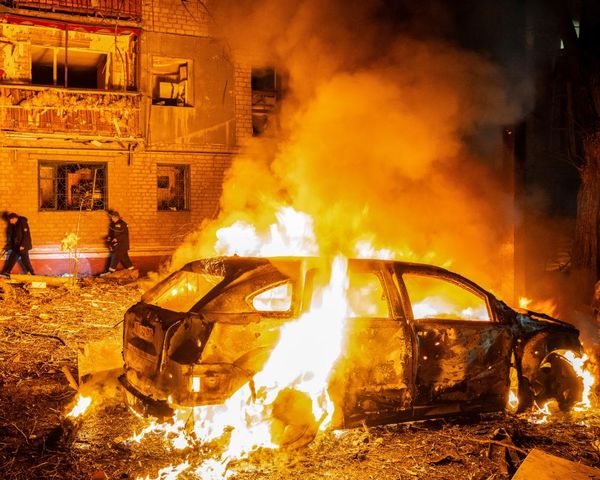
Speaking by telephone from the eastern edge of the city on Tuesday evening, Abu, who asked the Guardian to withhold his real name and exact location for fear of retaliation, said mortars were falling on civilian areas.
“Mortars have been falling throughout the day, two hit our yard, two outside our house and one hit the back of the house. Everyone is hiding under the staircase. Because of the intensity of the fighting we have not been able to eat anything, it is too dangerous to go and fetch food. The world is being destroyed around us.
“I have never seen this level of fighting. There are still around 40,000 civilians in my neighborhood. Last night fighting was for two hours but today Daesh [Isis] fought from 7.30am until an hour ago. In our street I think there are still around 300 people. There is no electricity and running water right now.”
Abu’s wife said: “We have not eaten anything today. Our future is lost and we don’t know what is going to happen to us. I wish these mortars and airstrike would stop because there are too many civilians in our neighbourhood.”
The battle for Mosul will be the toughest test yet for Iraqi forces, who are converging on the city alongside Kurdish Peshmerga soldiers, Sunni tribal fighters, and Shia militias tasked with blocking a potential retreat for the militants into the eastern desert of Syria. The coalition is backed by American air power and military advisers on the ground.

The estimated number of civilians inside Mosul has fluctuated between 1 million and 2 million people, making it by far the largest city under Isis control and a key flank of the group’s self-proclaimed but quickly receding caliphate.
Concerns have mounted over the fate of the civilians, with Isis standing accused of using them as human shields to slow the alliance’s advance. The UN expects tens of thousands to flee the fighting in the coming weeks.
But the fresh progress in the battle, led by Iraq’s most elite counter-terrorism division, appears to signal a new phase in the conflict, moving from the sparsely populated villages on the outskirts of Mosul to heavily mined terrain inside the city that will likely be marked by heavy street fighting and urban combat.
“We are currently fighting battles on the eastern outskirts of Mosul,” the counter-terrorism force’s Lt Gen Abdul Wahab al-Saidi told Reuters. “The pressure is on all sides of the city to facilitate entry to the city centre.”
A resident of the eastern al-Quds neighbourhood said: “We can see Daesh fighters firing towards the Iraqi forces and moving in cars between the alleys of the neighbourhood. It’s street fighting.”
The eastern half of Mosul, which is divided by the Tigris river, would be first to fall from Isis control, and the group is believed to have booby-trapped the bridges into western districts. Isis is believed to have 5,000-6,000 fighters holed up in the city, though American officials have said in recent days that senior leaders of the group were attempting to flee.