Iraqi doctor bets on plasma treatment in search of COVID breakthrough
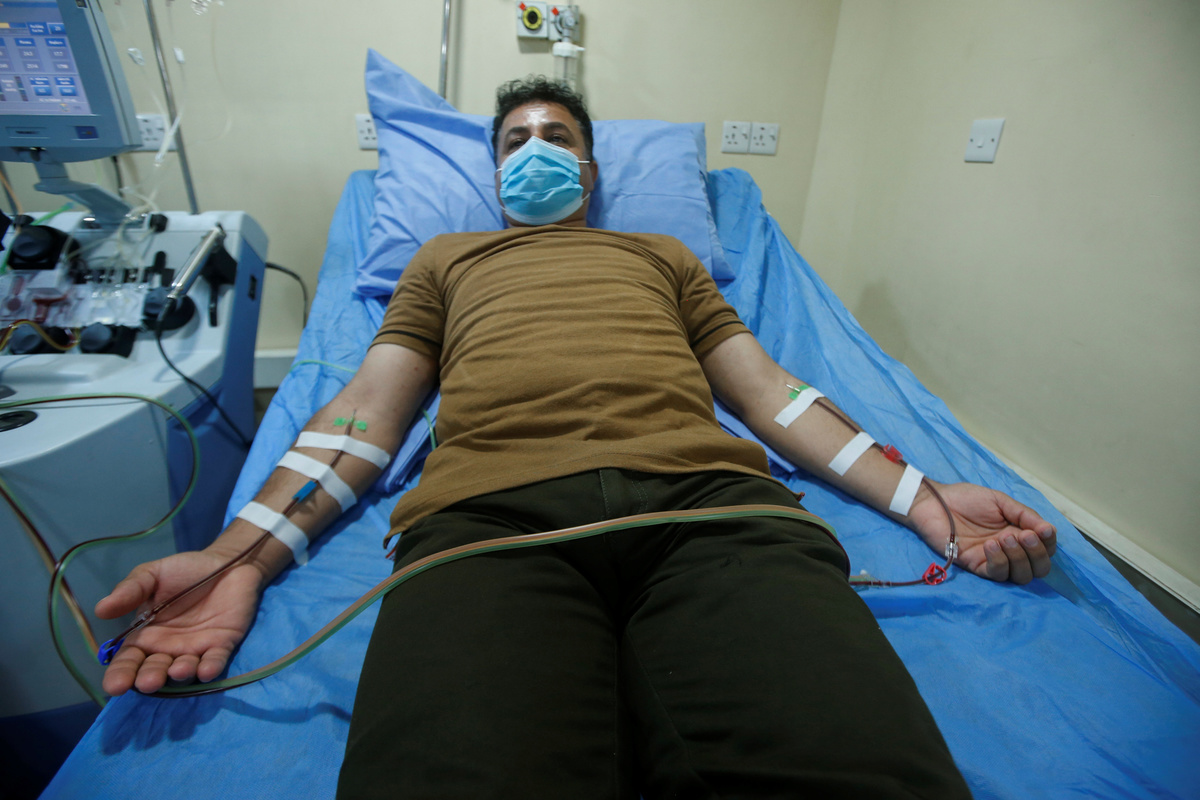
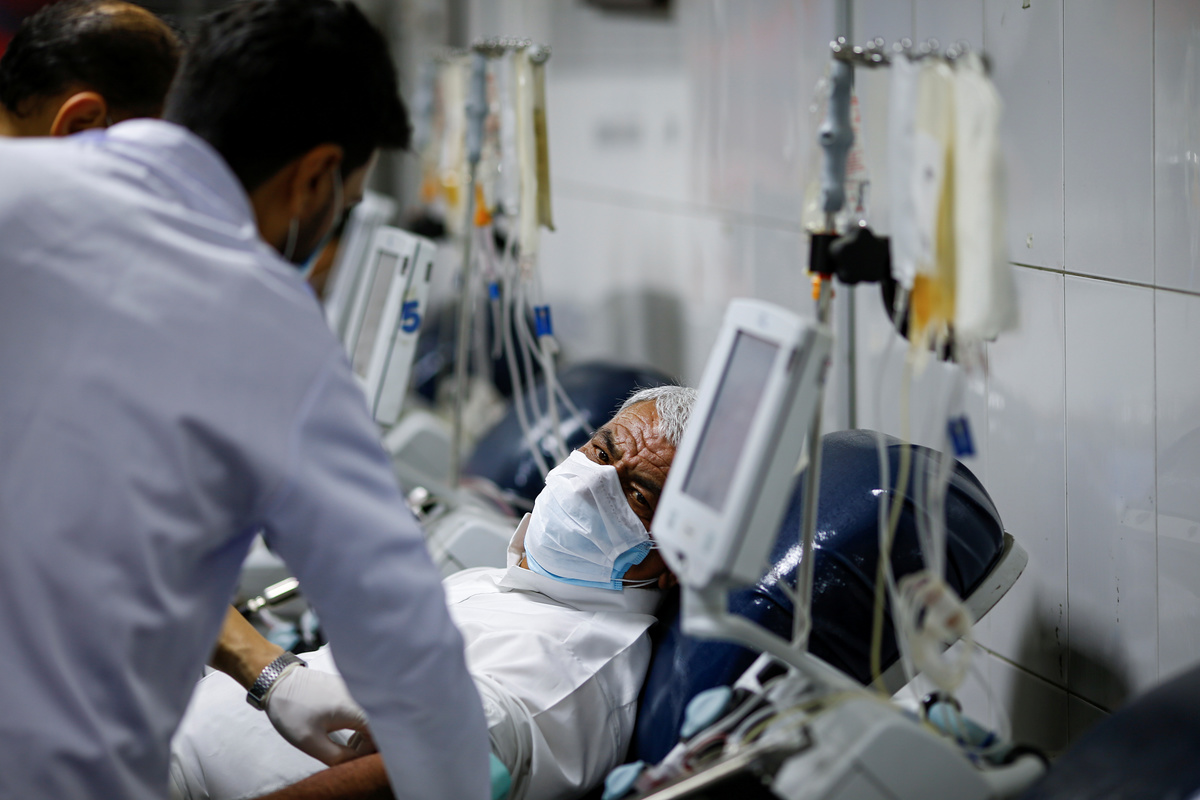
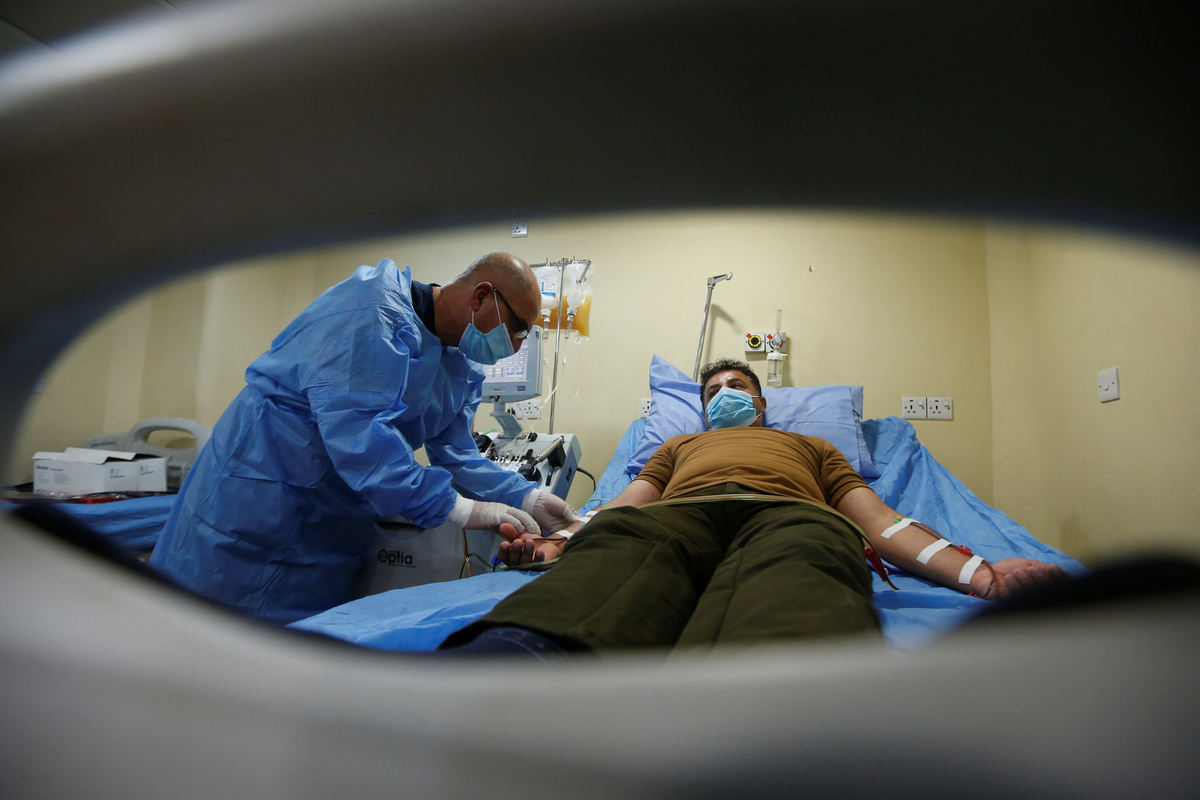
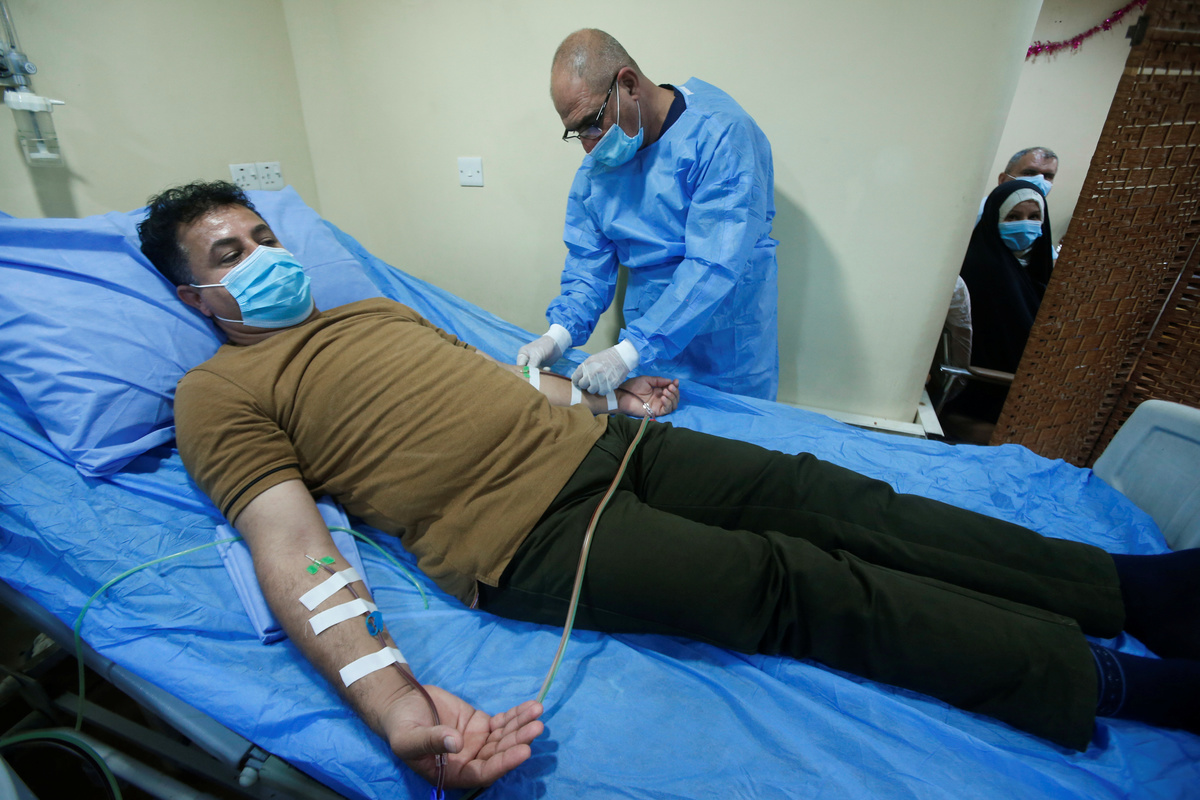
A man who has recovered from the coronavirus disease (COVID-19) wears a protective face mask as he donates his blood plasma to help critically ill patients at Basra Teaching Hospital in Basra, Iraq June 20, 2020. Picture taken June 20, 2020. REUTERS/Essam Al-Sudani
In a hospital ward in Iraq, doctor Ali Salam Abdullah and a smiling patient hold up a large blood bag full of the yellow liquid that he hopes will help turn the corner in cutting the country's coronavirus death rate.
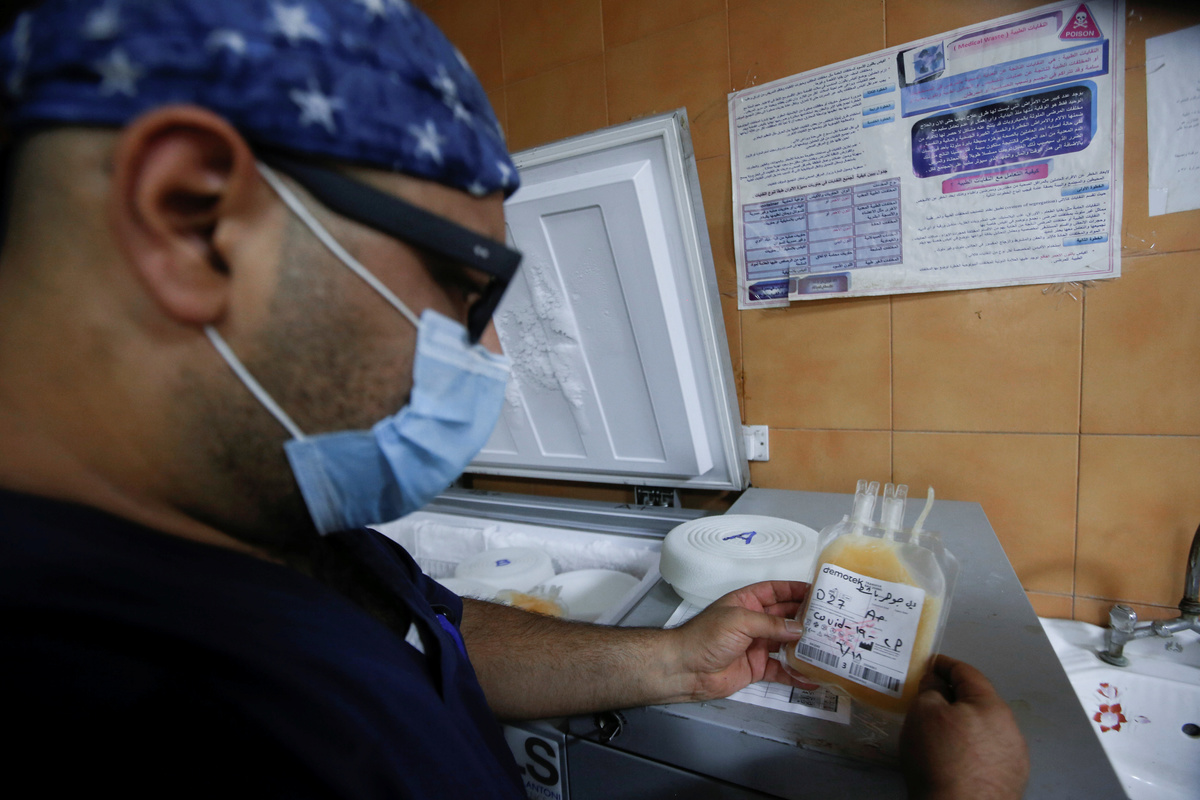
The liquid is plasma from a recently recovered patient, believed to be rich in virus antibodies and which immunologist Abdullah and his team in the southern city of Basra have been using to treat critical COVID-19 cases since April.
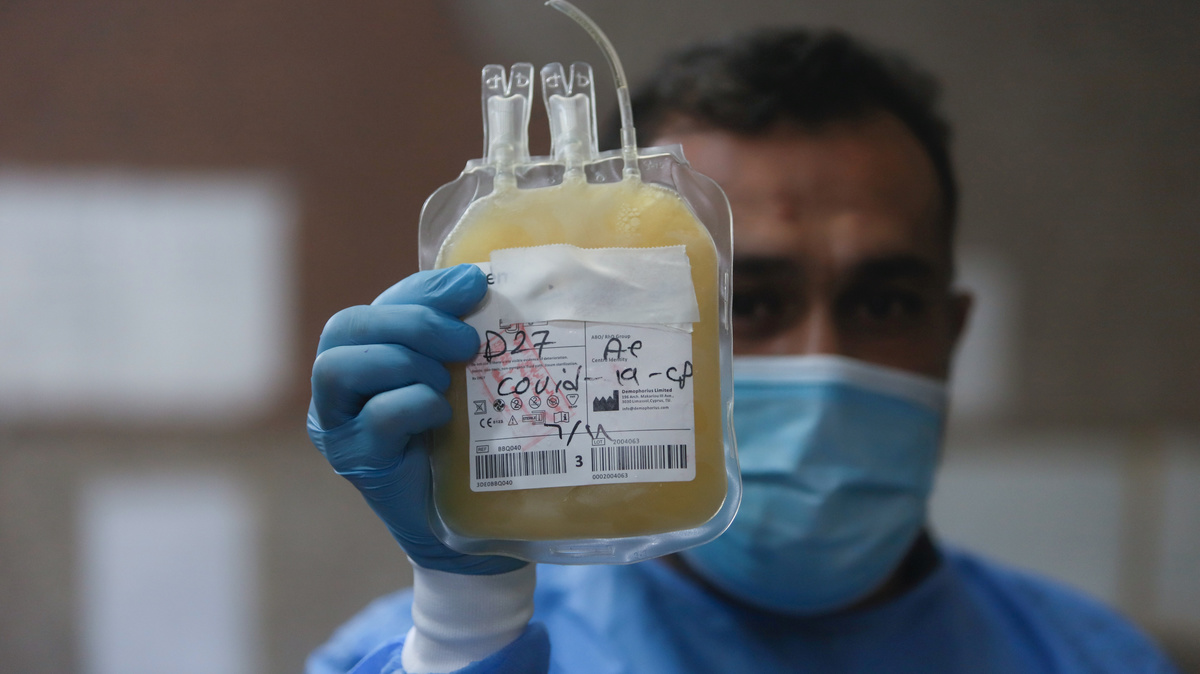
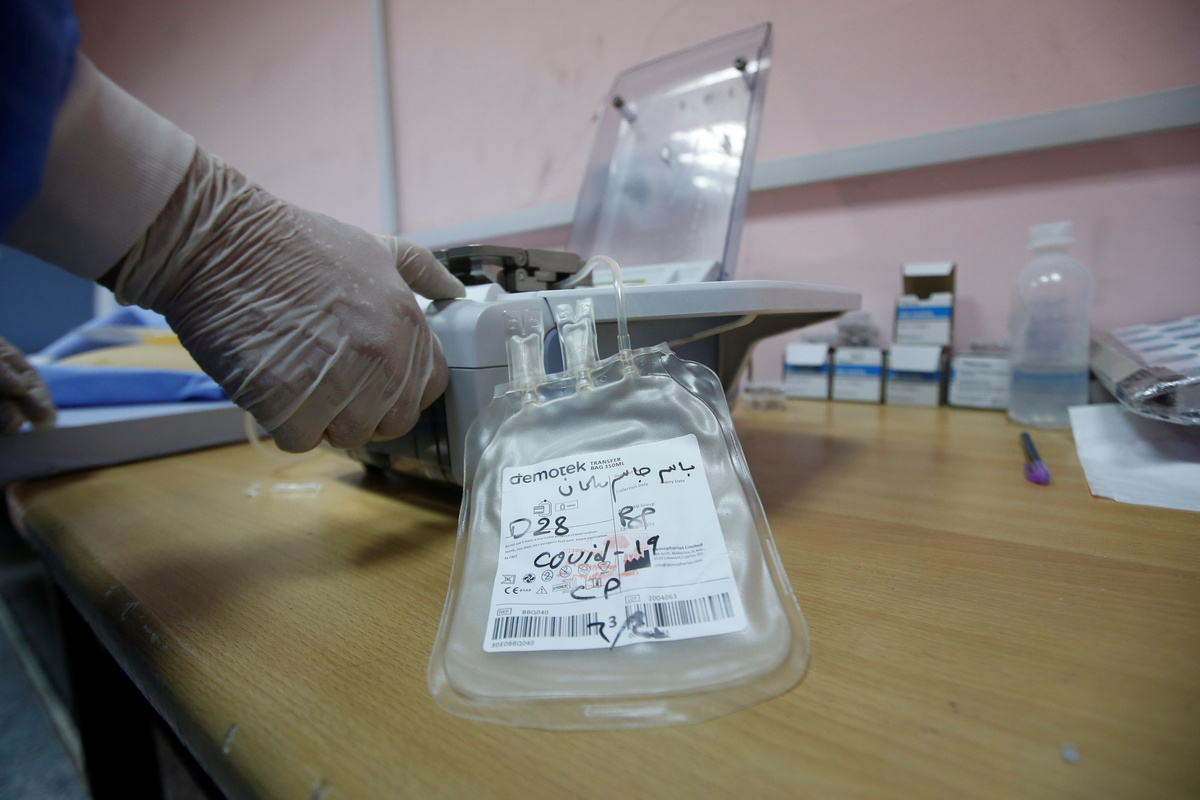
A nurse wearing a protective face mask and gloves shows blood plasma from a person who has recovered from the coronavirus disease (COVID-19), to be used to help critically ill patients, at a blood bank in Basra, Iraq June 20, 2020. Picture taken 20, 2020. REUTERS/Essam Al-Sudani
He now hopes to get health ministry support to use plasma as a generalised treatment before patients' conditions become life-threatening, but he says he is facing a shortage of donors.
"Among all recovered patients, only three percent (of eligible donors) volunteer," he said. "... If half of those recovered patients came, we would have enough (plasma) to treat patients in Basra until the end of the year."
While the effectiveness of plasma as a coronavirus treatment remains unclear, the health ministry is allowing it to be gathered at blood banks and used under certain conditions, while the global pharma industry is working to develop antibody-based therapies.
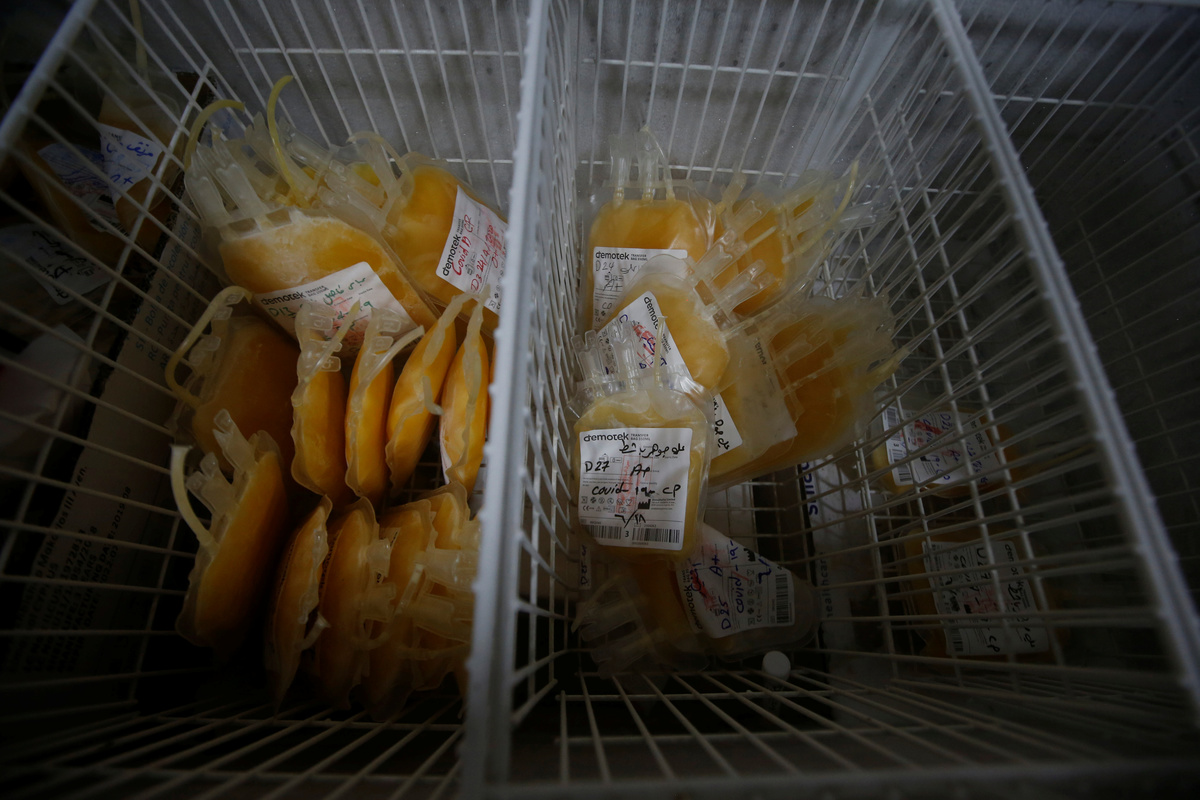
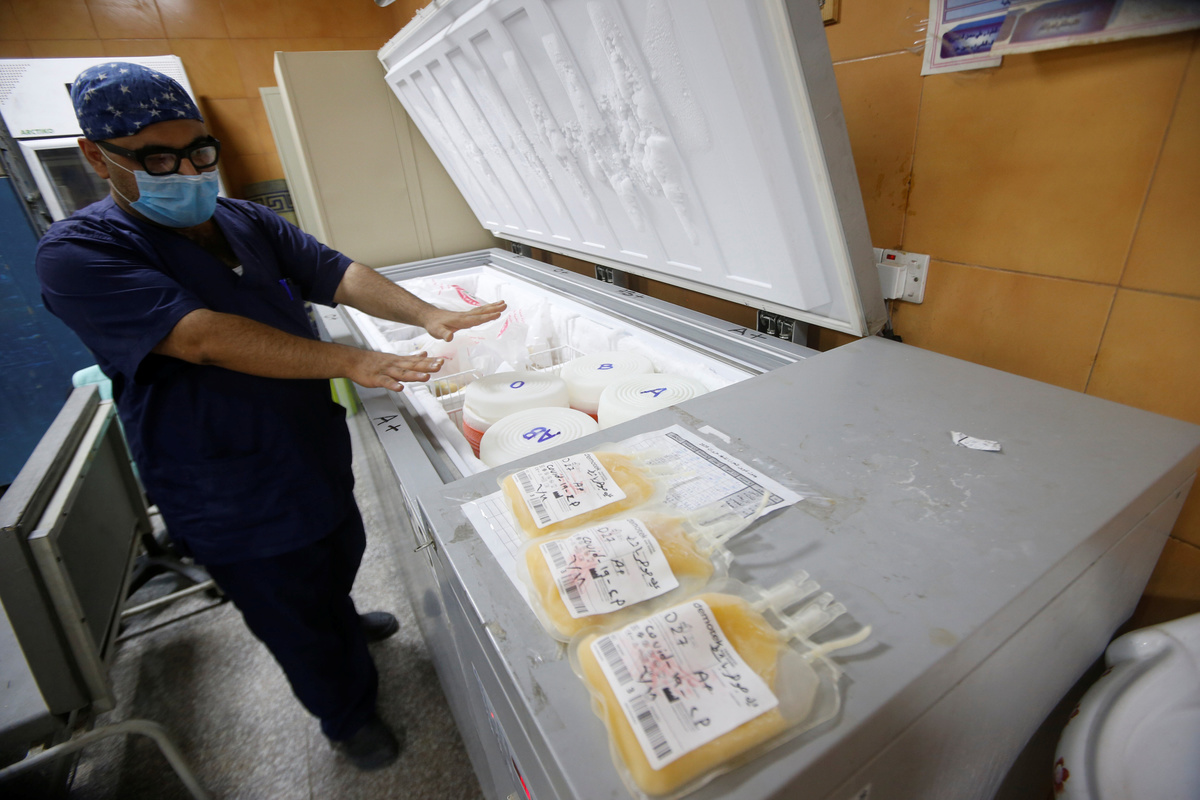
Packs with blood plasma from people who have recovered from the coronavirus disease (COVID-19), to be used for critically ill patients, are seen at a blood bank in Basra, Iraq June 20, 2020. Picture taken 20, 2020. REUTERS/Essam Al-Sudani
Abdullah is convinced that plasma helps patients' weakened immune systems fight the virus and, to compensate for the shortage of donors, is using a plasma exchange machine that injects replacement fluids to increase the yield per patient from the standard 400ml to up to 3000ml.
Once he has enough volunteers he says he will revert to standard extraction levels but for the time being, and as Iraq's COVID epidemic continues to spread, Abdullah is sticking to the higher-yield procedure.
He is hopeful his methods will eventually be vetted and adopted abroad.
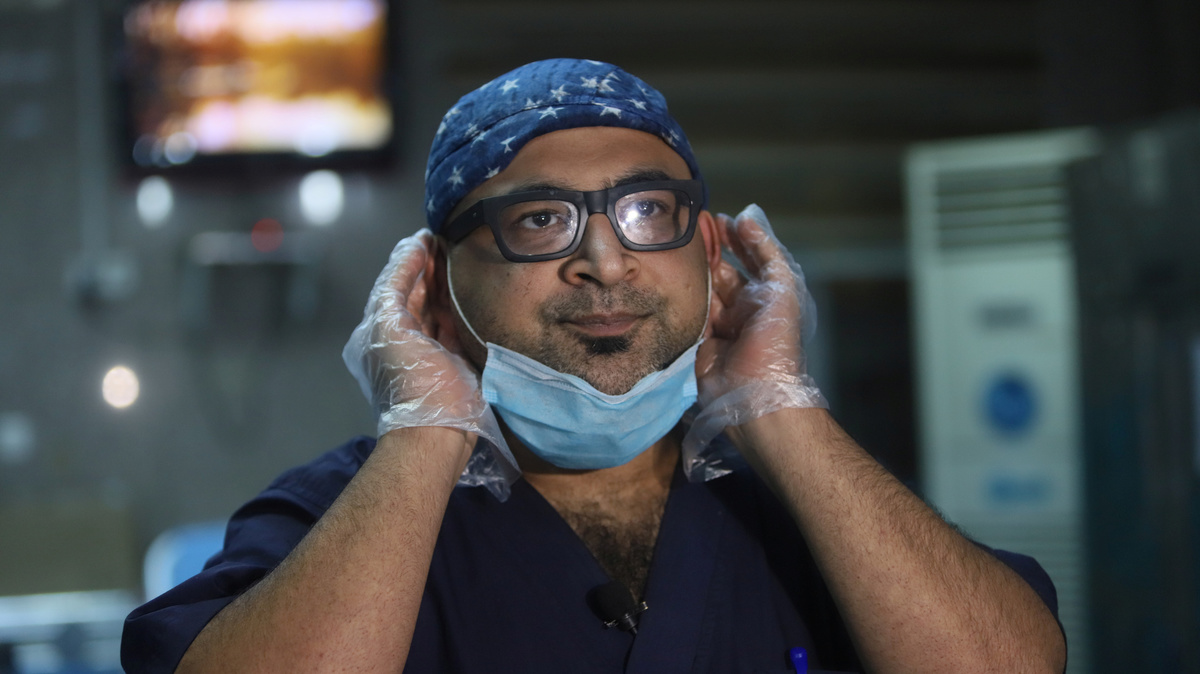
Ali Salam Abdullah, an Iraqi doctor, wearing a protective face mask holds blood plasma from a patient who has recovered from the coronavirus disease (COVID-19), to be used to help critically ill patients at the blood bank in Basra, Iraq June 20, 2020. Picture taken June 20, 2020. REUTERS/Essam Al-Sudani
"I encourage people to come and donate. But most people are afraid, I don’t know why," said donor Basim Jassem, before posing for pictures with his super-sized plasma bag.
"They take it from (us) and replace it with a replacement fluid. There is nothing special about it."
Iraq's COVID death toll stands at just over 1,250, with more than 34,500 people infected, according to health ministry figures.
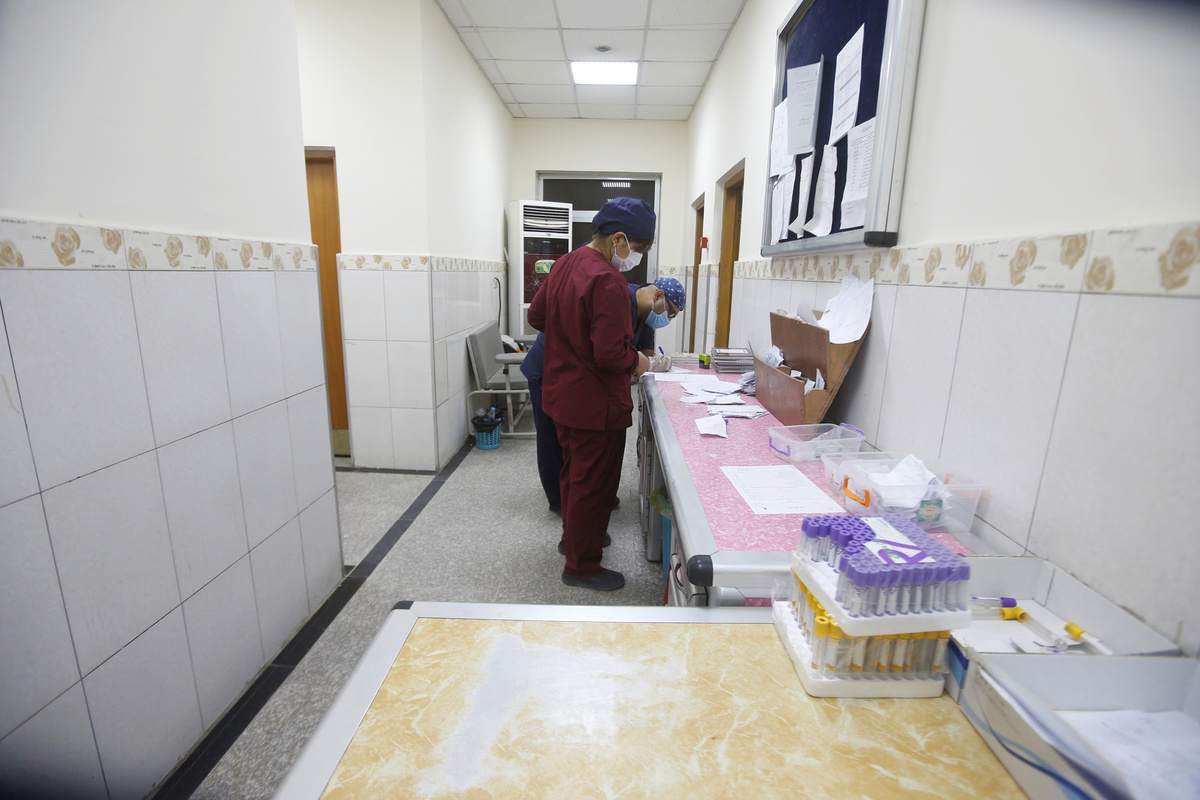
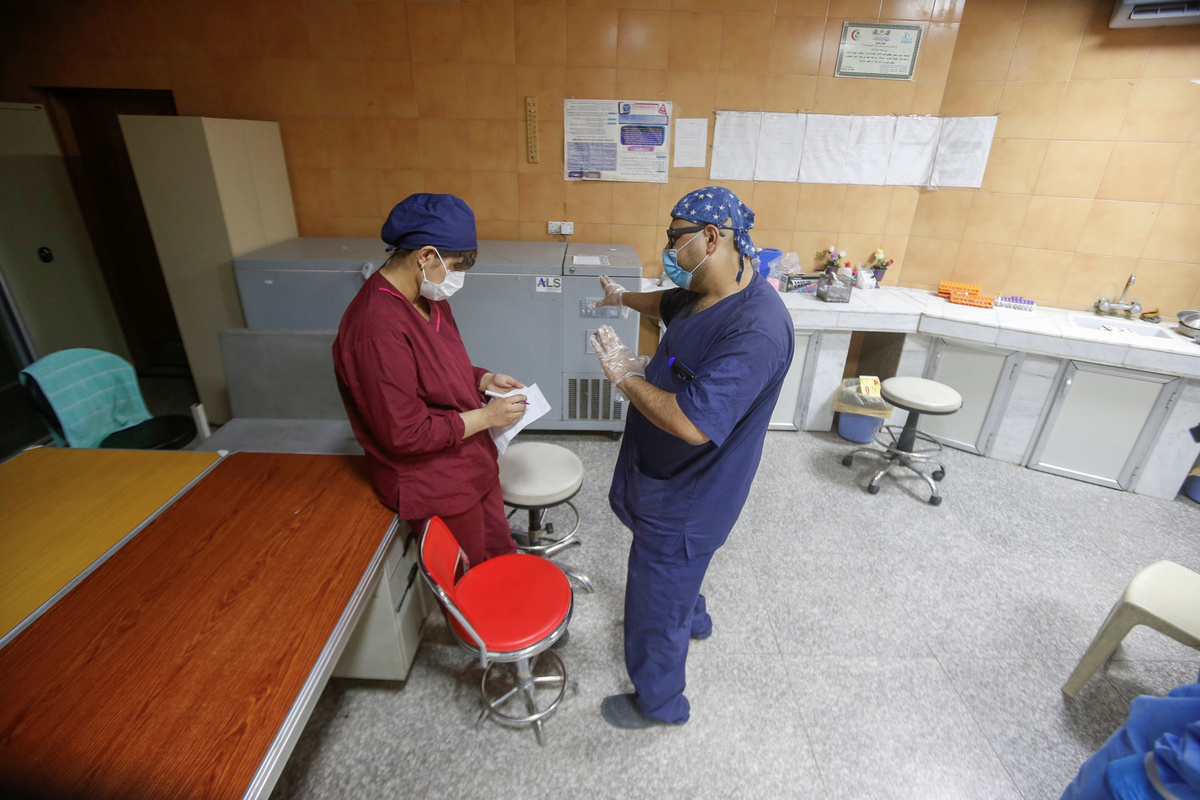
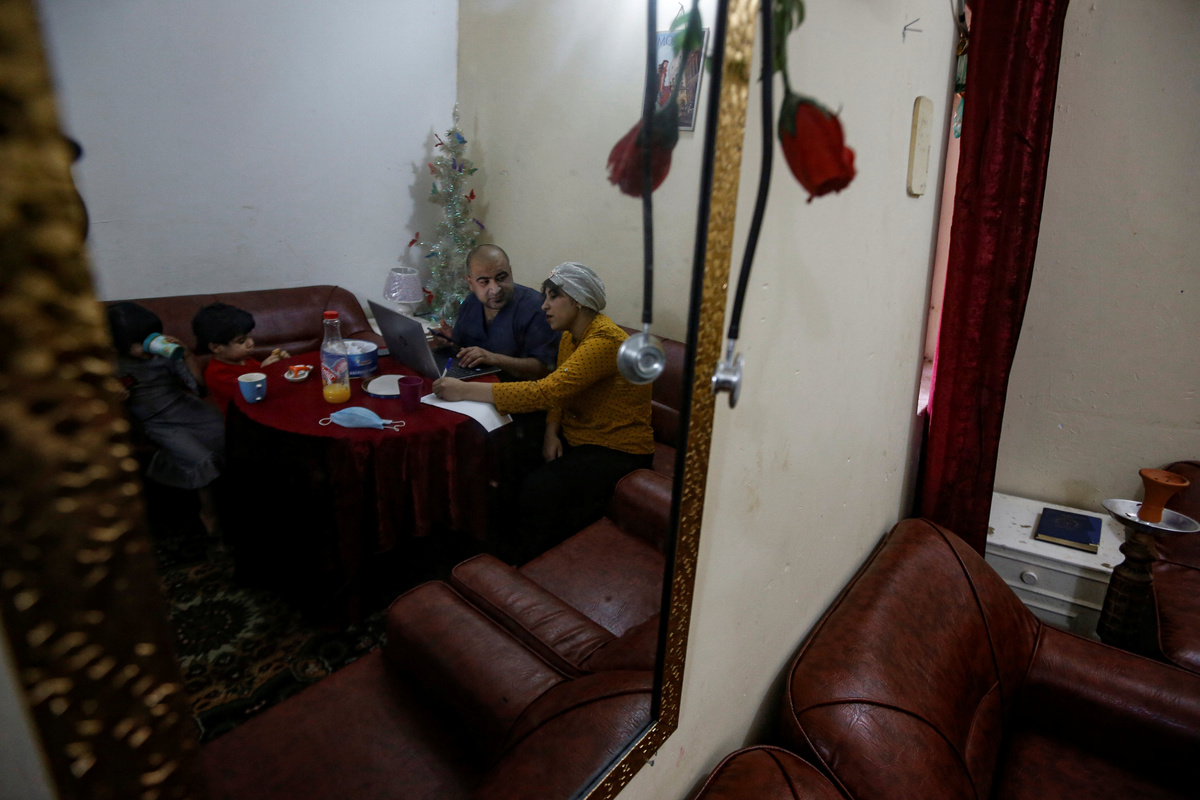
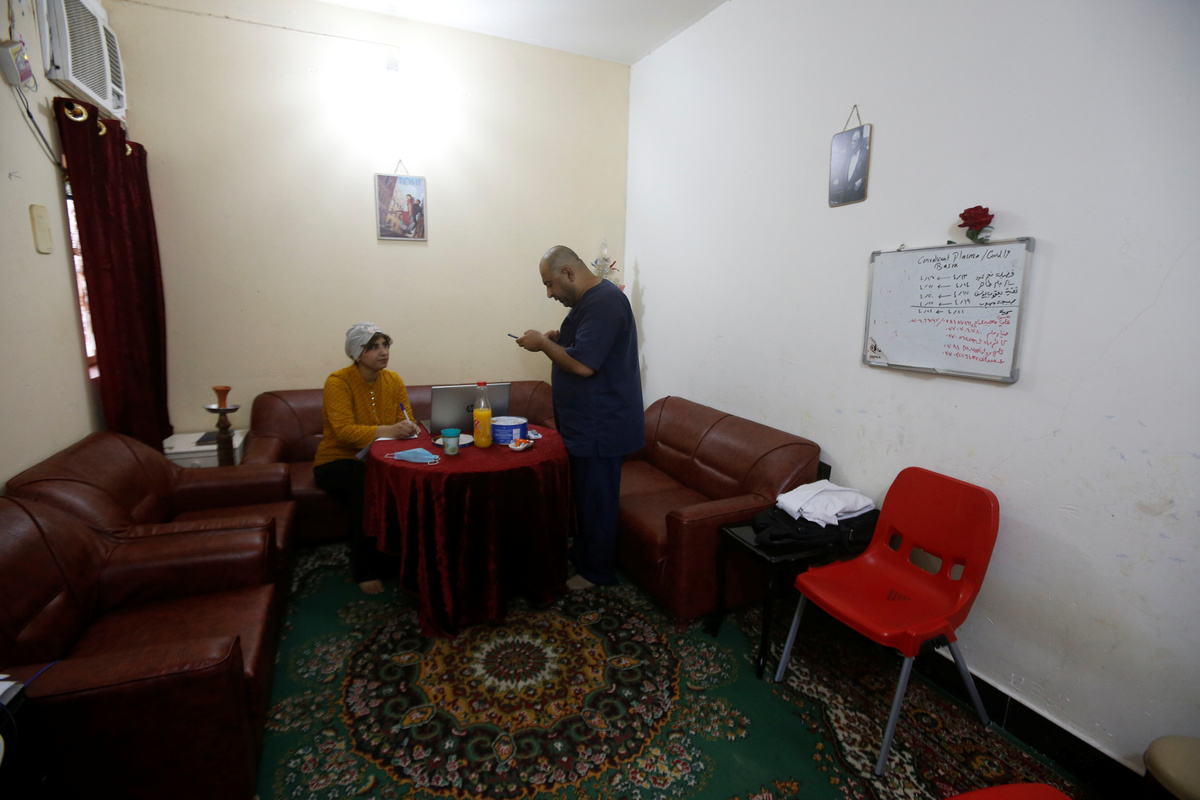
Ali Salam Abdullah, an Iraqi doctor, and his wife Hiba Jabbar Ashoor, a medical assistant, sign papers to collect blood plasma from people who had recovered from the coronavirus disease (COVID-19), to help critically ill patients, at a blood bank in Basra, Iraq June 20, 2020. Picture taken June 20, 2020. REUTERS/Essam Al-Sudani
A ministry spokesman could not be reached immediately for comment on this article.
(Additional reporting by Mohammed Katfan; writing by Charlotte Bruneau; editing by John Stonestreet)
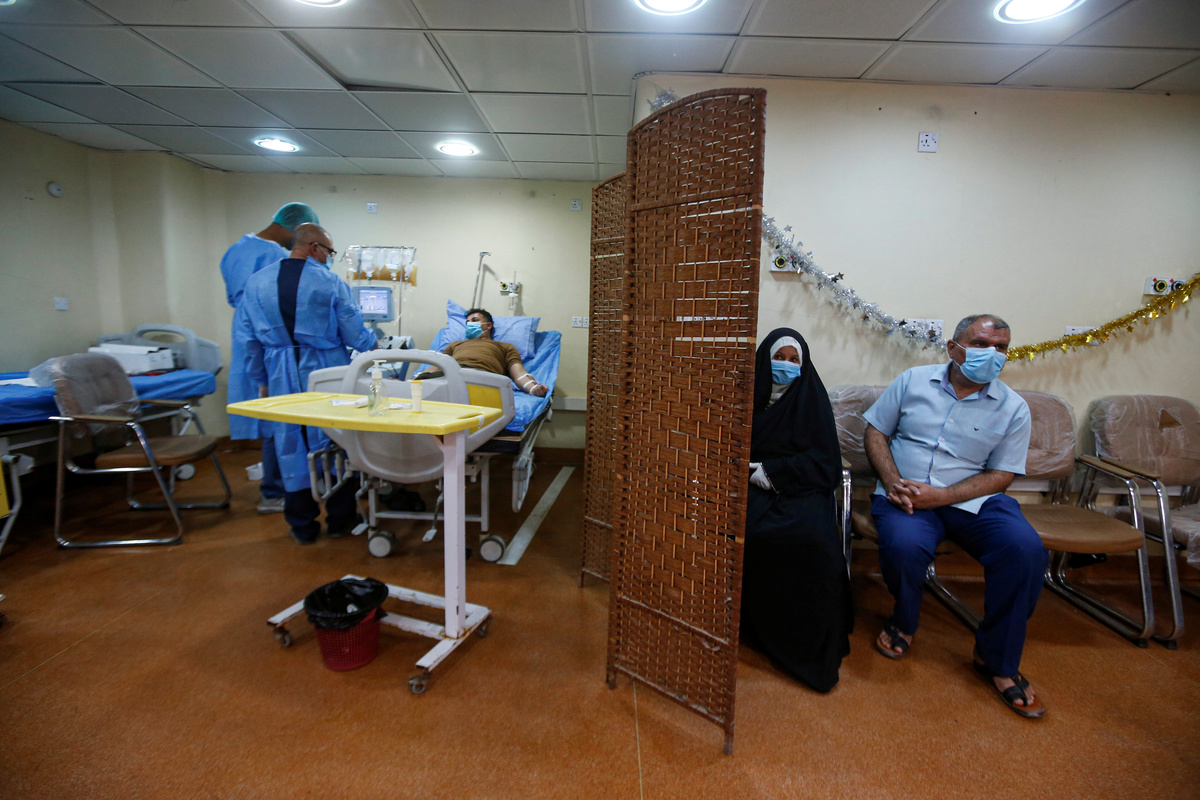
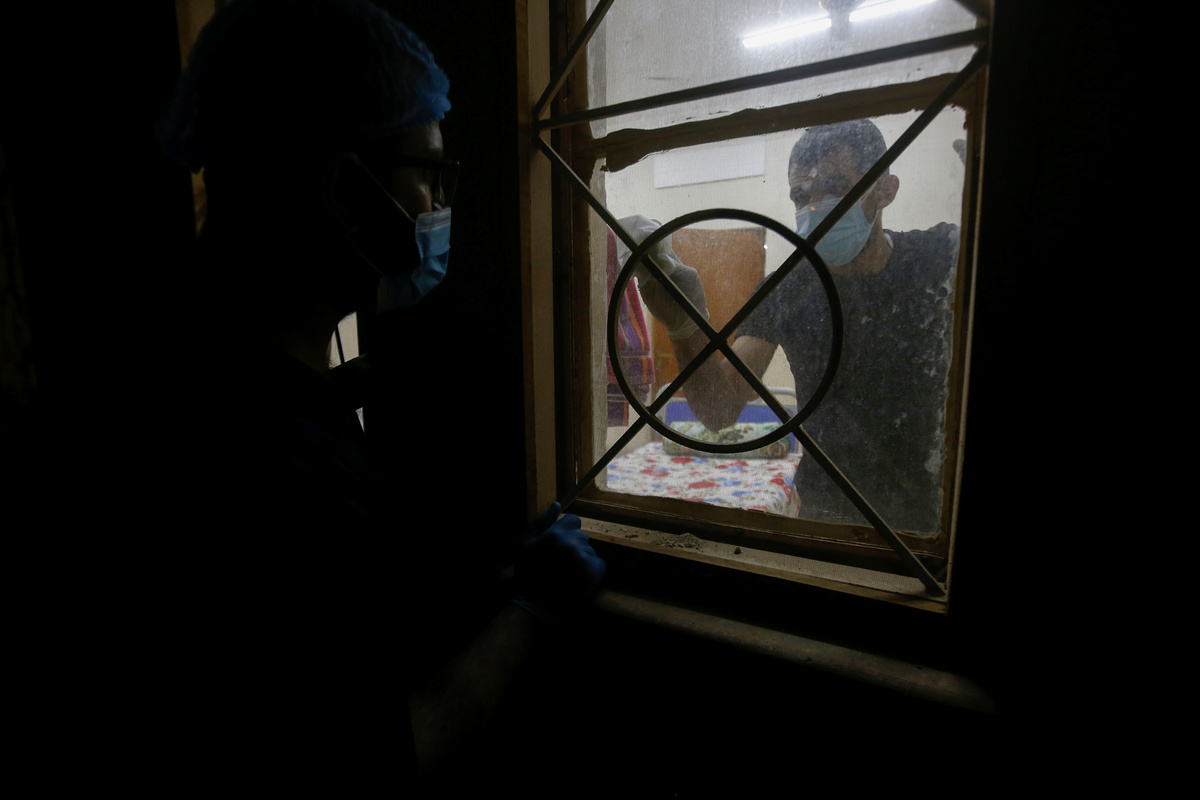
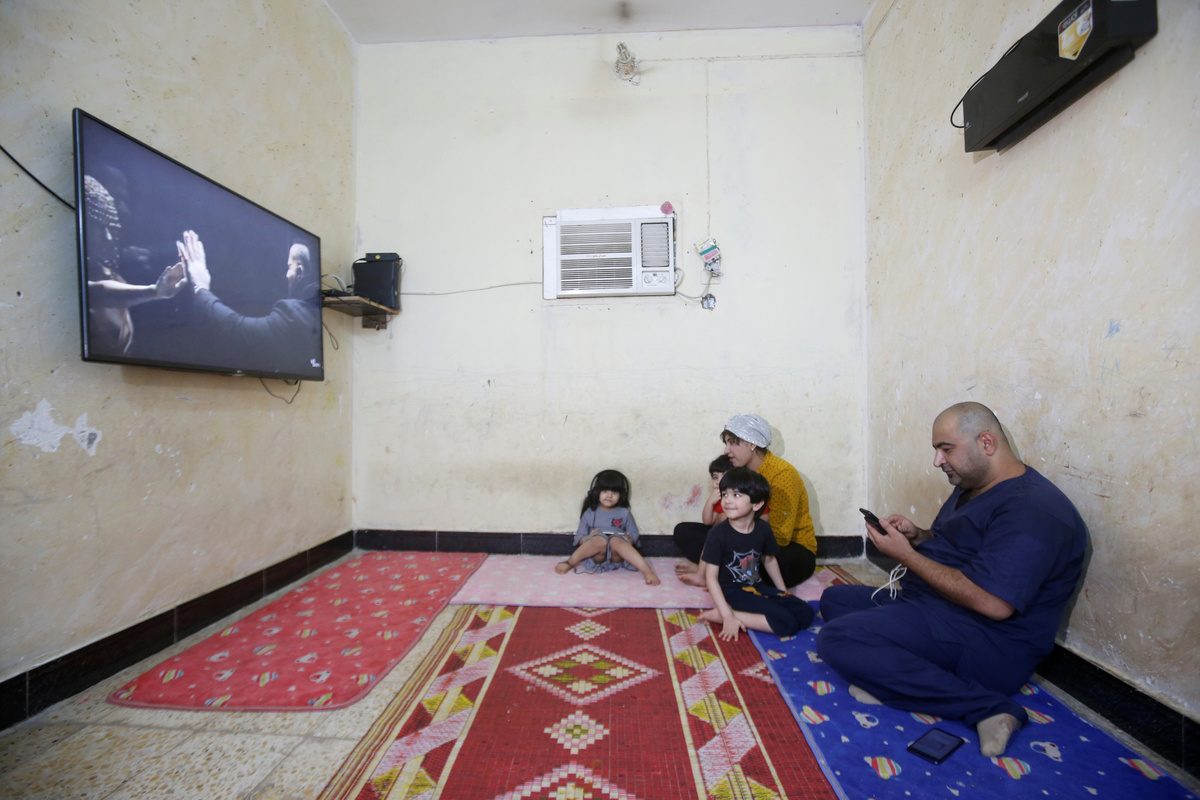
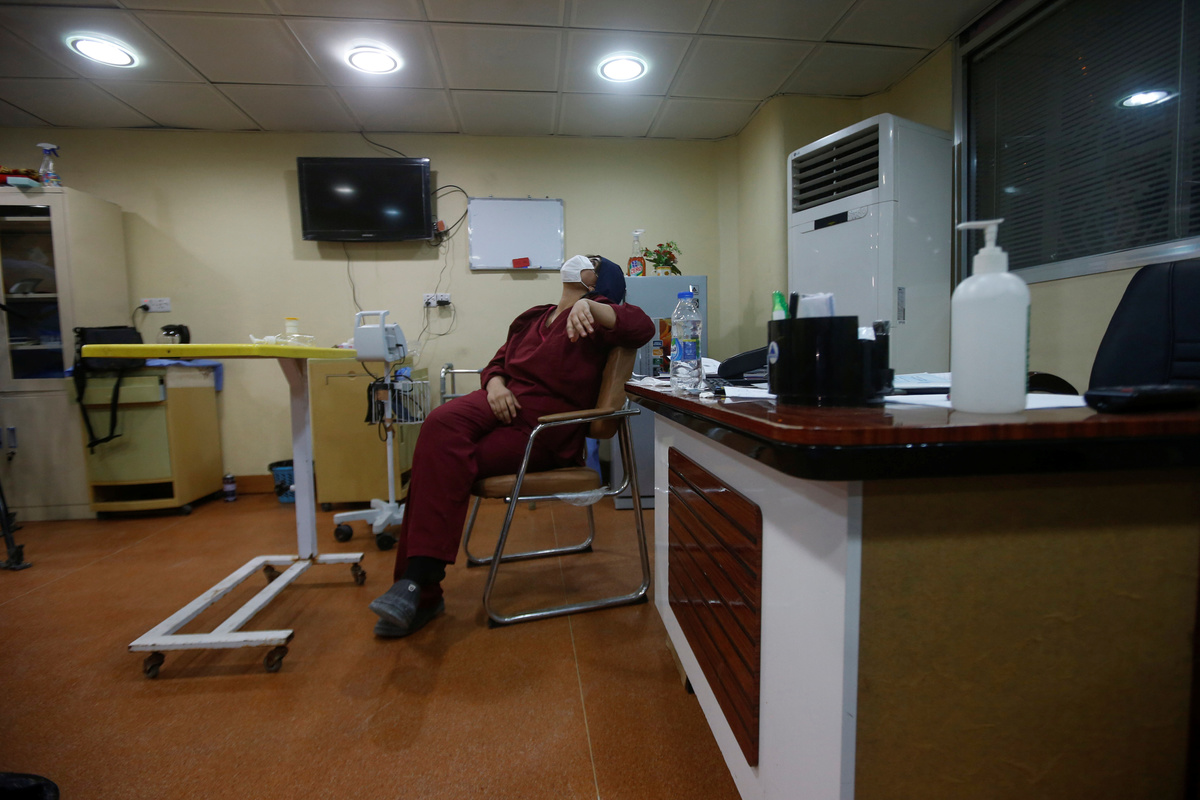
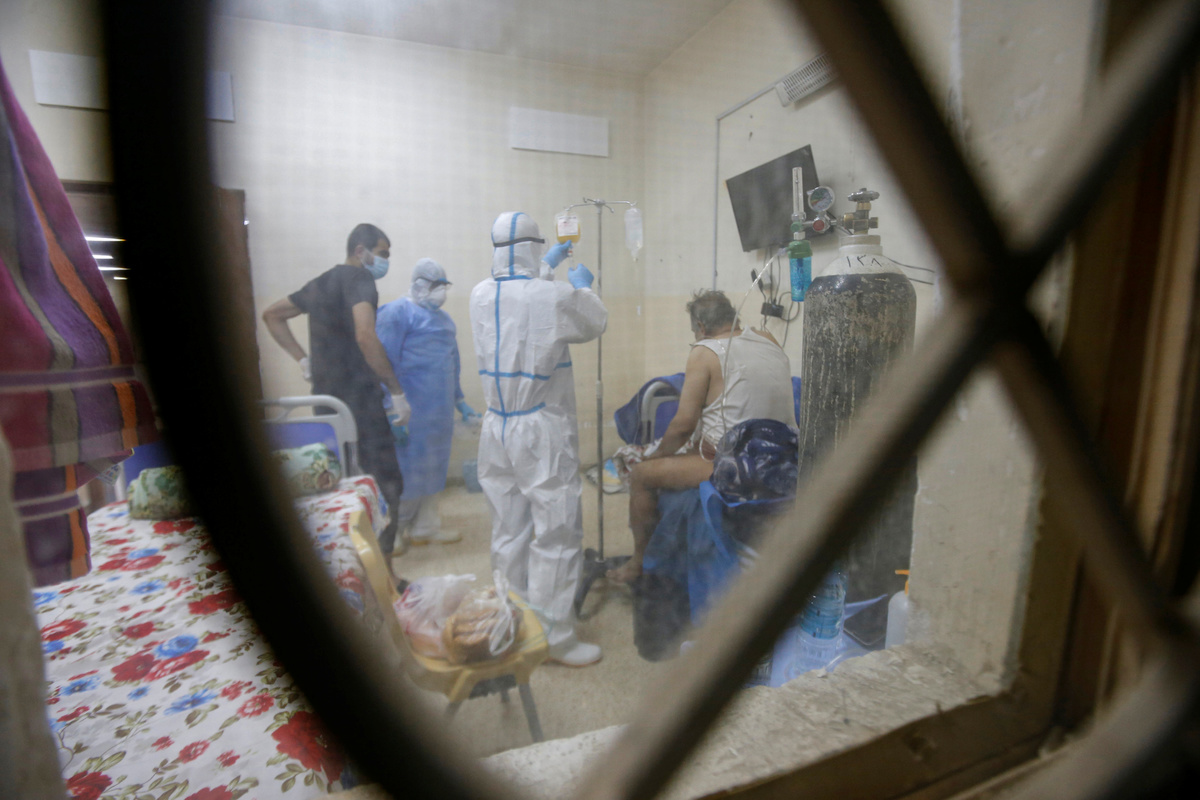
A couple who have recovered from the coronavirus disease (COVID-19) wear protective face masks as they wait to donate blood plasma to help critically ill patients at Basra Teaching Hospital in Basra, Iraq June 20, 2020. Picture taken June 20, 2020. REUTERS/Essam Al-SudaniAli Salam Abdullah, an Iraqi doctor, shows blood plasma taken from people who have recovered from the coronavirus disease (COVID-19), to be used to help critically ill patients, at a blood bank in Basra, Iraq June 20, 2020. Picture taken June 20, 2020. REUTERS/Essam Al-SudaniA nurse wearing protective gloves prepares a plastic bag to store a blood plasma sample, following the outbreak of the coronavirus disease (COVID-19), at a blood bank in Basra, Iraq June 20, 2020. picture taken June 20, 2020. REUTERS/Essam Al-SudaniA man who has recovered from the coronavirus disease (COVID-19) donates his plasma to help critically ill patients at National Blood Transfusion Center in Baghdad, Iraq June 18, 2020. Picture taken June 18, 2020. REUTERS/Thaier Al-SudaniAli Salam Abdullah, an Iraqi doctor, wears a protective face mask and gloves, following the outbreak of the coronavirus disease (COVID-19), as he works at a blood bank in Basra, Iraq June 20, 2020. Picture taken June 20, 2020. REUTERS/Essam Al-SudaniA man who has recovered from the coronavirus disease (COVID-19) donates his blood plasma to help critically ill patients at Basra Teaching Hospital in Basra, Iraq June 20, 2020. Picture taken June 20, 2020. REUTERS/Essam Al-SudaniAli Salam Abdullah, an Iraqi doctor, and his wife Hiba Jabbar Ashoor, a medical assistant, wear protective face masks as they talk, following the outbreak of the coronavirus disease (COVID-19), at a blood bank in Basra, Iraq June 20, 2020. Picture taken June 20, 2020. REUTERS/Essam Al-SudaniA man wearing a protective face mask looks through the window of a quarantine room where a coronavirus disease (COVID-19) patient is seen, at a hospital in Basra, Iraq June 20, 2020. Picture taken June 20, 2020. REUTERS/Essam Al-SudaniA man who has recovered from the coronavirus disease (COVID-19) wears a protective face mask as he donates his blood plasma to help critically ill patients at Basra Teaching Hospital in Basra, Iraq June 20, 2020. Picture taken June 20, 2020. REUTERS/Essam Al-SudaniAli Salam Abdullah, an Iraqi doctor, and his wife Hiba Jabbar Ashoor, a medical assistant, work from home following the outbreak of the coronavirus disease (COVID-19), in Basra, Iraq June 20, 2020. Picture taken June 20, 2020. REUTERS/Essam Al-SudaniAli Salam Abdullah, an Iraqi doctor, and his wife Hiba Jabbar Ashoor, a medical assistant, work from home following the outbreak of the coronavirus disease (COVID-19), in Basra, Iraq June 20, 2020. Picture taken June 20, 2020. REUTERS/Essam Al-SudaniAli Salam Abdullah, an Iraqi doctor, uses his mobile as his family watch TV at home, following the outbreak of the coronavirus disease (COVID-19), in Basra, Iraq June 20, 2020. Picture taken June 20, 2020. REUTERS/Essam Al-SudaniAn assistant of Dr. Hiba Jabbar Ashoor wears a protective face mask while taking a break at Basra Teaching Hospital, following the outbreak of the coronavirus disease (COVID-19), in Basra, Iraq June 20, 2020. Picture taken June 20, 2020. REUTERS/Essam Al-SudaniA coronavirus disease (COVID-19) patient receives blood plasma from a person who has recovered, at Basra hospital, in Basra, Iraq June 20, 2020. Picture taken June 20, 2020. REUTERS/Essam Al-Sudani
Sign up to read this article
Read news from 100’s of titles, curated specifically for you.






.jpg?w=600)



