Iraq's caretaker prime minister asked Washington to start working out a roadmap for an American troop withdrawal, but the US State Department on Friday flatly rejected the request, saying the two sides should instead talk about how to “recommit” to their partnership.
The US State Department said the presence of US troops was crucial for the fight against the ISIS group and it would not discuss removing them.
“Any delegation sent to Iraq would be dedicated to discussing how to best recommit to our strategic partnership — not to discuss troop withdrawal, but our right, appropriate force posture in the Middle East,” said spokesperson Morgan Ortagus.
"America is a force for good in the Middle East," she said in a statement. "We want to be a friend and partner to a sovereign, prosperous and stable Iraq.”
Thousands of anti-government protesters gathered in the capital and southern Iraq, many calling on both Iran and America to leave Iraq, reflecting anger and frustration over the two rivals trading blows on Iraqi soil.
The request from Prime Minister Adel Abdul Mahdi pointed to his determination to push ahead with demands for US troops to leave Iraq, stoked by the American drone strike on Jan. 3 that killed top Iranian Gen. Qassem Soleimani.
In a phone call Thursday night, he told US Secretary of State Mike Pompeo that recent US strikes in Iraq were an unacceptable breach of Iraqi sovereignty and a violation of their security agreements, his office said.
He asked Pompeo to “send delegates to Iraq to prepare a mechanism" to carry out the Iraqi parliament’s resolution on withdrawing foreign troops, according to the statement.
“The prime minister said American forces had entered Iraq and drones are flying in its airspace without permission from Iraqi authorities, and this was a violation of the bilateral agreements,” the statement added.
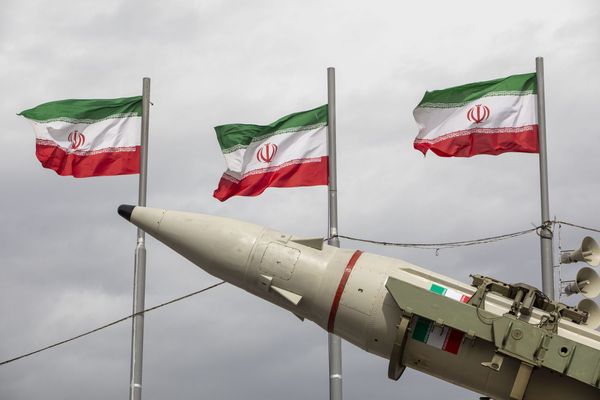
Abdul Mahdi signaled he was standing by the push for the American forces to go despite recent signs of de-escalation between Tehran and Washington after Iran retaliated for Soleimani's death with a barrage of missiles that hit two Iraqi bases where US troops are based but caused no casualties.
Iraqis have felt furious and helpless at being caught in the middle of fighting between Baghdad's two closest allies. Abdul Mahdi has said he rejects all violations of Iraqi sovereignty, including both the Iranian and US strikes.
Iraqi lawmakers passed a resolution Sunday to oust US troops, following the Jan. 3 US drone strike that killed Soleimani and senior Iraqi militia commander Abu Mahdi al-Muhandis at Baghdad's airport. The nonbinding vote put the responsibility on the government to formally request a withdrawal.
Speaking to Pompeo, Abdul Mahdi stopped short of requesting an immediate withdrawal and appeared to give the US time to draw up a strategy and timeline for departure.
In its initial readout of the call, the State Department made no mention of Abdul Mahdi's request on the troops. It said Pompeo initiated the call and reiterated the US condemnation of the Iranian missile strikes on the two bases, underscoring that President Donald Trump "has said the United States will do whatever it takes to protect the American and Iraqi people and defend our collective interests.”
There are some 5,200 US troops in Iraq assisting and providing training to Iraqi security counterparts to fight the ISIS group. An American pullout could deeply set back efforts to crush remnants of the group amid concerns of a resurgence amid the political turmoil.
Top American military officials including Gen. Mark Milley, chairman of the Joint Chiefs of Staff, and Defense Secretary Mark Esper, have said there were no plans for the US to withdraw.
Ortagus also said the State Department was in talks with NATO to increase its role in Iraq. Trump has invited NATO to play a larger role in the Middle East.
“Today, a NATO delegation is at the State Department to discuss increasing NATO’s role in Iraq, in line with the president’s desire for burden sharing in all of our collective defense efforts,” the statement said. “There does, however, need to be a conversation between the US and Iraqi governments not just regarding security, but about our financial, economic, and diplomatic partnership.”