
The ultra-conservative Iranian Revolutionary Guard threatened to take a strategic leap with its ballistic missile range should European countries insist on curbing the cleric-led country’s missile program.
On par, Tehran announced launching another satellite into orbit, even though the international community had warned strongly against such a test-firing. US Secretary of State Mike Pompeo had last January reiterated that technology used in the delivery missile system is virtually identical to ballistic missiles used to carry and deliver nuclear warheads.
"If the Europeans, or anyone else, want to conspire to disarm Iran of missiles, we will be forced to make a strategic leap," the guards' deputy commander Brig-Gen Hossein Salami said on state TV.
"All that hear me today, come to terms with the new reality of Iran's missile might: there are no obstacles or technical limitations to us increasing (their) range," he added.
Earlier Saturday, Iran announced the "successful test" of a new cruise missile with a range of more than 1,350 kilometers.
Iran faces heated international criticism for violating Security Council Resolution 2231, which urges Iran to refrain from developing missiles capable of carrying nuclear warheads or that can later be modified to carry nuclear warheads. Iran maintains that the resolution is "non-binding."
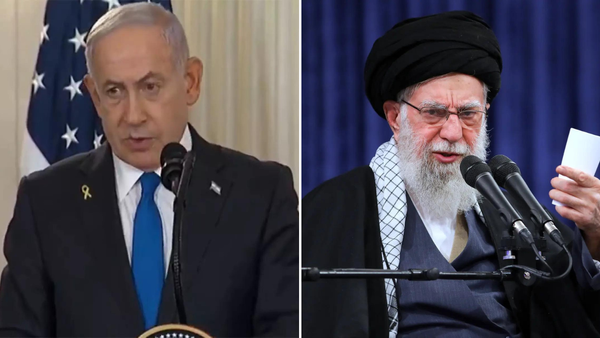
Israeli Prime Minister Benjamin Netanyahu had reiterated his warnings to Iran, saying that his country will stop at nothing to maintain its security and stability.
Netanyahu will travel on February 13 to the Polish capital Warsaw to participate in the Middle East Conference.
Iran’s escalatory threats come at a time preparations are nearly done for holding the US-organized event meant to discuss Iran's regional activities.
A week ago, Iranian Army Chief of Staff Major General Mohammad Bagheri announced that Iran would change its defense strategy to “offensive” to defend its national interests.
One of the reasons that the US gave for withdrawing from a landmark 2015 agreement that restricted Iran's nuclear program in exchange for sanctions relief was that it did not prevent Iran from developing missiles that could threaten Israel.