The US-Israeli war on Iran is likely to increase the number of small boat arrivals in Britain, the leader of the National Crime Agency (NCA) has warned.
Issuing his annual assessment of threats facing the country, NCA director general Graeme Biggar admitted the ongoing conflict in the Middle East could lead to an increase in organised immigration crime and arrivals on UK shores.
He said: “Migrant demand to reach UK unlawfully continues to be high, and the conflict in Iran is likely to increase the challenge.”
He said such increases often follow world conflict, adding that some of it is likely to be in the form of small boats crossing the Channel.
He added: “I am not expecting it to be an absolutely massive increase from Iran, I wouldn't overplay it. But, yes, some of it will be in small boats.”

Small boat arrivals were up 13 per cent year-on-year in 2025, after 45,774 people made the perilous crossing to claim asylum in Britain.
The NCA said most arrivals last year originated from countries in the Horn of Africa, replacing previous peaks of asylum seekers from Albania and Vietnam in recent years.
The fight against organised immigration crime accounts for a quarter of the NCA’s operational activity, with officers seizing 533 boats or engines last year in a bid to prevent smugglers profiting from the arrivals.
Delivering a speech at NCA’s headquarters in Stratford on Tuesday, Mr Biggar also warned technology is accelerating crime, with offenders turning to increasingly sophisticated techniques to smuggle drugs and run criminal networks.
Synthetic opioids pose the biggest risk, with nitazenes now being linked to 1,000 UK deaths in two-and-a-half years.
The potent drugs – some of which are 500 times stronger than morphine – are often smuggled into Britain in the post and are being found in adulterated heroin or in counterfeit pills being sold on the internet. Many are so dangerous that even the smallest amounts can lead to overdose.
“Synthetic opioids pose the biggest risk. Since nitazenes first appeared at scale in the UK in June 2023, they have been connected to 1,000 deaths. This is an extraordinary figure,” Mr Biggar said.
Nitazene-related deaths in the UK decreased slightly in 2025 to 359 deaths from 435 in 2024, however Mr Biggar admitted true numbers could be higher as testing struggles to keep pace.
In Britain, half of homicides, thefts and robberies are linked to drugs, the NCA chief said.
Drug-related deaths have doubled in a decade, with cocaine linked deaths up tenfold. Ketamine misuse is also surging, with the number of adults seeking treatment for ketamine use up tenfold in 10 years.
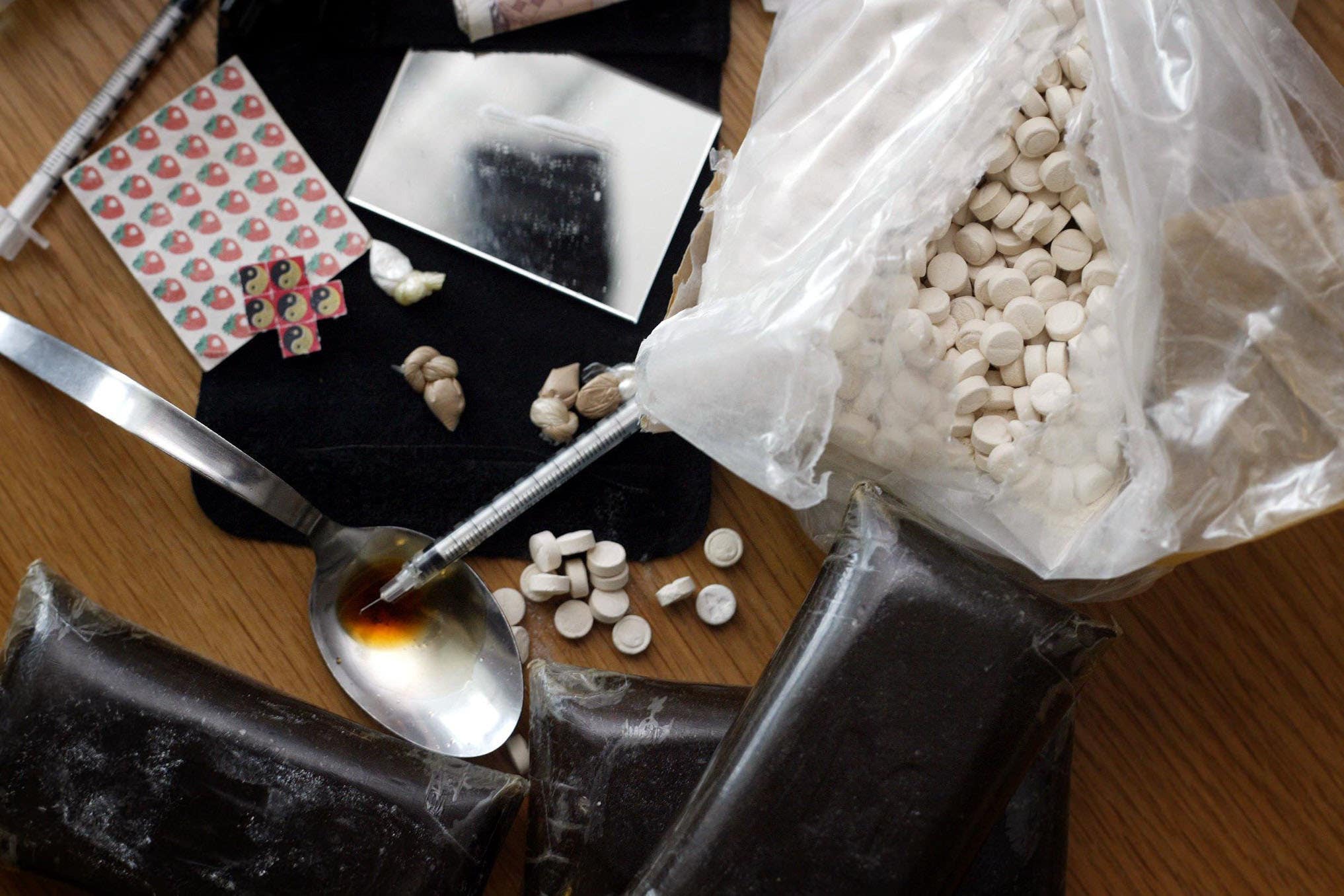
However, smugglers are using sophisticated scientific methods to chemically bond drugs to other substances as diverse as charcoal, cardboard boxes, plastic or glue.
Sometimes chemists will be flown internationally to bond the drugs, including cocaine and nitazenes, and then extract them again at the other end.
Mr Biggar said: “While we need to respond to a range of new challenges, we cannot take our eyes off the drug threat.
“It has always caused a lot of harm, it is evolving fast, and we need to stay on top of it.”
The threat from organised crime grew last year as technology allows criminals to “get smarter, faster and more connected, to each other and to victims”, Mr Biggar said, and developments in technology are “reshaping crime itself”.
Recent cyber attacks on Transport for London, the Legal Aid Agency, Marks and Spencer, the Co-op, Kido Nurseries and Jaguar Land Rover have shown that it is not enough for businesses to secure their systems, but they also need to address how staff can be manipulated, he added.
Responding to the NCA’s annual assessment, security minister Dan Jarvis said: “The threat from serious and organised crime is rapidly evolving, with criminals collaborating across borders and online to target the British public at scale. As they step up their activity, so must we.
“We’re driving a major international effort to take down smuggling gangs, and hitting drug traffickers harder than ever, through tougher port controls and record drug seizures.”