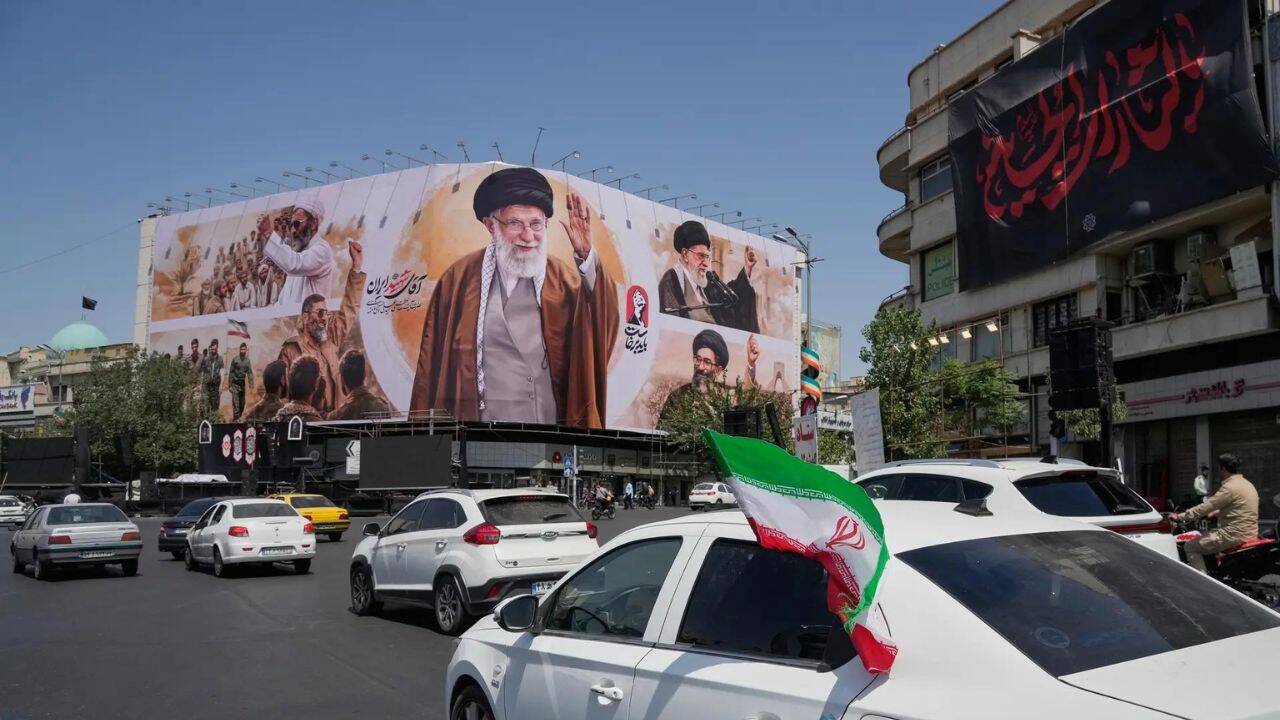
Ghalibaf Iran has declared that its recently signed Memorandum of Understanding (MoU) with the United States marks a political victory for what it calls the "Axis of Resistance", a regional alliance of Iran-backed governments and armed groups opposed to the United States and Israel. The remarks appears to indicate that Tehran sees the agreement not merely as a diplomatic breakthrough but as international recognition of its broader regional influence.
Get breaking news anytime, anywhere. Download the TOI app now!
Iranian parliament speaker Mohammad Bagher Ghalibaf met Mohammed Al-Nuaimi, vice chairman of the Houthi supreme political council, in Tehran on Sunday, where he portrayed the recent US-Iran memorandum as a strategic success for the alliance, according to Iranian state news agency IRNA.
The meeting took place on the sidelines of the funeral ceremonies of Iran's late Supreme Leader, Ayatollah Seyyed Ali Khamenei, IRNA reported.
"The US and Israel were forced to practically recognise Iran's allies in the Axis of Resistance under the recent memorandum," Ghalibaf said. "This is one of the achievements of this memorandum."
He further argued that Iran and the Axis of Resistance had stood together against the United States and Israel, describing the memorandum as a "defeat for the US" and an "achievement for the Resistance Front" both militarily and politically.
Ghalibaf also called for greater unity among Islamic countries, saying such cooperation was necessary to free the region from what he described as "US and Israeli domination".
What's Axis of Resistance
The term "Axis of Resistance" refers to an informal network led by Iran that includes state and non-state actors such as Hezbollah in Lebanon, the Houthis in Yemen, and several Shia militia groups operating in Iraq and Syria. The alliance has emerged over the past two decades around a shared opposition to Israeli and US influence in West Asia.
The phrase itself gained prominence after then US President George W Bush described Iran, Iraq and North Korea as the "Axis of Evil" in 2002. Iranian officials subsequently adopted the term "Axis of Resistance" to describe the network of allies that they say seeks to resist Western and Israeli influence in the region.
The United States, Israel and several Western governments view many members of the alliance differently. Hezbollah is designated as a terrorist organisation by the United States, while several countries, including the United Kingdom, Germany and Canada, have also proscribed the group in whole or in part.
The Houthis have faced sanctions and terrorism-related designations by the United States at different times, while several Iran-backed militia groups in Iraq and Syria have also been sanctioned or designated under US counterterrorism measures. Tehran, however, maintains that these groups are legitimate resistance movements.
ALSO READ | US-Iran MoU officially finalized after both sides digitally sign agreement
Iran praises Houthis and the Yemeni
Ghalibaf also praised the Houthis and the Yemeni people for what he described as their resistance against "violations of international law and oppression", adding that they had demonstrated the integrated power of the Axis of Resistance across the economic, military and political spheres.
Al-Nuaimi also underlined the close relationship between Tehran and the Houthis.
"What happened in Iran during the recent war has become a school of thought for the entire Resistance Front," he said.
He also said Yemen and Iran stood in the "same trench" for the sake of the "Islamic Ummah", referring to the global community of Muslims.
Separately, Iranian President Masoud Pezeshkian said the funeral ceremonies for Ayatollah Khamenei should not be viewed as an end but as a reaffirmation of his legacy, according to IRNA.
"I do not accept the interpretation of 'farewell,'" Pezeshkian said. "This is not a farewell, but rather a pledge to continue the path," he added.
He also expressed condolences to Khamenei's family and to those killed in the recent conflict, while claiming that the war had strengthened unity among Muslims and exposed what he described as the hypocrisy of the country's adversaries on human rights.
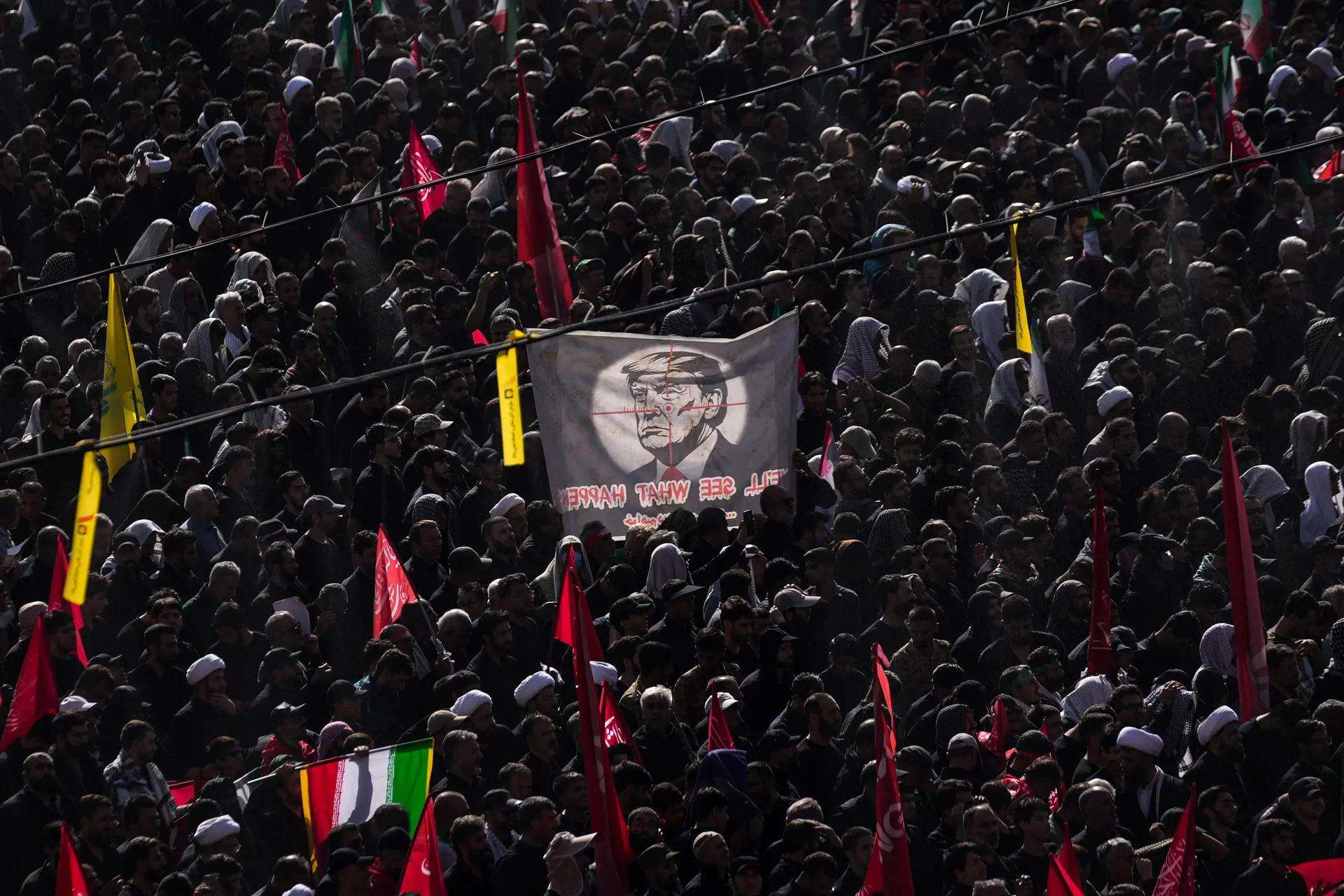
The week-long mourning ceremonies began in Tehran on Friday and are expected to continue in both Iran and Iraq, with public processions scheduled in Tehran, Qom, Najaf and Karbala before the final burial at the Imam Reza shrine in Mashhad.
ALSO READ | Inside Trump’s Iran deal: The billions that could soon flow to Tehran