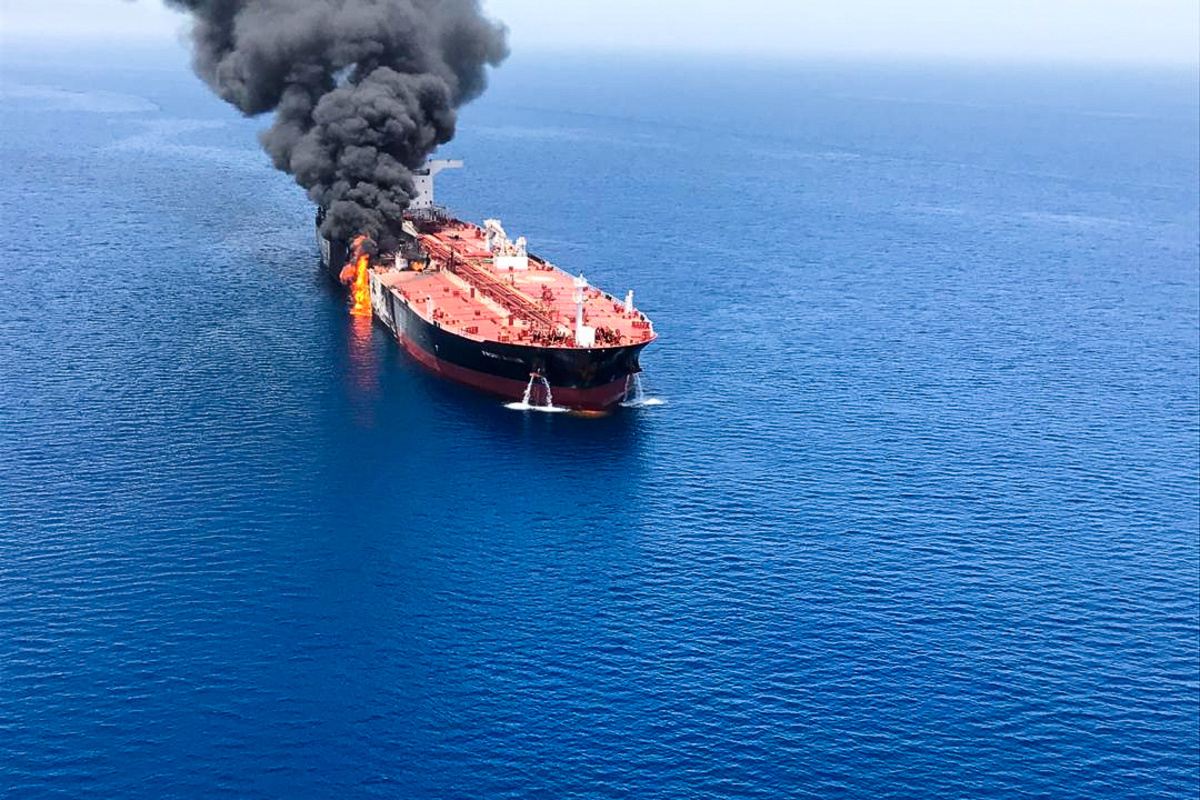
DUBAI (Reuters) - Iran rebuffed blame on Friday for attacks on two oil tankers in the Gulf of Oman and affirmed its responsibility for security in the Strait of Hormuz where almost a fifth of the world's oil passes, state radio reported.
Washington pointed the finger at Tehran for Thursday's attacks that drove up oil prices <LCOc1> and heightened concern about a new U.S.-Iranian confrontation.
"Obviously, accusing Iran for such a suspicious and unfortunate incident is the simplest and the most convenient way for (U.S. Secretary of State Mike) Pompeo and other U.S. officials. These accusations are alarming, "Foreign Ministry spokesman Abbas Mousavi as saying by Iran's state Radio.
"We are responsible for ensuring the security of the Strait and we have rescued the crew of those attacked tankers in the shortest possible time."
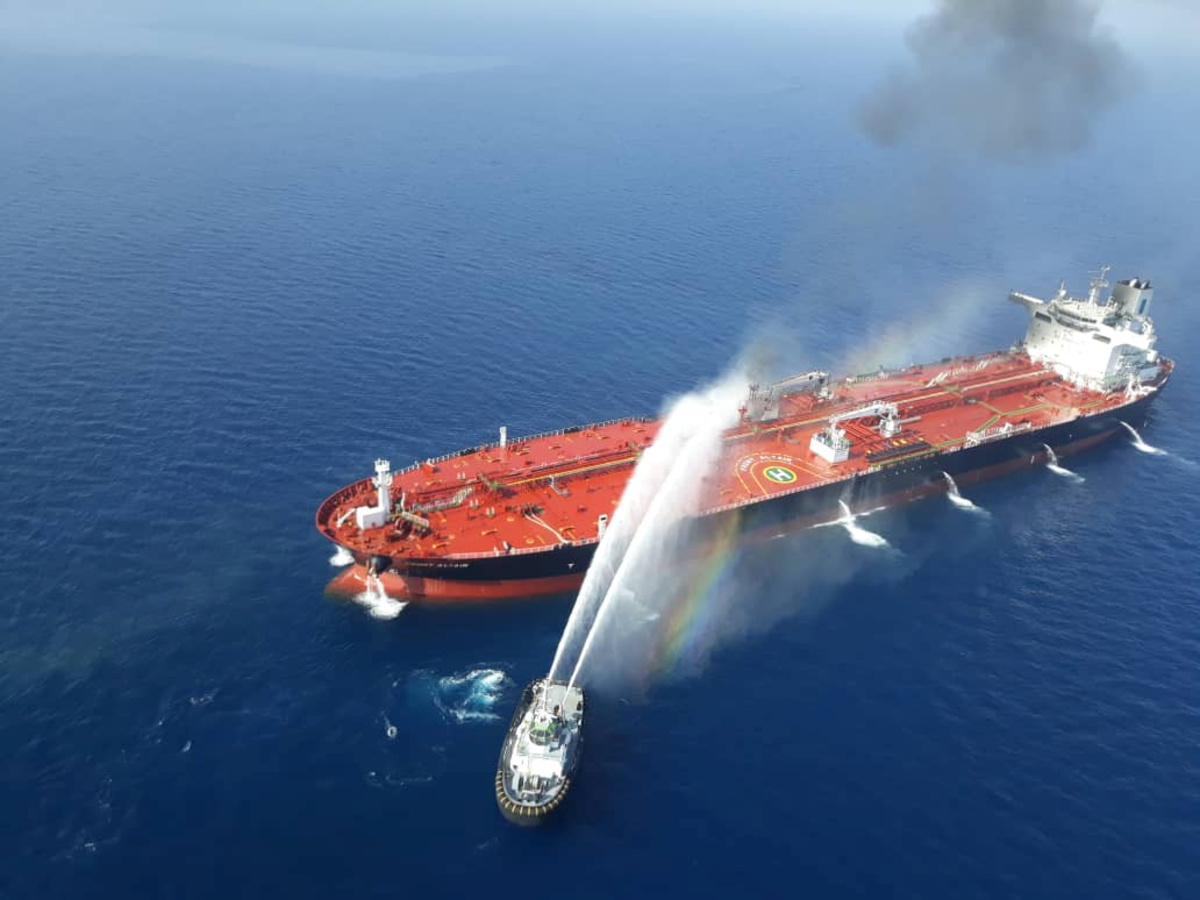
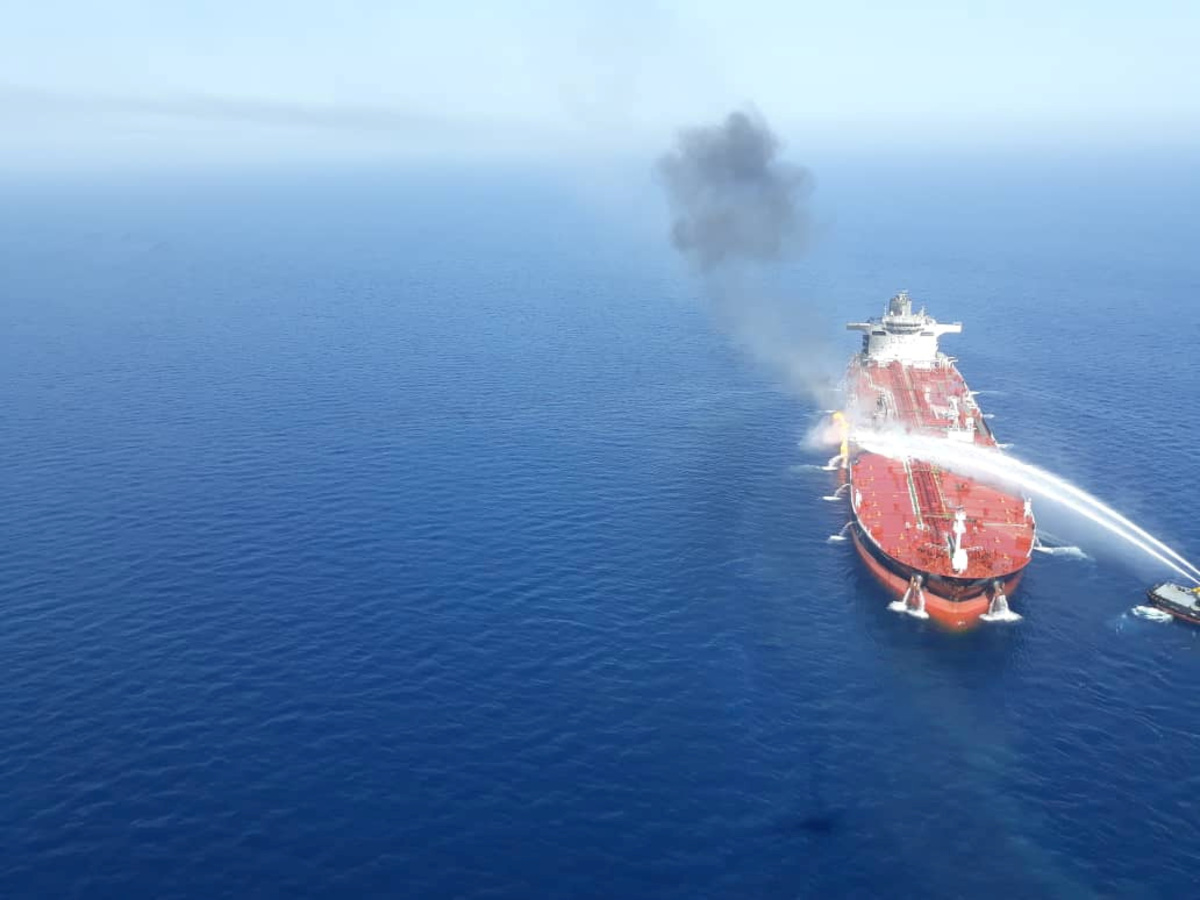
It was not immediately clear what caused the explosions that forced the crews to abandon ship and leave both the Norwegian-owned Front Altair and Japanese-owned Kokuka Courageous adrift in waters between Gulf Arab states and Iran.
Iran's Foreign Minister Mohammad Javad Zarif rejected the U.S. accusations as part of "sabotage diplomacy".
The blasts, south of the Strait of Hormuz, followed last month's attacks on vessels off the Fujairah emirate, one of the world's largest bunkering hubs.
About 17.2 million barrels per day (bpd) of oil passes through the Strait. Consumption was about 100 million bpd in 2017, data from analytics firm Vortexa showed.
Brent crude futures <LCOc1> rose 0.6% to $61.69 per barrel in Asian trade on Friday, having gained 2.2% the previous day.
One source said the blast on the Front Altair may have been caused by a magnetic mine. The firm that chartered the Kokuka Courageous tanker said it was hit by a suspected torpedo, but a person with knowledge of the matter said that was not the case.
MINE IMAGES
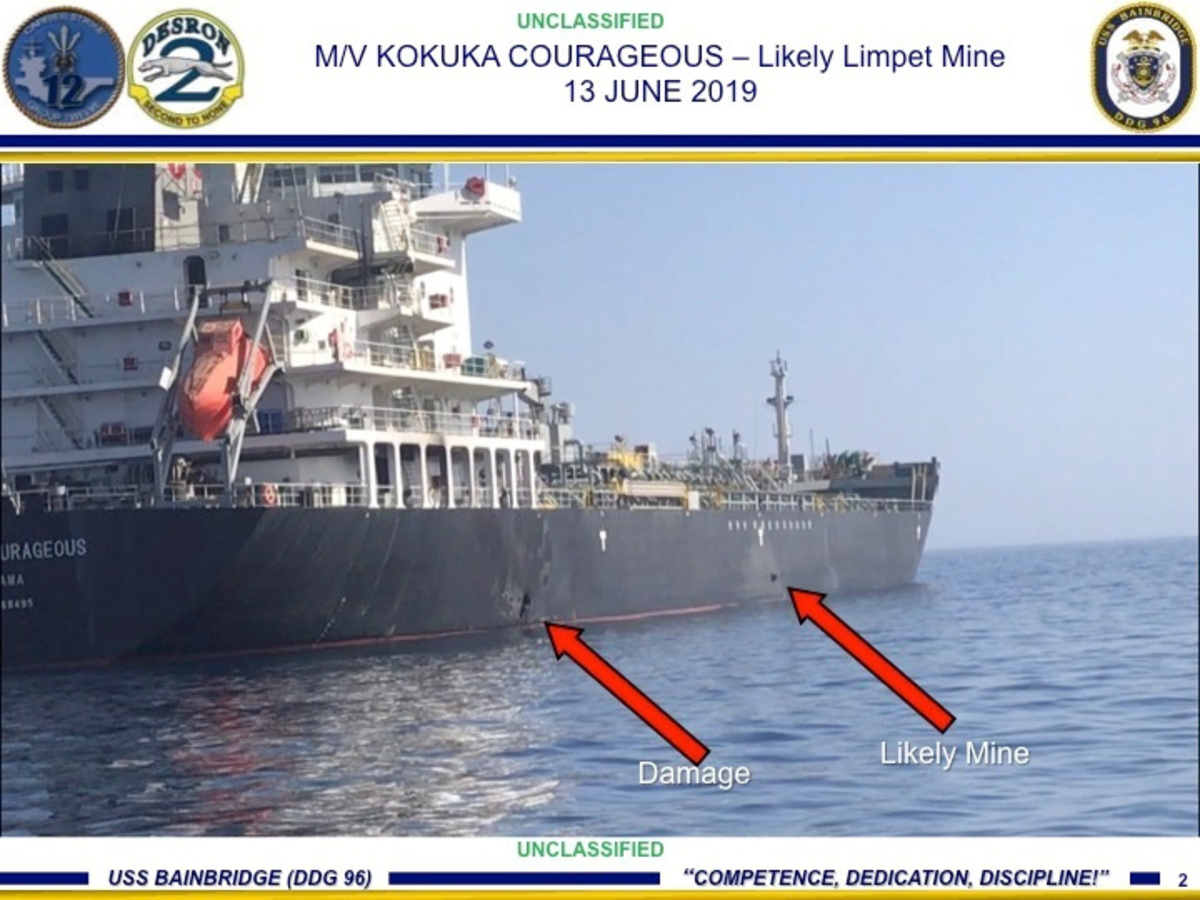
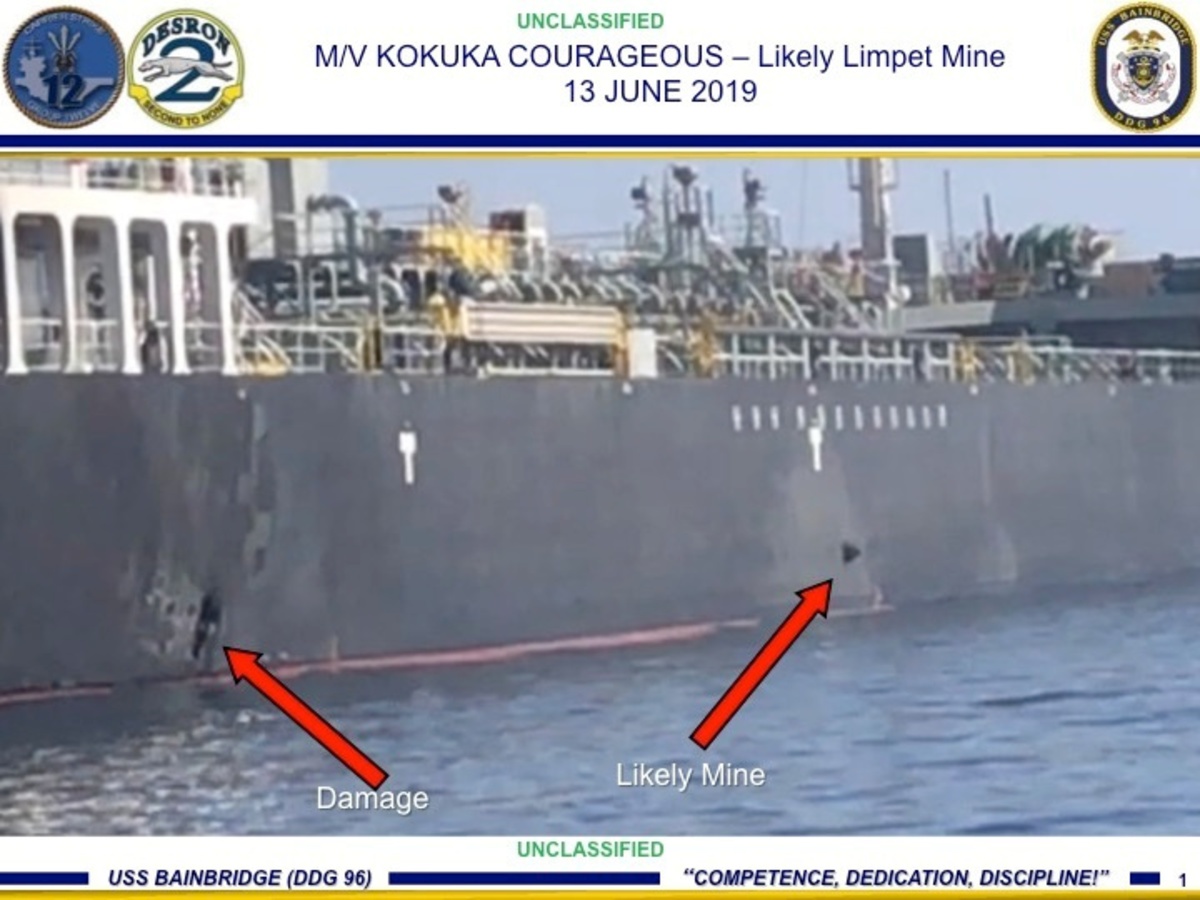
The U.S. military released a video late on Thursday that it said showed Iran's Revolutionary Guard (IRGC) removing an unexploded mine from the side of the Japanese-owned oil tanker.
IRGC commanders have said Iran would block all exports through the Strait if countries heed U.S. calls to stop buying its oil. In April, Washington designated the IRGC a foreign terrorist organisation.
The U.S. military's Central Command also released photographs showing the apparent mine, which attaches to the side of a ship magnetically, before it was removed later in the day.
Comprising an estimated 125,000-strong military with navy, army and air units, the Guards control Iran's missile programmes. The Guards' overseas Quds forces have fought Iran's proxy wars in the region for decades from Yemen to Syria.
Relations between Tehran and Washington took a turn for the worse last year, when the U.S. President Donald Trump pulled out of a 2015 nuclear deal between Iran and six world powers, and reimposed sanctions that were lifted under the deal in return for Tehran curbing its nuclear work.
Without mentioning the attacks, Iranian President Hassan Rouhani told leaders of a China-led security bloc in the Kyrgyz capital Bishkek that U.S. withdrawal from the deal posed a serious threat to stability in the Middle East.
Tensions have spiked further since Trump acted last month to force Iran's oil customers to slash their imports to zero or face draconian U.S. financial sanctions.
Iran's oil exports, its economic lifeblood, have dropped to about 400,000 bpd in May from 2.5 million bpd in April last year.
Chinese President Xi Jinping told Rouhani on Friday that Beijing, a signatory of the nuclear pact, will promote steady development of ties with Iran no matter how the situation changes, the official Xinhua news agency reported.
(Additional reporting by Olzhas Auyezov in Bishkek; Reporting and Writing by Parisa Hafezi; Editing by Andrew Cawthorne)