Iran has demanded changes to the venue and format for negotiations with the U.S. this Friday, two sources with knowledge tell Axios.
- Meanwhile, the Iranian military conducted two provocations against U.S. vessels in the Gulf, according to U.S. officials.
Why it matters: The incidents and new demands risk pushing President Trump off the diplomatic path and toward the military option at a time when he has already assembled enormous firepower in the Gulf.
Behind the scenes: The sources said the Iranians are walking back from understandings that were reached in recent days after several countries were already invited to participate in the talks.
- The Iranians want to move the talks from Istanbul to Oman.
- They also now want to hold them in a bilateral format, only with the U.S., rather than with several Arab and Muslim countries attending as observers.
- A source with knowledge said that's because the Iranians want to limit the talks to nuclear issues and not discuss things like missiles and proxy groups that are priorities for other countries in the region.
The latest: An Arab source told Axios the talks are now expected to take place in Oman on Friday, with the Trump administration agreeing to the Iranian request.
- Discussions are ongoing about whether other countries from the region will join the talks in Oman, the source said.
- The White House declined to comment.
Driving the news: Also on Tuesday, the Iranian military took what a U.S. official described as two "very aggressive" actions toward U.S. vessels in a span of six hours.
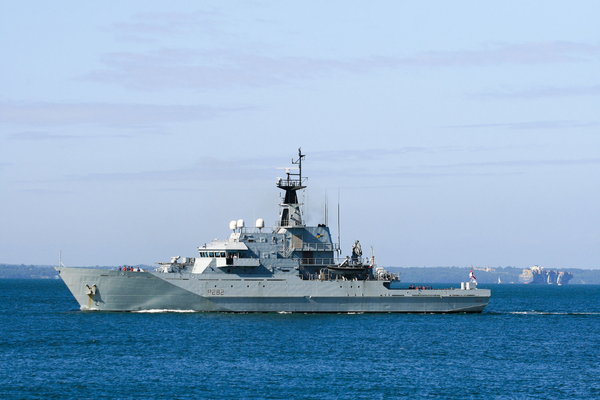
- In the first incident, Revolutionary Guards fast gunboats attempted to board a U.S.-flagged commercial ship near the straight of Hormuz.
- The Iranian boats scattered before a U.S. Navy destroyer arrived to escort the ship with support from the Air Force. No shots were fired.
- In the second incident, an Iranian drone with "unclear intent" flew near the USS Lincoln aircraft carrier and was shot down by an F-35 fighter jet, CENTCOM spokesperson Capt. Tim Hawkins said.
Friction point: A U.S. official described both actions as "very aggressive" and noted they came just six hours apart.
- In the CENTCOM statement, Hawkins said: "Continued Iranian harassment and threats in international waters and airspace will not be tolerated. Iran's unnecessary aggression near U.S. forces, regional partners and commercial vessels increases risks of collision, miscalculation, and regional destabilization."
State of play: White House press secretary Karoline Leavitt told reporters that she'd spoke to Trump's envoy Steve Witkoff about the incidents in the Gulf and the new Iranian demands.
- "As of right now, the talks with Iran are still scheduled," she said. "The talks will continue later this week as far as we are concerned."
- Leavitt noted that Trump is committed to pursuing diplomacy first, but "it takes two to tango" and Trump is keeping all options on the table.
- The spokesperson for Iran's foreign ministry told state media that locations including Turkey and Oman were under consideration and the location and timing of the talks "should not be used as fodder for media games."
Witkoff and Iranian Foreign Minister Abbas Araghchi are expected to lead the two negotiating teams.
- Araghchi held calls on Tuesday with his Omani and Turkish counterparts, and with the prime minister of Qatar.
- Meanwhile, Witkoff met in Israel with Prime Minister Benjamin Netanyahu. Israeli officials say the meeting focused on Iran, and Netanyahu brought along Israel Defense Forces Chief of Staff Lt. Gen. Eyal Zamir, Mossad Director David Barnea, and military intelligence chief Maj. Gen. Shlomi Binder.
This is a developing story. Check back for updates