Iran offered its first government-issued death toll late on Wednesday following a crackdown on nationwide protests, giving a far lower figure than activists abroad as the country’s theocracy tries to reassert control after unrest recalling the chaos surrounding its 1979 Islamic Revolution.
State television carried statements by the Interior Ministry and the Foundation of Martyrs and Veterans Affairs, an official body providing services to families of those killed in wars, saying 3,117 people were killed.
It added that 2,427 of the dead in the demonstrations that began on 28 December were civilians and security forces.
It did not elaborate on the rest. Iran's government in the past has undercounted or not reported fatalities from unrest.
The US-based Human Rights Activists News Agency said the death toll early on Thursday was at least 4,902, with many more feared dead.
The human rights group has been accurate throughout the years on demonstrations and unrest in Iran, relying on a network of activists inside the country that confirms all reported fatalities.
Other groups similarly have offered higher numbers than the Iranian government tally.
The Associated Press has been unable to independently assess the death toll, in part due to authorities cutting access to the internet and blocking international calls into the country.
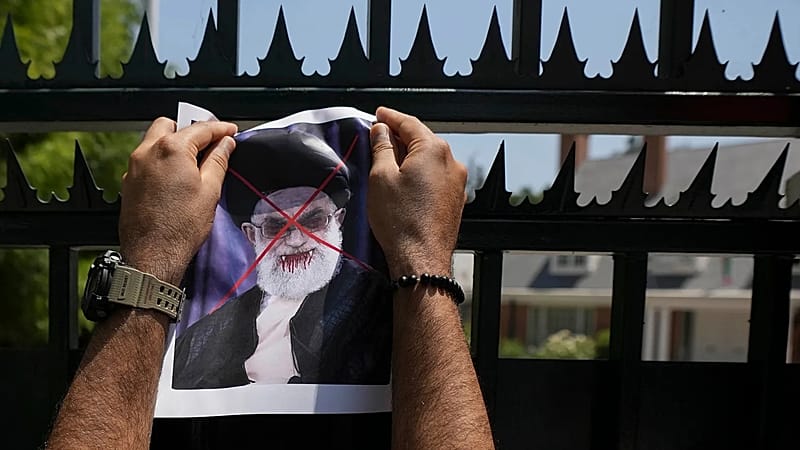
Iran has also reportedly limited journalists' ability locally to report on the aftermath of the protests, instead repeatedly airing claims on state television that refer to demonstrators as "rioters" motivated by America and Israel, without offering evidence to support the allegation.
Nearly 26,500 people have also been arrested, according to the Human Rights Activists News Agency.
Comments from officials have led to fears of some of those detained being put to death in Iran, one of the world's top executioners.
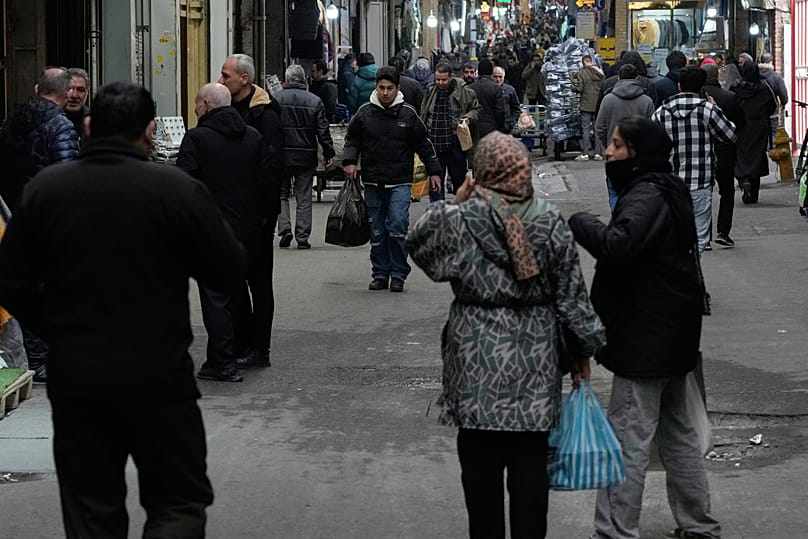
Warning from Araghchi
Meanwhile, Iranian Foreign Minister Abbas Araghchi issued his most-direct threat yet to the United States on Wednesday, warning the Islamic Republic will be “firing back with everything we have if we come under renewed attack.”
"Unlike the restraint Iran showed in June 2025, our powerful armed forces have no qualms about firing back with everything we have if we come under renewed attack," Araghchi wrote in the Wall Street Journal, referring to the 12-day conflict with Israel last June.
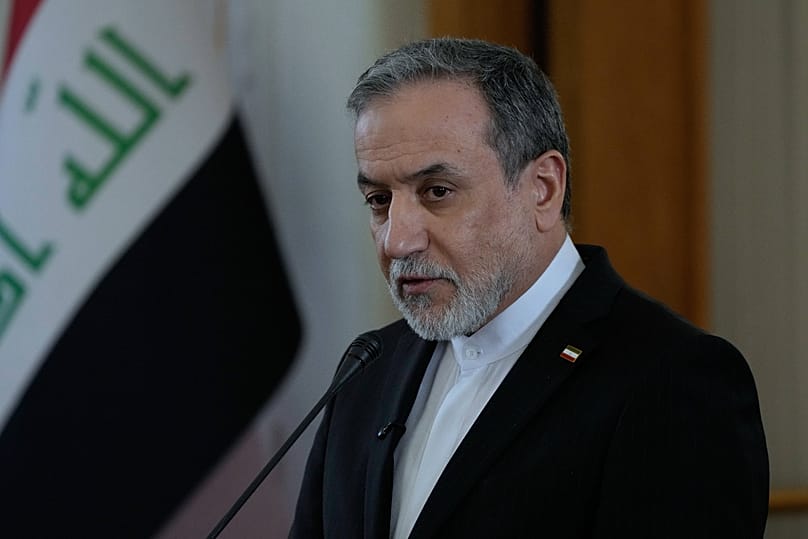
"This isn’t a threat, but a reality I feel I need to convey explicitly, because as a diplomat and a veteran, I abhor war."
The comments came as Araghchi saw his invitation to the World Economic Forum in Davos rescinded over the killings and as a US aircraft carrier group moved west toward the Middle East from Asia.
The USS Abraham Lincoln, which had been in the South China Sea in recent days, had passed through the Strait of Malacca, a key waterway connecting the sea and Indian Ocean, by Tuesday, ship-tracking data showed.