What’s the story?
The international negotiations over the future of Iran’s nuclear programme are approaching a deadline of 24 November. A deal would curb the Iranian programme – to reassure the rest of the world that Tehran does not intend to build nuclear weapons – in return for sanctions relief. Success would diminish the threat of a new war in the Middle East and significantly improve US-Iranian relations after a 35-year freeze. That in turn could lead to better cooperation in Syria, Iraq, Afghanistan and beyond. Inside Iran, the lifting of sanctions would immeasurably strengthen the hand of pragmatists, led by the president, Hassan Rouhani, who want to re-engage with the west.
How did we get here?
The standoff over Iranian’s nuclear aspirations dates to 2002, when it was revealed that the Islamic republic was building undeclared nuclear sites including a centrifuge plant for enriching uranium and a complex for making heavy water, which is used in the production of plutonium. In 2003 Tehran agreed a deal with European states to suspend enrichment and accept frequent inspections in return for a recognition of its right to have a nuclear programme and access to modern technology. But that deal broke down two years later.
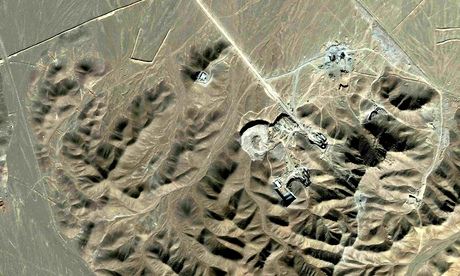
Since then, the crisis has deepened, with Iran expanding the programme, installing more centrifuges and working on the heavy water reactor, while the UN, US and EU have escalated sanctions. The prospect of armed conflict was brought closer in September 2009 when it was discovered that Iran had been building a second uranium enrichment plant, Fordow, inside a mountain near the city of Qom. Israel has repeatedly made clear it would take military action rather than allow Iran to acquire “breakout” capacity – the ability to assemble a nuclear bomb quickly, within a few weeks or months. An interim deal was reached last November to freeze enrichment and sanctions, but it expires on 24 November.
The issues
Enrichment and breakout
The central focus of a deal revolves around the concept of breakout capacity, which depends on numbers of centrifuges. The more centrifuges Iran has, the quicker it could make the highly enriched uranium (HEU) necessary for a warhead, if it took the decision to make weapons. Western and Israeli concerns centre on the possibility that Iran could install enough centrifuges to be able to reconfigure them and make a bomb’s worth of HEU before the international watchdog, the International Atomic Energy Agency (IAEA), noticed and before the west and Israel had time to react.
The US starting position in the talks was that Iran should only have capacity equivalent to about 4,000 of its centrifuges in their current design, so it would take between six months and a year to “break out”. At the moment Iran has 19,000 centrifuges installed, though just over half are functioning. Iran’s position is that it needs many more for its future nuclear energy programme, and will not contemplate reducing its existing capacity. A compromise will have to be found on this central issue for a deal to be possible.
Sanctions
In return, Iran would require a lifting of sanctions. Much of the discussion has focused on how that would be phased. A stumbling block has been the fact that the Obama administration cannot promise to lift sanctions imposed by Congress. All Obama can offer at the start of a deal is a temporary waiver. Currently the western offer consists of presidential waivers and the unfreezing of blocked Iranian assets in the west. Rouhani’s team says he needs more than that in order to satisfy the Iranian people that an agreement is worthwhile. The Iranians want an early lifting of UN security council sanctions, of an EU oil embargo and of a block on Iran using the international electronic payments system Swift.
Transparency
Critics of the breakout approach says it focuses on the wrong thing. It would be foolhardy for Iran to want to break out, they say, as there would be a high probability that it would be spotted before making a single weapon. A more serious threat is arguably that Iran might create a parallel covert programme in a disguised or underground facility. Some experts argue that it is therefore much more important for any agreement to radically enhance the IAEA’s monitoring powers so that any clandestine programme would be spotted quickly. The level of the IAEA presence in Iran is one of the issues on the table in the negotiations, as is the requirement for Iran to cooperate fully with the agency in its inquiry into the country’s alleged development work on nuclear weapons in the past.
Other nuclear elements
A deal would also involve an Iranian undertaking to redesign its heavy water reactor being built at Arak in central Iran, so that it produces much less plutonium than originally intended. Iran would also undertake not to build a reprocessing facility for extracting plutonium. The underground enrichment facility at Fordow would be converted to a small-scale research and development centre under constant IAEA inspection.
Opponents of a deal
Almost all the governments in the six-nation negotiating group in Vienna (US, UK, France, Germany, Russia and China) have a strong incentive to strike a deal, but France has been the least enthusiastic, frequently taking the toughest line, possibly because of strong ties with the Gulf Arabs. There are also strong forces of opposition in both the US and Iran. Many in the US Congress view a deal that leaves Iran with any enrichment capacity as a form of appeasement, and Republicans would be loth to endorse a central Obama foreign policy initiative. In Iran there is widespread distrust of western intentions, and hardliners have vowed to oppose any deal that seriously constrains Iran’s enrichment capacity. As in the US, many conservatives oppose it because it would strengthen the hand of moderates.
In the broader region there is significant hostility to an agreement from Israel and the Gulf Arab states. The Israeli government, which has an undeclared nuclear arsenal of its own, has portrayed any Iranian nuclear programme as a potential existential threat. The Gulf states, led by Saudi Arabia, believe an agreement that endorses the existence of even a limited Iranian enrichment capacity would disturb the delicate Sunni-Shia balance in the region, and have warned that it might lead them to reconsider their own positions on nuclear development.
Impact inside Iran
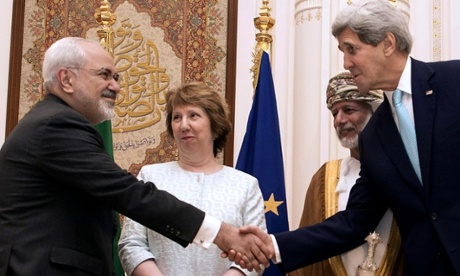
Rouhani’s fate is in the balance at the Vienna talks. He owes his victory in last year’s presidential election to his promise to end the nuclear standoff. He has made the talks a priority, naming his foreign minister, Mohammad Javad Zarif, as the country’s chief nuclear negotiator.
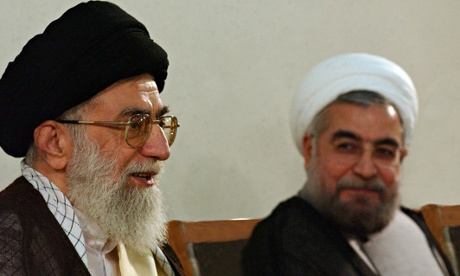
In the event of an agreement, Rouhani will gain greater influence over Iranian politics, currently dominated by conservative forces. Although the nuclear negotiations are not directly linked to Iran’s worrying human rights record, many believe that an agreement might increase Rouhani’s influence over social and judicial practices, moderating the character of the regime. But if the talks fail, Rouhani will lose authority and influence, which is likely to swing towards his critics among the conservative clerics and the powerful Revolutionary Guards.
Ultimately, a decision to approve any deal rests in the hands of one man, Ayatollah Ali Khamenei, the supreme leader. For the time being, he has put his weight behind Rouhani by supporting nuclear diplomacy, but it is not clear what his personal red lines are. He could still make or break the negotiations as they enter their final stretch.
Further reading
The Arms Control Association has published a basic briefing on the issue as well as useful fact sheets. Two recent articles arguing against an exclusive focus on centrifuges and breakout have been written by James Acton of the Carnegie Endowment for International Peace and Jeffrey Lewis in Foreign Policy. At the more detailed and technical end, the Institute for Science and International Security has a library of past IAEA reports on Iran and their analysis, and ArmsControlWonk.com has a rolling debate on Iran and other nonproliferation issues from, as you might expect, a wonkier point of view.