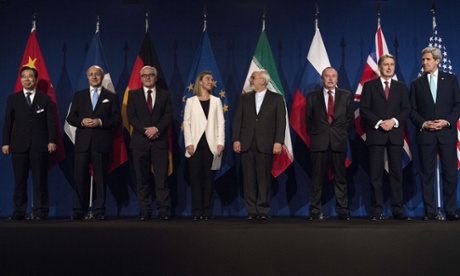
These are the winners and losers from the Lausanne nuclear deal, announced on Thursday. If the agreement is derailed before being finalised at the end of June, however, the table will be turned: winners will become losers and losers will become winners.
Winners
John Kerry
The US secretary of state has been under fire at home for having devoted so much of his time and effort to the Iran nuclear issue, which his critics claimed was a fool’s errand. The Lausanne deal is his response. It is already being hailed as one of the most significant diplomatic achievements in a generation or more, and makes him a leading contender for the Nobel Peace Price overnight.
Barack Obama
For his part, the US president already has a Nobel: he was given one at the start of his presidency.
A completed Iran deal could allow him to claim he had retrospectively earned it. It secures a signature foreign policy achievement for his legacy, to set alongside his principal domestic policy win, Obamacare.
Mohammad Javad Zarif
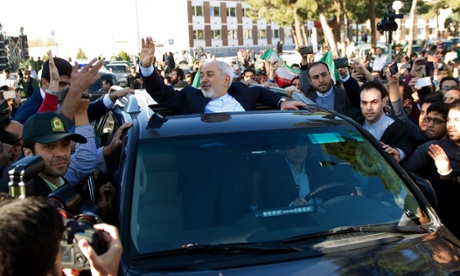
Iran’s foreign minister, who returned home to a hero’s welcome in Tehran on Friday, has made the deal the overwhelming focus of his role, delegating many other duties to deputies.
Failure to clinch an agreement – and lift the burden of sanctions on his country – would have spelt the end of his political career. For Zarif, it is all or nothing. If the full agreement is signed in June, he could be sitting alongside Kerry in Oslo receiving that Nobel.
Hassan Rouhani
The failure of a nuclear deal would have almost certainly have made Rouhani a one-term president of Iran. He will have to deliver the economic benefits of sanctions relief quickly, and then follow up with real social reform if he is to fulfil the hopes of Iranians who voted for him.
Federica Mogherini
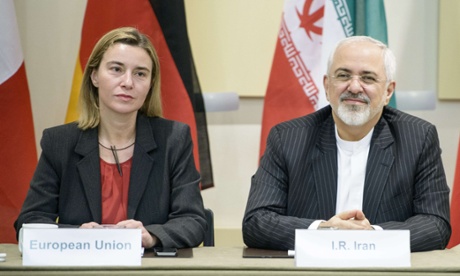
The former Italian foreign minister’s timing was impeccable. She took up the role as convener of the six-nation group as the talks were beginning to gather momentum.
But the fact that Mogherini was the one to first announce the Lausanne accord was not just a matter of luck. She won high marks from all sides for chairing some of the tougher late night sessions, and for instilling a team spirit among those who work for her.
Losers
Binyamin Netanyahu
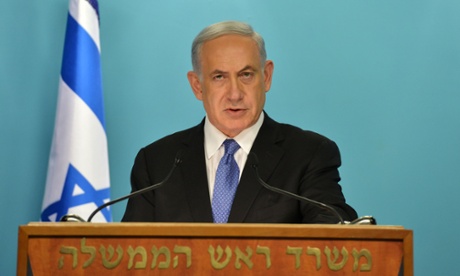
The Israeli prime minister went all out to stop the accord being signed and was rebuked by almost all sides in the negotiating chamber.
After all his sound and fury, particularly before the US Congress last month – the Lausanne deal makes him look ineffectual and marginalised.
Senator Bob Corker
The accord will make it harder for the US Republican party to muster a veto-proof majority to pass the Tennessee senator’s bill, which is due to go to the floor on the Senate this month.
He needs 13 Democrats to defect to muster 67 votes. It will be hard to find that many Democrats willing to defy their president once he has sealed a deal which has the approval of most non-proliferation experts.
King Salman bin Abdulaziz
The House of Saud has taken a zero-sum game approach to Iran and will see a rapprochement between the US and Iran as a loss of Saudi influence.
However, a strengthening of ties between Iran the US may come some time behind the deal and maybe not at all. Economically, though, Iran is likely to be a stronger rival in the Gulf once sanctions are lifted.