Iran's top nuclear scientist was assassinated with gunfire from a satellite-controlled machine gun mounted on a booby-trapped truck that exploded, it is claimed.
Astonishing new claims about the death of Mohsen Fakhrizadeh have emerged as Iran alleged the weapon used in the killing was made in Israel.
Iran's semi-official Fars news agency claims the initial gunfire came from a remotely-operated machine gun mounted on a Nissan truck which had a self-destruct mechanism and exploded.
The Arabic language Al Alam TV reported that the weapons used in Fakhrizadeh's killing were "controlled by satellite".
It is claimed the target, considered the “father” of Iran's nuclear weapons programme, was dragged out of his car and shot to make sure he was dead during a three-minute operation that involved 12 highly-trained assassins, including snipers, who lay in wait.

The assassins are said to have been part of a 62-strong group of plotters helped to orchestrate the daylight attack in Absard, 50 miles east of Tehran, last Friday.
Iran continued to vow revenge on Monday as a funeral for Fakhrizadeh, head of Iran's Research and Innovation Organisation of the Ministry of Defence, was held in the capital.
An American official and two other intelligence officials told the New York Times that Israel was behind the attack.
Fakhrizadeh, believed to be aged 59, and his wife were in a convoy of cars when they were ambushed by 12 assassins on a road in the countryside town of Absard.

Iranian journalist Mohamad Ahwaze, who claims to have received leaked information from the country's government and Revolutionary Guard, revealed details about the scientist's assassination.
In a series of tweets, the journalist claimed the assassins knew Fakhrizadeh was going to be driving from Tehran to Absard - a weekend destination for the wealthy where the 59-year-old had a villa - and planned the attack for a roundabout.
The 12 killers were deployed to Absard while 50 others supported them with logistics, Ahwaze claimed.
The journalist claimed all the members of the team that carried out the assassination had special training courses and were involved in security and intelligence services abroad.
According to leaked Iranian data, the assassination team used a Hyundai Santa Fe, a Nissan and four motorcycles to carry out the killing.
They were waiting for Fakhrizadeh at the scene of the ambush, Ahwaze wrote.
At the scene there was also a booby-trapped Nissan pickup.
About half an hour before Fakhrizadeh's convoy of three bulletproof cars arrived, the electricity in the area was cut off.

When the third vehicle passed, the Nissan was detonated.
The second car, containing Fakhrizadeh, was then sprayed with bullets by the 12 assassins, including two snipers.
Ahwaze tweeted: "According to Iranian leaks, the leader of the assassination team took Fakhrizadeh out of his car and shot him and made sure he was killed."
The Fars news agency, which is close to the Revolutionary Guard, claimed Fakhrizadeh stepped out of his car believing it had hit an object in the road or suffered an engine problem.

Witnesses on Friday told state TV that there were gunmen on foot.
Ahwaze said that the assassins escaped and the scientist's protection squad were then transported to hospitals in Tehran.
State media said Fakhrizadeh died in hospital after being gravely wounded.
None of the 12 hitmen were wounded or arrested, Ahzawe added.
In the aftermath, photos emerged showing the wreckage of the scientist's bullet-riddled, blacked-out vehicle, which was travelling in a convoy with three other vehicles.
Iran's English-language Press TV said on Monday that the weapon used in the killing of a prominent Iranian nuclear scientist last week was made in Israel.
"The weapon collected from the site of the terrorist act (where Mohsen Fakhrizadeh was assassinated) bears the logo and specifications of the Israeli military industry," an unnamed source told Press TV.
In Jerusalem, there was no immediate reply from Israeli officials contacted for comment on the report.
Speaking before the Press TV report, Israeli intelligence minister Eli Cohen told radio station 103 FM on Monday that he did not know who was responsible.
When asked about potential Iranian reprisals, Cohen added: "We have regional intelligence supremacy, and on this matter we are prepared, we are increasing vigilance, in the places where that is required."
Fakhrizadeh, who had little public profile in Iran but had been named by Israel as a prime player in what it says is Iran's nuclear weapons quest, survived an assassination attempt in 2008 when hitmen on motorcycles attached explosives to his car.
Iran began Fakhrizadeh's burial in a cemetery in northern Tehran on Monday, state TV reported, as the defence minister promised that the Islamic Republic would retaliate for his killing.
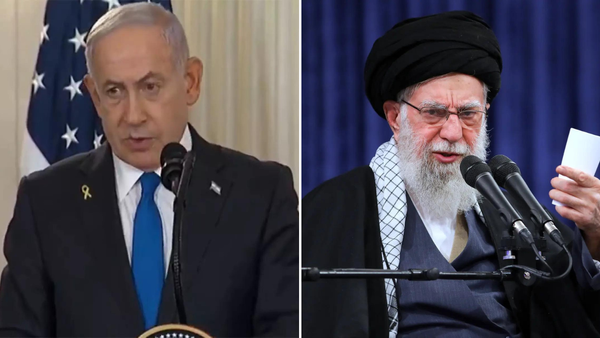
Iran's clerical and military rulers have blamed Iran's longtime enemy, Israel, for Fakhrizadeh's killing, raising the threat of a new confrontation with the West and Israel in the remaining weeks of Donald Trump's presidency.
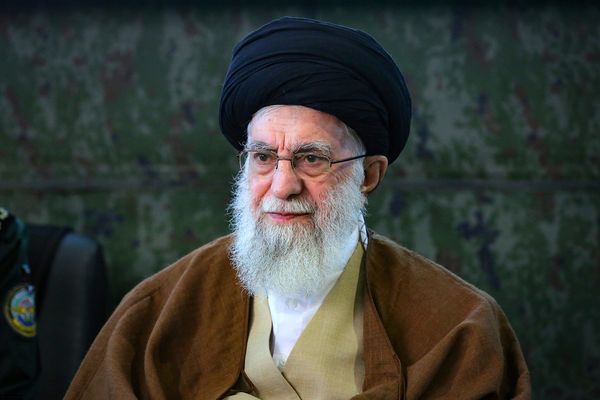
The hard-line Kayhan newspaper,, whose editor-in-chief is appointed by Supreme Leader Ayatollah Ali Khamenei, called for Iran to attack the port city of Haifa if an Israeli role in Fakhrizadeh's killing is proven.
However, Iran's rulers are aware of daunting military and political difficulties in attacking Israel.

Such an attack would also complicate any effort by US President-elect Joe Biden to revive detente with Tehran after he takes office on January 20.
Tensions have increased between Tehran and Washington since 2018, when Trump exited Iran's 2015 nuclear deal with six powers and reimposed sanctions that have crippled Iran's economy.
In retaliation, Tehran gradually breached the deal's curbs on its nuclear programme. Biden has said he will return the United States to the deal if Iran resumes compliance.
Tehran has always denied seeking nuclear weapons.
Fakhrizadeh's assassination comes 11 months after top Revolutionary Guards general Qassem Soleimani was killed in a US drone strike in Baghdad.
The Trump administration claimed Soleimani had masterminding attacks by Iran-aligned militias on American forces in the Middle East.