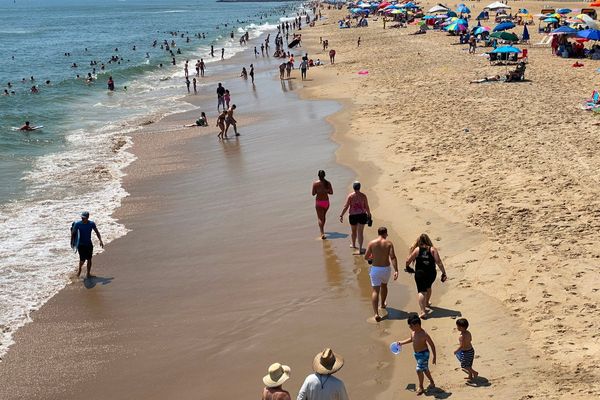
Boris Johnson finally broke his silence over the US assassination of Iranian military commander Qassem Soleimani as he returned from holidaying in the Caribbean.
Across the pond, US president Donald Trumpthreatened to “quickly and fully” and perhaps “disproportionately” strike back if Iran attacks any American citizens or targets in retaliation for the killing in Baghdad.
Meanwhile, Iran said it would no longer abide by any limits of an international nuclear deal agreed in 2015 – which aimed to prevent Tehran from building an atomic weapon.
Good morning. Follow here for all the latest updates on events in the Middle East in the wake of the US killing of Iranian general Qassem Soleimani.
Iran promises 'crushing and powerful retaliation'
A spokesperson for Iran's armed forces has pledged the country "will set up a plan, patiently, to respond to this terrorist act in a crushing and powerful manner".
“We are the ones who set the time and place of our reciprocal response," said the Iranian Armed Forces' spokesperson, Brigadier General Abolfazl Shekarchi.
Speaking to the Iranian Tasnim news agency, he also defended Qassem Soleimani's presence in Iraq as "absolutely legal and at the invitation of Iraqi officials and the people of the country", while claiming the opposite could not be said for the US military presence in the country.
“On the contrary, the Americans have occupied Iraq in violation of all international rules and regulations without any coordination with the Iraqi government and without the Iraqi people’s demand. They are looting the resources of that country and the oppressed people, especially their oil.
US and Nato forces in Iraq are stationed there at the Iraqi government's invitation, to aid in the fight against Isis.
Trump condemned for threatening 'war crimes'
The US president escalated tensions on Saturday night, as he threatened to target 52 Iranian sites in the event of any retaliation.
While the deliberate destruction of cultural sites goes against a UN security council resolution, which forbids it, many interpreted Mr Trump's threat as a statement of intent to target civilians.
In response, Alexandria Ocasio-Cortez labelled him a "monster", while Walter Shaub, the former head of ethics under George W Bush, painted it as akin to the act of a terrorist.
Tory foreign secretary backs Trump over assassination of Iran military leader, in sudden shift from Boris Johnson government
Dominic Raab said the UK “understands the position the US found themselves in” ahead of killing Qasem Soleimani, saying it had “a right to self-defence”, Rob Merrick reports.
The shift comes after Mike Pompeo, the US secretary of state, criticised the UK, France and Germany for failing to be “as helpful as I wish that they could be”.
Mr Raab also declined to criticise the US president’s overnight threat to hit 52 Iranian sites if Tehran retaliates for the assassination – in what would appear to hint at all-out war in the Gulf.

Here's some more detail from AP on Donald Trump's threat to bomb cultural sites:
The 1954 Hague Convention, of which the US is a party, bars any military from "direct hostilities against cultural property".
However, such sites can be targeted if they have been re-purposed and turned into a legitimate "military objective", according to the International Committee of the Red Cross.
Iran, home to 24 UNESCO World Heritage sites, has in the past reportedly guarded the sprawling tomb complex of the Islamic Republic's founder, Ayatollah Ruhollah Khomeini, with surface-to-air missiles.
Qassem Soleimani's body arrived in Iran this morning, and a grand funeral procession is underway.
His coffin was carried through the streets of Ahvaz, where tens of thousands turned out to mourn and pay their respects.
Here are some images of the vast procession.


Later today, Soleimani's remains will be taken to the holy city of Mashhad, according to Al Jazeera. On Monday, they will be transported to Tehran and Qom, where a red flag was unfurled atop the Jamkaran mosque on Saturday in a symbol of revenge.
Lastly, Soleimani's coffin will arrive in his hometown of Kerman on Tuesday, where he will be buried.
In Baghdad, parliament is holding an emergency session, with lawmakers under public pressure to expel US forces from the country, who have been stationed there to aid in the threat against Isis.
Prime minister Adel Abdul-Mahdi's approval is needed for plans announced on Saturday to restrict the movement of coalition forces in Iraq, including the 5,200 US troops stationed there, both in the air and on the ground.
It was not immediately clear what the new restrictions would mean, given that coalition troops were already subject to limitations and had to coordinate with the Joint Operation Command of top Iraqi military commanders.
Yesterday, a US defence official confirmed America would be sending a further 3,000 troops to the region.
Iranian parliament opens with chants of 'death to America'
Meanwhile in Tehran, an angry parliamentary session began with politicians venting their fury at the US.
"Mr Trump, this is the voice of Iranian nation. Listen," parliamentary speaker Ali Larijani said, as a chorus of politicians chanted "death to America" in unison.
He described US officials as following "the law of the jungle", and likened Soleimani's assassination to the 1953 CIA-backed coup that cemented the shah's rule for 26 years, until the Iranian revolution.
Mr Larijani also drew comparisons with the US Navy's shootdown of an Iranian passenger plane in 1988 that killed 290 people.
Shadow foreign secretary warns of 'lurch towards war' and takes aim at PM
Labour's Emily Thornberry said Donald Trump's "reckless" order to assassinate Qassem Soleimani has endangered Britain, in an interview with Sky News' Sophy Ridge.
"To take him out at this stage when there has been escalating tensions seems to me to be not making the world safer, actually we are taking a major lurch towards war," she said. "And we are doing that because the president is reckless and hasn't thought through what it is he is doing.
"But it seems to me quite clear that the Iranians are going to counter-attack and it means that our interests, our people, our forces are, of course, under threat."
Ms Thornberry continued her criticism of Mr Johnson's lack of responsibility while on holiday in the Caribbean, where he has remained silent on the unfolding Iran crisis.
"We should take responsibility, we are international players, of course, we have other preoccupations, and clearly the prime minister has a lot of preoccupations - he's sunning himself drinking vodka martinis somewhere else and not paying attention to this," she said.
Sanders introduces law to stop Trump from starting war with Iran
Bernie Sanders and fellow progressive Ro Khanna have introduced a law to block funding for “military force in or against Iran” without congressional approval, in an effort to stall a potential new war in the Middle East, Clark Mindock reports.
“Today, we are seeing a dangerous escalation that brings us closer to another disastrous war in the Middle East,” Mr Sanders, a 2020 Democratic presidential candidate, and Mr Khanna, a member of the House, said in a joint statement.
The statement continued: “A war with Iran could cost countless lives and trillions more dollars and lead to even more deaths, more conflict, more displacement in that already highly volatile region of the world.”

Here's a bit more reaction to Donald Trump's threat to bomb 52 targets in Iran.
The country's information and telecommunications minister Mohammad Javad Azari-Jahromi called the US president "a terrorist in a suit", comparing him to Isis.
As pointed out by The Independent's diplomatic correspondent Negar Mortazavi, Qassem Soleimani's role in the battle against Isis could unite Iran's divided political factions in their anger at the US.
Like clockwork, #IranianCulturalSites began to trend on Twitter, as people shared their favourite of Iran's many culturally significant locations in response to Mr Trump's threat of wanton destruction.
Baghdad rocked by blasts late on Saturday night, near US embassy and forces
With funeral processions were still taking place last night in Baghdad, as some Iraqis mourned the death of Soleimani and commander of the Iranian-backed Popular Mobilisation Forces, Abu Mahdi al-Muhandis, there were several explosions at significant locations across the city.
With funeral processions were still taking place last night in Baghdad, as some Iraqis mourned the death of Soleimani and commander of the Iranian-backed Popular Mobilisation Forces, Abu Mahdi al-Muhandis, there were several explosions at significant locations across the city.
The US-led coalition confirmed a rocket attack had taken place inside Baghdad's heavily fortified Green Zone, where the US embassy and government buildings are housed.
Another hit the nearby Jadriya neighbourhood, some 500 metres from the president's usual residence of As-Salam palace. Police sources told Reuters five people were injured.
Several more mortars were fired at the Balad air base north of the city. The US-led coalition said no troops were hurt.
Iranian MP claims Islamic Republic has power to 'attack the White House'
"We can attack the White House itself, we can respond to them on the American soil. We have the power, and God willing we will respond in an appropriate time," said Abolfazl Abutorabi, a hardline MP, according to Iranian news agency ILNA .
The hardline lawmaker urged Iran "should crush America's teeth" in response to a question on whether and how the Islamic Republic would react to the US assassination of Qassem Soleimani, in a furious parliamentary session held on Sunday.
"This is a declaration of war, which means if you hesitate you lose," Mr Abutorabi added. "When someone declares war do you want to respond to the bullets with flowers? They will shoot you in the head."
The Independent's international correspondent, Borzou Daragahi, said the MP was an obscure lawmaker known for making incendiary remarks and suggested the claims should be treated with a large dose of scepticism.
He said Iran was not believed to have any missiles capable of reaching Washington DC, and an individual suicide attack would likely be the only realistic means of Tehran targeting the capital.
Any significant military action by Iran would have to be vetted and approved by its Supreme National Security Council, a body that includes Supreme Leader Ali Khamenei, President Hassan Rouhani, and the leaders of the various branches of government and armed forces.
Mr Abutorabi also echoed previous suggestions that Iran could target ships in the Strait of Hormuz, where the Royal Navy was sent yesterday to escort ships.
"There are tens of thousands of possibilities for us to respond. Responding to the Americans in open waters does not pose any problem for us in terms of international regulations. We can take our revenge inside Iraq or in open waters."
Emergency parliament meeting in Iraq over future of US troops looks uncertain
The session called to debate the withdrawal of US troops was due to begin at 1pm local time (10am GMT), but is still yet to commence.
According to CNN, only about 20 of a possible 329 politicians have arrived, casting doubt on whether or not the meeting will take place.
Since the US airstrike that killed Soleimani and the Popular Mobilisation Forces commander Abu Mahdi al-Muhandis, rival Shiite leaders have come together in an unusual show of unity to call for the expulsion of US troops from the country.
"There is no need for the presence of American forces after defeating Daesh (Islamic State)," said Ammar al-Shibli, a member of the parliamentary legal committee told Reuters. "We have our own armed forces which are capable of protecting the country."
Hadi al-Amiri, the top candidate to succeed Muhandis, repeated his call for US troops to leave Iraq during Saturday's funeral procession.
While several parties have now floated plans to restrict the US presence in Iraq, to various degrees, prime minister Adel Abdul-Mahdi's approval also hangs in the balance for plans announced on Saturday to restrict the movement of coalition forces in Iraq.
It is unclear how far-ranging the proposed restrictions would be. Some 3,000 additional US troops have been deployed to the region, which currently houses 5,200 American soldiers.
Raab's defence of Trump criticised by Labour
The foreign secretary took an abrupt turn in his position on the Soleimani killing this morning, as he insisted Donald Trump had "a right to self-defence".
Given the shadow chancellor had previously urged Boris Johnson, who has been silent during his Carribean holiday, to go beyond calls for restraint and condemn the attacks outright, he was quick to criticise Mr Raab for his comments to Sophy Ridge.
As Dominic Raab says Trump had a right to self-defence, scepticism is mounting over US claims of an 'imminent' threat
According to Middle East analyst Rukmini Callimachi, US officials briefed after the drone strike on Soleimani have contradicted official claims that by killing the Iranian general, America averted an "imminent" attack.
Ms Callimachi, who reports for the New York Times and provides analysis for NBC, said one official had described the justification for the "chaotic" strike as "razor thin".
Echoing similar reports elsewhere, the official said that after the attack on an Iraqi base which killed an American defence contractor, Mr Trump was given several options for retaliation, of which killing Suleimani was the "far out option".
Despite alleged fury at the killing of the US contractor, Mr Trump is said to initially have gone with a more moderate option of strikes on the Popular Mobilisation Forces. He reportedly changed his mind after the protests at the US embassy in Baghdad.
One Republican source told CNN that Mr Trump had been warned by his advisers that if he did not take some form of military action, Iran would continue to attempt such attacks.
"I am very confident he was not reluctant," he said, adding that when Mr Trump has decided to act "you can't out escalate him."
While Trump's usual allies have defended the seemingly reckless decision to kill Soleimani, he faced criticism from one unusual source last night – Fox News' Tucker Carlson.
Here's a visual of the Iranian parliamentary session as politicians chanted "death to America", and the speaker warned: "Mr Trump, this is the voice of Iranian nation. Listen."

Elsewhere in Tehran, angry mourners burned American and Israeli flags.

And in the city of Ahvaz, tens of thousands of mourners turned out as Soleimani's coffin was paraded through the streets.

Iran to decide commitment to nuclear deal tonight, foreign ministry spokesperson says
"Tonight, there will be a very important meeting to decide about our next nuclear step and the implementation of the deal ... considering the recent threats [by America] it should be underlined that in politics, all developments and threats are linked to each other," said spokesperson Abbas Mousavi, according to state news agency IRNA.
In reaction to the US policy of "maximum pressure" and punishing sanctions since Donald Trump pulled out of the nuclear agreement in 2018, Iran has taken several actions in violation of the deal, involving the production of materials that could be used to create nuclear weapons.
Iran has warned that it will further decrease its commitments if European parties fail to shield Tehran from US penalties. In November, Iran gave Britain, France and Germany a third 60-day deadline to salvage the deal.
On Saturday, French foreign minister Jean-Yves Le Drian spoke with his counterparts in Germany and China, before issuing a public statement calling on Iran to "avoid any further measure of violation of the Vienna Agreement".
The Independent's international correspondent Borzou Daragahi reported Iran's claims in November it had amassed 500kg of enriched uranium, more than the 300kg limit set by the nuclear deal, and was producing enriched uranium at a rate of six kilograms per day.
Around 1,100 kilograms of reactor-grade uranium would be required to produce enough highly enriched fissile material for a single nuclear weapon.
The Independent's international correspondent Borzou Daragahi reported Iran's claims in November it had amassed 500kg of enriched uranium, more than the 300kg limit set by the nuclear deal, and was producing enriched uranium at a rate of six kilograms per day.
Around 1,100 kilograms of reactor-grade uranium would be required to produce enough highly enriched fissile material for a single nuclear weapon.
Criticism over Boris Johnson's silence on the Iranian crisis continues to roll in, as Dominic Raab sparked fears of the government's intentions by citing Donald Trump's "right to self-defence" in ordering the killing of Soleimani.
Here's the PM's most recent output on Twitter, hours before the airstrike.
And an interesting observation from Carole Cadwalladr of The Observer:
Speaking to Andrew Marr, Mr Raab insisted the PM had been in “constant contact”, to discuss the crisis, adding: “What really matters is that there is a very clear strategy and message.
“There has not been a vacuum at all – the prime minister has been in charge.”