We’re going to bring this blog to a close now. Our US politics live blog will have all the latest fallout from the killing of Suleimani and there will be more reports and analysis on Iran page.
The UK foreign secretary, Dominic Raab, has called for a “diplomatic way through” the crisis.
In carefully worded comments for a pooled TV interview, Raab said:
I’ve just come from the meeting that the prime minister chaired with key ministers and officials, and clearly our first priority is to make sure that UK national citizens, shipping, diplomatic missions and military personnel are safe. We’ve changed our travel advice, we’re going to be reinforcing in due course the Royal Navy protection for shipping in the Strait of Hormuz.
And on the diplomatic front, our overwhelming message that the prime minister and I are conveying to our European and American counterparts, and also critically our partners in the Middle East, is the importance of deescalating the tensions and finding a diplomatic way through this crisis.
I will be talking further with our European partners, our Middle Eastern partners, and I’ll be traveling to the US and Canada towards the end of the week.
Asked if the decision to order the killing of Suleimani was right or wrong, Raab said:
General Suleimani was a regional threat. He had a track record, that was his job description. I don’t think we will, as the prime minister said, lament his passing. But at the same time looking forward now, the key message that we’ve got all of our European and American partners but critically, also, to the Iranians to the Iraqis, and all of those affected in the region, is the importance to defuse the tensions, to deescalate. I had a conversation with Foreign Minister Zarif this afternoon, where we conveyed that message and the importance of finding a diplomatic way through.
Asked about Trump’s threat to target cultural sites, Raab said:
We have been clear that cultural sites are protected under international law and would expect that to be respected.
Updated
Rouhani: 'never threaten Iran'
Iran’s president, Hassan Rouhani, has warned the US to “never threaten the Iranian nation”. He also criticised Trump’s threat to target 52 Iranian cultural sites if Tehran retaliates against the killing of Suleimani.
In a tweet he urged Trump to remember the killing of 290 Iranians when a US navy ship shot down an Iranian Airbus over the Strait of Hormuz.
Those who refer to the number 52 should also remember the number 290. #IR655
— Hassan Rouhani (@HassanRouhani) January 6, 2020
Never threaten the Iranian nation.
Updated
UN warns of ‘profound risk of miscalculation’
The UN secretary general, António Guterres, has demanded an end to the escalation of tensions and warned of the “profound risk of miscalculation”.
He did not name any countries but his warning appeared squarely aimed at the US and Iran.
Speaking to reporters he said:
“My message is simple and clear: stop escalation. Exercise maximum restraint. Restart dialogue. Renew international cooperation. Let us not forget the terrible human suffering caused by war.”
Guterres also warned that “geopolitical tensions are at their highest level this century”. He added:
“This cauldron of tensions is leading more and more countries to take unpredicted decisions with unpredictable consequences and a profound risk of miscalculation.”
UN Secretary-General António Guterres: "My message is simple and clear: stop escalation. Exercise maximum restraint. Restart dialogue. Renew international cooperation. Let us not forget the terrible human suffering caused by war." pic.twitter.com/Lv9I8U5Nrb
— euronews (@euronews) January 6, 2020
Updated
The US embassy in Israel has issued a security alert warning US citizens of “heightened tensions” and highlighting the risk of rocket attacks.
The alert, published on the embassy’s website, made no mention of the killing of Suleimani. It said:
“Out of an abundance of caution, the embassy strongly encourages US citizens to remain vigilant and take appropriate steps to increase their security awareness, as security incidents, including rocket fire, often take place without warning.”
Updated
Iraq’s prime minister, Adel Abdul-Mahdi, has told the US ambassador to Baghdad, that both countries should work together on implementing an Iraqi parliamentary resolution on the withdrawal of foreign troops.
Reuters quotes a statement from Mahdi’s office as saying:
The prime minister stressed the importance of mutual cooperation on implementing the withdrawal of foreign troops, in line with the Iraqi parliament’s resolution, and to set relations with the United States on a proper foundation.
He stressed how dangerous the situation is right now and its potential consequences, adding that Iraq is doing everything it can to prevent the descent into open war.”
Updated
Nato suspends training in Iraq
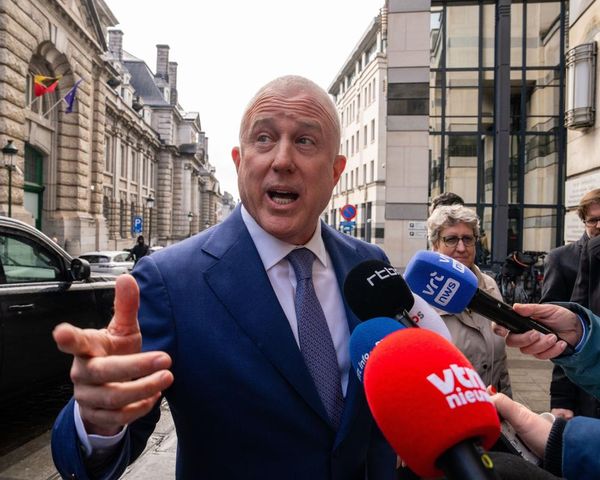
Nato’s secretary general, Jens Stoltenberg, has announced the temporary suspension of training in Iraq after chairing a meeting in Brussels over the Iran crisis.
Speaking to reporters in the Belgian capital he also distanced Nato from the US killing of Suleimani.
Stoltenberg said: “This is a US decision. It is not a decision taken by the global coalition nor Nato. But all allies are concerned about Iran’s destabilising activities in the region.”
Secretary-General Stoltenberg on the murder of #Soleimani: "This is a US decision. It is not a decision taken by the global coalition or #NATO. But all allies are concerned about #Iran's destabilising activities in the region."https://t.co/sVeqKVcIqD pic.twitter.com/zL9cAP4knQ
— euronews (@euronews) January 6, 2020
“At our meeting today, Allies expressed their strong support for the fight against ISIS and for the #NATO mission in #Iraq. In everything that we do, the safety of our personnel is paramount. As such, we have temporarily suspended our training on the ground,” - @jensstoltenberg pic.twitter.com/htkIA7dIcb
— Oana Lungescu (@NATOpress) January 6, 2020
Updated
Summary
Here’s a summary of the latest developments:
- Donald Trump has issued a new warning to Iran amid mounting tension between Tehran and Washington over his decision to order the killing of Qassem Suleimani last week. In an all-caps tweet the president said Iran would never have a nuclear weapon.
- Trump also defended his threat to target Iranian cultural sites – widely seen as a war crime – if Tehran retaliates for the killing of Suleimani. Speaking to reporters he said: “They’re allowed to use roadside bombs and blow up our people. And we’re not allowed to touch their cultural site? It doesn’t work that way.” Unesco has reminded the US that it has signed treaties committing it not to harm cultural heritage in the event of armed conflict
- Two senior Senate Democrats, Chuck Shumer and Robert Menendz, have called on Trump to immediately declassify the administrations reasoning for the strike on Suleimani. The former national intelligence director James Clapper made a similar call and cast doubt on the administration’s claim that Suleimani posed a direct threat to US lives.
- Iran’s supreme leader, Ayatollah Ali Khamenei, has publicly wept while presiding over a vast public funeral procession in Tehran for Suleimani. Khamenei’s voice cracked with emotion as he recited prayers over the coffin of Suleimani and others killed in the attack.
- Police in Tehran said millions of mourners gathered in the Iranian capital. Observers said they were the largest crowds in Tehran since the funeral in 1989 of Ayatollah Khomeini, the founder of the Islamic Republic.
- Iran’s foreign minister, Javad Zarif, said the scale of the crowds was a signal to Donald Trump that the US could not break the will of the Iranian people. Zarif also predicted the end of the “malign US presence” in the region.
- Suleimani’s daughter, Zeinab, told mourners that the US can expect revenge. She said: “America and Zionism should know that my father’s martyrdom will lead to awakening … in the resistance front and bring about a dark day for them and flatten their homes.”
- Diplomats across the world have called for calm and implicitly criticised the US in the wake of the killing of Suleimani. The foreign minister of Germany described a threat by Donald Trump to impose sanctions on Iraq if it withdrew US troops as “not very helpful”. China said it believes Iran was forced to reduce its commitment to the nuclear deal. Saudi Arabia said tensions in the regions were at a “very dangerous moment”. EU foreign ministers will hold an emergency meeting on Iran in Brussels on Friday.
- Downing Street has said targeting cultural sites in Iran, as Trump has suggested, would breach international warfare conventions. Responding to Trump’s latest comments, Boris Johnson’s spokesman said there were “international conventions in place that prevent the destruction of cultural heritage”.
- The German chancellor, Angela Merkel, is to travel to Russia this week for talks with Vladimir Putin about the crisis. She is due to visit Moscow on Saturday at the invitation of Putin, the Kremlin said.
- Oil prices have climbed above $70 a barrel for the first time in eight months amid fears that the US airstrike may trigger a retaliation. The attack has sent shockwaves through global markets, causing equity indices in Asia, the US and Europe to slump while the benchmark price of Brent crude climbed to its highest level since May last year.
- The husband of the jailed British-Iranian dual national Nazanin Zaghari-Ratcliffe has criticised the killing of Suleimani, saying it is hard to demand Iran complies with the rule of law if its adversaries play fast and loose with the same law. Richard Ratcliffe again urged Johnson, the British prime minister, to find time to meet him to discuss his wife’s plight.
Updated
A YouGov poll for HuffPost suggests some US public backing for the killing of Suleimani.
It found 43% approved of the action compared with 38% who disapproved. But between 43% to 35% said Trump did not plan carefully enough before ordering the strike.
NEW: HuffPost/YouGov polling:
— Ariel Edwards-Levy (@aedwardslevy) January 6, 2020
-43% approve of strike killing Soleimani, 38% disapprove
But Americans say:
-43% to 35% Trump did not plan carefully enough
-44% to 34% he should have gotten Congress auth
-47% to 32% he has no clear plan for Iranhttps://t.co/GQdWxgFdjj pic.twitter.com/rYBll66TG1
Updated
Josep Borrell, who started work as the EU’s foreign policy chief last month, has invited the Iranian foreign minister, Javad Zarif, for separate talks after a phone call over the weekend.
“It is up to the Iranian side to take up the invitation and proceed. I understand that there is interest on both sides to continue the mutual engagement,” a spokesman for Borrell said, when asked if the meeting would go ahead.
Even as commentators were reading the last rites for the Iran nuclear deal, the EU is seeking to keep alive the agreement it helped secure in 2015.
In a tweet Borrell said he deeply regretted Iran’s latest announcement on the deal, adding: “Full implementation of nuclear deal by all is now more important than ever, for regional stability and global security. I will continue working with all participants on way forward.”
Deeply regret Iran’s latest announcement on #JCPOA. As ever we will rely on @iaeaorg verification. Full implementation of #NuclearDeal by all is now more important than ever, for regional stability & global security. I will continue working with all participants on way forward.
— Josep Borrell Fontelles (@JosepBorrellF) January 6, 2020
The EU said it would continue to rely on the verdict of the International Atomic Energy Agency, which has responsibility for monitoring Iran’s compliance with the nuclear deal.
Updated
EU foreign ministers to hold emergency meeting on Iran
EU foreign ministers will hold an emergency meeting on Iran in Brussels on Friday, two diplomats have told Reuters.
Earlier Boris Johnson, Emanuel Macron, and Angela Merkel issued a joint statement calling for deescalation of the crisis.
It said:
We have condemned the recent attacks on coalitions forces in Iraq and are gravely concerned by the negative role Iran has played in the region, including through the IRGC and the Al-Quds force under the command of General Suleimani.
There is now an urgent need for de-escalation. We call on all parties to exercise utmost restraint and responsibility. The current cycle of violence in Iraq must be stopped.
We specifically call on Iran to refrain from further violent action or proliferation, and urge Iran to reverse all measures inconsistent with the JCPOA.
We recall our attachment to the sovereignty and security of Iraq. Another crisis risks jeopardising years of efforts to stabilise Iraq.
We also reaffirm our commitment to continue the fight against Daesh, which remains a high priority. The preservation of the Coalition is key in this regard. We therefore urge the Iraqi authorities to continue providing the Coalition all the necessary support.
We stand ready to continue our engagement with all sides in order to contribute to defuse tensions and restore stability to the region.
Updated
Donald Trump’s threat to destroy the sites of ancient Persia should send a shiver down the spine of any civilised person. How can anything justify American bombing of Persepolis or the mosques of Isfahan? Only the demented can see them as “threatening America”. It is on the same ethical plane as the Islamic State vandalism of Palmyra and Mosul.
Hundreds of Yemenis have taken part in a protest in Sana’a called by Tehran-backed Huthi rebels to vent anger over the US assassination of Iranian commander Qassem Suleimani, AFP reports.
“We come together with free men around the world to face down the American Satan,” an announcer told the crowd at the Bab al-Yaman entrance to the capital’s Old City.
The demonstrators cried: “Death to America” and waved banners calling for a boycott of US and Israeli products, in images broadcast by the Huthis’ Al-Masirah television.
Huthi official Dhaifallah al-Shami addressed the crowd under giant portraits of Suleimani and top Iraqi military figure Mahdi al-Muhandis, both killed in a US drone strike in Baghdad last Friday.
“The blood of the martyrs Suleimani and Muhandis is not just Iranian or Iraqi but belongs to the Muslim community and to free men around the world,” he said.
The Huthis have called for swift reprisals for the killings.
A statement from Huthi authorities read out to the crowd said it was “time for the Americans and Zionists to pack their bags” and leave the region.
The rebels are locked in a five-year conflict with a Saudi-led military coalition.
It was unclear if the Huthi call for reprisals was also directed at Riyadh, which has stepped up efforts to end Yemen’s conflict amid a lull in Huthi attacks on the kingdom.
Now: a march in Sanaa organized by the Houthis to condemn the killing of the Iranian military commander Qassem Soleimani and the Iraqi militias leader Abu Mahdi Al-Muhandis pic.twitter.com/wDIYWtihC2
— Almasdaronline (@AlmasdaronlineE) January 6, 2020
Updated
Trump warns Iran that it will never have a nuclear weapon
Donald Trump’s capslock diplomacy continues:
IRAN WILL NEVER HAVE A NUCLEAR WEAPON!
— Donald J. Trump (@realDonaldTrump) January 6, 2020
Unesco has reminded the US that it has signed treaties committing it not to harm cultural heritage in the event of armed conflict, after Donald Trump stood by his threat to go after Iranian cultural sites, warning of a “major retaliation” if Iran strikes back for the killing of Suleimani.
The UN cultural body said that under provisions of the 1954 and 1972 conventions – which have been ratified by both the US and Iran – signatory states undertake not to take any deliberate measures which might damage cultural and natural heritage on the territory of other states party to those conventions.
Updated
Downing Street has released a readout of a phone call between Boris Johnson and the prime minister of Iraq, Adil Abdul-Mahdi, about the crisis.
It said:
“The leaders discussed the need to de-escalate tensions in the region following the death of Qassem Suleimani and agreed to work together to find a diplomatic way forward.
“The prime minister underlined the UK’s unwavering commitment to Iraq’s stability and sovereignty and emphasised the importance of the continued fight against the shared threat from Daesh.”
This suggests that the UK is trying to persuade Baghdad not to expel US troops from Iraq as its parliament has vowed.
Updated
Two senior Senate Democrats have called on Trump to immediately declassify the administrations reasoning for the strike on Suleimani, as suggested by former national intelligence director James Clapper (see earlier).
In a letter to Trump the Senate minority leader, Chuck Schumer, and a Senate foreigns relation committee member, Robert Menendez, said the White House’s classified notification sent to Congress late on Saturday under the War Powers Act was insufficient and inappropriate.
🚨 BREAKING 🚨
— Senator Bob Menendez (@SenatorMenendez) January 6, 2020
We are sending a short but clear letter to Pres. Trump: Don’t hide from the American people. Declassify your decision to kill Soleimani and bring our country to the brink of war with Iran. pic.twitter.com/y86QqMdw4q
“It is critical that national security matters of such import be shared with the American people in a timely manner,” they wrote.
Late on Sunday, the House Speaker, Nancy Pelosi, said the House would introduce and vote this week on a war powers resolution to limit the president’s military actions regarding Iran. In a letter to House Democrats, Pelosi called the airstrike provocative and disproportionate and said it had endangered US service members, diplomats and others by risking a serious escalation of tensions with Iran. A similar resolution was introduced in the Senate.
Updated
Iran’s UK ambassador, Hamid Baeidinejad, has condemned Trump’s threat to target Iran’s cultural sites if there it retaliating against Suleiman’s killing.
Retweeting criticism of Trump’s comments by Tristram Hunt, the director of the V&A museum, Baeidinejad said Trump threat was a disturbing step towards his goal of war.
رئیس موزه ویکتوریا-آلبرت بریتانیا(از مهمترین موزه های جهان):همچون تخریب وحشتناک وتنفرانگیز پالمیرا و اماکن مهم میراث تاریخی توسط داعش،تهدید دولت آمریکا به انهدام اماکن مهم فرهنگی ایران باید محکوم گردد.این اعلام،قدمی نگران کننده به سمت عادی سازی تخریب فرهنگ بعنوان یک هدف جنگی است. https://t.co/tzX5Gu0PRM
— Hamid Baeidinejad (@baeidinejad) January 6, 2020
Donald Trump has defended his threat to target Iranian cultural sites – widely seen as a war crime – if Tehran retaliates for the killing of Suleimani.
On bellicose form, the US president also lashed out at Iraq following its parliament’s demand for American troops to be expelled from that country, and vowed to respond with crippling sanctions.
Speaking to reporters onboard Air Force One a day later, he sought to offer a justification for threat he tweeted on Saturday. “They’re allowed to kill our people,” Trump said, according to a pool report. “They’re allowed to torture and maim our people. They’re allowed to use roadside bombs and blow up our people. And we’re not allowed to touch their cultural site? It doesn’t work that way.”
Updated
Russia’s Foreign Ministry says it sees no threat of nuclear weapons proliferation after Iran’s decision to abandon limitations on enriching uranium, Reuters reports.
The ministry said that Russia remained fully committed to the Iran nuclear deal
Iran announced on Sunday that it would lift limitations on uranium enrichment, taking a further step back from commitments to a 2015 nuclear deal with six major powers, but said it would continue to cooperate with the UN nuclear watchdog.
Summary
Here’s a summary of events so far:
- Iran’s supreme leader, Ayatollah Ali Khamenei, has publicly wept presiding over a vast public funeral procession in Tehran for Qassem Suleimani. Khamenei’s voice cracked with emotion as he recited prayers over the coffin of Suleimani and others killed in the attack, amid raised tensions between Tehran and Washington.
- Police in Tehran said millions of mourners gathered in the Iranian capital. Observers said they were the largest crowds in Tehran since the funeral in 1989 of Ayatollah Khomeini, the founder of the Islamic Republic.
- Iran’s foreign minister, Javad Zarif, said the the scale of the crowds were a signal to Donald Trump that the US could not break the will of the Iranian people. Zarif also predicted the end of the “malign US presence” in the region.
- Suleimani’s daughter, Zeinab, told mourners that the US can expect revenge. She said: “America and Zionism should know that my father’s martyrdom will lead to awakening … in the resistance front and bring about a dark day for them and flatten their homes.”
- Diplomats across the world have called for calm and implicitly criticised the US in the wake of the killing of Suleimani. The foreign minister of Germany described a threat by Donald Trump to impose sanctions on Iraq if it withdrew US troops as “not very helpful”. China said it believes Iran was forced to reduce its commitment to the nuclear deal. Saudi Arabia said tensions in the regions were at a “very dangerous moment.”
- Downing Street has said targeting cultural sites in Iran, as Trump has suggested, would breach international warfare conventions. Responding to Trump’s latest comments, Boris Johnson’s spokesman said there were “international conventions in place that prevent the destruction of cultural heritage”.
- The German chancellor, Angela Merkel, is to travel to Russia this week for talks with Vladimir Putin about the crisis. She is due to visit Moscow on Saturday at the invitation of Putin, the Kremlin said.
- Oil prices have climbed above $70 a barrel for the first time in eight months amid fears that the US airstrike may trigger a retaliation. The attack has sent shockwaves through global markets, causing equity indices in Asia, the US and Europe to slump while the benchmark price of Brent crude climbed to its highest level since May last year.
- The husband of the jailed British-Iranian dual national Nazanin Zaghari-Ratcliffe has criticised the killing of Suleimani, saying it is hard to demand Iran complies with the rule of law if its adversaries play fast and loose with the same law. Richard Ratcliffe again urged Johnson, the British prime minister, to find time to meet him to discuss his wife’s plight.
Updated
Downing Street has said targeting cultural sites in Iran would breach international warfare conventions in an implicit rebuke to Donald Trump for threatening to bomb protected heritage sites.
Boris Johnson’s official spokesman refused to criticise Trump directly but made clear the UK government would not support such a course of action, after the US president said he could target 52 Iranian sites if Iran retaliated over the assassination of Qassem Suleimani – “some at a very high level and important to Iran and the Iranian culture”.
Responding to Trump’s latest comments, Johnson’s spokesman said there were “international conventions in place that prevent the destruction of cultural heritage”, implying the UK does not believe such threats would be carried out.
Helicopter video footage released by Iran’s Revolutionary Guards-affiliated Fars news agency shows the scale of the crowds in Tehran.
Aerial Footage of Funeral Procession for General Soleiman in Tehran pic.twitter.com/oT8TkTj318
— Fars News Agency (@EnglishFars) January 6, 2020
Updated
Saudi Arabia, Iran’s regional rival and a key ally of the US, has called for calm.
Its foreign minister, Prince Faisal bin Farhan, said the kingdom does not want to see further escalation of tensions in the region at a “very dangerous moment”.
Speaking at press briefing in Riyadh, Reuters quoted him saying:
“We are very keen that the situation in the region doesn’t escalate any further. It’s certainly a very dangerous moment and we have to be conscious of the risks and dangers not just to the region but to wider global security.
“We hope that all actors take all the steps necessary to prevent any further escalation and any provocation.”
Updated
The Iranian ambassador to the UK is to complain formally about a frontpage article in the Times claiming that Iranian generals are prepared to kill British troops in response to the assassination of Qassem Suleimani.
Hamid Baeidinejad said he strongly condemned “the vicious lie and provocative news by #Times today”.
He added on Twitter: “I will ask the concerned UK authorities to take swift action to stop such malicious false propaganda in this very sensitive time.”
The story was headlined “We will kill UK troops, warns Iran”. Although the embassy frequently takes issue with the slant of specific stories in the British press, including what it feels is anti-Iranian bias, it is rare for the ambassador to threaten a formal complaint.
Updated
Iran’s foreign minister, Javad Zarif, asked Trump: “Have you EVER seen such a sea of humanity in your life?”
Zarif predicted the end of what he called the “malign US presence” in the region.
Have you EVER seen such a sea of humanity in your life, @realdonaldtrump?
— Javad Zarif (@JZarif) January 6, 2020
Do you still want to listen to the clowns advising you on our region?
And do you still imagine you can break the will of this great nation & its people?
End of malign US presence in West Asia has begun. pic.twitter.com/5WzYM9OBuQ
Observers say the scale of the crowds in Tehran are “astonishing”.
The panoramic photo that I took of General #Suleimani's funeral, on Yadegar bridge, in front of Iran's ministry of tourism and cultural heritage.
— Mahdieh (马迪) Jahangir © (@MadiTravel) January 6, 2020
Never seen such a crowd before. Astonishing number of people from every walk of life.#NoWarOnIran #IranianCulturalSites pic.twitter.com/PYMs58wHzp
Updated
Downing Street has urged the Iraqi government to allow foreign troops to remain in the country to fight against the threat posed by Islamic State.
In the wake of the killing of Suleimani and a Iraqi militia leader in the US drone attack, Iraq’s parliament voted to expel US troops.
The PM’s spokesman said:
“The coalition is in Iraq to protect Iraqis and others from the threat from Daesh at the request of the Iraqi government. We urge the Iraqi government to ensure the coalition is able to continue our vital work countering this shared threat.
“The foreign secretary spoke to the Iraqi president and prime minister this weekend.
“The prime minister is speaking with his Iraqi counterpart today and our ambassador in Baghdad is in touch with political leaders in Iraq to emphasise these points and urge them to ensure we can keep fighting this threat together.”
Updated

James Clapper, the former director of national intelligence, has expressed doubts about the Trump administration’s claim that Suleimani posed a direct threat to US lives.
Speaking to CNN, Clapper said: “Suleimani himself didn’t plant IEDs. He didn’t himself launch rocket attacks against American personel or facilities. So to me it is a bit of a stretch that by doing this they thwarted an imminent attack. Typically under Suleimani attacks were carried out by proxies, that is Shia militia in Iraq.”
Clapper also said the Trump administration was facing a problem of trust by appearing to pick and chose the intelligence it believes.
He said:
There is a credibility issue here in general. The president has spent the last three years discrediting the very intelligence community that produced this intelligence. There is a history that people should remember about 17 years ago when the administration made assurances about intelligences pertaining to Iraq which of course was the occasion for an invasion. So scepticism is in order her.
The discrediting of the intelligence community is going to come back to haunt and this may be a case in point. If it has to do with Russian meddling or a determination of North Korea not to denuclearise, that’s intelligence we don’t like. But if we have intelligence we do like, that supports our position then it’s ok. There a bit of a credibility challenge here for the administration.
Trump’s national security adviser, Robert O’Brien, has claimed there was “very solid” intelligence that Suleimani was travelling around the region to plan an attack against troops.
“We knew he was in the process of planning these attacks and we acted to defend American lives,” O’Brien told Fox News.
Clapper said he could not believe such assurances without seeing the intelligence on which they were based. He suggested Trump may have to publish any intelligence showing Suliemani posed a threat to US lives.
Clapper said:
“The president has indicated he might declassify the intelligence, and in this case the occasion may call for it. The two intelligence oversight committees in the Senate and the House certainly are entitled to the same intelligence information and to my knowledge they have not been exposed to it.”
Updated
Downing Street has insisted Britain’s security partnership with the US remains “very close” despite Donald Trump not informing the UK of its plans to assassinate Suleimani, PA reports.
The prime minister’s official spokesman said:
“We have a very close security partnership with the United States, we are in regular dialogue at every level.”
Asked if Johnson was convinced the US drone strike was legal, the spokesman said:
“States have a right to take action such as this in self defence and the US have been clear that Suleimani was plotting imminent attacks on American diplomats and military personnel.”
Johnson spoke to the Iraqi prime minister on Monday morning, the spokesman said.

The scale of the crowds mourning Suleimani in Tehran are was the biggest since the 1989 funeral for the founder of the Islamic Republic, Ayatollah Ruhollah Khomeini, according to Reuters.
Crowds chanted: “Death to America”. One poster held by a mourner read: “It is our right to seek a harsh revenge,” echoing comments by Iranian military and political leaders.
The death of the general, widely seen as the second most powerful figure in Iran after Khamenei, has prompted a rare public display of unity at home after deadly anti-government protests in November and before parliamentary elections in February.
“The martyrdom of Suleimani is for sure a turning point for the establishment, at home and abroad. His death, at least for now, has united Iran,” a former senior pro-reform Iranian official told Reuters.
The coffins of Suleimani and the Iraqi militia leader, Abu Mahdi al-Muhandis, who was also killed in Friday’s attack, were draped in their national flags and passed from hand to hand across the heads of mourners in central Tehran.
The funeral ceremonies will culminate with Suleimani’s burial in his home city of Kerman, in southern Iran.
Traditionally, Muslims are buried swiftly after their death, often the same day. But Suleimani’s body has first been taken to cities in Iraq, where Iran has vied with the Washington for influence since the 2003 US invasion, before being carried around Iran.

“America and Zionism should know that my father’s martyrdom will lead to awakening ... in the resistance front and bring about a dark day for them and flatten their homes,” Zeinab Suleimani, the commander’s daughter, told mourners. Iran usually refers to Israel as the Zionist state and describes regional countries and other forces opposed to Israel and the United States as a “resistance” front.
“Crazy Trump, don’t think that everything is over with my father’s martyrdom,” she said in the televised address.
Ismail Haniyeh, leader of the Palestinian militant group Hamas, told the ceremony: “Resistance against the Zionist project on the land of Palestine will not stop, and resistance against the American dominance will not be broken.”
Haniyeh was on his first trip to Iran since becoming leader of the group in 2017.
Ismail Haniyeh: General Soleimani’s Path to Be Continuedhttps://t.co/udECeq6GSJ pic.twitter.com/YhFLskbP5v
— Fars News Agency (@EnglishFars) January 6, 2020
Updated
Here’s video of Iran’s supreme leader, Ayatollha Ali Khamenei, crying over Suleimani’s coffin.

Police in Tehran say “millions” of people have gathered in Tehran to mourn the death of Suleimani, Reuters reports.
Soleimani’s daughter, Zeinab, directly threatened an attack on the US military in the Mideast while speaking to a crowd that stretched as far as the eye could see in Iran’s capital.
“The families of the American soldiers in western Asia ... will spend their days waiting for the death of their children,” she said to cheers.
Iranian state television and others online shared a video that showed Trump’s American flag tweet following Soleimani’s killing turn into a coffin, the likes of the tweet replaced by over 143,000 “killed” with the hashtag #severerevenge.
Iran’s Supreme Leader Ayatollah Ali Khamenei himself prayed over the caskets of Soleimani and others slain in the attack. Khamenei, who had a close relationship with Soleimani, wept at one point during the traditional Muslim prayers for the dead. The crowd wailed.
Soleimani’s successor, Esmail Ghaani stood near Khamenei’s side, as did Iranian President Hassan Rouhani and other top leaders in the Islamic Republic.
Soleimani’s mass processionals has seen politicians and leaders across the Islamic Republic’s political spectrum take part, temporarily silencing that anger.
Ghaani, a longtime Soleimani deputy, has now taken over as the head of the Revolutionary Guard’s Quds Force, an expeditionary arm of the paramilitary organisation answerable only to Khamenei.

Updated
Germany has described Donald Trump’s threat to impose sanctions on Iraq if Baghdad expels US troops as “not very helpful”.
Speaking to German radio, the foreign minister, Heiko Maas, said: “I don’t think you can convince Iraq with threats, but with arguments.”
Maas also warned that long term efforts to rebuild Iraq “could all be lost” if the situation escalates.
Iraq’s parliament demanded American troops leave after the drone attack on Suliemani which also killed Abu Mahdi al-Muhandis, a senior Iraqi militia commander.
In response Trump said Iraq would facing crippling sanctions if it carried out the expulsion.
Speaking to reporter on Air Force One Trump said: “If they do ask us to leave, if we don’t do it in a very friendly basis, we will charge them sanctions like they’ve never seen before ever. It’ll make Iranian sanctions look somewhat tame.”
Maas admitted that US Secretary of State Mike Pompeo had hoped for more full-throated backing from allies.
“Apparently he wasn’t too happy that we didn’t 100% support America’s actions,” Maas said after Pompeo spoke by phone with his German, French and British counterparts.
Maas said it was important that the European Union presented a united stance so it could play a meaningful role in helping to cool tempers.
“Our own security interests are massively affected by the fight in Iraq against international terrorism, against IS, so we have a responsibility here,” he said.
“I think it’s necessary that the EU foreign ministers quickly convene in Brussels to coordinate a European position.”
He also said Germany, France and Britain would decide this week how to react to Iran’s decision to forego the limit on enrichment it had pledged to honour in the nuclear agreement.
“We can’t just accept this without responding,” Maas said.
“It certainly doesn’t make things easier and it could be the first step towards the end of the deal and that would be a great loss.”
@HeikoMaas - #US-#Drohungen gegen #Irak "nicht sehr hilfreich":https://t.co/341ZpUTgym pic.twitter.com/QFW15trgG7
— Reuters Deutschland (@reuters_de) January 6, 2020
China is siding with Iran in the wake Suliemani’s killing and has condemned the US. Its foreign ministry spokesman, Geng Shuang, said Beijing believes Iran was “forced” to reduce its commitment to the nuclear deal.
He added that “recent military adventures by the US violated the basic norms governing international relations.”
On Sunday Iran announced that it will no longer abide by any of the limits imposed by the unravelling 2015 nuclear deal following the US military intervention.
Shuang added that “there is no way out by military means, and extreme pressure will not work.” He said “power politics is unpopular and unsustainable.”
China is among the countries that signed the nuclear deal. Shuang added that Iran has demonstrated restraint under the agreement and did not violate its obligations.
Although Iran has been forced to reduce compliance due to external factors, it has also demonstrated restraint and expressed its political will to implement the entire agreement, without violating its obligations under the NPT: Chinese FM.https://t.co/KDmTCP5yRB pic.twitter.com/c4JcmNg6Kd
— Global Times (@globaltimesnews) January 6, 2020
Updated
The German Chancellor, Angela Merkel, will travel to Russia later this week for talks with Vladimir Putin about the Middle East crisis following Suliemani’s killing, Reuters reports.
The Kremlin said Merkel will travel to Russia on Saturday at Putin’s invitation and that the two leaders also plan to discuss the situations in Syria, Libya and Ukraine.
Opening summary
Welcome to live coverage of the fallout from the death of Qassem Suleimani, the Iranian general killed in a US drone strike on Friday.
So far today huge crowds have brought central Tehran to a standstill as mourners flooded the Iranian capital to pay a homage to Suleimani, the commander of the Revolutionary Guards’ powerful Quds Force. The country’s supreme leader Ayatollah Ali Khamenei publicly wept as he led prayers for Suleimani, who was one of Iran’s most popular public figures.
Late on Sunday, Donald Trump defended his threat to target Iranian cultural sites if Tehran retaliates for the killing of Suleimani. The US president also lashed out at Iraq following its parliament’s demand for American troops to be expelled from that country, and vowed to respond with crippling sanctions.
Over the weekend the Trump administration scrambled to justify its claim that the killing of Iran’s most powerful general was about stopping a war rather than starting one, as tensions spiralled by the hour.
Later on Monday Nato ambassadors will meet at their Brussels headquarters to discuss the killing, surprised many of Washington’s allies and triggered calls for de-escalation.