WASHINGTON _ Iran launched more than a dozen ballistic missiles at two military bases used by U.S. forces in Iraq, the Pentagon said Tuesday night, as long-simmering tensions between Washington and Tehran erupted into fiery explosions and fears of all-out war after the U.S. killing of a top Iranian general.
The U.S. has not confirmed any casualties from the Iranian attack on bases in northern and western Iraq, according to Pentagon spokesman Jonathan Hoffman, and there was no immediate U.S. military response or statement from President Donald Trump.
"It is clear that these missiles were launched from Iran," Hoffman said in a statement.
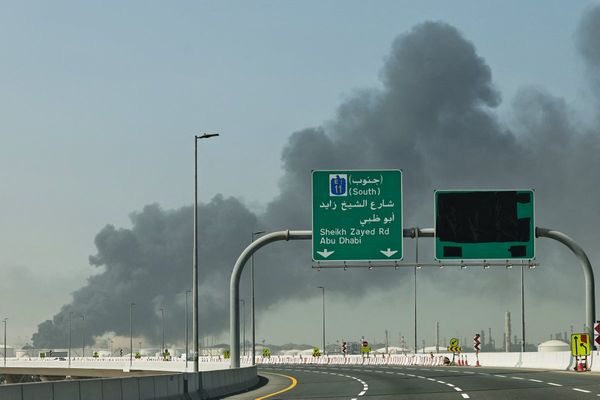
The missiles targeted the Asad Air Base, which houses both Iraqi and U.S. forces, in western Iraq. They also struck a base in Irbil, in the Kurdish-governed north of the country.
Both bases were already on high alert, Hoffman said, as U.S. forces braced for Tehran's retaliation over the U.S. drone strike that killed Iranian Gen. Qassem Soleimani on Friday in Baghdad.
"As we evaluate the situation and our response, we will take all necessary measures to protect and defend U.S. personnel, partners and allies in the region," Hoffman said.
Iran announced the attack on state-run television, which showed video of what it said were missile launches aimed at the bases. Roughly an hour later, state-run TV showed video of what it called a "second wave" of missiles being launched.
State TV said the barrage marked the beginning of "harsh Iranian revenge" for the U.S. strike that targeted Soleimani. The Iranian announcements on social media bore the hashtag "harsh retaliation."
At least some analysts said that if the Iranian attack did not go further, it might not generate a military response from the Trump administration.
"If there are no U.S. casualties, and this is the extent of Iranian retaliation, then the U.S. does not need to escalate," said Faysal Itani, deputy director of the Center for Global Policy, a Washington think tank that specializes in Muslim politics.
"Iran can fire the missiles. Killing Suleimani was a far bigger blow," he added.
The two bases are vast, and the missiles may have landed without doing damage, noted James Carafano, a foreign policy expert at the Heritage Foundation in Washington. He said the key issue is whether there were American casualties in the attack.
"The damage could be severe, or nothing," he said.
Carafano said Americans still have an overwhelming military advantage, one that could dissuade the Iranians from trying to draw the U.S. into an even deeper conflict.
"The problem with escalating is, where does that go?"
If the U.S. unleashes its own missiles, possible targets could include the bases in Iran that launched the missiles, and command-and-control facilities used by the Islamic Revolutionary Guard Corps. Pentagon officials will probably weigh whether to keep the U.S. response limited, in order to avoid intensifying the conflict.
The Pentagon has tens of thousands of troops, and extensive military hardware, in the region capable of carrying out attacks.
In addition to fighters and bombers at bases in Qatar and the United Arab Emirates, a U.S. aircraft carrier, the Truman, is deployed in the Persian Gulf with two destroyers that are capable of firing Tomahawk missiles. The Air Force also has bomber planes based in the United States that could be used.
The Iranian attack is a major escalation of a struggle between Iran and the U.S. that was conducted for years in the shadows, or via proxy forces, but that quickly spiraled out of control after Trump authorized the killing of Soleimani, one of Iran's most powerful military commanders.
The missiles apparently mark the first time Tehran has directly attacked U.S. positions and openly acknowledged doing so. U.S. officials have frequently accused Iran of being behind attacks on U.S. forces in Iraq, but those assaults generally involved Iranian-backed militias, not Iranian security forces.
Iran's semiofficial news agency Fars showed footage of what it said was "tens" of missiles being launched toward the Asad Air Base.
A representative of Iran's supreme leader, Ali Khamenei, tweeted the image of the Iranian flag after the missiles were launched. It was an echo of Trump's tweet of the U.S. flag when Soleimani was killed.
Iranian state TV warned the U.S. against a retaliatory attack, quoting officials of the Islamic Revolutionary Guard Corps _ the force that Soleimani headed _ as having "warned America that if they respond to the Iranian missile attack, the Iranian response will be much harsher, wider and stronger."
The missiles were launched at 1:20 a.m. Wednesday, the Iranian broadcast said, noting that was the precise time that Soleimani "was martyred by the Americans" as he left Baghdad's airport.
At the White House, Press Secretary Stephanie Grisham said officials were "aware of the reports of attacks on U.S. facilities in Iraq."
"The president has been briefed and is monitoring the situation closely and consulting with his national security team," she said.
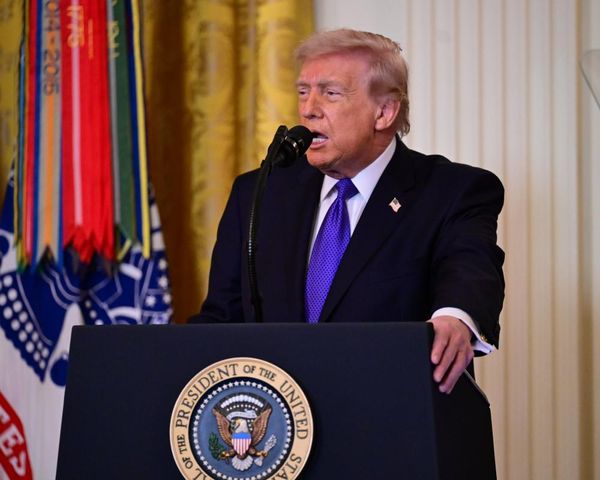
Officials said Trump did not plan to address the nation from the Oval Office, and he was uncharacteristically silent on Twitter after the attacks.
House Speaker Nancy Pelosi, D-Calif., was notified of the attacks in a note handed to her during a meeting of House Democratic leaders, according to Democrats in the room.
"She told us it had happened and (added:) 'We're all praying,' " said Rep. Debbie Dingell, D-Mich., who was in the meeting.
The attacks come as Trump administration officials were scheduled to brief members of Congress on Wednesday.
Sen. Rand Paul, R-Ky., a frequent critic of U.S. military intervention, voiced concerns that the violence was spiraling.
"I am praying for the safety of our troops in Iraq tonight," he tweeted. "We need to stop the escalation before it leads to another endless war in the Middle East."
Earlier, Trump shifted his justification for authorizing the killing of Soleimani as the top U.S. national security official belatedly provided classified briefings to congressional leaders about the administration's claim that he had been planning an imminent attack on Americans.
Trump and his aides previously had insisted that Friday's deadly drone strike was intended to stop the Quds Force commander from killing "hundreds" of Americans.
But his death in Baghdad instead saw Iranian leaders vow to "set ablaze" scores of Western targets, prompted ally Iraq's threat to expel U.S. military forces and pushed the Pentagon to beef up U.S. troops and bolster defenses in the region.
With tensions rising, and unable to convincingly argue that Americans were safer, Trump and his aides instead pointed to Soleimani's role supplying insurgents who killed hundreds of U.S. troops during the Iraq war. "It was retaliation," Trump said Tuesday.
The change in emphasis fueled growing concerns about the administration's still-murky strategy for dealing with Iran. It also underscored the unique challenge for a president who has uttered thousands of falsehoods since taking office as he and his aides sought to reassure Americans they can navigate a major foreign policy crisis, largely of their own making, before it spirals into all-out war.
"I don't think any American president can simply say to the world, 'Trust me,' " said Richard Haass, president of the nonpartisan Council on Foreign Relations. "Trump has the added problem of his own record with the truth."
"If you're trying to justify something that could ultimately take you to war, you better damn well do that as quickly and directly as you can," said Leon E. Panetta, who served as secretary of Defense and CIA director under President Barack Obama. "The last thing that you need is to have an American public that questions why the hell we're going to war."
For the second day in a row, senior U.S. officials were forced to walk back Trump's threats to bomb Iranian cultural sites, a potential war crime, if Iran launches retaliatory attacks. As criticism poured in, Trump appeared to back down, saying for the first time that he would not deliberately target Iran's antiquities.
"If that's what the law is, I like to obey the law," he said.
In Baghdad, Iraq's government demanded clarification over whether the approximately 5,200 U.S. troops in Iraq were making plans to pull out after receiving a letter _ twice _ from a U.S. commander that the Pentagon said was sent in error.
Iraqi officials said the letter was delivered around 8 p.m., but the Arabic translation did not match the English-language version. Iraqi officials pointed out the discrepancy and later received a correct translation via official channels.
"It wasn't a matter of a paper falling from a photocopier or something that came by accident," Iraqi Prime Minister Adel Abdul Mahdi said in a speech Tuesday, adding that the Pentagon's subsequent claims that the letter was a draft had bewildered the Iraqis.
"OK, this is a draft," he said. "But we got it. So how should we behave?"
Abdul Mahdi urged Trump to withdraw U.S. troops, but Defense Secretary Mark Esper _ holding his second news conference in two days _ repeated his assertion that no pullout was underway or had been ordered.
"A draft, unsigned letter does not constitute a policy change," Esper said. "And there is no signed letter, to the best of my knowledge. I've asked the question."
Joseph Maguire, the acting director of national intelligence, provided classified briefings Tuesday to the leaders of the House and Senate, and the chairs and ranking members of the Intelligence committees on the evidence available before last week's drone strike. Normally the so-called Gang of Eight is informed before such a sensitive military operation takes place.
Esper, Secretary of State Michael R. Pompeo, Chairman of the Joint Chiefs Gen. Mark Milley and CIA Director Gina Haspel plan to brief rank-and-file lawmakers on Wednesday. The House Foreign Affairs Committee called a hearing on Iran for Jan. 14 and asked Pompeo to testify.
At the State Department, Pompeo told reporters that Soleimani had posed an "imminent threat" to Americans. But he declined to provide evidence of the threat, instead blaming the veteran commander for a "terror campaign" as he oversaw Iranian military and proxy-force operations across the Middle East.
"We made the right decision. We got it right," Pompeo said.
He dismissed Iraq's claim that Soleimani had flown into Baghdad for talks with Saudi Arabia, its chief regional rival, as part of an initiative to ease tensions. "Anyone here believe that?" Pompeo said.