The new press regulator, the Independent Press Standards Organisation (Ipso), has published its first set of rulings on complaints, including the first use of its power to direct the prominence of a correction.
Of the five rulings, here on its website, three were not upheld. One, against the Aberdeen Press & Journal, was partially upheld. One, involving the Edinburgh Evening News, was upheld, but Ipso felt the paper had published an appropriate correction and apology.
There was something of a sting in the tail of the Press & Journal ruling. The paper had conceded that its article about the sale of plots in the Highlands had wrongly identified critics of the sale as Clan Donald rather than a Facebook group called “Clan Donald Worldwide.” There is no formal connection between the two.
So the paper, having accepted the inaccuracy, removed the online article and offered to publish a correction on page 5 or 6 of its print edition.
But the complainant did not accept the proposed correction and also argued that the proposed prominence was inadequate.
Ipso’s committee, in agreeing that the article was inaccurate, thought the wording of the correction was sufficient. But it registered its concern about the paper’s proposal to publish the correction on page 5 or 6, when the original article had appeared on page3.
The committee didn’t think it was being placed in an established corrections column. So, in its ruling, it said that in order to remedy the breach of the editors’ code, the Press & Journal was required to publish the correction “in full, on page 3 or further forward, in the newspaper.”
“In addition”, said Ipso, “acknowledgements must be added to both the print and online versions of this correction to explain that they have been published following a ruling by the Independent Press Standards Organisation.”
The five rulings should be seen in the context of Ipso having received nearly 3,000 complaints since it started work in September. Many of them were resolved directly between the publication and the complainant.
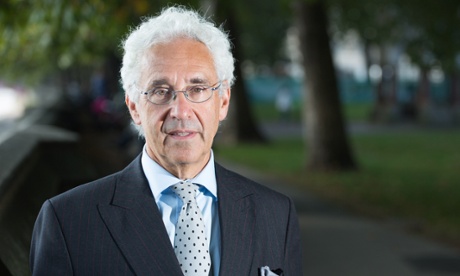
To accompany the first examples of its work, Ipso’s chairman, Sir Alan Moses, has taken the opportunity to write to editors and publishers in order to set out new guidance about how publications should handle complaints.
His letter informs editors of the first requirements to be issued by Ipso regarding the operation of internal complaints’ handling systems.
It states that every publication contracted to Ipso should inform readers how to complain about editorial issues. And all complainants who raise issues relevant to Ipso’s remit should be informed about the editors’ code and be provided with Ipso’s contact details.
Moses also revealed that the Ipso budget has been agreed for 2015 and that the body has found new offices.
He said: “The new system is working well... We also expect to agree with the industry changes to Ipso’s rules and regulations that will simplify our procedures.”
PS: Ipso is continuing its inquiries into the Sunday Mirror article in September involving explicit tweets sent to an undercover reporter by Tory MP Brooks Newmark (new readers: see here). I understand that there will be some kind of statement by Ipso about the matter in the new year.