The Independent Press Standards Organisation (Ipso) is on the verge of deciding whether to create a pilot arbitration service.
Its board met on Wednesday to discuss the results of a public consultation and held what an Ipso spokesperson called “a very positive discussion” about its results.
Adding the service to a regulator was one of the recommendations of the Leveson report. It would be a forum to arbitrate on both civil and legal claims against the newspapers and magazines.
It would act as an alternative dispute resolution process to avoid litigation over legal actions for libel and and invasions of privacy.
But some lawyers are known to be wary of such a scheme and it is probable that their concerns are contained in some of the 21 consultation submissions received by Ipso.
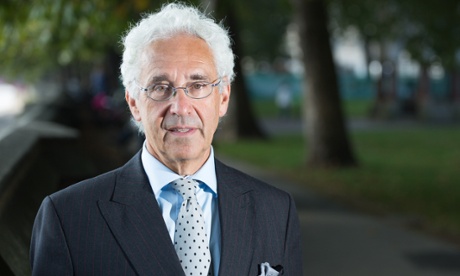
According to the Ipso spokesperson, the board is to consider the responses in more detail and “plans to make a decision on whether to move forward with a pilot scheme at its 26 November meeting.” Its chairman is the former judge, Sir Alan Moses.
The announcement follows remarks by Ipso’s chief executive, Matt Tee, at the IBC Protecting the Media conference last Thursday (24 September) in which he spoke about the implications of setting up an arbitration scheme.
It would be one of the features, he said, that would need to be in place with any regulator seeking recognition under the royal charter created by the government in the wake of the Leveson report.
In so doing, it would give members of the recognised regulator protection from exemplary damages and costs in the Crime and Courts Act 2013 which is soon due to come into effect.
However, Ipso’s founders - the publishers of national and regional newspapers and magazines - have let it be known that the body will not seek recognition.
Tee told the conference that Ipso was regulating 85 separate publishers, adding: “We don’t cover the Guardian or Independent. I’d very much like them to come aboard, but don’t think it’s absolutely business-critical to Ipso that they do.”
He also said that Ipso hoped soon to simplify its regulations in order to make it easier for people to institute standards complaints against publishers.
He told of one such “interesting case” in which a Daily Express story referred to “39 of the world’s worst mugshots.”
Tee said: “It was a terrible piece. We got a complaint immediately from Changing Faces, a facial disfigurement charity. We connected them with the Express, and the Express took down the article immediately and apologised.
“We are now working with Changing Faces to produce some guidance - advisory guidance - for the press about the way in which facial disfigurement issues are portrayed and handled.
“That was an extreme example - I wish that article had never appeared, but given that it did appear, I think it was appropriate action.”
Wolfe: the PRP is open for business
In the highly unlikely event of Ipso ever seeking to resgister under the royal charter, it would need to receive approval from the Press Recognition Panel (PRP).
Its chairman, Dr David Wolfe QC, also spoke at the conference and said the PRP was now in a position to deal with applications from regulators.
Impress, the Independent Monitor for the Press, is believed to be the only possible applicant. It has said it intends to apply but has not yet said which, if any, publishers it will be regulating.
Wolfe said: “If and when we receive an application, we will not only publish the fact that we have received it, but we will publish - subject to anything which is genuinely commercially confidential - the application itself.
“So the whole world will be able to see what is being said by an applicant regulator about their complaints process, their board appointments, their arbitration process and so on.”
This was because the panel itself would be reliant on information provided by an applicant, and would not be in a position to investigate whether it was accurate.
Wolfe said the publishers covered by Ipso were “by no means the totality of the market that there is out there”, adding: “The definition of ‘relevant publisher’ is fairly widely cast.”
Sources: Ipso/PA Media Lawyer