Summary:
- The world’s leading climate scientists have warned there is only 12 years to be kept to a maximum of 1.5C and avoid catastrophic environmental breakdown.
- The authors of the landmark report by the UN Intergovernmental Panel on Climate Change (IPCC) said urgent and unprecedented changes are needed to reach the target, which is affordable and feasible although it lies at the most ambitious end of the Paris agreement pledge to keep temperatures between 1.5C and 2C.
- Debra Roberts, a co-chair of the IPCC working group, said: “It’s a line in the sand and what it says to our species is that this is the moment and we must act now. This is the largest clarion bell from the science community and I hope it mobilises people and dents the mood of complacency.”
- Political leaders have been urged to act on the report. Christiana Figueres, the former UN climate chief who led the historic Paris agreement of 2015, said: “There is nothing opaque about this new data. The illustrations of mounting impacts, the fast-approaching and irreversible tipping points are visceral versions of a future that no policy-maker could wish to usher in or be responsible for.”
That is it from the liveblog. For all the news and reaction to the IPCC report please follow our coverage here.
Updated
Julie Hirigoyen, chief executive at UK Green Building Council (UKGBC), said:
This report from the IPCC is a wake-up call for governments and businesses across the globe. One of the goals of the international 2015 COP21 climate deal was to limit the temperature increase to 1.5°C above pre-industrial levels, recognising that this would significantly reduce the risks and impacts of climate change. This latest IPCC report points to the urgency and scale of action required to achieve this, which should be keenly reviewed by every single boardroom. There is no doubt that business leaders need to make bold decisions today to transition to a low/no-carbon economy that can sustain future generations.
The construction and property industry in the UK is an economic juggernaut, and our buildings account for approximately 30% of carbon emissions. It is also the industry with the most cost-effective means of reducing carbon emissions so it will be a vital catalyst for change in the wider economy. At UKGBC we know that built environment businesses can, and must, lead the charge against climate change. Our Advancing Net Zero programme is a collaborative initiative to drive the transition to a net zero carbon built environment by 2050 – which would be commensurate with the 1.5°C limit. Only by all working together to effect change at speed and at scale will we stand any chance of rising to the challenge outlined today.
Updated
According to my colleague Jon Watts, the big question now is whether governments will act on the report or ignore it:
In Britain, the next step will be a meeting in parliament to discuss how to move towards net zero emissions. It will be chaired by Lord Krebs, former member of the Committee on Climate Change (CCC), and speakers will include Prof Jim Skea, who was co-chair of an IPCC working group, and Baroness Brown. The government to expected to formally ask the CCC for advice around 15 October.
More details here:
https://eciu.net/events/2018/going-net-zero-on-climate-challenges-and-opportunities-for-the-uk
Updated
Gebru Jember Endalew, the chair of the Least Developed Countries Group, one of the key negotiating blocks in climate talks representing the world’s poorest countries, said:
Communities across the world are already experiencing the devastating impacts of 1C global warming. Each fraction of a degree that global temperatures rise is extremely dangerous.
Limiting global temperature increases to 1.5C means significantly decreased levels of food insecurity, water shortages, destruction of infrastructure, and displacement from sea level rise and other impacts. To the lives and livelihoods of billions, that half a degree is everything.
Endalew said the report made clear that there is an urgent need to “accelerate the global response to climate change to avoid exceeding the 1.5C limit”, adding:
Governments must increase climate action now and submit more ambitious plans for the future. This includes increasing the level of support to developing countries to enable them to develop and lift their people out of poverty without going down a traditional, unsustainable development pathway.
On the issue of loss and damage, Endalew said:
This IPCC report confirms that loss and damage resulting from climate change will only worsen with further warming with much greater losses at 2C than at 1.5C. It is particularly vulnerable countries like the least developed countries that are worst affected by the devastating impacts of climate change and bear the greatest cost from the damage it causes, despite contributing the least to the problem. This injustice must be addressed by the international community through the provision of support for dealing with loss and damage.
The most important message of this IPCC report is that achieving 1.5C is necessary, achievable and urgent. A safer, more prosperous future is possible with immediate action to implement transformative change across societies. There is a need to take advantage of the increasing availability of affordable, renewable and efficient energy solutions, rapidly reduce the use of fossil fuels, with coal phased out by mid-century, preserve and restore forests and soils, promote sustainable agriculture and implement other real climate solutions that together can bring about a zero-carbon economy.
On the implementation guidelines for the Paris agreement that are due at COP24 in December 2018, he said:
The IPCC report has made even clearer the need for the Paris rulebook to properly reflect the breadth of action required by all countries to achieve the agreement’s 1.5C goal. Countries must deliver a robust rulebook that will ensure adequate action is taken to cut emissions, adapt to climate change and address loss and damage, and that support is provided to enable poorer countries to do the same.
Updated
Dr Jo House, reader in environmental science and policy at the Cabot Institute, University of Bristol, said today’s report underlines the need “to rapidly replace fossil fuel emissions with low-cost renewable energy technologies that are already widely available”.
She added:
The report also highlights the urgent needs to protect forests and peatlands – these store more carbon than fossil fuel reserves, but also suck it out of the atmosphere, removing nearly a third of our current carbon dioxide emissions. Planting new forests can remove carbon from the atmosphere, as can using plants’ biomass for energy with carbon capture and storage technology. Some scenarios rely on planting up to 700Mha of land to bioenergy crops – that’s twice the size of India. To avoid relying on land for bioenergy mitigation, competing with food and nature, we have to address fossil fuel and industrial emissions. The IPCC will produce a special report on climate change and land next year to look further into land based mitigation and the co-benefits and tradeoffs.
Updated
This is a good video from climate campaigner Bill McKibben (thanks for highlighting, @jessthecrip).
He says although individual choices about how we live are important, it is only by coming together and forcing through real systemic change (100% renewable towns and cities, keeping carbon in the ground and divestment from fossil fuels) that climate breakdown can be avoided.
Updated
There is no shortage of political opposition to meaningful climate action, from the US president, Donald Trump, to Brazil’s far-right populist Jair Bolsonaro. And this morning Australia’s prime minister, Scott Morrison, has put himself firmly in that category.
Speaking before the IPCC report was released he said there was no money for “global climate conferences and all that nonsense”.
Here is the full story from my colleague Paul Karp.
Updated
George Monbiot has written a powerful thread about the threat we face and what needs to be done:
1. Because the lobbying power of fossil fuel-based businesses outweighs that of any other faction. The fossil fuel industry uses its profits to lobby for continued extraction and use. Its tactics are highly sophisticated.
— GeorgeMonbiot (@GeorgeMonbiot) October 8, 2018
3. This campaign of denial resonates with an innate resistance to change, reinforced by a tendency known as System Justification: a fundamental human weakness.
— GeorgeMonbiot (@GeorgeMonbiot) October 8, 2018
5. Perpetual growth was impossible until coal was widely used: before then, industrial expansion led to agricultural depression, breaking the cycle of accumulation (see EA Wrigley, Energy and the English Industrial Revoliution). So we came to see progress = growth = fossil fuel
— GeorgeMonbiot (@GeorgeMonbiot) October 8, 2018
7. This shift will not occur through buying different products or reducing the use of plastic bags, or any other form of voluntary consumer action, valid as these may be. It will occur only through political action.
— GeorgeMonbiot (@GeorgeMonbiot) October 8, 2018
8. What does this mean? Mobilisation on a massive scale, through groups such as https://t.co/iQUIxrOaMa, to put environmental breakdown at the front and centre of political life. We need to break through vested interests, denial and System Justification to force government action
— GeorgeMonbiot (@GeorgeMonbiot) October 8, 2018
10. We need to get embarassing about it, to overcome our own reticence, even when we are labelled Jeremiahs or Cassandras, and risk upsetting people in alerting them to what is happening and what we need to do. https://t.co/eqXaLi7JQY
— GeorgeMonbiot (@GeorgeMonbiot) October 8, 2018
Updated
More from Labour’s Rebecca Long-Bailey on Labour’s commitment to tackling climate breakdown:
Because it is not lack of knowledge which is preventing action on #ClimateChange 2/
— Rebecca Long-Bailey (@RLong_Bailey) October 8, 2018
And it is not lack of technology that is preventing action on #ClimateChange 4/
— Rebecca Long-Bailey (@RLong_Bailey) October 8, 2018
Updated
Caroline Lucas, MP for and former leader of the Green party, said:
This report couldn’t be written in stronger terms: we are at a tipping point on the edge of complete climate breakdown, and governments around the world are failing to prevent it.
Our own government is pushing us towards that tipping point with carbon intensive and ecologically destructive projects like airport expansion, fracking and HS2 – while slashing support for renewables and continuing to subsidise fossil fuels.
Ministers have a choice: they can keep coating business-as-usual policies in a green veneer and watch as floods and heatwaves become the norm. Or they can embrace the opportunities to create a fairer, healthier, safer society that come with the economic overhaul we need.
Updated
It is worth revisiting this piece from last week by my colleague George Monbiot, who argues that unless we kick our addiction to economic growth we can not meet the challenge posed by the unfolding climate breakdown.
Given that economic growth, in nations that are already rich enough to meet the needs of all, requires an increase in pointless consumption, it is hard to see how it can ever be decoupled from the assault on the living planet.
Updated
The Aldersgate Group, which represents some of the of the UK’s leading businesses, said the report sets out clear opportunities for a zero-carbon economy.
Nick Molho, executive director, said:
This report from the world’s leading climate scientists is clear that there are compelling environmental, economic and social benefits to limiting the increase in global temperatures to 1.5C as envisaged in the Paris agreement. Whilst achieving such a target will require challenging emission cuts across the economy, important progress has already been made and an increase in ambition would unlock a significant innovation and investment opportunity.
He added:
With strengths in areas such as offshore wind and electric vehicle manufacturing, energy efficient building design and green financial and legal services, UK businesses have a strong basis from which to accelerate emission cuts and be at the forefront of the development of the new clean technologies and services which the world economy will increasingly demand.
Major economies now need to increase their existing emissions reduction pledges under the Paris agreement and adopt net zero-emissions targets in line with the conclusions of the IPCC report. The prime minister made the right call when she announced at the UN general assembly that the UK will be joining the Carbon Neutrality Coalition, especially as this follows growing public backing and cross-party support for a net zero target.
The government must now begin work towards legislating for such a target in the UK, by rapidly acting on its commitment to seek the Committee on Climate Change’s advice on how the UK can ensure its climate targets are aligned with the 1.5C goal. Backed by detailed policies, such a target would accelerate investment in ultra-low-emission goods, services and infrastructure and support the innovation needed to tackle emission cuts in more challenging sectors such as land management, agriculture, long-distance transport and heavy industry.
Updated
Claire Perry, minister for energy, has put out a brief statement.
This report should act as a rallying cry for governments around the world to innovate, invest, and raise ambition to avert catastrophic climate change. The UK has already shown carbon abatement and prosperity can go hand-in-hand and we lead the world in clean growth, slashing emissions by more than 40% since 1990 while growing our economy ahead of the G7. There is now no excuse and real action is needed.
She added that in a “few days”, during the “first-ever Green GB Week”, the government will “outline our next steps to confront this global crisis”.
Updated
Jagoda Munić, director of Friends of the Earth Europe, said the message from the report was stark, and warned that Europe was not doing enough:
The fossil fuel age has to end ... To have any chance of avoiding the chaos, droughts and rising tides of 1.5C or more of global warming, we must massively and speedily transform our society to kick our fossil fuel addiction.
Munic said a “safer, fairer and cleaner fossil-free” Europe was possible, with many communities already showing the way, from resisting dirty energy projects to installing community-owned renewable energy schemes.
She said the EU is still planning to keep emitting carbon beyond 2050, and is currently only considering committing to “net zero emissions” by that year.
She argued that as one of the regions most responsible for causing climate change, and most capable of responding, the EU needs to act at much greater speed and scale.
The EU must do its fair share, beginning with completely stopping funding for fossil fuels and switching to 100% renewables by 2030. Currently the EU is far off track. Going to ‘net zero’ by 2050 is simply too late for Europe to stop burning carbon – and still it does not represent zero fossil fuels. Europe needs a completely fossil-free energy system by 2030.
Friends of the Earth Europe is calling on the EU to:
- Urgently increase its climate ambition: increasing-short term targets to 100% renewables by 2030, and having a long-term vision in line with achieving 1.5C;
- Completely phase out financing and building more fossil fuel infrastructure, including gas, which shackles Europe to decades more fossil fuel use – including a fossil-free EU budget;
- Urgently increase investment in community renewables and energy savings and transform to 100% renewables based on a democratically owned energy system.
Karin Nansen, chair of Friends of the Earth International, said:
This is a climate emergency – for many around the world preventing climate catastrophe and temperature rises exceeding 1.5C is a matter of life and death. Only radical system change offers a pathway towards hope and out of despair. We want a just transition to a clean energy system that benefits people, not corporations.
Updated
The Aldersgate Group, an alliance of leading business groups committed to sustainable economy, has welcomed the report.
Here’s a selection of what some of its prominent members have said:
Steve Waygood, chief responsible investment officer, Aviva Investors:
Keeping global temperature increases to 1.5C will help safeguard our investment portfolios and protect our customers savings. The long-term negative financial consequences of climate change are far, far greater than the short-term financial risks of transitioning to the Paris agreement. Today’s report reiterates the need for policymakers to accelerate action to reduce carbon emissions and meet the agreed aims of the Paris agreement.
Gabrielle Ginér, head of environmental sustainability at BT:
Our target is to reduce the carbon emissions intensity of our operations by 87% by 2030 against a 2016/17 baseline.
Pia Heidenmark Cook, chief sustainability officer at Ikea:
We will contribute by decarbonising our energy use including electricity and heating, using zero-emissions deliveries, moving to a circular business model and enabling millions of customers and co-workers to take climate action in their everyday lives.
Benet Northcote, director of corporate responsibility at John Lewis Partnership:
We have already cut our operational emission intensity by nearly 70% since 2010 and over the coming months we will be unveiling the next stage in our plans to reduce our environmental impact and emissions even further. Waitrose and Partners continues to lead in its commitment to truly sustainable agriculture, while John Lewis and Partners is pioneering circular economy solutions that will lessen humanity’s impact on the environment.
Mike Barry, director of sustainable business at Marks and Spencer:
We need to take bolder, faster action and shift our mind-set to one of embracing the inevitability and opportunity of the low-carbon economy.
Updated
More from the Labour party on today’s IPCC report.
Rebecca Long-Bailey, Labour’s shadow business, energy and industrial strategy secretary, who seems to be fronting a lot of the party’s climate breakdown agenda, said the report makes clear that avoiding dangerous climate change will require “a transformational effort”:
That is precisely what Labour is offering – a plan to rapidly decarbonise our energy system as part of a green jobs revolution, and a long term target of net zero emissions before 2050. This would make the UK one of the few countries in the world on track to meet the Paris agreement goals.
The Tories are way off course to meeting our existing climate targets, and every day this government remains in power the window of opportunity to tackle the climate crisis shrinks. It is a cruel irony that today we were also expecting the first horizontal shale fracking in the UK – an industry the government has pushed at the expense of local communities, air quality and our climate.
Updated
Ben Backwell, chief executive of the Global Wind Energy Council, welcomed the report.
He said:
The IPCC report lays out the scale of the challenge and the opportunity ahead for the wind industry: renewables should supply 70-85% of electricity by 2050.
We need to shoulder the responsibility and make this a reality along with our partners in solar photovoltaics and storage.
Updated

Mary Robinson, former Irish president and a UN special envoy on climate, insisted the ambitious recommendations in the report are “doable”.
She told Today: “I do think this scientific report is going to be a change-maker. I’m a prisoner of hope, having learned from Archbishop Desmond Tutu, and I know how serious it is in the poorest countries, the climate issue.
“Small island states are being devastated, but so are the Carolinas in the United States and Puerto Rico, etc. We have to become human again. We have to understand that we face an existential threat that is going to undermine the future prospects for our children and grandchildren.
“It is doable.”
She added: “Before this, people talked vaguely about staying at or below 2C – we now know that 2C is dangerous. So it is really important that governments take the responsibility, but we must all do what we can.”
Robinson also backed campaigns to divest in oil companies and invest in renewable companies.
And she urged the European Union to set an example by adopting a target for having zero-carbon emissions by 2050.
She said:
The richer parts of the world now have to really take seriously and do it the climate justice way.
This puts the responsibility on all governments to have an intense dialogue now and to explain that we have 11 years until 2030 to safeguard the world for our children and grandchildren.
Updated

Barry Gardiner, shadow minister for international climate change in the UK, described the report as a “wake-up call”.
Speaking on BBC Radio 4’s Today programme, he said it should be seen as opportunity for the UK, not a threat.
He said: “We in the UK are incredibly well-placed – we’ve got the skills, we’ve got the technology, we’ve got the natural resources of wind and wave power to lead the world in this low-carbon revolution that is going to take place.”
But Gardiner struggled to answer whether a Labour government would outlaw burning wood pellets at the Drax power station in Yorkshire.
“We must honour the must honour the commitments that have made but we must now look at the way in which we can transform the economy,” he said.
He accused Today’s John Humphrys of “petty fogging” when challenged to put a price on Labour’s programme to tackle climate change.
Updated
‘Trump can’t tear up international agreement on climate change’

One of the report’s authors has insisted that Donald Trump cannot derail the determination of the international community to cap global warming to 1.5C.
Prof Jim Skea, co-chair of the IPCC working group behind the report, underlined the need for “unprecedented change” during an interview for BBC Radio 4’s Today programme.
But asked about Trump’s threats to tear up international agreements on climate change, Skea said: “He can’t tear up the agreement, all he can do is withdraw from it. There are very clear indications from almost every other country in the world that they are going to stick with it and in fact even compensate for any gaps led by the US.”
He added: “It needs big changes in all systems. Our energy systems need to change, our transportation systems – the way we manage land will become increasingly important if we are going to make a difference.
“To keep below 1.5C, or pretty close to it, we would need to see cuts in carbon dioxide emissions globally of about 45% by 2030. That is why we were saying ‘unprecedented change’ and setting up the challenge for governments.”
Updated
A key point the IPCC has made before but which is underlined this time around: to address global warming we are going to have to remove carbon dioxide from the atmosphere.
If the world is to limit global warming to 1.5C, it is estimated somewhere between 100 and 1,000 billion tonnes of carbon dioxide will need to effectively sucked from the sky.
This, to put it mildly, is an issue. Techniques that could be used to do it are unproven at scale and could carry significant risks. Some are basic withdrawal technologies – planting and cultivating more trees and crops – and relatively uncontroversial, though they require using land that could otherwise be employed to feed people.
Much hope in IPCC circles has previously been placed in what is known as BECCS – bioenergy with carbon capture and storage. It basically involves growing trees and other vegetation to burn for electricity and then capturing the emissions released in power generation and storing it underground. Again, it would require a massive area to be meaningful – greater than the size of India, according to some research. It has been discussed for years but progress has been limited.
The new report also mentions direct-air carbon capture and storage, a largely theoretical technique that uses large fans and chemicals to move and absorb carbon dioxide.
Then there are proposed techniques that would not reduce atmospheric carbon dioxide but mask its effects. Governments have barely begun to consider how to regulate ocean fertilisation or “enhanced weathering” techniques, which both involve introducing chemicals into environment.
Environment groups have generally resisted these approaches – there has been a not unreasonable argument that we must first cut emissions – but this is shifting. The Australian Conservation Foundation today called on governments and industry to not only reduce emissions but to urgently investigate how to remove greenhouse gases from the atmosphere.
But these are debates that lie ahead.
Updated
Summary
A landmark UN report from the intergovernmental panel on climate change (IPCC) has delivered a dramatic and extraordinarily serious warning: We have little more than a decade to get global warming under control or the world is at risk.
- The report was delivered in Korea on Monday, and set out the impact of a rise in global temperatures of 1.5C above pre-industrialisation levels.
- Limiting warming to 1.5C is not impossible but will require unprecedented transitions in all aspects of society, and every bit of warming matters, the IPCC panel said.
- Current pledges by world governments are not enough to limit rises to 1.5C.
- The world is currently on a trajectory of 3 to 4C rises.
- The report mapped out four pathways to achieve 1.5C, with different combinations of land use and technological change. Reforestation, shifts to electric transport systems and greater adoption of carbon capture technology are all essential.
- We need to cut global emissions by about 45% by 2030 compared with 2010 levels.
- The world will need to be carbon neutral by the year 2047 if we are to have a 66% chance of limiting warming to 1.5C.
- To do that we have to source 70 to 85% of electricity from renewables within the next 32 years, put a price on greenhouse emissions, and remove carbon dioxide from Earth’s atmosphere.
- The panel said they assessed feasibility factors including technology, physics and chemistry, but the willingness of government and institutions was out of the control of scientists.
The difference between a rise of 1.5C and 2C was stark:
- At 1.5C there would be less extreme weather where people live, including extreme heat, rainfall, and drought.
- By 2100 sea level rises would be around 10cm lower than at 2C.
- All coral reefs would basically cease to exist at 2C, whereas at 1.5C there is a good chance of saving 10-30% of existing ecosystems.
- Species extinction would be lower, and there would be smaller reductions in the yields of key crops like maize, rice and wheat, particularly in sub-Saharan Africa, south-east Asia, and South and Central America.
- The proportion of the global population exposed to global warming-induced water shortages would be up to 50% less than at 2C.
- Several hundred million fewer people would be exposed to climate change-related risk by 2050.
- The likelihood of an Arctic Ocean free of sea ice in summer would be once per century compared with at least once per decade.
Updated
Government and corporate leaders must show they understand the science and step up to the challenge set today, Greenpeace says, but it’s also up to the individual.
“Every person has to do everything in their power to change course and follow the plan that is included in the IPCC report. Will we get there in time? Nobody knows,” says Kaisa Kosonen, senior policy adviser at Greenpeace Nordic.
“It’s uncharted territory we’re heading into. What matters now is that we decide to try and that we make it our absolute priority. Only then do we have a chance to protect ourselves from the devastating impacts that science says would start accelerating after 1.5C.
“Those who say it’s unrealistic are actually telling us to give up on people, to give up on species, to give up on our amazing planet. We will not accept this. ”
Mari Chang, climate and energy campaigner at Greenpeace East Asia, says change is already happening in Korea, where the report was launched today.
“We’re witnessing the beginning of the end of coal in Korea through game-changing decisions by Chungcheongnam-do to phase out coal and two South Korean pension funds to end coal financing,” says Chang.
“These decisions challenge the Moon government to also ramp up action in line with the Paris goals.”
Updated
Love to be twenty years away from an actual apocalypse and the main political response is “science isn’t real”
— pixelated (something halloween-related) (@pixelatedboat) October 8, 2018
“Burying our heads in the sand cannot be contemplated as an option any longer,” says Glen Klatovsky, deputy chief executive of 350.org.
“The climate crisis is here and already impacting the most vulnerable and the least responsible for creating it. The only way to achieve it is to stop all fossil fuel extraction and redirect the massive resources currently spent on the fossil fuel economy towards the renewable energy transition.”
The climate activist organisation said it was coordinating a global action to deliver copies of the report to institutions, demanding they end their support of the fossil fuel industry.
The full report has the word "Australia" more than 30 times in body text, not including the mentions of all the Australia scientists - more than a dozen - who contributed. #SR15 #IPCC https://t.co/48rkPEfRKY
— Graham Readfearn (@readfearn) October 8, 2018
Will governments do what's needed?
It’s a “critical moment”, says Jonathan Watts. In that press conference earlier was the looming reality that there is a growing gap between what scientists are urging and what politicians are willing to do.
We already know the US wants to pull out of the Paris agreement. Brazil has thrown support behind a presidential candidate who wants to do the same. Australia’s prime minister has rejected calls from his party colleagues to join them but at the same time claims the country is on track to meet targets (spoiler: it’s probably not).
“This may be the dying kicks of the fossil-fuel industry and its political lobbyists,” says Watts. “Or it could be the start of a seizure of power that will be fatal to climate stabilisation efforts. A critical moment.”
The panel was repeatedly asked if it was optimistic that its report would be acted on.
It said yes, and that it looked at six conditions of feasibility: is it possible within the laws of physics and chemistry, do we have the technology, and what are the investment needs? Ther report could answer yes to those four but the final two – the capacity of government and institutions to act – were out of its hands.
“We’ve done our job, we’ve passed the message on. It’s their responsibility ... whether they can act on it.”
The decisions taken by political leaders in the next few years will be crucial because the investment cycle for power plants and transport systems is at least 10 years, says Johan Rockström, chief scientist at Conservation International and co-author of the recent Hothouse Earth report.
Infastructure built now will continue to burn up carbon for decades to come if it is not re-engineered.
Rockström said the political shifts in some countries should be met with a counterbalancing move in others.
“Every time we get leaders in the US or Brazil taking a step back then others, particularly in Europe, should take a step forward.”
Updated
Pep Canadell, the executive director of the Global Carbon Project, makes a good point – that this is likely to be the last reminder that the temperature rise can be limited to 1.5C if there is sufficient will.
The report finds there are no biophysical or technical roadblocks to doing it, though he says the IPCC has misstepped by talking about what needs to be achieved decades down the line given governments don’t respond to those timescales.
He spells out what would need to happen, including the almost immediate establishment of a global carbon market, massive improvements in energy efficiency, recasting of people’s diets, steps to reduce the expected peak global population and the immediate rollout of plans to remove carbon dioxide from the atmosphere.
“Importantly, all actions required are win-wins for society and cost less than the excess climate change damage.”
Updated
That’s certainly one way of putting it.
When the BBC sounds like the Onion pic.twitter.com/m4a3GbF2UT
— Brian L Kahn (@blkahn) October 8, 2018
The Conversation has put together a great simplified explainer on the report “at a glance”.
Along with some handy graphs and charts, the article notes the world will need to be carbon-neutral by the year 2047 if we are to have a 66% chance of limiting warming to 1.5C. That chance drops to 50% if we take until 2058.
To do that we have to source 70-85% of electricity from renewables within the next 32 years, put a price on greenhouse emissions, and remove carbon dioxide from Earth’s atmosphere.
Updated
The Australian Academy of Science has put together a video about the report.
Low-lying island nations, such as those across the Pacific, have been raising their concerns for many years as they are among the first to feel the “life and death issue” of rising sea levels.
“Pacific Island nations have long maintained that we need “1.5 to stay alive’,” said Maria Timon Chi-Fang, Pacific outreach officer for the Pacific Calling Partnership.
“My home country of Kiribati is only two metres above sea level, and sea level rise is a life-or-death issue for us. Already with 1C of warming, we are seeing more frequent and damaging storms, the loss of our crop-growing lands and freshwater resources, and our homes flooded.
“Many I-Kiribati are already resigned to having to leave home as life on the islands becomes untenable, and we know many of our Pacific neighbours are facing the same crisis.
“We call on Australia and other big carbon polluters to give us a fair go at preserving our culture and having the dignified, safe and secure future that we deserve.”
Updated
Still in Australia, which I earlier noted was reportedly among nations to push back on elements of the report about a coal phase-out (the government denies this):
Prime minister Scott Morrison – under fire for having recently abandoned a policy to cut emissions from electricity – said his government would “look at the report carefully” but claimed “only a year ago the same report said that the policies Australia has was right on the money”.
It isn’t clear which report he was referring to – the special report is a one-off and the IPCC last published a major assessment in 2013-14. Morrison went on to say Australia was responsible for a little more than 1% of global emissions.
There are a lot bigger players than us out there ... emissions per capita in Australia are at their lowest level for decades ... but at the end of the day we want to ensure electricity prices are lower.
Australia, of course, is heavily reliant on coal, which the report says would basically need to be finished as an energy source by mid-century.
The opposition leader Bill Shorten – according to opinion polls, favoured to take power at an election next year – said fossil fuels would not disappear but he wanted to see more renewable energy. He has promised it would deliver 50% of electricity by 2030, up from about 20% today.
Updated
Climate risk to coral reefs underestimated
There’s an interesting part of the report which relates to coral, and specifically the large-scale bleaching events which hit the Great Barrier Reef, off Australia’s north-east coast, in recent years.
The bleaching events were predicted, but came far sooner than expected, leading the report to conclude the research community had possibly underestimated the impact of global warming on coral.
Interesting admission in full #IPCC #SR15 report on impacts of warming on corals. ".. the research community has under-estimated climate risks for coral reefs." pic.twitter.com/UOfHSs3lqL
— Graham Readfearn (@readfearn) October 8, 2018
Adam Morton reports here that the difference between a rise of 1.5C instead of 2C is a matter of survival for the Great Barrier Reef.
Today’s report found that coral reefs were likely to decline between 70% and 90% if the temperature increased to 1.5C.
Dire enough, to be sure, but if global warming reaches 2C, more than 99% of coral reefs were projected to decline.
“Going to 2C and above gets to a point where corals can no longer grow back, or you have annual bleaching events,” said Professor Ove Hoegh-Guldberg, a coordinating lead author on the report and a coral reefs expert with the University of Queensland.
“On the other hand, at 1.5C there’s still significant areas which are not heating up or not exposed to the same levels of stress such that they would lose coral, and so we’re fairly confident that we would have parts of those ecosystems remaining.”
Updated
Still a future for coal, coal association says
I am keeping one ear on the press conference as I bring you the international reaction to this report.
The panel has just been asked if the fossil fuel industry was represented.
Yes, in a word – the plenary sessions included observer organisations, and “they were in the room”.
Outside the press conference, the interim chief executive of the World Coal Association, Katie Warrick, tells us it believes there is still a future for coal.
While we are still reviewing the draft, the World Coal Association believes that any credible pathway to meeting the 1.5C scenario must focus on emissions rather than fuel. That is why [carbon capture and storage] is so vital.
Forecasts from the [International Energy Agency] and other credible experts continue to see a role for coal for the foreseeable future. Going into COP24, we will be campaigning for greater action on all low emissions technologies including CCS.
The report has said fossil fuels, in particular coal, must be phased out. It’s probably a good moment for me to re-up this quote from the panel earlier:
“All options need to be exercised ... We can make choices about how much of each option we use ... but the idea you can leave anything out is impossible.”
And this:
Q: How soon do coal, oil, and natural gas need to be phased out entirely?
— Eric Holthaus (@EricHolthaus) October 8, 2018
IPCC: "The report is quite clear ... all pathways require quite significant changes in the pattern of fossil fuel use. ... Coal will have to be reduced very, very substantially by mid-century."
Updated
Ban Ki-moon, former United Nations secretary general:
Equity, inclusivity and cooperation must underpin our collective response to meet the 1.5°C target, with states acting in the same spirit that led to the Paris agreement and the sustainable development goals. Climate change respects no borders; our actions must transcend all frontiers.
Gro Harlem Brundtland, acting chair of the Elders, former prime minister of Norway:
This report is not a wake-up call, it is a ticking time bomb. Climate activists have been calling for decades for leaders to show responsibility and take urgent action, but we have barely scratched the surface of what needs to be done. Further failure would be an unconscionable betrayal of the planet and future generations.
Mary Robinson, former president of Ireland, former UN high commissioner for human rights and former UN special envoy on climate change:
The IPCC report starkly sets out the challenges of securing a just transition to a 1.5C world, and the urgency with which this needs to be accomplished. This can only be done by a people-centred, rights-based approach with justice and solidarity at its heart. The time for talking is long past; leaders need to step up, serve their people and act immediately.
Ricardo Lagos, former president of Chile, former UN special envoy on Climate Change:
The threats posed by climate change to planetary health cannot be understated. The time for stating the scale of the problem has passed, and we now need to move to urgent, radical action to keep temperature rises to 1.5°C. It cannot be left to climate scientists and activists alone – it is a battle that must be joined by all those with an interest in our future survival.
Ernesto Zedillo, former president of Mexico:
If we allow temperatures to rise above 1.5°C then all the progress on prosperity, growth and development risks being wiped out. Our economic paradigm needs to shift to promote zero-carbon, climate-resilient policies. This means putting a price on carbon and investing in new, sustainable technologies, but also giving those most affected a voice in developing new growth models.
Amjad Abdulla, chief negotiator for the Alliance of Small Island States, and IPCC board member:
The report shows that we only have the slimmest of opportunities remaining to avoid unthinkable damage to the climate system that supports life as we know it. I have no doubt that historians will look back at these findings as one of the defining moments in the course of human affairs. I urge all civilised nations to take responsibility for it by dramatically increasing our efforts to cut the emissions responsible for the crisis and to do what is necessary to help vulnerable people respond to some of the devastating consequences we now know can no longer be avoided.
Updated
The Trump administration is a “rogue outlier”, says the former US vice president Al Gore.
Responding to the IPCC report, Gore said the Paris agreement was “monumental” but now nations had to go further, and time was running out.
“Solving the climate crisis requires vision and leadership. Unfortunately, the Trump administration has become a rogue outlier in its shortsighted attempt to prop up the dirty fossil fuel industries of the past. The administration is in direct conflict with American businesses, states, cities and citizens leading the transformation.”
Updated
The IPCC report is a wake-up call for slumbering world leaders,” says Andrew Steer, president and CEO, World Resources Institute.
“The difference in impacts between 1.5 and 2C of warming is large, and potentially game changing. And, the devastation that would come with today’s 3-4C trajectory would be vastly greater. Each tenth of a degree matters – and tragically it’s the poor who will be most affected.”
The consequences of #climate change in a 2˚C world are far greater than with 1.5˚C of warming. But the world is far off track from either. https://t.co/opTouzN3qg #SR15 #IPCC pic.twitter.com/W4weC6p3ta
— WRI Climate (@WRIClimate) October 8, 2018
Updated
So is the 1.5C target feasible? That’s the big early question.
Professor Piers Forster from the University of Leeds is one of the lead authors of the Special Report chapter, which looks at the different “pathways” that governments could take. He tells me he is “exhausted but elated” the report was finished on time (one of the sessions went for 30 hours straight).
Forster says the report “shows that limiting warming to 1.5C is barely feasible and every year we delay the window of feasibility halves. Nevertheless, if we were to succeed, we go on to show that benefits across society will be huge and the world will be all the richer for it. It’s a battle worth winning.”
Here’s something to understand. The report sets out four different “pathways” that governments could choose. As one of the IPCC co-chairs, Jim Skea, says, “it’s possible within the laws of physics and chemistry … It’s up to the governments to decide that last step of feasibility.”
Updated
There is an absolute mountain of reaction coming through to the report. I’ll bring it to you shortly.
Here’s a piece written by Nicholas Stern, IG Patel professor of economics and government and chair of the Grantham Research Institute on Climate Change and the Environment at the London School of Economics and Political Science.
Stern authored the Stern Review on the Economics of Climate Change for the UK government.
Human activities are currently emitting about 42bn tonnes of carbon dioxide every year, and at that rate the carbon budget – allowing us a 50-50 chance of keeping warming to 1.5C – would be exhausted within 20 years.
Even 1.5C of warming would have brutal consequences, according to the report. Poor people, in particular, would suffer as the threat of food and water shortages increase in some parts of the world.
But the report makes clear that allowing warming to reach 2C would create risks that any reasonable person would regard as deeply dangerous.
Question: What did it feel like personally, as humans, compiling this report?
“It’s a tremendous collective endeavour.”
“There is space [to act] but the space is shrinking. We can still do it as a universal humanity, and I think that was the spirit of this.”
“The urgency of the issue is being seen because climate change is shaping the future of our civilisation. If action is not taken it will take the planet into an unprecedented climate situation [and] the scale of the changes humans would have to implement ... is unprecedented ... This report is a milestone in conveying that message.”
Updated
Every emissions reduction option must be used: IPCC panel
Some pretty direct statements coming from the panel towards the end of the press conference.
The report shows we are at a crossroads, and what happens between now and 2030 is critical, especially for Co2 emissions. If we don’t act now and have substantial reductions in emissions over the next decade we are making it very challenging to impossible to keep global warming to just 1.5C.
Asked by a reporter about the difference in benefits of reforestation or carbon emission reductions, the panel has a stark response:
The word “or” does not work in relation to reductions. The only linking word you can use is “and”.
“All options need to be exercised ... We can make choices about how much of each option we use ... but the idea you can leave anything out is impossible.”
Updated
One of the key questions repeatedly coming up is whether world governments will act on the report’s warnings and recommendations.
This observation is from our global environment editor, formerly Latin America correspondent.
World scientists say forests are essential if global warming is to keep to 1.5C on the same day that 46% of Brazilians vote for a presidential candidate who has vowed to open the Amazon to agribusiness. https://t.co/67KFPKBV18
— jonathanwatts (@jonathanwatts) October 8, 2018
Question: What consumer aspects does the report tackle? What lifestyle changes can people make?
Answer: The report is also clear that everyone has the means to act relating to daily choices. Energy demands and diets are both key parts of the pathways to reductions.
The presentation is done, I’ll now bring you some key Q&As from the floor.
Question: Every IPCC report suggests greenhouse gases need to be reduced urgently. What’s new about this report?
Answer: The report is new in providing clear knowledge about differences in risks and impact from half a degree warning, with robust findings that weren’t previously available. “It’s very clear that half a degree matters.”
Question: How optimistic are you on a scale from one to 10?
Answer: One thing the report did not aspire to do was assess feasibility. We identified six different conditions that needed to be met for 1.5C to be achievable.
One of those was is it possible within the laws of physics and chemistry? Yes it is.
Do we have the technology? What are the investment needs?
But two things that can’t be answered by scientists are the political and institutional feasibility.
“We’ve done our job, we’ve passed the message on. It’s their responsibility ... whether they can act on it.”
Question: What about the US pulling out of Paris?
Answer: This is a literature review, and we haven’t found literature out there that looks at the implication of the US pulling out of Paris. We’ve sent a clear signal to collectivity countries, of which the US is still one.
The report is clear that reducing emissions early on is needed to prevent overshoot. If we overshoot 1.5C global warning, then we would rely on carbon dioxide removal to go back. Early action to reduce emissions is possible – there are options are available. But there is an urgent need to accelerate.
Updated
We earlier heard from the co-chairs of the report a summary of the differences between 1.5C and 2C temperature rises. Here’s more from Adam Morton.
A major point of the report, obviously enough, is to illustrate the difference between limiting warming to 1.5C and 2C by 2100.
Sarah Perkins-Kirkpatrick, a research fellow at the Climate Change Research Centre at the University of New South Wales, has pulled together a good summary that we’ve adapted and expanded:
-
All coral reefs would basically cease to exist at 2C, whereas at 1.5C there is a good chance of saving 10-30% of existing ecosystems.
-
Sea level rise would be about 10cm less at 1.5C. This might not sound much, but it is significant – it would mean less salt water intrusion in low-lying islands, less loss of available land and up to 10 million fewer people being exposed to risks (based on 2010 population data).
- Heatwaves, which can be fatal to humans and play a part in wrecking ecosystems, would be less frequent and not last as long.
-
Marine heatwaves would also not happen as frequently. More marine species would survive, and the impact on fisheries and aquaculture would be reduced.
-
Tropical cyclones would carry less water, reducing the impact of floods.
- There is a good chance that droughts would be less severe, with obvious ramifications for food security and water availability.
- The overall impact on human health – in terms of the impact of vector-borne diseases, heatwaves and ozone depletion – would be reduced.
- The likelihood of an Arctic Ocean free of sea ice in summer would be once per century compared with at least once per decade.
- It is estimated it would prevent thawing over centuries of a permafrost area of 1.5 to 2.5m sq km. Permafrost thawing could trigger accelerated warming as greenhouse gases it has trapped are released.
-
More species are likely to survive. At 1.5C, 4% of vertebrates, 6% of insects and 8% of plants are expected to lose over half the geographic range in which they can live. At 2C, it is 8% of vertebrates, 18% of insects and 16% of plants.
Updated
Current promises aren't enough
However, these limits require changes on an “unprecedented scale”.
Rapid progress is being made in some areas but needs to be picked up in transport and land management.
We need to start taking carbon dioxide out of the atmosphere in this century, using tree-planting, carbon capture and storage, land management, and other “novel approaches”, but this has implications on food security and biosecurity.
Current pledges by world governments are not enough to limit rises to 1.5C.
Updated
More from the co-chairs:
- Since pre industrial times human activities have already caused about 1C of global warming. We’re already seeing the consequences for people, nature and livelihoods.
- If the world continues to warm at the current rate, global temperatures are likely to reach 1.5C between 2030 and 2052.
The differences limiting the rise to 1.5C intead of 2C include:
- There would be less extreme weather where people live, including extreme heat, rainfal, and drought.
- By 2100 sea level rises would be around 10cm lower than at 2C.
- Species extinction would be lower, and there would be smaller reductions in the yields of key crops like maize, rice and wheat, particularly in sub-Saharan Africa, south-east Asia, and South and Central America.
- The proportion of the global population exposed to global-warming-induced water shortages would be up to 50% less than at 2C.
- Several hundred million fewer people would be exposed to climate-change-related risk by 2050.
Updated
Limiting warming to 1.5C is not impossible but will require unprecedented transitions in all aspects of society, says Hoesung Lee.
Every bit of warming matters, he says, before handing over to co-chairs.
A huge degree of difference. New #IPCC #SR15 report spells out difference in harms between another 0.9 and 1.8 dF of warming. Lost lives, coral & maybe ice sheet. But it is unlikely world can limit warming to lower goal. https://t.co/Hjeg9wldfn pic.twitter.com/XBiGdrkHtQ
— seth borenstein (@borenbears) October 8, 2018
The current global state-of-play as described in the report:
- Human activities have caused about 1C of global warming since pre-industrial times (expressed as a likely range of 0.8-1.2C).
- We are seeing the effects of this through increased extreme weather, rising sea levels, coral bleaching and shrinking Arctic sea ice, among other changes.
- We’re likely to reach 1.5C warming sometime between 2030 and 2052 on the current path. The effects of this warming would be materially and noticeably different from today. It would be worse again at 2C and higher temperature rises.
- To limit warming to 1.5C we need to cut global emissions by about 45% by 2030 compared with 2010 levels.
- Scientists say it could be done but it would require rapid action now. It would mean significant changes in all sectors of society. We would also need to remove carbon dioxide from the atmosphere.
Updated
The chair of the IPCC, Hoesung Lee, is now addressing media on what he calls “one of the most important reports” produced by the IPCC, and “certainly one of the most keenly awaited”.
He says previous reports gave governments a clear understanding of the implications of 2C warming, but there was “relatively little” about 1.5C.
This is the first time in IPCC’s history that all three working groups worked together to produce the report, which was put together in a very short amount of time, what he calls a “Herculean effort”.
Updated
Global warming must not exceed 1.5C, warns landmark UN report
The report is public.
“It’s a line in the sand and what it says to our species is that this is the moment and we must act now,” says Debra Roberts, a co-chair of the working group on impacts.
“This is the largest clarion bell from the science community and I hope it mobilises people and dents the mood of complacency.”
Read our full report from our global environment editor Jonathan Watts here.
The authors of the landmark report say urgent and unprecedented changes are needed to reach the target, which they say is affordable and feasible although it lies at the most ambitious end of the Paris agreement pledge to keep temperatures between 1.5C and 2C.
The half-degree difference could also prevent corals from being completely eradicated and ease pressure on the Arctic, according to the 1.5C study, which was launched in Incheon in South Korea after approval at a final plenary of all 195 countries that saw delegates hugging one another, with some in tears.
Updated
The IPCC press conference will start in a few minutes, and I’ll bring you updates. We’ll also have extensive reporting and analysis on the report itself.
In the meantime, here’s a recent piece on the possibility of the Earth becoming a “hothouse”.
As things stand, if you add up all the things that the 190-plus countries have committed to do as part of that Paris deal, global temperatures will probably go well above 3C, writes Graham Readfearn.
We’re already at 1C of warming, so the extra half a degree isn’t far away – many scientists will say it’s already locked in, while others say there are plausible ways to stabilise temperatures at that level.
But in August, one of the world’s leading scientific journals – the Proceedings of the National Academy of Sciences – published a “perspective” article that has become known as the “hothouse Earth” paper.
There was no new science in the paper and while it was speculative, it did raise fundamental questions about the ability of governments around the world to stop the Earth from spiralling into a “hothouse”.
Updated
Some information on the report itself, outlined by chair of the IPCC, Hoesung Lee, in a speech last week (pdf).
It was commissioned as part of the Paris agreement in 2016, the IPCC was invited to prepare a report assessing the impacts of 1.5C warming and related emissions pathways.
At that time, relatively little was known about the risks avoided in a 1.5C world compared with a 2C warmer world, or about the pathway of greenhouse gas emissions compatible with limiting global warming to 1.5C.
In February 2017 the panel announced 91 authors and review editors, from 40 countries. There are 133 contributing authors.
The final report contains more than 6,000 cited references.
The first order draft attracted almost 13,000 comments from about 500 experts across 61 countries.
The second order draft attracted more than 25,000 comments from 570 experts and officials in 71 countries.
The final government draft received almost 4,000 comments from government, bringing the total amount of comments to 42,000, each of which must be addressed by the authors.
Updated
Politically, the issue of global warming and how to address it is in a much more precarious situation than when this report was commissioned in 2016.
Donald Trump has pledged to withdraw the US from the Paris accord. The Australian government – currently coming through another bout of leadership instability – has also flagged withdrawing. It was already failing its targets.
Jair Bolsonaro, who today won the first round of voting in the presidential election in Brazil, has also pledged to withdraw from the Accord and to open up the Amazon for agribusiness.
On the other side are low-lying island nations already feeling the impact of rising sea levels.
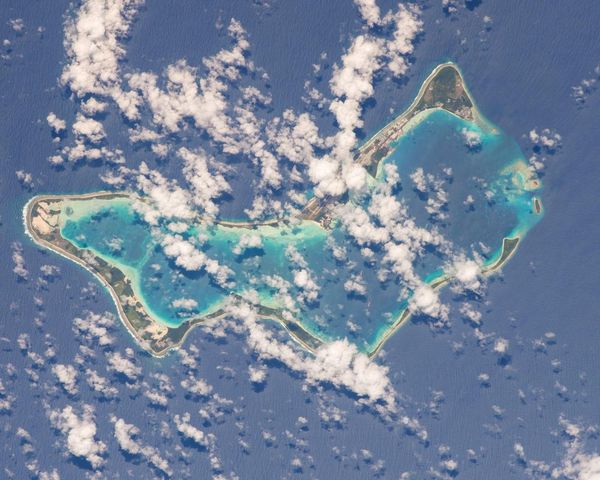
The Marshall Islands has announced a plan to reach net zero emissions by 2050.
“If we can do it, so can everyone else,” said president Hilda Heine.
Updated
In a little under an hour, the Intergovernmental Panel on Climate Change (IPCC) will be releasing its highly anticipated special report on global warming of 1.5C.
The news is not good, with the report – based on more than 6,000 scientific works – expected to warn that the world is nowhere near on track to reach its targets unless there is drastic, world-changing action immediately.
That means a massive transformation in the way the world generates energy – phasing out fossil fuels and coal in particular, as well as how it uses transportation and grows food.
“It’s extraordinarily challenging to get to the 1.5C target and we are nowhere near on track to doing that,” co-author Drew Shindell, a Duke University climate scientist, told the Guardian last month.
There were reports of pushback during the drafting, including from Japan, South Korea, Poland, Estonia and Australia. Australia, where the government is extraordinarily pro-coal, is currently debating withdrawing from the Paris agreement and is the world’s largest coal exporter. Its environment minister denied the claims.
The world has already warmed 1C, and the 2015 Paris agreement saw countries agree to curb rises to 2C above pre-industrialisation levels and to pursue efforts to limit the increase to 1.5C.
Updated