On the eve of the Rio 2016 opening ceremony, the director of communications for the organising committee was holding forth in the lobby of the International Olympic Committee family hotel, from which one member would later be led by police investigating ticket touting. Asked if he had a message for those arriving in Rio for the Games, Mario Andrada half smiled and half sighed. “Buckle up,” he said. “It’s going to be a bumpy ride.”
A bit like the city of Rio de Janeiro itself, that ride has been by contradictory turns chaotic, uplifting, amusing, enchanting and enraging. But as far as the IOC president, Thomas Bach, was concerned, these Games have been an unalloyed triumph from start to finish.
He did not appear to see empty seats in venues amid huge disparities between the claimed number of sales and those actually present. He did not worry at the waste of convoys of buses speeding along dedicated lanes, many of them virtually empty. Or the fact that cuts to the numbers of volunteers had appeared to leave those left exhausted and out on their feet. Or that those Brazilians and international fans who made it to the Olympic Park had missed the last metro by the time their events finished.
Yet despite everything, by the end the excitement of the sporting action had permeated the heart of this city and at its climax every bar and restaurant was tuned to Brazil’s progress in the volleyball, beach volleyball and – most of all – the football.
But it felt like it was happening in spite of the IOC and the organisers rather than because of them. Only occasionally, as with the triathlon on Copacabana, did it feel as though there had been an effort to take the Games to the people rather than it being a means by which to inconvenience or disadvantage them.
Yet rather like the version of the Games that is presented to the world through the excellent, hyperreal camera work of Olympic Broadcast Services, in Bach’s world everything was sunny.
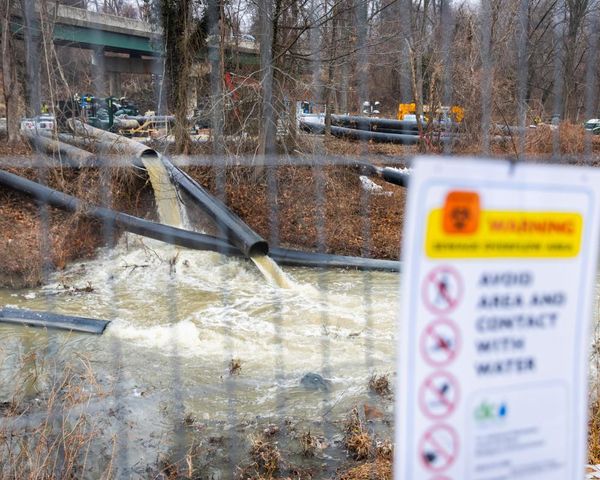
At his closing press conference he spoke about how the locals had “many reasons to celebrate these Games because they will leave a great legacy”. Which might come as news to those who had been promised that Guanabara Bay would be cleaned up but who will now find the temporary fix installed so that the world’s sailors did not have to compete in foul, sewage-infested waters is swept away by the tide of effluent flowing back into the bay.
He waxed lyrical about how it would leave a “new educational infrastructure” because the handball arena will be turned into four schools. That will be scant reward for those more concerned about the deep-rooted public-funding crisis that is affecting not only schools and universities but also hospitals and other services.
The most jaw-dropping moment in this broadcast from Planet Bach was when he claimed the Games had been arranged without a single Brazilian real of public subsidy. “There is no public money in the organisation of this Olympic Games,” he said. Over the previous week it had become clear that the Paralympics, paid for out of the same budget as the Olympics, would not happen without a substantial bailout from the public purse. For Bach not to refer to that was hubris of the highest order. It also relied on the sleight of hand long employed by the IOC – separating the “operational budget” from the “infrastructural budget”.
In fairness, some long-overdue improvements to the public transport network have been willed into being by the fixed deadline of the Games. Whether the $3bn metro extension into the upmarket Barra stretch of condos and strip malls that housed the Olympic Park at its far end is the best use of that investment will become clear in time.
Bach was most excited about the surge in social media traffic, in which he claimed that the main headlines were “the people’s Games, the most happy Games ever, the beautiful Games, the passion Games”.
In George Orwell’s 1984, Newspeak was the official language and blackwhite was a key concept within it. Orwell wrote: “Applied to an opponent, it means the habit of impudently claiming that black is white, in contradiction of the plain facts. Applied to a Party member, it means a loyal willingness to say that black is white when Party discipline demands this. But it means also the ability to believe that black is white, and more, to know that black is white, and to forget that one has ever believed the contrary.
“This demands a continuous alteration of the past, made possible by the system of thought which really embraces all the rest, and which is known in Newspeak as doublethink.”
Swap Party for the IOC and the basis on which the guardians of the five rings invent their own mythology as they go along becomes much clearer.
Bach went on to prove the point further: “It’s also a Games in the middle of reality. This Games has not been organised in a bubble.” In all honesty, the opposite is true.
The blame for some of the pressures that have threatened to tear at the fabric of these Olympics can be laid squarely at the door of the IOC. Others were the fault of the vainglorious Brazilian politicians determined to add the ultimate seal of international approval to their story of economic growth by hosting the World Cup and Olympics back to back.
It is true to say that Brazil has been assailed by an economic and political hurricane since winning, in 2009, the right to host the Games, on a wave of optimism as one of the emerging Bric – Brazil, Russia, India, China – powerhouses.
Fifa and the IOC have been keen over recent decades to spread the gospel into new territories, largely for commercial reasons. But in doing so they have sought to take all of the upside and leave nothing behind.
The IOC in particular has legions of working groups and committees dedicated to sustainability. In the run-up to the London Olympics there was much talk about a “compact” Games. Bach was elected on the back of his Agenda 2020 reform plan.
But it is largely just talk. The reality is that the IOC is committed to crowd-source decisions from its peculiar membership of minor royals, former athletes and slick sports politicians who play to their own vanity.
It is right that major sporting festivals such as the Olympics should be taken to all corners of the world. But it should be done on a scale that is sensible and in a way that leaves lasting benefit. Instead, even as it was assailed by the Russian doping crisis on the eve of the Games the IOC voted to add five sports to the schedule for 2020; it is accelerating endlessly towards gigantism.
Even the crowds coming out of the feelgood fillip of the packed finals of the beach volleyball on Copacabana were a reminder of the corporatism that is hardwired into the Games. As they streamed out, many started scanning for the helpers holding lollipop signs bearing the names of sponsors that would lead them back to their hotels.
In a sane world Rio might be, in its own way, a reminder that the Olympics need not be a cookie-cutter experience, that it should embrace different parts of the world and that staging it need not mean bankrupting a state. The rough edges were in some way pleasing, a reminder that the Games has got too fat.
It could be a signal that there is a better, lower-key, more affordable (for hosts and for spectators), more sustainable way of staging the Olympics that leaves behind a genuine legacy rather than just saying it will.
Instead, the logistical difficulties involved – and the temerity of the Brazilian police in targeting the ticketing arrangements of some of its members – are more likely to have made this self-aggrandising “movement” revert to type and start looking up five-star establishments in Tokyo and, beyond that, in Hollywood or Paris.