NEW DELHI: Safran, the world’s largest aerospace engine manufacturer, has firmed up plans to invest upto euro 300 million in India over the next few years.
A euro 200 million maintenance repair overhaul (MRO) in Hyderabad will be the French MNC's largest shop facility in the world for LEAP engines that power both Airbus A320neo and Boeing 737 MAX when it becomes operational by 2025.
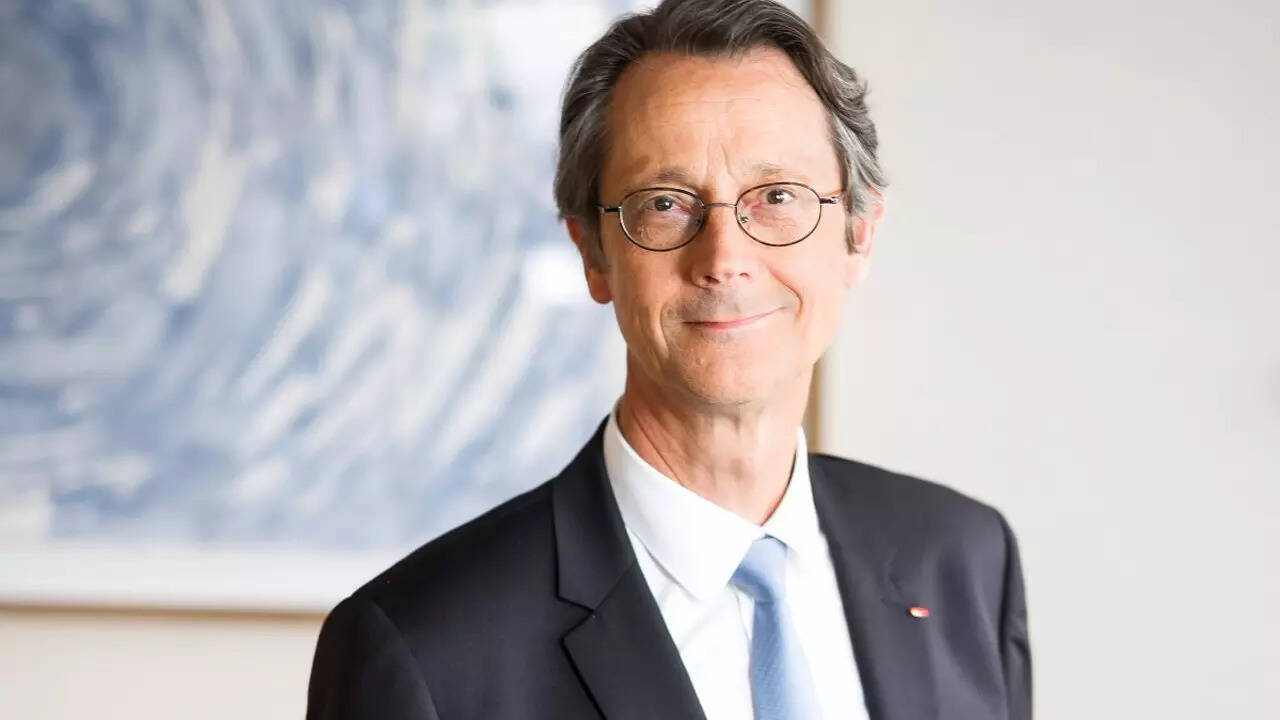
In India to inaugurate three centres and announce the MRO, Safran Global CEO and director Olivier Andries spoke to TOI about “friend” Bharat. Excerpts:
What made Safran choose India for having the largest LEAP engine MRO here?
We have a lot of customer airlines in India using A320neo/B737 MAX for the Leap engines. There is a backlog of 1,500 engines to Indian carriers. India is a very important and strategic market for us. Air traffic here will double in a decade.
The Telangana government gave us an attractive offer for having the site in the state. The MRO will service 300 engines annually and have a work force of 1,000 by 2030 as the capacity grows in phases. It will serve airlines of India and of the region, including the Middle East.
Apart from the MRO, what are the other plans for India?
We will be opening two IT centres for Safran, one each in Hyderabad and the other in Mumbai. These will together hire 1,000 people by 2025, with Hyderabad accounting for 800 of them. In Bengaluru, we are going to inaugurate a new facility in JV with Hindustan Aeronautics Ltd (HAL) where piping of Leap engines will be done.
The JV has been on since 2005 and the earlier facility was in the middle of the city. That work will now happen from a much larger space outside the city near the airport as the workload has increased tremendously. We may have another partnership with HAL (on the defence side).
The revival of air traffic has seen a backlog build up for new aircraft and engine deliveries. How is that issue being tackled?
In 2020, air travel slumped and there was a demand shock. From 2021 when travel demand picked up, there has been a supply chain shock. (The closure of China) meant a shortage of several items including titanium, nickel and chemicals.
While the issue has been substantially resolved in Europe, problems in the US continue. The (war in Ukraine) has compounded issues further. We are trying to address these issues as best as possible given the circumstances.
The Tatas are scouting for new planes and engines. Have you been in talks on the issue of engine availability?
We have been engaged with the Tatas. Personally as I see it, almost half of the aircraft available (and ordered) globally are owned (ordered) by big leasing companies. So initially the Tatas may need to lease planes from them as delivery for new orders will take time.
Indian carriers have been experiencing snags in engines across manufacturers every now and then. Why is the frequency relatively higher here?
The environment of Middle East and India is the most difficult for engines — hot, dusty, sandy and humid (in India’s case). The behaviour of engines in cold and dry places is different than those operating in a harsh environment. We are taking care of this issue through technological means.
You are building the largest LEAP engine MRO in India. Are there any planes to have a final assembly line for engines here?
We have two Leap manufacturing facilities globally — one in France and the other in the US. These units have to be close to airframe manufacturers for logistical reasons. Engines from our French facility go to the Airbus base in Toulouse and those from the US one go to Boeing. Since we have a big customer base of airlines in India and the region, we decided to have an MRO near them in the country.
Covid has shown that over dependence on one region (China) can cause supply chain disruptions. How are you preparing for future shocks in this regard?
We are going to live in an uncertain world with rising geopolitical tensions (referring to Russia-Ukraine). We have to be resilient and sovereign in our supply chain. We can’t afford to over-depend on one country. Every part of an engine will be double sourced. Dependence on no single country will be beyond 50%. So we are looking at activities in friendly countries. And India is a friendly country.
Comments on transfer of technology to India?
We are ready to engage with Indian transfer technology for fighter aircraft engines under the country’s make-in-India self-reliance plan. The support for this (transfer of military grade tech) has the backing of the highest level of government in France. France is ready to transfer this technology only to India.