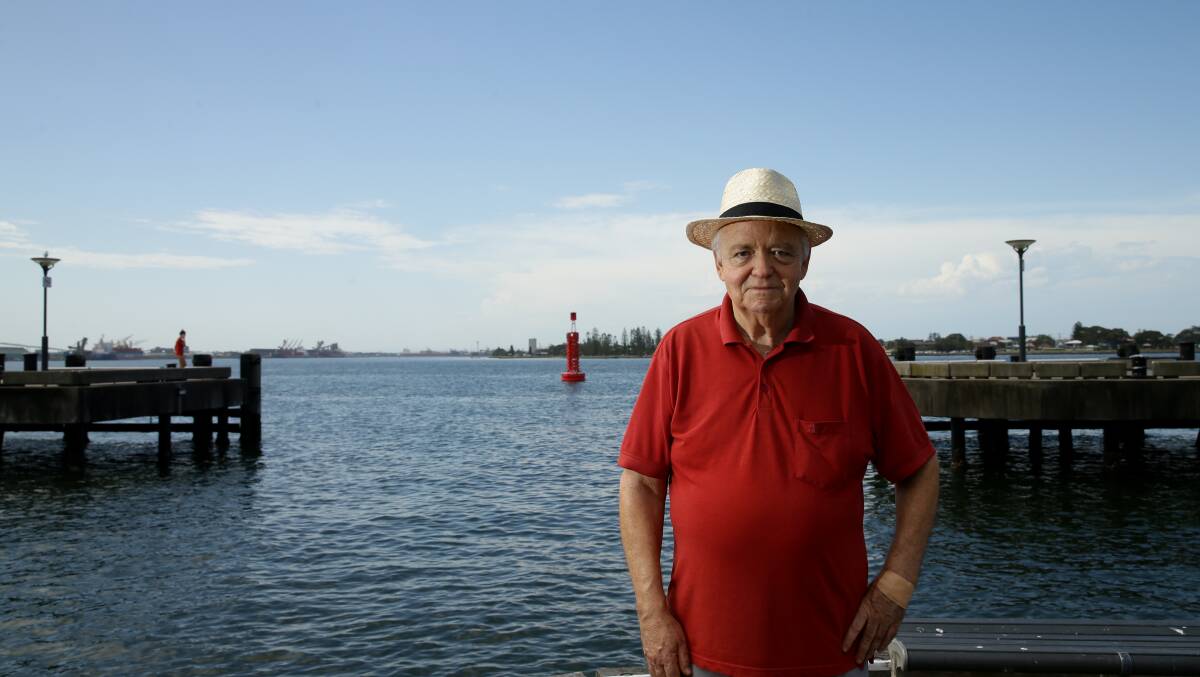
DISTINGUISHED investigative journalist Brian Toohey spoke in Newcastle on Saturday night about his take on the world of spycraft and "intelligence", and why the United States, not China, was the world's greatest agent of "foreign interference".
Toohey's work from 1973 at The National Times, the Australian Financial Review, the Sydney Morning Herald and other publications including his own periodical, The Eye, has made him a perpetual thorn in the side of the power elites in Canberra and elsewhere.
The Sydney-based writer was in Newcastle to speak at a Hunter Broad Left dinner at Carrington Bowling Club, attended by about 45 people under COVID-19 restrictions.
The annual gathering noted the loss of one of the group's prominent members, former trades hall secretary Peter Barrack, who died in January.
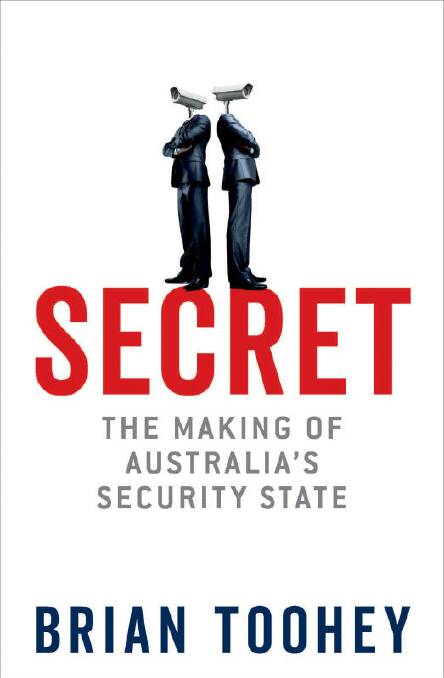
Toohey's speech - Crazy Laws and Crazy Wars - included subjects covered in his latest book, Secret: The Making Of Australia's Security State, published last year.
PREVIOUS HUNTER BROAD LEFT SPEAKERS
-
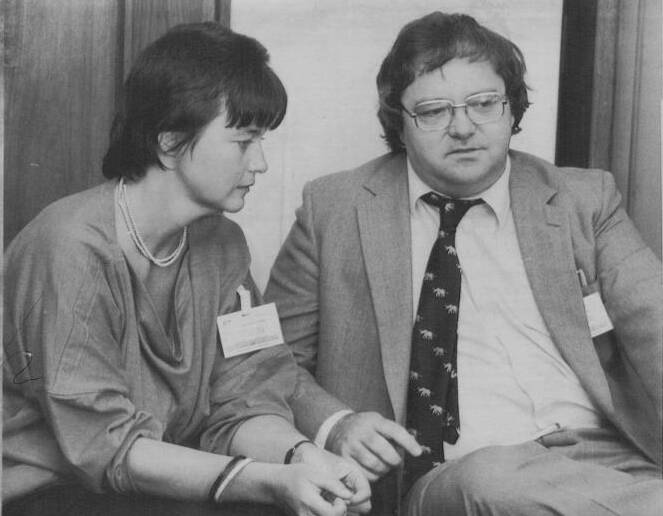
Meredith Burgmann blasts ASIO as incompetent''
-
Vince Scapapatura says US influence outweighs China
-
Melbourne activist Alex Edney-Browne on the military and universities
-
Clinton Fernandez on 'whistlblowers and the security state'
He said both sides of politics and most of the media were "working themselves into a lather about the horrors of foreign influence and foreign interference", but it should be remembered that "trying to influence others is a fundamental right in a democracy".
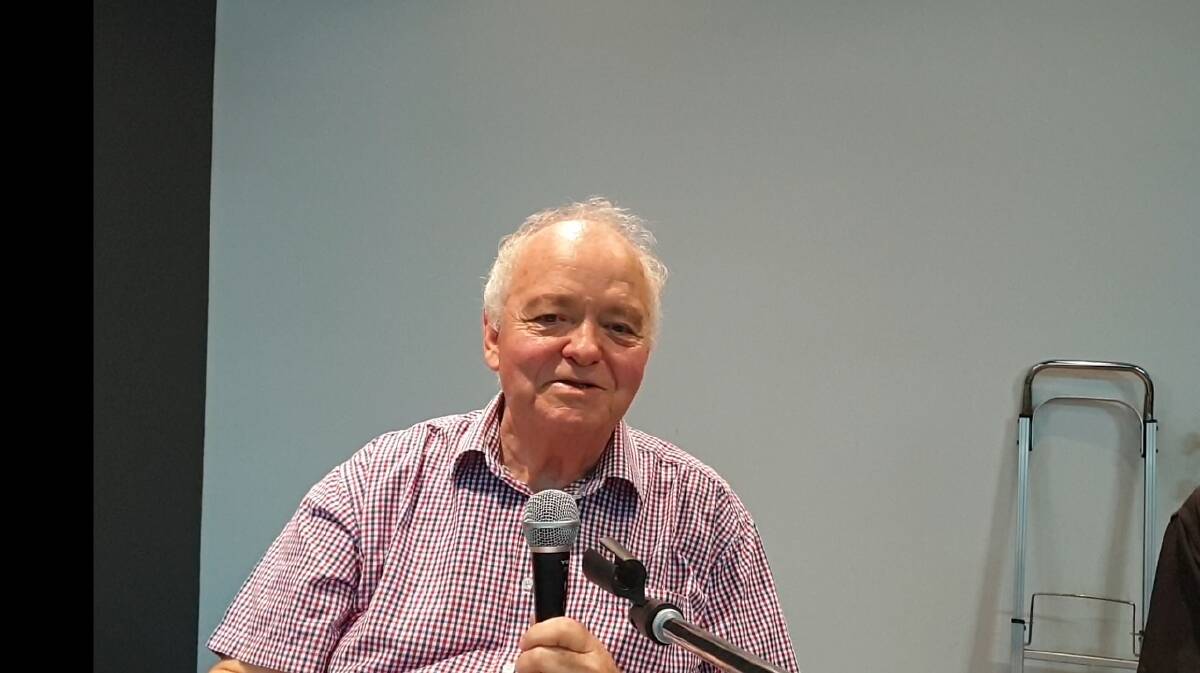
"Foreign influence can be highly beneficial, unless we want to seal ourselves from the rest of the world," Toohey said.
He said foreigners should be free to express any opinion they want as long as it's clear who they were working for.
That was the case whether it was China or any other country, including the US, which "exercises more influence over Australian policy than any other country".
Referring to Russian interference in the 2016 US election, Toohey described it as "a piddling $2 million retaliation" for the $100 million that the State Department confirmed to Congress it had spent "in 2014 alone trying to undermine" Russian president Vladimir Putin.
Secret, and previous Toohey books including Oyster, co-written with the late ABC journalist William Pinwill, not only question the direction of Australian foreign and defence policies, they reveal what Geoffrey Robertson - endorsing Secret - described as "70 years of cock-up and cover-up".
They also detail the growth of Australia's "clandestine agencies" - ASIO (Australian Security Intelligence Organisation) and ASIS (Australian Secret Intelligence Service) - and a succession of new secrecy laws that Toohey says have given "unprecedented levels of peacetime power" to "secretive officials and ministers".
He said the power that the Australian intelligence agencies now wielded was "beyond recognition" compared with their earlier years.
Toohey said "the lie" that Iraq had weapons of mass destruction showed the way "intelligence" was misused.
"The reality is that intelligence is now often nothing more than propaganda," Toohey said.
"Even when it is proved to be false, it continues to be repeated by many officials and journalists.
BRIAN TOOHEY ANSWERING QUESTIONS ON SATURDAY NIGHT
Toohey said an "avalanche of new laws" since the 9/11 attacks have "stripped away the core liberties" of Australians, driven from within the Australian Department of Home Affairs.
He said the new laws and their emphasis on secrecy displayed a "zealotry that would not seem out of place in China".
He said that Australia witnessed 154 acts of terrorism - politically motivated violence including bombings, stabbings and shootings - between June 1966 and September 11, 2001.
One of these was the infamous Sydney Hilton Hotel bombing in 1978 in which a bomb in a garbage bin outside the hotel, where Commonwealth heads of government were staying, exploded killing two garbage collectors and a police officer, and injured 11 others.
"Despite the presence of 12 foreign leaders, PM Malcolm Fraser never saw a need for new laws - the existing murder laws were enough - nor did he attempt to wedge Labor for being weak on terrorism," Toohey said.
He said that while the ANZUS treaty did not oblige America to come to our aid, there was "almost no way to avoid tagging along with the US in its next illegal war, which will probably occur under [president-elect Joe] Biden".
Toohey said the Congressional Research Service calculated the US had used military force overseas 240 times since 1950.
"Most weren't major wars, but no other country has used military power to intervene in other countries on remotely this scale," Toohey said.
He said that after removing Saddam Hussein from Iraq, US drove the intervention to overthrow Libyan dictator Colonel Gadaffi, "although he was doing little harm internationally".
He said Libya descended into chaos afterwards, slave markets prospered, terrorist groups and army factions took control of large parts of the country and refugees flooded Europe.
He said former prime minister John Howard still refuses to concede that invading Iraq was a mistake, but its repercussions continue.
He said a detailed report titled Creating Refugees released in September by Brown University found that between 39 million and 57 million people fled their homes in the eight most violent wars the US launched or took part in since 2001.
BRIAN TOOHEY'S ADDRESS ON SATURDAY NIGHT
On the recurrent debate over borders in the South China Sea, Toohey said the Chinese Communist Party inherited the claims that were first made by the Nationalists - "the supposed 'good guys' - in 1923 and formally repeated in 1943, which was "why Taiwan still makes the same claims today".
He said that for all of the concern over Chinese infiltration of Australian politics, there was "no chance of Manchurian candidates prevailing".
(The Manchurian Candidate was a 1962 Cold War thriller starring Frank Sinatra as a former soldier from a prominent political family who was captured prisoner in the Korean War and brainwashed by his communist captors as a "sleeper agent" programmed to become an assassin.)
"The top echelons of politics, the courts, the military and so on would all have to be brainwashed," Toohey said.
"They will make up their own minds. They won't succumb to Chinese influence, especially when China is really on the nose in Australia.
"Yet ASIO continues to warn that Manchurian candidates are embedded throughout the top layers of Australian society, and journalists repeat this rubbish after secret briefings."
In Secret, he said: "Like many other journalists, my goal is to let people know what governments are doing in their name, subject to the usual constraints of time and resources."
Despite repeatedly criticising journalists who did not test the claims of politicians and intelligence services on national security issues, Toohey said the Coalition's secrecy laws had meant reporters had "a much tougher job" today.
He said the Espionage and Foreign Interference Act 2018, he said some of the definitions were so broad that "almost anything is a crime". He said the Act made it an offence to leak, receive or publish any "inherently harmful information", including economic information, whether it was classified or not.
"George Orwell could never could never have dreamt that one up," he wrote in Secret.
- Secret is published by Melbourne University Press
- Videos courtesy Hunter Broad Left
IN THE NEWS: