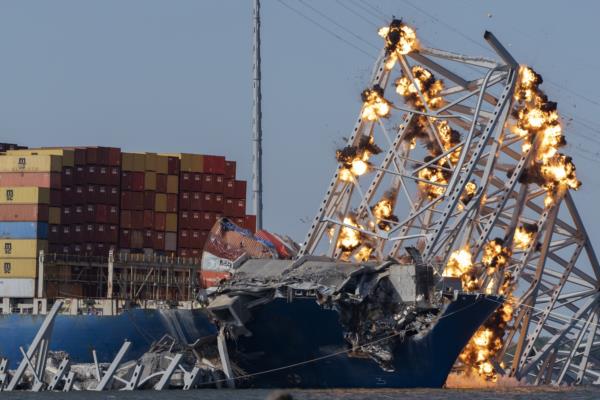
The Dali container ship encountered a series of power failures before colliding with Baltimore's Francis Scott Key Bridge, resulting in six fatalities. The National Transportation Safety Board's preliminary report highlighted four blackouts that affected the 984-foot vessel. The first blackout occurred due to a crew member mistakenly closing an exhaust damper during maintenance, leading to a diesel engine stall. Subsequently, a backup generator failed due to insufficient fuel pressure. The reasons for the other three power failures, including two just before the crash, remain unknown.
Following the initial outages, the ship's electrical configuration was changed, transitioning to a different system. Hours later, while navigating the Patapsco River, unexpected breaker trips caused another blackout, resulting in the automatic shutdown of the diesel engine. Despite efforts to restore power, the ship struck the bridge due to a lack of propulsion for steering.
The causes of the blackouts remain a subject of investigation. Experts suggest that the switch in electrical configurations may have played a role, as using components not regularly employed can increase the risk of failure. However, such changes are considered routine in maritime operations.
While the crew responded promptly to the power failures, questions have been raised about the adequacy of safeguards on cargo ships. The incident underscores the importance of balancing cost efficiency with safety in maritime transportation, especially as vessels continue to grow in size.
Experts emphasize that machinery failures can occur unexpectedly, particularly in confined port spaces, heightening the risk of accidents. Despite the tragedy, shipping remains the most efficient mode of transporting goods, emphasizing the need for reliable and redundant systems on board ships.