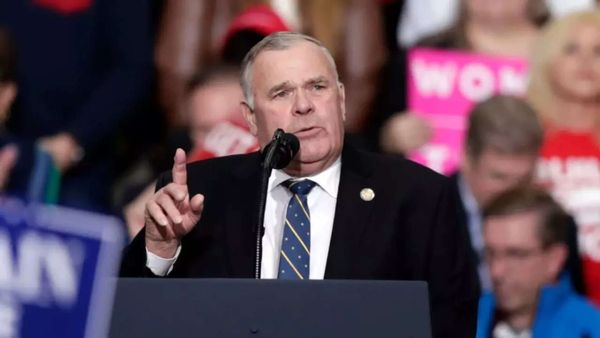
MINNEAPOLIS _ Carver County Attorney Mark Metz announced Thursday that he was closing the two-year investigation into the death of musician Prince Rogers Nelson without issuing any criminal charges.
Metz said county, state and federal investigators undertook an "extensive, painstaking and thorough" investigation but were unable to determine who provided Prince the fentanyl painkillers, disguised as counterfeit prescription medication, that killed the megastar on April 21, 2016.
Metz said there was no evidence Prince or his associates knew that the musician had taken counterfeit pills marketed under the trade name Vicodin, or that anyone had conspired to kill him.
"There is no reliable evidence showing how Prince obtained the counterfeit Vicodin containing fentanyl," he added. "The bottom line is that we simply do not have sufficient evidence to charge anyone with a crime related to Prince's death."
After the news conference, a spokeswoman for the U.S. attorney's office said that federal prosecutors have so far received no credible evidence that would lead to any federal criminal charges. A law enforcement source with direct knowledge of the case said it is now inactive pending the uncovering of additional evidence or witnesses.
Ninety minutes before Metz spoke, the U.S. attorney's office in Minnesota announced that it had agreed to a civil settlement with a Minnesota doctor who admitted that he knew that painkillers he had prescribed for Prince's bodyguard and longtime associate, Kirk Johnson, would be used by the musician. The settlement resolves possible controlled substance violations found during the death investigation.
Dr. Michael T. Schulenberg will pay a $30,000 fine and will also be monitored under a two-year agreement with the U.S. Drug Enforcement Administration as part of the settlement.
Neither the names of Prince nor Johnson appear in the settlement agreement, but federal search warrants executed in the weeks after Prince's body was discovered at his Paisley Park studio in Chanhassen disclosed that Schulenberg admitted to writing prescriptions for Percocet in Johnson's name, knowing that they were actually for Prince.
Investigators do not suspect Schulenberg of supplying the fentanyl that caused Prince's death.
Prince, 57, died of a massive overdose of fentanyl on April 21, 2016, according to the medical examiner. The Minneapolis Star Tribune first reported that pills marked as prescription painkillers seized at the death scene were found to contain fentanyl.
An autopsy revealed so much fentanyl in Prince's system that it would have been fatal for anyone, regardless of their size or drug tolerance.
According to a federal search warrant application unsealed early Thursday, a medical examiner found 67 micrograms of fentanyl per liter of blood in Prince's system _ more than 22 times what would be found in a cancer patient who regularly wore a pharmaceutical fentanyl patch.
In a statement Thursday, Amy Conners, an attorney for the doctor, said Schulenberg affirmed a previous statement that he did not prescribe opiates to any patient with the intention that they be given to Prince. However, the U.S. attorney's office contends that Schulenberg knowingly made a prescription "in the name of an individual, knowing that the controlled substances were intended to be used by another individual."
"Doctors are trusted medical professionals and, in the midst of our opioid crisis, they must be part of the solution," U.S. Attorney Greg Brooker said in a statement announcing the settlement. "As licensed professionals, doctors are held to a high level of accountability in their prescribing practices, especially when it comes to highly addictive painkillers. The U.S. attorney's office and the DEA will not hesitate to take action against health care providers who fail to comply with the Controlled Substances Act. We are committed to using every available tool to stem the tide of opioid abuse."
According to the agreement, Schulenberg and the U.S. attorney's office reached the settlement to "avoid the delay, uncertainty, inconvenience, and expense of protracted litigation of these claims ... "
However, the agreement is made "in compromise of disputed claims." Schulenberg did not admit liability nor did the government make any concessions "that its claims are not well-founded."
"After he learned of Prince's addiction, he immediately worked to refer Prince to a treatment facility and to transfer care to a chemical dependency specialist," Conners said Thursday. "Dr. Schulenberg has previously disclosed all information regarding his care and treatment of Prince to his employers, law enforcement and regulatory authorities in the course of his complete cooperation with all related investigations."
The U.S. attorney's office also agreed not to revoke or suspend Schulenberg's DEA registration unless he violated his agreement with the DEA.
Schulenberg is a licensed physician doing business at Fairview Clinics in New Brighton and has been licensed since 1997 in Minnesota.
According to a second previously sealed federal search warrant application from 2016, Schulenberg, who was Johnson's doctor, told investigators at the death scene that he examined Prince at Johnson's request two weeks earlier and administered intravenous fluids.
Schulenberg initially denied prescribing medication but said he prescribed anti-nausea drugs and vitamin D for Prince. Instead, he issued the drugs in Johnson's name.
Schulenberg also admitted that Johnson asked him to prescribe pain medication to Prince on April 14, a week before the musician's death, because Prince was experiencing hip pain and had a concert that night in Atlanta _ the show would be notable for being his last full concert.
Schulenberg did not see Prince that day but agreed to write a prescription for 15 tablets of Percocet, a form of oxycodone, intended for Prince but made out in Johnson's name. According to a DEA task force officer, in his notes, Schulenberg wrote that Johnson "called and is leaving town for Atlanta for a concert shortly and hurt his back lifting equipment."
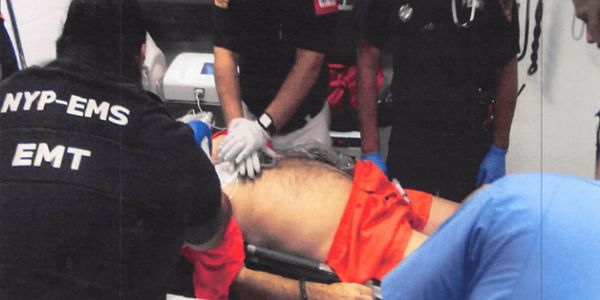
On the return trip to the Minneapols area from the Atlanta show, Prince's private plane made an emergency landing in Moline, Ill., after Prince passed out. Paramedics scrambled to revive him on the tarmac, and he recovered after two shots of naloxone, an overdose antidote often referred to by its brand name Narcan. Johnson told doctors in Moline that Prince may have taken Percocet. He was documented as suffering from an opiate overdose but refused treatment at the hospital.
Schulenberg told investigators that three days after the emergency landing, or four days before Prince died, Johnson sent a text message asking Schulenberg to call him. During the call, Schulenberg told investigators, Johnson expressed concerns about Prince's opiate use and apologized for asking Schulenberg to prescribe Percocet for Prince.
As part of the settlement this week, Schulenberg also entered into a "Memorandum of Agreement" with the DEA under which he agreed to comply with a two-year period of heightened compliance for logging and reporting of all of his prescriptions of controlled substances _ including quantity, strength, dosage and diagnoses.
Under the agreement, DEA personnel can also enter his office without notice at any time during business hours to ensure compliance. Schulenberg must submit logs on a quarterly basis and allow the DEA access to his prescribing history through Minnesota's Prescription Monitoring Program. He must also provide a prescribing history report to the DEA from the Minnesota Board of Pharmacy.
Brooker, meanwhile, wrote a letter to Schulenberg's attorneys, Conners and Thomas Heffelfinger, earlier this week clarifying prosecutors' intentions with respect to their client.
"I understand his concern to be whether, in the view of this office, he is currently the target of a criminal investigation. In the context of a criminal investigation, a 'target' is a person who is linked by substantial evidence to the commission of a crime and who, in the prosecutor's judgment, is likely to be charged. At this time, Dr. Schulenberg is not a target of any criminal investigation."
Medical records indicated that Schulenberg examined Prince a day before his death, according to one federal search warrant. The musician reported feeling "antsy" and thought it may be related to having stopped taking Tylenol that morning. Prince didn't know if the Tylenol had other ingredients, Schulenberg said. But Schulenberg's notes indicated that "independent sources of history" reported Prince's Tylenol as containing hydrocodone, a pain reliever. A urinalysis on Prince also tested positive for opiates.
The records also show Schulenberg expressed concern that Prince could be suffering from opiate withdrawal.
Federal search warrants described DEA investigators seeking evidence of federal drug crimes that included distribution and conspiracy charges. Weeks after Prince's death, agents found dozens of pills marked as prescription pain pills in Prince's bedroom, inside two bottles of CVS-brand vitamin C tablets in a black suitcase.
Agents also recovered a CVS prescription pill container with 10 white round pills with "TV150" stamped on one side and "3" on another, which indicates an acetaminophen/codeine mixture. But, according to the search warrants, those pills were thought to be an unused prescription written by a Minnesota dentist for Johnson.
On Thursday, Johnson's attorney, F. Clayton Tyler, said Johnson was relieved to learn that no charges had been filed against him.
"He continues to deny that he had anything to do with the death of his close friend, Prince," Tyler said. "Prince's death was a tragedy that few could experience more deeply than Kirk Johnson. Today's decision affirms his innocence, and he will continue to mourn and honor his friend every day."
Kimberlee Andrus, of Austin, Minn., drove more than 90 minutes to the Carver County Courthouse to attend Thursday's news conference. Donning purple hair, a purple blouse and a giant Prince symbol, she left disappointed after learning that no one would face criminal charges.
"I honestly believe there was foul play, and I'm not the only one," said Andrus, 39. After more than three decades of listening to Prince's music, she said she felt a close personal connection to the late musician and has spent the last two years investigating his death along with other fans.
"I lost my brother," Andrus said. "I wanted to see if justice was brought to someone I love and cared dearly about for many years."
She vowed to keep digging until someone is held accountable for Prince's overdose.