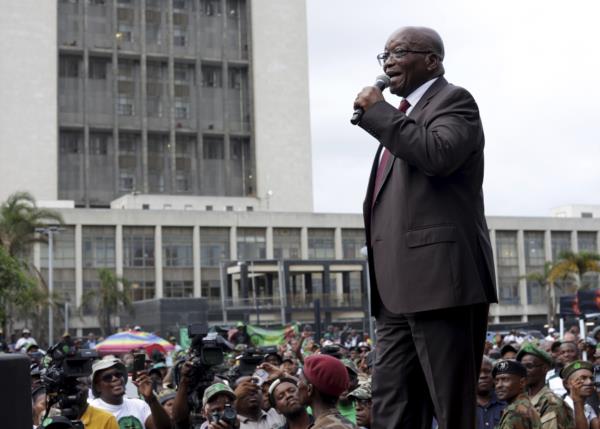
South African police are currently investigating allegations that the MK Party, a political party associated with former President Jacob Zuma, may have forged supporters' signatures in order to register for the upcoming national elections. The party, known for its criticism of the ruling African National Congress (ANC), has faced legal challenges regarding its eligibility to participate in the elections scheduled for May 29.
The MK Party initially had its registration rejected by the Independent Electoral Commission but managed to succeed on a second attempt. However, Jacob Zuma, the party's de facto leader, faced initial ineligibility due to a criminal conviction for contempt of court. Despite this, an appeal allowed him to contest the elections pending a final ruling by the Constitutional Court next month.
The recent investigation was prompted by a former party official's claims of an elaborate scheme to forge some of the 15,000 signatures required for party registration. The Independent Electoral Commission has called for a thorough investigation into the matter, leading to the opening of an inquiry by the National Police Commissioner in Cape Town.
Jacob Zuma's involvement with the MK Party has added a significant twist to South African politics, as he openly opposes the ANC, the party he once led. Zuma's presidency, marred by corruption allegations, ended in 2018 when he was compelled to resign by the ANC.
The upcoming elections are anticipated to be crucial for South Africa, with predictions suggesting that the ANC might lose its parliamentary majority for the first time since the end of apartheid in 1994. Despite Zuma's legal challenges, his popularity in certain regions could impact the election outcome, especially if the MK Party is allowed to participate.
If the allegations of signature forgery are substantiated, the MK Party risks disqualification from the elections, potentially altering the political landscape in South Africa.