An academic fraud investigation at the University of North Carolina has found that more than 3,100 students were involved in a “shadow curriculum” that occurred over nearly two decades.
The investigation reveals a wider scope of academic fraud than previous probes by the school and the NCAA. The investigation found that the students – nearly half of them athletes – took classes that they didn’t have to show up for and required only a research paper that was often given an A or B regardless of the quality of work.
“Over 3,100 students received one or more semesters of deficient instruction and were awarded high grades that often had little relationship to the quality of their work,” said the report.
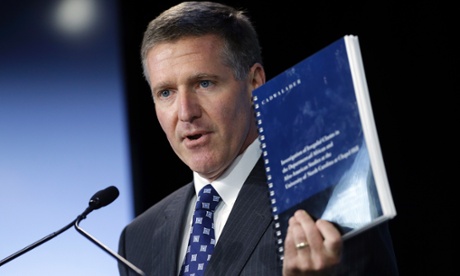
Former US Justice Department official Kenneth Wainstein released his findings on Wednesday. In it, North Carolina administrators Debby Crowder and Julius Nyang’oro are said to have filled the the Department of African and Afro-American Studies with so-called “paper classes” beginning in 1992.
“These were classes that were taught on an independent study basis for students and student-athletes whom Crowder selected. Like traditional independent studies at Chapel Hill or any other campus, these classes entailed no class attendance and required only the submission of a single research paper. Unlike traditional independent studies, however, there was no faculty member involved in managing thecourse and overseeing the student’s research and writing process. In fact, the students never had a single interaction with a faculty member; their only interaction was with Crowder, the student services manager who was not a member of the University faculty.
“Crowder provided the students with no actual instruction, but she managed the wholecourse from beginning to end. She registered the selected students for the classes; she assigned them their paper topics; she received their completed papers at the end of the semester; she graded the papers; and she recorded the students’ final class grades on the grade rolls. When Crowder graded the papers, she did so generously – typically with As or high Bs – and largely without regard to the quality of the papers. The result was that thousands of Chapel Hill students received high grades, a large number of whom did not earn those high grades with high quality work.”
The report continued by saying that football and basketball players packed out the AFAM class. “Of the identifiable enrollments in the lecture paper classes, 47.4% were student-athletes, even though student-athletes make up just over 4% of the Chapel Hill undergraduate student body. Of those student-athlete enrollments, 50.9% were football players, 12.2% were men’s basketball players, 6.1% were women’s basketball players, and 30.6% were Olympic and other sport athletes.” It also says that the young athletes were encouraged to enrol in these courses by academic advisors provided by the athletic department, and that in the case of 329 students the grades helped keep or push their GPA “above the 2.0 level for a semester”.
The investigation says that “several administrators were aware of red flags about potential irregularities in AFAM but took little or no action to inquire about them,” and that the “ University failed to conduct any meaningful oversight of the AFAM Department and ASPSA, and Crowder’s paper class scheme was allowed to operate within one of the nation’s premier academic institutions for almost two decades.”
The NCAA reopened an academic-misconduct probe at UNC in June because new information was available. The new investigation said it was done in cooperation with the NCAA.