WASHINGTON _ The hotline that keeps U.S. and Russian military forces from fatal disaster in Syria, where the two nations have vitally different interests, has some kinks.
That is the upshot of an investigation into a botched U.S.-led coalition airstrike in the Syrian city of Deir el Zour on Sept. 17 that may have killed as many as 83 people, many of them members of the Syrian army.
The airstrike incensed Moscow and helped torpedo a tenuous cease-fire involving Russian, U.S. and Syrian forces.
The investigation suggests that the danger of a miscalculation remains as U.S. forces fight the Islamic State in close proximity to Russian forces defending Syria's embattled regime.
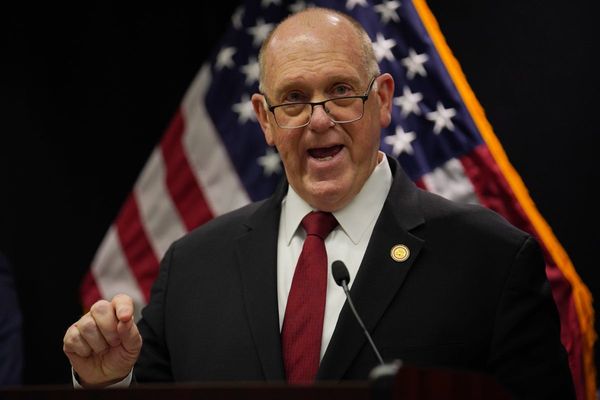
U.S. Air Force Brig. Gen. Richard A. Coe, who led the investigation, said Tuesday that Russians had been kept waiting for 27 minutes when they used the hotline to call Sept. 17 and warn the U.S. military that it was bombing a Syrian military unit.
The usual U.S. military point of contact for the Russians was on another side of a base, Coe said. Transcripts show that the Russians hung up. When they called back a few minutes later, the officer still wasn't near the phone. They waited on hold until he showed up.
Although Coe did not specify the location of the combined air operations center, it is known to be in Bahrain, the Persian Gulf island that is home to the Navy's 5th Fleet.
"So this was obviously a missed opportunity to be able to limit the damage of the mistake," Coe said. "But, you know, we would not have stopped the strikes but for the phone call from the Russians. ... So we're certainly grateful for the phone call."
Coe said the air attack on the Deir el Zour installation was the result of compounded human errors, starting with the mistaken identification of a vehicle thought to be bearing a key commander of the Islamic State extremist group _ also known as ISIS, ISIL or Daesh _ which later arrived in Deir el Zour.
Australian, British and Danish aircraft took part in the airstrike alongside U.S. aircraft, which included F-16 fighters, A-10 Warthogs, F/A-18 combat jets and numerous drones, Coe said.
The aircraft let loose with 34 precision-guided weapons and 380 rounds of 30 mm ammunition, Coe said. A U.S. investigation following the attack could not arrive at the site and relied on aerial footage, confirming only 15 deaths but believing there were more.
The Syrian Observatory for Human Rights reported 83 deaths in the botched attack.
"The targets struck included defensive fighting positions, vehicles, tents, bed-down locations, tunnels and personnel," Coe said, "all of which were believed to be Daesh forces at the time of the strike."
Coe said 15 of the precision-guided weapons were fired by coalition aircraft during the 27-minute stretch in which the Russian commander sought to alert U.S. forces to their mistake.
In October 2015, U.S. and Russian officials set up a hotline designed to avoid accidental clashes between U.S.-led coalition forces and Russian aircraft protecting the Syrian regime.
Coe noted that a series of "human factors" had led to the botched airstrike but added that the Syrian forces "were not wearing uniforms. They had no flags or insignia" and were operating in "close proximity" to armed Islamic extremists.
Deir el Zour, Syria's seventh largest city, anchors the eastern part of the country, to the southeast of Raqqa, the stronghold of Islamic State extremists. The city has been a key transit point for the Islamic extremists.
The officers ordering the coalition airstrike did not operate from malice, Coe said, although one service member noted in the run-up to the bombing that "what we're looking at can't possibly be ISIL."
The dissenting voice noted the presence of a tank near the attack site, Coe said.
"He was watching a full-motion video of a tank, and in his personal experience he had never seen ISIL with a tank," Coe said, adding that others at the air operations center in Bahrain noted that Islamic rebels had captured an army tank days earlier, overruling the dissent.
"They were good people trying to do the right thing but this time they came up short," Coe said. At another moment, he said, "We made unintentional, regrettable errors in the targeting process."
Continuous aerial surveillance of a suspect vehicle began two days before the coalition airstrike, he said, stretching across multiple shifts of workers in various monitoring sites around the world, some of whom were "transitory personnel" not sufficiently aware of training or information.
While the decision to identify the vehicle as belonging to ISIL was made in "good faith," Coe said, it led to a series of invalid assumptions that colored analysis before the airstrike.
Coe did not identify which aircraft were flown by Danish, British and Australian forces, although the BBC said Britain was using a British Reaper unmanned system.
President Barack Obama sent condolences to Syria following the attack. Australian Prime Minister Malcolm Turnbull expressed regret for the loss of life. Australia maintains F/A-18 fighters in the Middle East as part of the U.S.-led coalition.
What role Danish forces played was not immediately clear.