
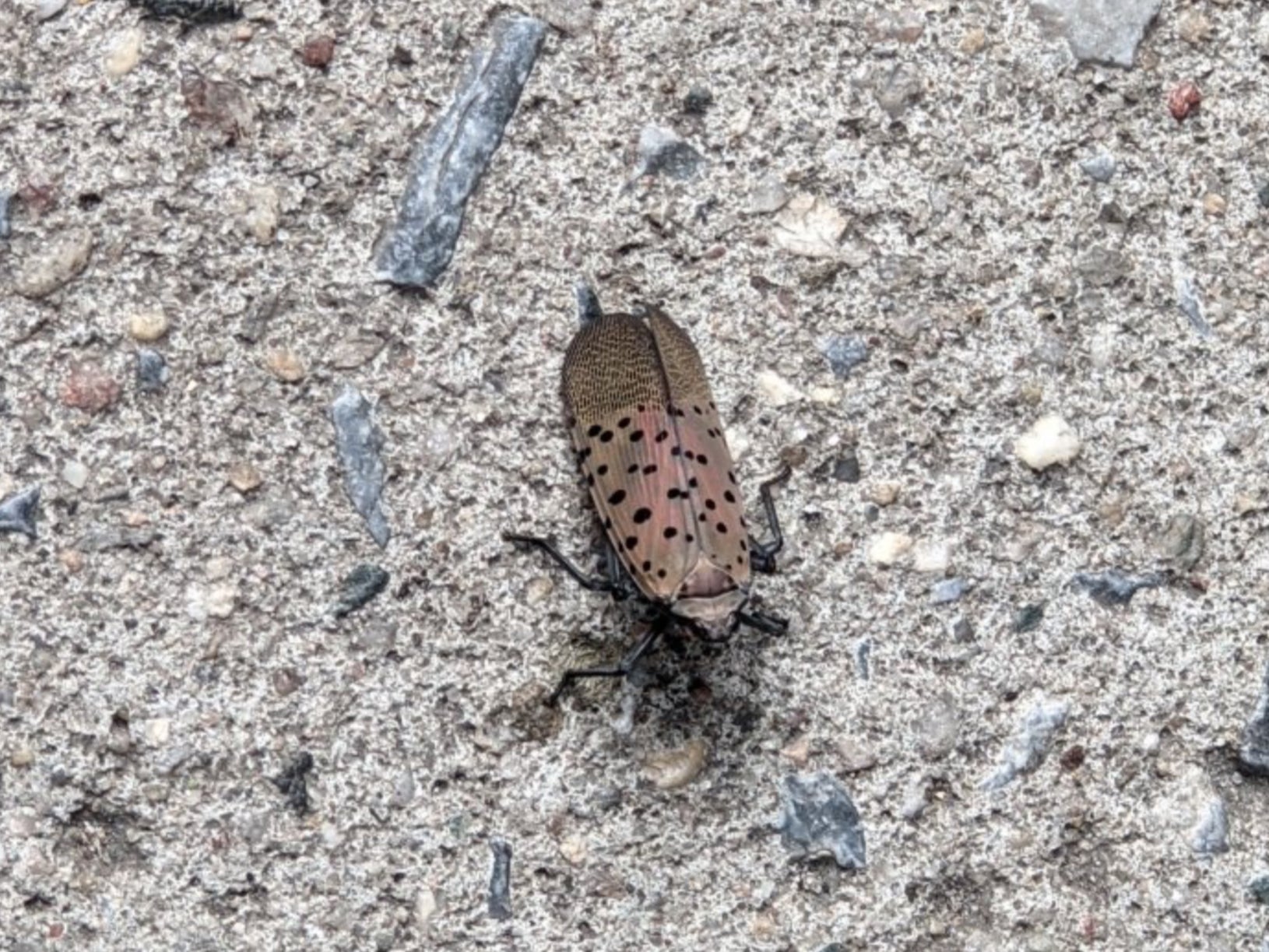
Authorities in some states urge people to kill them on sight
(Picture: Twitter)New York has had a colourful invasion after several reports of spotted lanternflies around the city.
While the lanternfly is harmless to humans, the invasive plant-hopper is known to be destructive to nature. It is considered a threat to trees, crops, plants and overall quality of life.
Down in Philadelphia, the Department of Agriculture said, “this insect could cost the state $324 million annually and more than 2,800 jobs”, according to a 2019 economic impact study.
The advice in that state? Kill them on sight and make a report of a sighting.
“If you see a spotted lanternfly, it’s imperative to immediately report it. What else? Kill it! Squash it, smash it...just get rid of it. In the fall, these bugs will lay egg masses with 30-50 eggs each. These are called bad bugs for a reason, don’t let them take over your county next.”
The Spotted Lantern Fly is pretty, but invasive and destructive!! I saw this one fly by at Broadway & 70th Street, took a photo when it landed, then squished it, took another photo and reported it to iNaturalist. Please do the same if you see one!! #birdcpp pic.twitter.com/DEv87aOfrL
— boysenberry45 (@boysenberry451) August 16, 2021
The bug comes from China, India and Vietnam, but they have since been spotted in Pennsylvania in 2014 before spreading to other states such as Maryland, Delaware, Virginia. New York is the newest state to see a surge of spotted lanternflies.
Alejandro Calixto, director of the New York State Integrated Pest Management program at Cornell University, warned that it “could impact New York’s forests as well as the agricultural and tourism industries.”
“Once these insects reach some of the state’s grape production areas, there’s going to be an impact”, he added.
We're sounding the alert on the SPOTTED LANTERNFLY after a recent surge in Manhattan observations on @inaturalist—over 30 in just the last week. This invasive planthopper destroys plants and trees, but does not hurt humans. Kill it by swatting or squashing. pic.twitter.com/9YyIuTjMBu
— Manhattan Bird Alert (@BirdCentralPark) August 15, 2021
@inaturalist seen today at 84th St and Amsterdam Ave, NYC, this spotted lanternfly. I killed it… pic.twitter.com/4uQTULktLn
— Howard Katz (@HK7682) August 10, 2021
Oh… no :( Spotted lanternfly (MANY) on Staten Island…. If you see these little jerks anywhere around the NYC area, please report them https://t.co/85LClN4RAJ squish them (and record the host plant if you can!) pic.twitter.com/qX9q0df5gJ
— Shannon Curley, PhD (@ShanimalNstinct) July 7, 2021
@NewJerseyDEP @JerseyCity FYI, just stopped a spotted lanternfly in our backyard in 07306, near Journal Square. pic.twitter.com/HkE3j5hG5Z
— Matt Chaban (@MC_NYC) June 19, 2021
I didn’t realize the spotted lanternfly had reached NYC. Sad news. https://t.co/KH7bA9PNp3
— Kyle MacLea (@kmaclea) August 15, 2021
It’s a shame these spotted lanternflies are tree & crop destroying pests, because their markings are very pretty. https://t.co/lqJjeOZo8u pic.twitter.com/7uwQ4A3CGb
— NYC You Next Tuesday (@thekateblack) August 15, 2021
#Hikers, parks goers, nature explorers in #NYC areas. There are still sighting of these spotted lanternfly in #statenisland . They are still around this month. Please report to spottedlanternfly@dec.ny.gov with pics and location if you see them.#Brooklyn #Bronx #invasivespecies https://t.co/yYNANXt0rt
— Activate Our Garden (@OurActivate) November 28, 2020
In this never ending “Season of Suck” now THESE show up. He’s twitching by the way. pic.twitter.com/F4KKOw0yUh
— Dale Arnold (@DaleEArnold) June 19, 2020
The Department of Agriculture and Markets says that the SLF “can be transported on outdoor goods and equipment” and “can also hitchhike in vehicles”.
If you see something which you believe to be a spotted lanternfly, you can:
- Take pictures of the insect, egg masses, or infestation. Include something in the photograph for scale, such as a coin or pen.
- Collect the insect and place it in a freezer or a jar with rubbing alcohol/hand sanitizer.
- Note the location (address, intersecting roads, or GPS coordinates), shipping information, and any other relevant information.
- Email the information to: spottedlanternfly@agriculture.ny.gov