

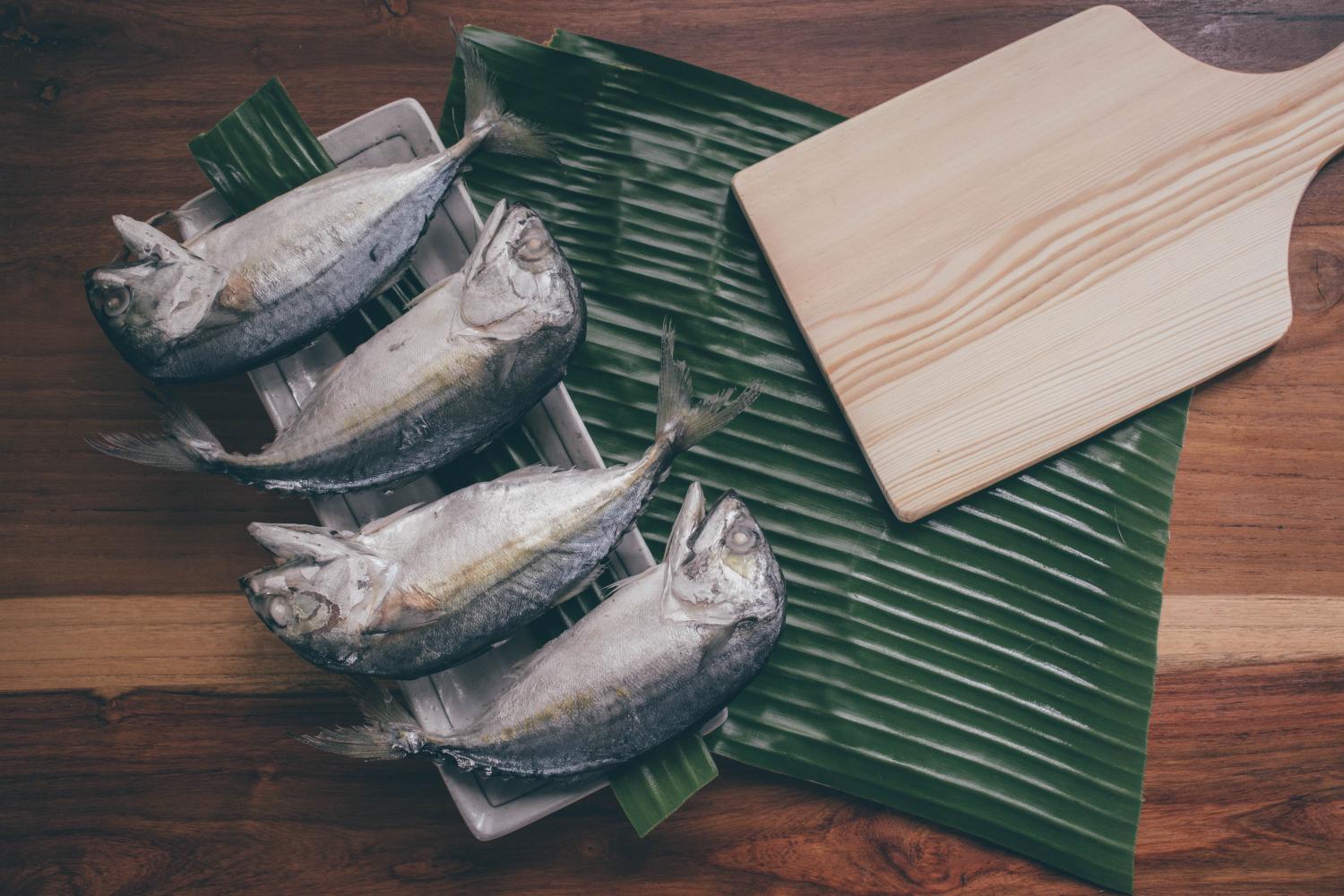
Up until a few decades ago, pla thu (Thai short mackerel), which was overflowing in local seas, had been one of the main staples in Thai households. Back then, almost every Thai child -- whether in a poor or wealthy family -- grew up feeding on pla thu, not only because the fish was available abundantly but also for a comforting good taste that reflected the loving warmth of mum's kitchen.
Today, with various choices of imported seafood dynamically occupying supermarket shelves, Thai parents and ordinary diners alike seem to care less about our once-loved culinary treasure.
Apparently, pla thu and other local ocean harvests are now seen among modern-day consumers as less glorious compared to Norwegian salmon, Japanese tuna and Atlantic cod.
But amid the invasion of imported counterparts, those in the know say that local fish hasn't really dwindled in popularity. Neither has it in number of sales nor culinary glory.
"Diners today might say they prefer imported fish and fancier seafood. But at the end of the day, what they regularly eat is common local produce," said Nirun Sangsuk-iam, managing director of Sirikhun Seafood.
"Pla thu and pla in-see [spotted mackerel] have continued during the past 30 years to be the market's top sellers. The only difference from then and now is their pricing."
Born in a fisher family in the renowned fishing village of Mahachai, Samut Sakhon province, Nirun is a fisherman by blood and trade.
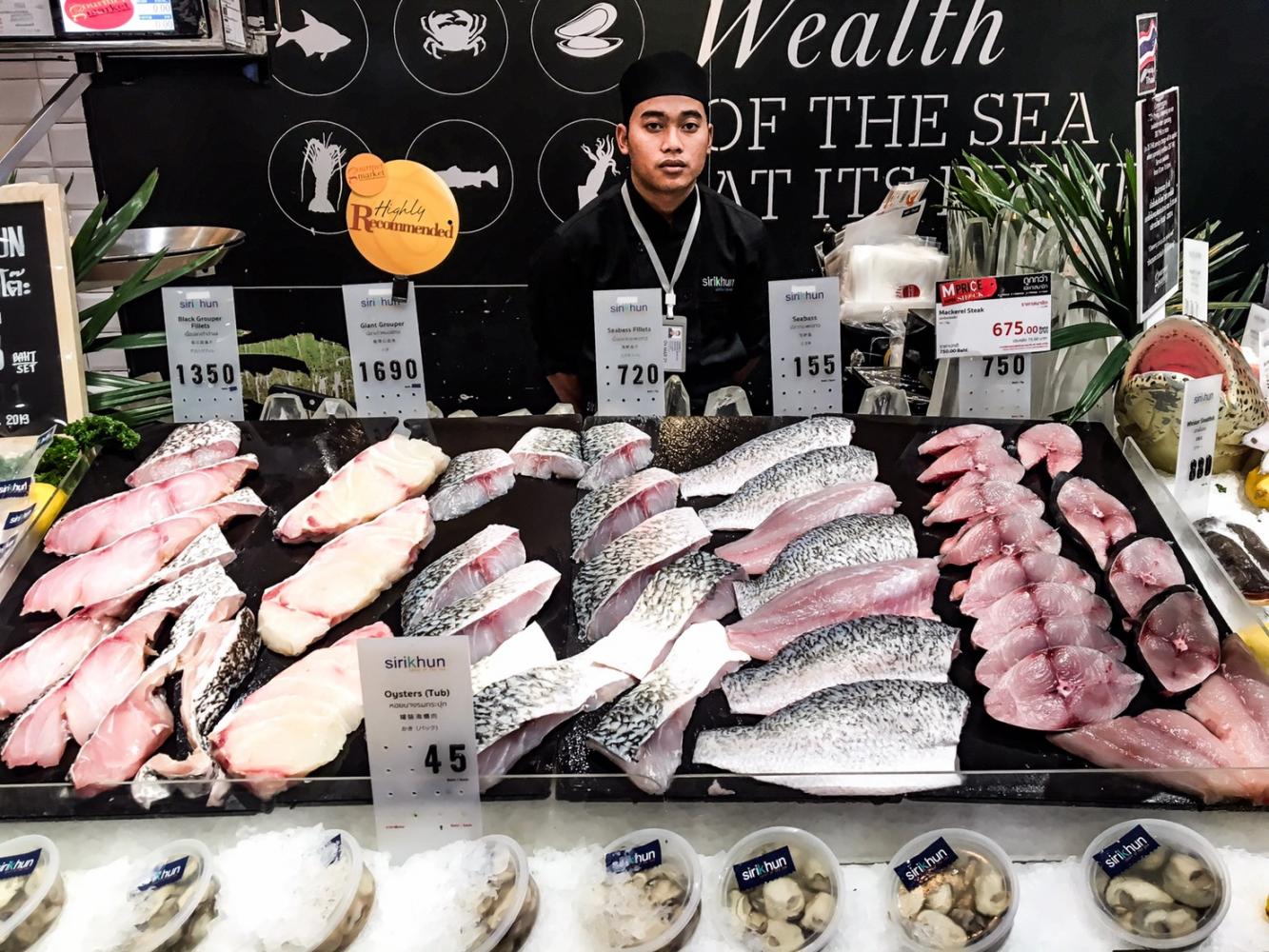
His company is among a few number of local seafood suppliers that target mainly retail customers and diners.
Other than a selection of crab, prawn, lobster, squid and shellfish, the company's inventory boasts more than 200 species of fish -- all caught in local waters both in the Andaman Sea and the Gulf of Thailand. The fish list includes barracuda, catfish, croaker, grouper, halibut, mackerel, mullet, pomfret, sea bass, sea bream and trevally, to name just a few.
According to Nirun, imported fish wasn't a rival of domestic produce in the retail scene until recently.
"While foreign seafood came with ritzy price tags, local seafood had always been super cheap. For examples, in the 70s and 80s, blue crab cost 30 baht per kilogramme and pla thu 10 baht per kilogramme.
"At that time seafood was in abundance. You can say that 'nai nam mee pla, nai na mee khao' [there's plenty of fish in the water and rice in the field]. And seafood was basically a victual for the lower class, as the upper class fed on poultry and red meat."
Nirun said he had, however, foreseen the shortage of seafood supply coming long before it became an apparent crisis in mid-90s.
"Because seafood lies deep in the broad ocean and no one can control or manipulate nature, as long as our consumption of seafood continues, the shortage would come no matter what."
He said the mainstream selection of local fish in the retail market nowadays is typically a by-product of industrial fishing and catch from large-scale trawlers. Basically the fish must go through rough trawling, together with industrial-grade fish, before being stored in the vessel for at least 15 days before reaching land.
Statistics show that, since mid-90s, the volume of harvest from trawlers operating in Thai oceans has dropped badly. In the good old days, each two hours of trawling used to generate 200 tonnes of produce, now the volume has come down to just 2 tonnes.
Consumers today therefore find that prices for local seafood in the retail trade have risen as high as 10 times from that of 30 years ago. Blue crab now fetches 700 baht per kilogramme while pla thu is approximately 100 baht per kilogramme.

FROM LARGE-SCALE FISHERY TO LINE CAUGHT
Despite the decline in volume of the local catch, Nirun lately has witnessed a rising demand for domestically sourced fish from retail customers, who are -- more than ever before -- demanding and knowledgeable.
"Our clientele [60/40 mix of Thai and international families] know what they want, and, interestingly, they cherish prime-quality local seafood as much as they do the imported harvest."
Nirun said his seafood retail business is thus answering the customers' needs, as opposed to trying to sell products he's already carrying.
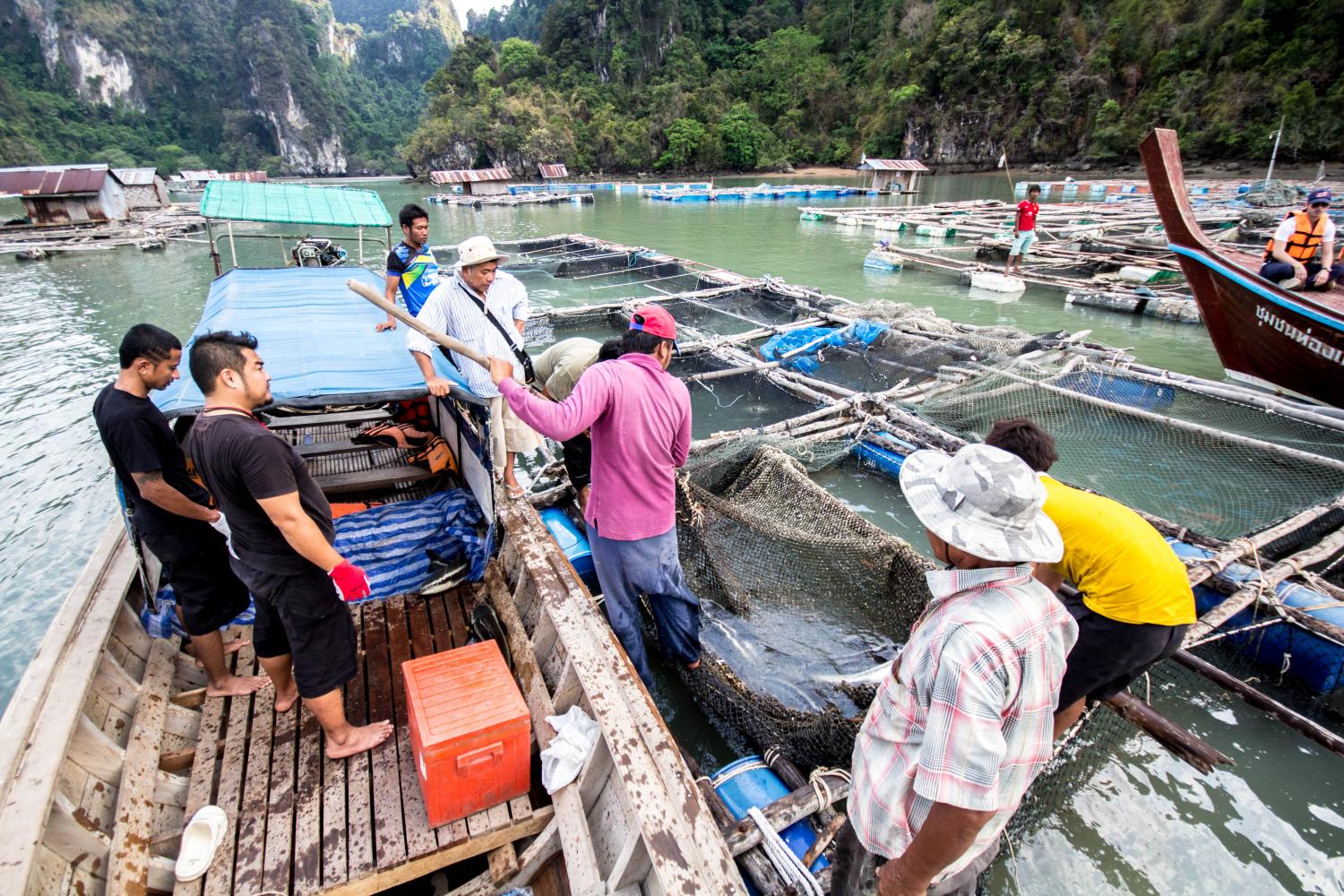
And though the majority of Sirikhun Seafood's produce is basically accumulated from its extensive network of aquacultural traps laid in the ocean as well as from fishermen, the company also works closely with recreational anglers.
According to Nirun, these thrill-seekers -- more than 10,000 of them in the country currently -- are the only way to get a hold of fancier, much-sought-after marine varieties. Commercial fishermen will not go exorbitantly deep and far or spend days in the ocean for just one fish, let alone be able to afford the high cost of the journey.
"There are about 200 sporting anglers in our circle. They [including high-ranking executives, business tycoons and social celebrities] are the best in the game.
"So, of this niche venture, we basically match the customers' request with the sportsmen's trophies."
Among the fanciest species to come across Nirun's trade are pla gao na kak thong (golden-mask grouper) and pla gao kusalad daeng (red coral grouper). Each entered the retail food market with a price tag of 3,000 baht per kilogramme.
MARKETING FAD VS CULINARY BLISS
Diners nowadays are more likely to prize the appearance of the fish rather than the taste, Nirun observed.
He cited the market value of the red coral grouper, whose harvested volume is less than 1% of all groupers caught in Thai waters.
"The taste [of the red coral grouper] is fine. But when you add the fact that the fish also looks nice and is hard to find, the price for the fair-tasting species easily goes up."
Being in the aquaculture field for all his life, Niran said there's no such thing as the best fish to be had.
"Fish are all the same in terms of culinary value. Expensive fish isn't always the best tasting.
"Cheap fish can taste as heavenly to me as the pricey ones. It all depends on your preference and how you prepare it."
According to him, those who like fatty fish with delicate texture should go for fish from the Gulf of Thailand. While deep-ocean fish from the Andaman Sea, with bigger sizes and nicer shapes, provide a meat that's firm and lean.
When it comes to the nationally treasured pla thu, Nirun noted that typical consumers tend to look for a large version.
But the shorter, smaller mackerel locally called pla thu nah aow is said to offer a lot better mouthfeel due to its softer, sweeter and fattier meat and finer skin.
An inhabitant of the nutritious brackish coast of the Gulf of Thailand, the diminutive pla thu nah aow are scooped up from shallow waters near the coast and usually takes no more than 12 hours to reach the land.
Thus, comparing to the Andaman Sea pla thu caught by deep-ocean trawlers that would take at least half-a-month to get to your table, the Gulf mackerel doesn't just taste better but is also fresher.
"At the end of the day, freshness is the key of good taste," Nitun said.
THAI FISH TO THE SASHIMI ARENA
Japanese restaurants are known to showcase the best quality and exemplary freshness of seafood. And today some of them include Thai fish in their exquisite sashimi line-up.
"We Thais think that fish sourced from local waters isn't good enough to be eaten raw. But the reality is that our local seafood produce, especially white meat fish, is more and more in demand among Japanese sashimi connoisseurs," Nirun said.
Types of Thai fish gracing the sashimi platter include sea bass, red seabream, pla chon tha-lay (cobia), pla ja-ruad (croakers), pla mong (kingfish), pla si-kun (yellow-stripe scad), pla chor lamduan (black-banded trevally) and pla chom-ngam (diamond trevally).
In order to match up with high Japanese culinary standards, Nirun explained he and his staff had to be trained by Japanese chefs and went to Japan to accumulate the know-how.
"We've learned a lot about Japanese aquaculture. We strictly follow their cues on how to handle live seafood, from the catching point to the killing techniques and how to build high-standard facilities."
Nirun said hygiene is always vital when it comes to consuming raw seafood.
"Obviously seafood in the market nowadays doesn't always come from pristine waters. So not all fish can be eaten raw," he said, adding that his company also sells sashimi-grade fish, yet only upon request of the customers through a pre-order channel
"Raw fish for eating must be processed meticulously and stored properly. We don't think sashimi should be displayed in supermarket shelves waiting for customers."
MISUNDERSTANDING TRUTH
Before the talk was concluded, I asked Nirun if he had anything he'd want consumers to better understand about Thai seafood.
"First of all, as a person born, raised and bred in the fishing business, I have never seen any use of formalin in Thai fisheries.
"People usually misread the ammonia-like smell that's sometimes found in fish as a residue of the adulteration chemicals. Truth is that such a smell is an organic product of natural decomposition. It's a sign of a rotting process and worst case is that you are eating fish that's not fresh.
"More dreadful for me is seafood that, no matter how long it's been dead, produces no foul odour. It is known among us in the fishing business that some specific imported fish are bathed with chemicals to prevent the smell. For me it's safer to eat seafood that's fishy than the ones that smell of nothing at all.
"We need to create new awareness and brand loyalty for Thai seafood. Local catch is no less beneficial than the much-hyped imported counterparts. And the best-tasting seafood is always the one that's freshly caught in your vicinity."
Sirikhun Seafood has outlets in the Gourmet Market at EmQuartier, Siam Paragon and The Mall department stores. To contact the company, call 061-587-9494, or visit sirikhun.com.













