
Thank you for following!
That concludes our coverage of International Women’s Day, which, like all of our lives, was marked by both inspirational and cringeworthy moments.
Pioneering and overlooked women were recognized, like photographer Diane Arbus who today received her New York Times obituary. Protests were held in Spain, London and France to demand equality.
Susan Sarandon reminded us of the good guys out there, when she revealed actor Paul Newman gave her part of his salary. Cyprus vowed to close the gender pay gap.
There were also tone deaf moments women are all too familiar with. McDonald’s was criticized for turning its golden arches upside-down (“W”!), rather than increase wages. President Trump talked women’s empowerment.
Thank you for following us through it all.
Here is every woman who has ever won a Nobel Prize.
Happy International Women's Day! We're celebrating the women who have changed the world.
— The Nobel Prize (@NobelPrize) March 8, 2018
Here's all of the amazing women who have received the #NobelPrize and their remarkable achievements at the time of the award. #IWD2018 pic.twitter.com/isKJHSGjsj
As we alluded to in our previous post, women are underrepresented in STEM (science, technology, engineering and math) careers. So to highlight those fighting to change that gender imbalance, check out these resources.
First, from coder and American Association for the Advancement of Science fellow, Maryam Zaringhalam. Her list of women in sciences starts with her mother, a doctor.
First and always, I'm thankful for my mom. I've looked up to her all my life for her unbelievable strength & warmth. She's the kind of doctor who gave her patients our home phone number so they could call any time day or night if there was anything they needed. And call they did pic.twitter.com/cUCYtFN1Uv
— Maryam Zaringhalam, PhD (@webmz_) March 8, 2018
NASA’s Planetquest reminded us of Natalie Batalha, Sara Seager, Debra Fischer and Jessie Dotson, astronomers and astrophysicists leading mission such as the Kepler spacecraft and the Hubble telescope. And don’t forget about the women at CERN, the world’s largest particle physics lab.
For #InternationalWomensDay see how many scientists are leading your favorite NASA missions. From @NASAKepler to @NASAHubble to the stars beyond our solar system, these women are breaking celestial ceilings 💪 https://t.co/t5r8BSkJGD pic.twitter.com/cyNJF3B9AS
— NASA Planetquest (@PlanetQuest) March 8, 2018
We don’t hear about them very often, but actually women have been working in science... well, forever.
Check out the story below of Enheduanna, the Sumerian high-priestess expected to make accurate astronomical predictions in 2300 BCE.
Examples from the last couple centuries? In 1938, Lise Meitner solved the problem of nuclear fission. Thirty-five years ago this week meitnerium was discovered, and became the only element named solely a woman who was not a mythical figure.
Katherine Johnson not only helped integrate a school in West Virginia, but also made calculations for NASA space missions. She was later played by Taraji P Henson in Hidden Figures.
Because that clearly does not cover everyone, Scientific American compiled a whole list of women in science. And so did the 500 Women Scientists project, a resource for everyone to use to highlight women’s voices.
Enheduanna was a high-priestess and princess who lived in the Sumerian city-state of Ur, now part of Iraq. She was appointed Priestess of the Moon Goddess in about 2354 BCE, which required making accurate mathematical and astronomical predictions. #STEMlegends #WomenInSTEM pic.twitter.com/ji9IBPHahA
— Royal Astronomical Society (@RoyalAstroSoc) March 8, 2018
In some fields, women have been underrepresented for a very long time. One good example? Philosophy.
The numbers of women in philosophy mirror those math, science and engineering.*
Tania Lombrozo, a philosopher from the University of California Berkeley, explored why in an NPR story.
To borrow a metaphor from a paper by [Louise] Antony [a prominent philosopher], philosophy could involve a ‘perfect storm’ of social and psychological factors that conspire to make it difficult for women to persist in the field. No single intervention is likely to change the climate.*More on that in a moment.
the argument here is still valid : women are underrepresented in philosophy. That fact is not in dispute. So on #InternationalWomensDay, let's take a moment to reflect on the reasons why this situation persists and what can be done about it. ... . https://t.co/kPeSRnEufV
— Philosophy Matters (@PhilosophyMttrs) March 8, 2018
*More on that in a moment.
Updated
In other news from the swamp, a record number of women are running for Congress this year.
One of the 575 running for a US House, Senate or governor’s seat is Fayrouz Saad. She is seeking a House seat just north-west of Detroit, Michigan. Right now, 106 of the 535 Congressional seats are filled by women – or 19%.
During the 2016 presidential campaign, Saad said members of her family were sometimes told by strangers, “I can’t wait for Donald Trump to deport you.”
I had this moment of clarity after the election that rather than hoping someone else steps in, why shouldn’t I?... I want to run as soon as possible.”
If Saad wins, she will be the first Muslim-American female member of Congress.
Well, obviously! https://t.co/M3Ls6wl6BD
— Fayrouz Saad (@FayrouzSaad) January 5, 2018
Here’s an official statement from the Trump White House about women’s empowerment, accompanied by pictures of his almost entirely white male cabinet sitting around a bunch of rockets. Enjoy.

On International Women’s Day, we celebrate the many incredible contributions made by women of all ages in the United States and around the world. We honor the vital role of women in our communities, businesses, civil society, and government. And we reaffirm our Nation’s commitment to ensuring that every person has the opportunity to succeed.
Despite some recent progress around the world, too many women still face tremendous barriers to participation in all aspects of life. This must change. Women are critical to economic growth and global stability. When women are empowered, communities and entire nations thrive.

Over the past year, my Administration has championed the creation of international initiatives to promote women’s economic empowerment. Through the Women Entrepreneurs Finance Initiative (We-Fi), we are working to improve access to capital for women entrepreneurs in the developing world. With the formation of the Canada-United States Council for Advancement of Women Entrepreneurs and Business Leaders, we are engaging with the private sector to reduce barriers to women’s participation in business. And through the Overseas Private Investment Corporation’s new “2X Women’s Initiative,” we are mobilizing $1 billion for investment into projects that support women in emerging markets.
Moreover, I have worked with Congress to enact policies that encourage American women to pursue careers in the international arena. In October, I signed the Women, Peace, and Security Act, which promotes the participation of women in conflict prevention and post-conflict peace efforts around the world. Involvement in these efforts will provide women with important opportunities to use their skills and abilities to mediate difficult situations and to keep our country safe.

Today, my Administration is launching USAID’s WomenConnect Challenge. In an increasingly connected world, women are lagging behind in access to the internet. In fact, 1.7 billion women in low and middle-income countries around the world remain unconnected today. The WomenConnect Challenge will help women in these developing countries gain access to the digital technology that is so foundational for productivity and participation in the global economy.
My Administration is also supporting women in the United States by empowering them to continue driving the success of our Nation. In 2017, the Small Business Administration increased capital loans to women-owned businesses by more than $575 million.
Through these and many other initiatives, we seek to empower women of all backgrounds to achieve their economic potential and shape our world. As we mark International Women’s Day, we remain committed to the worthwhile mission of enhancing women’s leadership in the world and building a stronger America for all.
International Women’s Day is also tennis star Serena Williams’ first day back in tour. One of sports “most remarkable figures”, Williams gave birth last year and then survived a blood clot (which, naturally, she diagnosed herself).
I never questioned my return,” the 36-year-old said on Wednesday before her comeback match in the Paribas Open in Indian Wells.
Former First Lady Michelle Obama’s latest initiative works to improve education for women and girls around the world. Here’s an email we just received from the Obama Foundation:
Growing up, my parents always had a clear message for me and my brother: there is nothing more important for your future than getting a good education. Nothing.
Even though neither of them had a college degree, they were determined to give us that opportunity. And let me tell you, my education changed everything for me – opening doors I never could have imagined and allowing me to pursue the career of my dreams.
...
Girls who go to school marry later, have lower rates of infant and maternal mortality, are more likely to immunize their children, and are less likely to contract malaria and HIV. Girls who are educated also earn higher salaries – 10%-20% more for each additional year of secondary school. And sending more girls to school and into the workforce can boost an entire country’s economy.
...
Every single one of us has a role to play in helping girls get the education they deserve, and International Women’s Day is the perfect time to make that commitment.
I teamed up with @Refinery29 to mark #InternationalWomensDay and to talk about my passionate commitment to empowering girls around the world through education. This will continue to be a core part of my work at the @ObamaFoundation. https://t.co/rczguiLYWP
— Michelle Obama (@MichelleObama) March 8, 2018
BBC staff protest for equal pay
Back in London, the Press Association reports that the staff of BBC are protesting for fair pay, chanting “Equal pay for equal work”.
They stood outside BB Broadcasting House at 4:22pm GMT. Why 4:22? It is 9% short of a typical 9am-5pm working day, symbolizing the gender pay gap at BBC.
Here is more from the Press Association:
A huge cheer went up for Carrie Gracie, who resigned as BBC China editor earlier this year over pay inequalities, as she was brought to the front of the crowd.
“Yes it was great to see so many people, and it’s great to see so many men. Isn’t that cool?...
“And it just makes the point that this is not like some people have presented it as a small group of entitled women.

Updated
A piece published this week by one of my colleagues in Washington DC highlights a male-dominated institution being pushed to change – the US Senate. One of their own, US Senator Tammy Duckworth from Illinois, is about to be the first US Senator to give birth in office.
“I feel like the Senate is actually in the 19th century as opposed to the 21st somehow and that’s really unfortunate,” the Democrat told my colleague Lauren Gambino, during an interview in her office.
It’s a reflection of a real need for more women in leadership across our country, whether it’s legislatively or in boardrooms or the military.”
Duckworth was one of the first women to fly combat missions in Iraq, lost both her legs when a rocket-propelled grenade hit hit her helicopter in 2004, and became the first disabled woman to serve in Congress in 2012.
However, when Duckworth takes her upcoming leave, she will have a host of challenges thanks to current Senate rules. More from Lauren’s piece:
The upper chamber does not allow votes by proxy, which means Duckworth could be summoned while on leave to take critical votes. Unlike in the House, children are not allowed to accompany members on the floor. Meanwhile, if she needs to breastfeed during a vote, her best option would probably be the women’s restroom off the Senate floor.

Hello from New York, and many thanks to Elle Hunt.
Here in the US, cities as far flung as Los Angeles and Toledo, Ohio have scheduled protests and networking events for women. As well, many women celebrities marked the occasion by tweeting about campaigning – yet relatively unknown – women.
The first female presidential nominee of a major US political party, Democrat Hillary Clinton, called out the US women’s hockey and soccer teams, who demanded equal pay.
The New York Times published obituaries for 15 “remarkable women” previously “overlooked” by the paper. Some of the famous names the paper excluded – photographer Diane Arbus and Ida B Wells, a, 1890s newspaper editor in Memphis, Tennessee who chronicled lynchings in the South.
While we acknowledge women today, it is also worth noting US-specific work that needs to be done. America is one of the only industrialized nations to lack paid family leave. Many the lowest paid professions – such as teacher’s assistants, personal care aides and restaurant hostesses and waiters – are dominated by women. It is also one of the most expensive places to give birth, and has some of the worst birth outcomes.
As well, not all of the ways America marked International Women’s Day have escaped scrutiny. Many criticized businesses such as McDonald’s as only paying lip service. The restaurant chain dominates one of the lowest paid industries in America, which is both dominated by women (65% of the workforce) and which pays women broadly less (median weekly earnings of just $370 for women, $413 for men).
Many thanks for all the contributions made so far to this blog. Keep them coming, I’ll be looking below the line for more!
Before I hand over our rolling coverage to Jessica Glenza, my colleague at Guardian US in New York, I wanted to share some of the incredible photographs of women on strike today in Spain – thanks to this commenter for the reminder.


More than 5m women are estimated to have taken part in Spain’s first nationwide “feminist strike” on Thursday, with the protestors’ slogan: “If we stop, the world stops”.
And with that, Jess is on with the blog ...
For the International Day of the Girl in October last year, Beyoncé lent her song Freedom to a campaign to achieve gender equality by 2030. Today, on International Women’s Day, one of the writers credited on the song has spoken of the challenges she herself has faced in the music industry.
Carla Marie Williams, who co-wrote Freedom for Beyoncé’s widely-acclaimed Lemonade album, says women are held back in the male-dominated world of music, and called for more investment by record labels and publishers to bridge the gender gap.
“Equality in the music industry definitely doesn’t exist, it’s male-dominated through and through,” the Brit-winning and Grammy-nominated writer told my colleague, Nadia Khomami.
The music industry has not escaped the spotlight being shone on sexism in the entertainment industry at large. At the end of last year, hundreds of female musicians in Australia published an open letter demanding “zero tolerance for sexual harassment, violence, objectification and sexist behaviours”.
Madonna and Grimes both recently expressed frustration with how their respective teams were handling their new material, interpreted as evidence of “an industry that loves to sell the idea of female independence but does not like to enable it”.
And last week, Kim Deal – of the Breeders and formerly the Pixies – spoke frankly about how far that discrimination went in the industry: “I’ve said before that misogyny is the actual backbone of the music industry, and without misogyny the music industry would crumble.”
A Guardian analysis last year found that more than two-thirds of the live music acts that performed in the UK on one night in October were male-only, prompting many women working in music to offer their advice to others hoping to break in to the industry.
McDonald's IWD stunt loses Momentum
McDonald’s has flipped its iconic golden arches to become a W, “in celebration of women everywhere, and for the first time in our brand history” – to which many have responded, “try again”.
For its own commemoration of International Women’s Day, McDonald’s overturned its logo on Twitter, Instagram and its other digital channels; supplied 100 restaurants in the US with special branded garb; and – at one franchise in California – went so far as to install a new sign.
A @McDonalds in Lynwood, California has flipped its arches upside down in honour of #InternationalWomensDay on March 8th..!! 👏👏👏 pic.twitter.com/BTQfDq4Ipq
— Muhammad Haris Tufail (@mhtufail_) March 8, 2018
McDonald’s global chief diversity officer, Wendy Lewis, said in a statement to Business Insider that the stunt was “in honour of the extraordinary accomplishments of women everywhere, and especially in our restaurants”.
But her vow that the company was “committed to their success” was called into question by social media users who called on McDonald’s to pay its employees a living wage.
McDonalds: In celebration of women we are flipping the arches upside down.
— bogwolf (@truebe) March 7, 2018
Or you could give your employees better benefits.
McD: Look it's a W!
Maybe a living wage? Better family leave? A career path forward in the face of automation?
McD: The W stands for women.
When I started using the term "McFeminism" to refer to the corporate-friendly, HRC fan sort of feminism, I didn't expect McDonalds to actually become one of the biggest examples of the phenomenon 🤦🏻♀️
— Thorne Melcher 🌸 (@ExistentialEnso) March 8, 2018
I THOUGHT THE UPSIDE DOWN MCDONALDS LOGO STOOD FOR WOLVES
— NOT A WOLF (@SICKOFWOLVES) March 7, 2018
OR LIVABLE WAGES
BUT YEAH THIS IS GOOD SURE FINE
In response to the campaign, Momentum put out a video highlighting how McDonald’s low wages and zero-hours contracts meant some women workers faced poverty and homelessness. The videos, produced in collaboration with the Bakers’ Union, are in support of striking McDonald’s workers.
“This empty McFeminism has nothing to do with women’s liberation and everything to do with McDonald’s attempt to sanitise its image,” said Laura Parker, Momentum’s national coordinator. “If they actually cared about women, they’d pay their workers a living wage and stop forcing them onto zero hours contracts.
“It’s completely unacceptable that zero hours contracts at McDonald’s have left women workers without enough money to feed their children – and have even made some of them homeless.”
In Ireland, campaigners seeking to repeal the 8th Amendment are celebrating a “historic and momentous” step forward in their bid to allow access to abortion.
As reported by the Guardian’s Ireland correspondent, Henry McDonald, and Harriet Sherwood, the wording of a national referendum to overturn the constitutional ban on abortion was agreed by the cabinet on Thursday.
Ailbhe Smyth, the convenor of the Coalition to Repeal the 8th Amendment, welcomed the news as a “significant milestone”, well overdue.
“It has been a very long time coming. ... We need abortion care that is safe and regulated, in line with best medical practice, and today brings us a crucial step forward in trying to achieve this important goal.”
The referendum bill is being debated in parliament, with full details due to be published on Friday.
The campaign to repeal the 8th will ramp up in the weeks leading up to May’s referendum, with Orla O’Connor of the National Women’s Council indicating that it would be “rooted in the experiences of women and girls and the type of healthcare services they need”.
Cyprus vows to 'close the gap'
Cyprus’ septugenarian president Nicos Anastasiades has pledged he will do whatever it takes to “close the gap” of gender inequality amid criticism over his failure to appoint more women to government office.
“Every day steps of progress should be made for the gap to shrink and with each passing day our world to become fairer,” said the conservative president in a tweet marking International Women’s Day. His own efforts “in this direction will be continuous,” he vowed.
Anastasiades, who won a second presidential term in office last month, has been criticised for having only two women in his cabinet despite high anticipation that more would be appointed given the island’s burgeoning population of highly qualified female professionals.
A former British colony, Cyprus is among the most patriarchal of EU member states. Most of the voters who abstained form casting ballots in the two-round presidential vote were women, pollsters say. In her own message to mark the day, the communications minister Vasiliki Anastasiadou, who was promoted to the post last month, said:
“March 8 ... is a day of reflection because so much more has yet to be done until women gain the place they deserve in the whole spectrum of life, as equal members of our society. The women of Cyprus have achieved much. We can, however, do much more.”
Religious leaders on the ethnically divided island also expressed concern at the the violence and discrimination women suffered on Cyprus. In a joint statement, the five [male] leaders representing the island’s Greek Orthodox, Muslim, Armenian Orthodox, Maronites and Catholic communities, voiced consternation that “violence against women and girls continues to be one of the most pervasive manifestations of discrimination against women in Cyprus. This includes economic, psychological, sexual and physical violence.”
Thanks, Alexandra – and hello, all. Thank you for following along with our coverage of International Women’s Day 2018 thus far, and please keep your contributions coming below the line – thanks to Ruth for this comment about her late Mum, who didn’t listen when she was told that “ladies” could only be nurses or teachers.

I shall think of my mother, a talented artist and writer, she was prevented from following her dream to become an engineer, not by her father but by her mother, who insisted that 'ladies' could have only two careers - nursing or teaching - but that she might go to art college as that was quite 'suitable'. She ended up an engineering draughtsman and my favourite photograph of her shows her astride her Panther motorcycle in the early 1950s. I learned to ride on her old BSA Bantam. If she were still alive, she'd be 88. She went far too soon.
Updated
That’s all from me today, my colleague Elle Hunt will be taking over this liveblog shortly. Thank you all for your contributions!
Updated
Mattel launches “Inspiring Women” collection on International Women's Day
I probably shouldn’t like this so much, but I really want a Amelia Earhart Barbie.
The famously sexist Barbie doll maker Mattel (until 2016, remember, Barbie was a white woman so stick-thin it was argued were she real she would not menstruate) has released a new batch of dolls inspired by modern-day women.
Role models include Olympic snowboarder Chloe Kim, record-breaking Wonder Woman director Patti Jenkins, conservationist Bindi Irwin and British professional boxer Nicola Adams Obe, reports InStyle. They join the existing “Sheroes” line which includes: Ashley Graham, Ava DuVernay, Gabby Douglas, and Misty Copeland.
Mattel also introduced its “Inspiring Women” collection, which focuses on historical figures including Amelia Earhart, Frida Kahlo, and NASA mathematician Katherine Johnson.
I will be drawing in eyebrows for my Frieda Barbie...https://t.co/2I3mFxKd0D
— 🧘🏻♀️Stephanie Escobar💃🏻 (@SFGeekGirl) March 7, 2018
Say what you like about Manchester (it rains all the time! it looks like the back of a fridge!*) but they do know how to pull off a decent marketing campaign.
Lou Cordwell, Founder & CEO of @mNwork, talks to us about the Womanchester campaign.
— Visit Womanchester (@visit_mcr) March 8, 2018
Find out how to get involved here: https://t.co/52ASSZrwOx #RadicalManchester #InternationalWomensDay #IWD2018 pic.twitter.com/3GcqO5enf5
Today, that involves renaming itself Womanchester for the day, with lots of people getting on board using the hashtag #Womanchester.
The name change is intended to remind people that “Manchester was the home of suffragette leader Emmeline Pankhurst, and is the “birthplace of progress and innovation”.
Organisations and people supporting the name change include Womanchester City, Womanchester Airport and Greater Womanchester Mayor Andy Burnham.
Womanchester City also playing a blinder in bigging up the women’s game
.@klbardsley picks her inspirational women's 5-a-side squad! @serenawilliams and @Madonna make the list... Who else would you choose? #IWD2018 pic.twitter.com/pYANGMM32X
— Womanchester City (@ManCity) March 8, 2018
*This is a joke, promise. I love Manchester. I have to or our north of England editor Helen Pidd would kill me.
Updated
Comedian raises £72,000 and counting by telling Twitter the date of International Men's Day
One of the great joys of International Women’s Day is tracking the progress of comedian Richard Herring, as he responds to every ill-informed Twitter user asking if there is an International Men’s Day (there is, it’s November 19th).
This year he’s cannily using the enjoyment many people get from his sterling efforts to rise money for domestic violence charity Refuge. And has so far raised £72,000 and counting ...
You’d think so wouldn’t you? But maybe you’re the first person to think of this. Shall we google it together now and see? https://t.co/ewf0LIbKTH
— Richard K Herring (@Herring1967) March 8, 2018
Always best to have a guess rather than do any research. But you guessed wrong and must now pay £5 here - https://t.co/XV522ImcQR
— Richard K Herring (@Herring1967) March 8, 2018
You have 11 more guesses. Use them wisely. https://t.co/4FfHUikPVg
Report: Women in prison in worse health than men
To coincide with International Women’s Day, Public Health England has released a report looking at the health of women in prisons, which unsurprisingly concludes that acceptable standards are not currently being met, reports my colleague Frances Perraudin.
The report recognises that people in prison are typically in poorer health than the rest of the population, but notes that women prisoners are often in a worse condition than their male counterparts. 65% of women in prison suffer from depression compared to 37% of men. Despite representing just 5% of the prison population, women account for 23% of all self-harm incidents in prison.
A blogpost on the PHE website reads:
Historically, prisons have almost invariably been designed for the majority male prison population – from the architecture of prisons, to security procedures, to healthcare, family contact, work and training.”
53% of women in prison report having experienced emotional, physical or sexual abuse during childhood and 41% of prisoners say they observed violence at home as a child. “These negative childhood experiences can have a profound impact on women’s health outcomes and their offending behaviour.
Women also tend to have roles as parents or primary care givers in families, meaning time in prison no only impacts on them but on their families and the people they look after,” it adds. Between 24% and 31% of all women in prison have one or more child dependents.
Commenting on the report, Eytan Alexander, CEO at UK Addiction Treatment (UKAT), said the report showed there was “still a way to go until standards are where they should be”. “We have treated women where abuse has played a part in their lives, and where they’ve either experienced prison themselves, or have been affected by a family member in prison,” he said.
“The impact reverberates across the family and it’s important that if a woman is incarcerated, that the root cause is addressed in order to avoid future offences and substance abuse.”
More than 50 countries organise Wikipedia edit-a-thons
On Int’ Women’s Day, more than 50 countries organized #Wikipedia edit-a-thons in partnership with @SweMFA to make the internet more gender equal. UN Women in Georgia, Kosovo and @unwomenbih support the action to close the #Wikigap. https://t.co/fXooqriOLJ #TimeIsNow #IWD2018 pic.twitter.com/6J9NkDlkGd
— UN Women Europe &CIS (@unwomeneca) March 8, 2018
UN Women have been tweeting about the global #WikiGap event, organised in partnership with the Swedish Foreign ministry. The idea is to get more women contributing to the website, to address the gender imbalance on the world’s largest online and user-generated encyclopaedia. The Swedish foreign ministry states:
Knowledge is power, and Wikipedia has the potential to colour our view of the world. But there is great imbalance between men and women on the website, like in society at large.
Ninety per cent of those who add content to Wikipedia are men. There are four times more articles about men than women. The figures vary regionally, but no matter how you look at it, the picture is clear: the information about women is less extensive than that about men. Regardless of which language version of Wikipedia you read. We want to change this.
#WikiGap is an event during which people around the world will gather to add more content to Wikipedia about women figures, experts and role models in various fields. On 8 March – International Women’s Day – the Ministry for Foreign Affairs and Swedish embassies will host simultaneous events in more than 50 countries, from Sweden to Tanzania, Egypt and Colombia.
Sweden is the first country in the world to pursue a feminist foreign policy. We do this based on the conviction that gender equality is fair and right, and because it is a basic condition for sustainable peace and security.
The New York Times is doing something pretty cool.
Since 1851, obituaries in The New York Times have been dominated by white men. Now, we're adding the stories of 15 remarkable women. https://t.co/9CfW7PqOtu
— The New York Times (@nytimes) March 8, 2018
It is using International Women’s Day to launch Overlooked, a project to write the obituaries of the people who never received them.
It’s starting with 15 obituaries of women today, including prominent British women Lillias Campbell Davidson, Charlotte Bronte and Ada Lovelace.
The NYT will continue to publish the obituaries throughout this year, expanding to include others who were overlooked, especially people of colour, with new obituaries published every week, they said.
Women are marching all around the world today. Here are some photos:


Women in Yarl's Wood continue hunger strike on International Women's Day
More than 100 female detainees at the Yarl’s Wood detention centre are continuing their hunger strike, with more than 500 people also fasting to show solidarity with their cause.
Share the Yarl’s Wood’ strikers demands! https://t.co/zM4wksFvKc #TheseWallsMustFall #HungerForFreedom #FreedomFast pic.twitter.com/b5SHGsGpXW
— MigrantConnections (@MigrantConnect) March 8, 2018
A woman who gave her name as Afiya in a statement, said in a statement.
We wish we could be celebrating with you on this day, but we are not free to do so. It is true that women have made much progress in the past century since the suffragettes won the right for some women to vote, but a hundred years does not negate an entire history of women being treated at best as inferior and at worst as property. We have a long way to go. Today we celebrate what has been achieved, but we cannot take for granted the rights and freedoms that have been won. We women here in Yarl’s Wood did not anticipate our freedom would be taken from us or the impact it would have. We are on a hunger strike because we are suffering unfair imprisonment and racist abuse in this archaic institution in Britain. This is a desperate measure due to desperate circumstances. We feel voiceless, forgotten and ignored. We need a voice and more importantly we need someone to listen.
Diane Abbott MP, Shadow Home Secretary, said:
Refugee and migrant women are often struggling to be heard. They can and do make such a great contribution to this country, but also face some very grave challenges. I’m glad to support their campaigns for greater liberty, dignity and safety. It’s time for us in Parliament to ensure that this centenary year for women’s suffrage is about listening to and including all women, especially those who have been historically marginalised from British politics.
Marchu Girma, grassroots director at Women for Refugee Women, said:
A century on from women getting the vote, there are some women in our society whose voices are still unheard. For far too long refugee and migrant women have gone unheard, and now we are now asking for our needs to safety, dignity, liberty to be met. We believe all women count.
The Syrian female doctor challenging the patriarchy, even in war
This is a really powerful and inspiring video featuring Dr Amani Ballour who is committed to challenging gender stereotypes in war-torn east Ghouta.
“I believe we as women can change this reality,” she says.
Updated
France marks International Women's Day
French president Emmanuel Macron visited a Paris-based property business on Thursday morning and declared it to be “exemplary in matters of professional equality between men and women”. The company, Gécina, employs almost 500 people. The visit came as the French government draws up measures to boost gender equality in and outside the workplace after its “Tour de France” consultative exercise that led to around 50 suggestions.
French daily newspaper Libération made male readers pay 50 centimes more than female readers to mark International Women’s Day. In the cities of Perpignon and Strasbourg, feminists and supporters renamed streets after women. Only 2% of French roads carry women’s names.
In France, research from the Inequality Observatory shows women still earn on average 24% less than men for the same work. A group of associations and unions have called on workers, male and female, to stop working at 15.40 today, the time when women could be considered to be working for free given the pay gap.
GuardianWitness - What are you doing this International Women's Day?

Lisa, 43, Nairobi, Kenya
Women with disabilities from different countries in Africa are meeting today in Nairobi to strategise for change to end violence against women and girls with disabilities. We are exchanging our experiences and good practices to promote progress and end systemic gender-based violence.
We want to tell the world and in particular, women’s rights activists that women with disabilities are women first! To governments, multilateral and bilateral agencies and donors, women with disabilities are making progress around the world.
Monika Radojevic, 22, London
I’m going in to speak to years 5 and 6 at Kenmont Primary School about three important lessons that three important women have taught me. I’ll be speaking about Michelle Obama who taught me to dream big and shout loud, my own mother who taught me to be kind, and Mexican artist Frida Khalo who’s love for life despite her pain taught me to love myself more.
I hope most of all that young children are inspired by other powerful women to have big dreams of their own.
Catherine Sealys, 51, Saint Lucia
This year women are excited, they are ready, they are motivated and they have been educated by the “me too” and “Time’s Up” Movement. And they are ready to come out and make a difference.
Our organisation Raise Your Voice Saint Lucia will be hosting a march to call on the government of Saint Lucia. We want to send a strong message to our legislators that the time is now to make amendments to existing legislation and enact new laws to protect women and children as the law stands we are legally victimising our women and children, specifically those who are in common law relationships and children born into a common law relationship.
Mary Barbour statue unveiled in Glasgow
A statue of rent strike heroine Mary Barbour has been unveiled today in Glasgow’s Govan following a long-running fund-raising campaign.
Barbour was a central figure in the Glasgow rent strikes of 1915, coming to national notice when she formed eviction resistance groups of women which were described as ‘Mary Barbour’s Army’, and remains one of Scotland’s most beloved women activists.
The statue was commissioned after £100,000 was raised by campaigners, led by former Labour MP Maria Fyfe and depicts Barbour on the day she led a 20,000-strong march for tenants’ rights through the streets of the city. Standing for the Labour Party, Barbour went on to become on of Glasgow’s first women councillors.
Delighted that Mary Barbour will be honoured with a statue in Govan and that it will be unveiled on #IWD2018 - unfortunately due to #FMQs I can’t be there in person but look forward to seeing it very soon. https://t.co/0XAYZjhk39
— Nicola Sturgeon (@NicolaSturgeon) March 8, 2018
Sisterly #FMQs in Holyrood today
Nicola Sturgeon & Ruth Davidson begin today’s #FMQs by noting #IWD2018 & pledging to ensure ‘the next generation of women have fewer battles to fight’ pic.twitter.com/vmN0xJP4wD
— Libby Brooks (@libby_brooks) March 8, 2018
Female solicitors now outnumber men
The Law Society has revealed that the number of female solicitors practising in England and Wales now outnumbers men for the first time ever, my colleague Owen Bowcott reports.
The figures have emerged on International Women’s Day along with a survey of members which shows that 91% of those consulted believe that more flexible working would help improve diversity in the profession.
The newly released Law Society figures show that there are now 69,995 practising female solicitors in England and Wales, making up 50.1% of the 139, 624 total. There are fewer men: 69,629, amounting to 49.9%.
While the overall number of female solicitors has overtaken men, the senior ranks in most law firms are still dominated by male partners - showing that there is further to travel on the road to gender equality in the legal profession.
“As women solicitors practising in England and Wales outnumber men for the first time in history, people working in law ... have spoken out about the challenges the profession faces in achieving gender equality,” the Law Society’s vice president, Christina Blacklaws, said.
“While more and more women are becoming lawyers, this shift is not yet reflected at more senior levels in the profession. Our survey and a wider programme of work ... seeks to understand progress, barriers and support remedies.
“Unconscious bias in the legal profession is the most commonly identified barrier to career progression for women, while flexible working is seen as a remedy by an overwhelming 91% of respondents to our survey.
“Interestingly, while half of all respondents said they thought there had been progress on gender equality over the last five years, there was a significant difference in perception by gender with 74% of men reporting progress in gender equality compared to only 48% of women.”
The Law Society survey, answered by nearly 8,000 solicitors, recorded only 11% of respondents saying that unconscious bias training was carried out consistently in their organisation. Almost half (49%) said that the work/life balance required in order to reach senior levels was unacceptable.
Nearly two-thirds (60%) said they were aware of a gender pay gap in their place of work and approaching half (46%) said that traditional networks/routes to promotion were ‘male orientated’.
Updated
Gatwick Express honours women in announcements to mark IWD
Greece lagging behind in gender equality
Europe has worked hard to eradicate gender inequality – promoting gender mainstreaming in all EU policies and those of member states – but countries like Greece still have a long way to go, writes my colleague Helena Smith.
Sixty six years may have elapsed since Greece got its first woman MP, but in terms of gender equality the country still lags at the bottom of league tables Europe wide.
In contrast to Sweden which came in with 82.6 points, topping the latest study put out by the European Institute for gender equality, Greece scored a mere 50 points and came in last. In terms of equal pay, access to financial resources, education, household work and time devoted to it, decision-making and health, the country trailed its counterparts.
But the pay gap does seem to be closing according to figures released by Eurostat on the eve of International Womens’ day. The difference between average gross hourly earnings of male and female employees (as a percentage of male gross earnings) fell to 12.5 percent in 2014 – the last year for which figures were available. In 2010 it stood at 15 percent.
International Women's Day flag flies for the first time over parliament

An International Women’s Day flag is flying over parliament for the first time on Thursday, as MPs and peers mark the day with a debate in both Houses of Parliament.
Labour’s shadow equalities minister Dawn Butler said she had been inspired by the flag flying over the Transport for London building on Monday and had approached Speaker John Bercow to see if the flag could be flown in parliament. Bercow signed off the plan with less than 24 hours to go before IWD.
Bercow said the flag would “remind us of what has been achieved and how far their is to go to achieve full gender equality” and said it was an initiative supported by MPs from all parties as the House commemorated 100 years of the first women getting the vote.
“This is very much a cross-party initiative, this is a cause dear to all their hearts,” he said. “Whilst rejoicing in all the great things brought about by the Pankhursts, by Emily Wilding-Davison, by Millicent Fawcett, and indeed by modern campaigners, we must not sit smugly and think job done, there are still issues of unequal access to the labour market, occupational segregation, women and members of minority groups scaling the heights professionally, there is a substantial gender pay gap.”
Susan Sarandon reveals Paul Newman shared salary to close pay gap
If you needed another reason to admire the late Paul Newman (and really, does anyone?) the Press Association has supplied it, reporting that the actor gave Susan Sarandon part of his payment on the new-noir thriller Twilight to close the film’s gender pay gap.
Joe Nerssessian, of the Press Association reports:
Hollywood actor Paul Newman once gave up a portion of his salary to top-up co-star Susan Sarandon’s lower fee, the actress has revealed.
The pair worked together on 1998 neo-noir thriller Twilight, which also starred Gene Hackman and Reese Witherspoon.
After the negotiation term Favoured Nation - which ensures each actor in a film is paid the same as their co-stars - was only applied to the two men in the film, Newman volunteered some of his fee.
Sarandon told BBC Radio 5 Live: “Emma Stone once came forward and said she got equal pay because her male stars insisted upon it and gave up something of theirs. That happened to me with Paul Newman at one point, when I did a film with him ages ago.”
She added Newman had “stepped forward and said ‘Well, I’ll give you part of mine’. So yeah - he was a gem”.
The actress, 71, also said she believes there will “always be a casting couch” in Hollywood.
“I think what will go away is the unwanted exchange, but I think that giving yourself sexually, or being drawn to power and wanting to have sex with someone that’s in power is also a choice.”
“What we don’t want to have is being exploited and to have the Harvey Weinsteins of the world holding it over your head and holding it over your project - that is the most despicable.”
Newman died aged 83 in 2008.
International women’s day video from Iran: pic.twitter.com/BKB2lP4vf1
— Saeed Kamali Dehghan (@SaeedKD) March 8, 2018
Rename House of Lords, say Liberal Democrats
The Lib Dems are calling on Parliament to rename the House of Lords the House of Peers to better reflect the role women play in the upper chamber, the party said today
The bill, being laid in the House today by Liberal Democrat MP Christine Jardine, will highlight the fact that the House of Lords is a gendered title and put the issue on the legislative agenda for the rest of the parliament
Christine Jardine said:
The current gender-specific House of Lords title is no longer appropriate. It feeds into an outdated and unacceptable narrative that political decision-making is a man’s job.”
“In this centenary year of female voting and election rights, it is surely time to recognise that our upper chamber is not a male preserve.
A group that supports women’s rights using music influenced by Ethiopian heritage is thriving – despite losing UK aid funding, writes Claudine Spera
You can watch the amazing Yegna in action in this film:
Protester arrested at the Department of Health and Social Care, say Women's Strike UK
Blockade outside the Department of Health and Social Care. We want trans health in trans hands - now! #WomenStrike2018 #WeStrike pic.twitter.com/lyJim9jjTM
— Women's Strike (@Women_Strike) March 8, 2018
A protester who was taking part in an Women’s Strike UK action at the Department of Health and Social Care has been arrested, the group says.
According to the group:
Trans women and their allies were peacefully protesting the Department of Health this morning to call urgent attention to the failings in the provision of healthcare for trans people.
The group added:
- 2K people will meet at 1pm in Russell Square, Bloomsbury, London
- 61 University campuses across UK are on strike
- Actions in 7 cities - London, Birmingham, Cardiff, Edinburgh, Aberdeen, Derry and Brighton
- The UK will be one of 56 countries on strike.
Noshin Salari Rad, one of the organisers of the strike said:
Thursday is about solidarity between all women– trans women, women of colour, indigenous, working class, disabled, migrant, sex workers, Muslim, lesbian and queer.
Women in Sport
My colleague Anna Kessel has just informed me what I’d rather be doing today (I’m joking of course, what else would I rather do then liveblog IWD???)
A groundbreaking women’s football history conference aims to blow apart perceptions of the sport is kicking off at the National Football Museum in Manchester today.
Anna writes:
The two-day conference, which begins on International Women’s Day, hosts academics, journalists and artists from around the globe. Lectures range from the acclaimed writer and sports activist Shireen Ahmed discussing football and the hijab, to a study on women and the 1966 men’s World Cup from Professor John Hughson.
If you are unfortunate enough to be an Evertonian like me, it’s worth a glance for the pictures of Elaine Shaw and friends on their trip to Rotterdam to see Everton play the 1985 Cup Winners’ Cup final.
Music
The great thing about International Women’s Day is that is shines a light on institutional sexism is all sorts of areas.
Culture - both high and low - remains hugely dominated by men, and nowhere is that more evident that in the classical music sphere. Which is why it’s great to see movement by some institutions to address the glaring inequality.
Music college Trinity Laban has used International Women’s Day to pledgs that music by women – past and present and across many genres - will make up more than half of its concert programmes in 2018/19 academic year.
We are thrilled to announce on #InternationalWomensDay Venus Blazing, a celebration of female composers: https://t.co/5oEXVGkZU7 #VenusBlazing pic.twitter.com/pNLQWlGK2S
— Trinity Laban (@TrinityLaban) March 8, 2018
Harriet Harman MP, Chair of Trinity Laban Conservatoire of Music & Dance, is launching Venus Blazing at a lunchtime concert by Trinity Laban’s Chamber Choir celebrating the 90th birthday of British composer Thea Musgrave, at 1pm in Greenwich today.
She said:
Trinity Laban Conservatoire of Music & Dance is strongly committed to diversity in all elements and it has a mission to constantly challenge the status quo. Venus Blazing is a great example of just how it can do this. It will encourage and inspire its students – many of whom will go on to shape the future of the performing arts – to engage with the historic issue of gender imbalance in music by women, and ensure that it does not continue into the next generation. I welcome this bold initiative to raise awareness of the disparity that has long existed in music and shine a light on music that has so frequently been overlooked. I am also greatly looking forward to hearing some of the musical treasures by women I might not otherwise have had the chance to hear.
A group of trailblazing academics has spent the last 12 months tracking down the lost music of five forgotten women composers.https://t.co/yI79Q7e64W#IWD2018
— BBC Radio 3 (@BBCRadio3) March 8, 2018
Radio 3 are also putting in a shift - joining forces with academics to bring to light the work of five forgotten women composers.
Labour would punish firms for not closing the gender pay gap
This Comment piece from Dawn Butler, shadow Women & Equalities secretary, is very much worth a read.
It can be read alongside the Guardian’s story here:
A New Normal
My colleague Lucy Lamble has been at the London School of Economics in London this morning, where Danish development cooperation minister, Ulla Tørnæs, one of the people who set up the She Decides movement in response to Trump’s Global Gag rule, has called for a “new normal” in the face of pushbacks to women’s rights over their sexual and reproductive rights:
International Women’s is a day to celebrate the incredible journey millions of women and girls around the world have taken. A journey towards a life in dignity, with equal opportunities, freedom and prosperity. [A hundred years ago, for the first time the British Parliament passed an act granting most women – yet not all – the right to vote. Look at you now. What a long way we have come.
But the journey is far from over. For many girls and women, the journey has not yet even started.] In several parts of the world, gender equality and women’s enjoyment of human rights is but a distant hope. And women’s rights are even under increasing pressure. Various conservative and religious movements globally are adding pressure. This needs to change. We cannot, and should not, accept the setbacks we now see. All of us have a responsibility to act. To stand up and fight for those millions of girls and women, who do not enjoy the same fundamental human rights as we do.
Last week in Pretoria, Denmark and South Africa co-hosted the first “SheDecides-one-year-on -conference’ with a special focus on youth. In Pretoria, representatives from governments, parliaments, civil society, bright academics, and – notably – young people from North and South, all committed to stand up collectively to a vision of a New Normal. A New Normal where women and girls can decide freely about their own bodies. Their own lives. And their own futures. Where SheDecides. Without question.
Action is needed for women and girls - but really to the benefit of us ALL.
“I have always understood equality as not about demanding ‘more’, but rather being entitled to the same.” LSE Director Minouche Shafik is first in our series of inspiring #LSEwomen launching this #InternationalWomensDay #IWD #IWD2018 https://t.co/reyFQ3mV7J pic.twitter.com/IVmb2t2Enq
— LSE (@LSEnews) March 8, 2018
Empty desks at El Pais
Spanish newspaper El Pais has posted this rather cool little video, explaining that they are not fully staffed today because of the women’s strike.
En la redacción de EL PAÍS, hoy no estamos todos #LasPeriodistasParamos #Huelga8Marzo #WomensDay https://t.co/Ku1A43HyXY pic.twitter.com/mcbSkjcMKK
— EL PAÍS (@el_pais) March 8, 2018
And showing the empty desks of female journalists who have not come into work today. ¡Qué bueno !
Cut price news for French mesdames
This is rather cute from French left-leaning newspaper Libération
A la (double) une de @libe jeudi 8 mars : «contre les inégalités salariales... deux prix» https://t.co/SgMjZSnIKt pic.twitter.com/vW92tA7wip
— Libération (@libe) March 7, 2018
To draw attention to the gender pay gap in France, which is 25% according to the paper, they are selling today’s edition at two different prices. Women get a 25% discount at the newsstand. Bravo!
Women's Strike UK
If you fancy getting involved in some radical action in the UK today, it’s worth taking a look at this Facebook post from the Women’s Strike Assembly - UK and following @Women_Strike
Today #WeStrike! Wear red, bring an umbrella & join us! ⚡️
— Women's Strike (@Women_Strike) March 8, 2018
Share your reasons for striking #WhyIStrike
See you on the streets!
For more info: https://t.co/lPtvH5Gvqs // https://t.co/ftQPdej4jI#WomenStrike2018 pic.twitter.com/Z56fvBLNpA
Updated
Señoras in Spain showing the world how it's done
Women in Spain are taking part in the county’s first nationwide “feminist strike” to mark International Women’s Day, reports Sam Jones in Madrid. Some are downing tools for the whole day, while others are stopping for a two-hour stretch (from 11.30 to 13.30 or from 16.00 to 18.00).
#Spanish women give up work for a day in first 'feminist strike' #huelga8marzo https://t.co/7R3zDFWamO
— Sam Jones (@swajones) March 8, 2018
But the action goes beyond the traditional workplace: women are also being encouraged to abandon their unpaid work - such as cleaning, social care and child care - to show how unfairly these tasks are distributed.
There are also signs of more direct action in Catalonia, with protesters occupying streets in Barcelona, shutting down a railway line out of the Catalan capital and blocking a road between Barcelona and the town of Manresa. Protests are due to be held later today in cities across Spain.
Protests are also under way in Madrid, with workers and students picketing the city’s Complutense university. Some prominent Spanish journalists are absent from news websites, radio and TV programmes today as they, too are on strike. Spain’s health, social services and equality minister, Dolors Montserrat, has described today’s action as “a social revolution for men and women”, but stressed that it “isn’t a war between the sexes”. Montserrat told the Espejo Público programme that while she was pleased to see so many women exercising their right to protest, it was up to individual women “to decide how they want to strike” or whether they wished to go to work as normal.
Updated
Happy International Women's Day from London!
Good morning and happy International Women’s Day! I hope all our readers have had a decent breakfast this morning - because we’ve got an awful lot of patriarchy smashing to get through.
Huge thanks to the powerhouse that is Claire Phipps in Sydney - it is so exciting to hear of the manifold ways people are marking IWD around the globe.
On that note - what are YOU doing to mark the day? I’d love to hear what IWD means to you, and what action you are taking. Get in touch via the Guardian Witness button at the top to share your stories or tweet me at @lexytopping.
It’s time for me to hand over the live blog to my colleague Alexandra Topping, who’ll take you through the next part of International Women’s Day as it rolls across the globe.
The mood this year feels different. Real change is underway: women in Saudi Arabia can now drive, or go to sports matches. Milestones have been reached: it’s 100 years since (partial) women’s suffrage in the UK. There are loud conversations around harassment, pay inequality and more. Time’s Up and #MeToo have edged beyond hashtags into palpable anger and hunger for action.
In other ways, though, it feels as if little has changed. A man who bragged about grabbing women “by the pussy” sits in the Oval Office. A prime minister is asked in a TV interview when she conceived her unborn child. Women still routinely face sexual harassment at work. Reported cases of female genital mutilation continue to rise.
Do get in touch to share what’s going on where you are: via the comments below, to Guardian Witness here or via the button at the top of the blog. And thank you for reading.
Mary McAleese: 'Catholic church an empire of misogyny'
The Catholic church is an “empire of misogyny”, the former Irish president Mary McAleese has said ahead of a conference in Rome calling for women to be given leadership roles by the Vatican.
“The Catholic church is one of the last great bastions of misogyny. It’s an empire of misogyny,” McAleese told reporters.
“There are so few leadership roles currently available to women. Women do not have strong role models in the church they can look up to.”
She said a church hierarchy that was “homophobic and anti-abortion is not the church of the future”.
McAleese, a keynote speaker at the Voices of Faith conference, was refused approval by the Vatican, forcing organisers to relocate the event to another venue in Rome. No reason was given for the refusal, but McAleese is a vocal advocate for women’s and LGBT rights.
Two other women invited to speak at the event were also refused Vatican accreditation.
Chantal Goetz, one of the conference organisers, said: “We feel we have reached a crisis point. Young people leave the church in alarming numbers. We watch the exodus of talented, educated young women.”
Speaking of strikes, here’s Ada Colau, mayor of Barcelona, on why she is joining the nationwide feminist strike in Spain today:
To show that without women the world really does stop …
As people in public positions, we have the duty to mobilise on behalf of those who can’t go on strike. This is the century of women and of feminism; we’ve raised our voices and we won’t stop.
No more violence, discrimination or pay gap!
On the first day of the UN Decade for Women in 1975, the women of Iceland took the day off to demonstrate the importance of all their work, waged and unwaged, in the countryside and the city. Almost all women who were physically able came out of their homes, offices and factories, and even female television presenters were replaced on the screen by men holding children. Some 90% of women took part.
They called it a day off but we at the International Wages for Housework Campaign called it a strike, and took as our slogan their placard which said: “When women stop, everything stops” …
But how can you strike if you can’t risk being sacked or endangering those you care for? This has always been the dilemma, especially of the carer on whom vulnerable people depend. In countries such as Spain, where there is general recognition of the strike validity and even union backing, it’s easier for women to walk out for at least part of the day – hundreds of thousands are expected to do just that.
Where such support is not yet forthcoming, women can still publicise our situation and what we want changed in call-ins and letters to the press, returning from lunch even 10 minutes late, banging pots in the streets or at the window, as women in Spain did against the 2003 Iraq war.
New figures from the TUC published today show that women in the UK effectively work the first 67 days of the year for no pay, thanks to the gender pay gap.
When all workers, full and part-time, are included, the pay gap is 18.4%. But in education, it’s 26.5%, meaning it will be 7 April before the average female worker in the sector is earning the same as the average male worker.
Hundreds of South Koreans are staging a protest in support of the #MeToo movement on International Women’s Day, Associated Press reports.
Protesters, many wearing black and holding black signs reading #MeToo, gathered in central Seoul. They called for bringing alleged sexual offenders to justice, as well as action on other issues such as closing a gender pay gap.
Since a female prosecutor’s revelation in January of workplace mistreatment and sexual misconduct, South Korea’s #MeToo movement has gained major traction. The list of women who speak out is growing daily.
Several high-profile men have resigned from positions of power, including a governor who was a leading presidential contender before he was accused of repeatedly raping his secretary.
Updated
Here’s British PM Theresa May’s message for International Women’s Day in which she flags many of the prominent women now in positions of power in the UK, 100 years after some women won the right to vote.
May has also written for the Guardian today setting out details of the government’s new domestic violence bill, which will extend the definition to include financial abuse, and proposes electronically tagging those suspected of abuse.
On International Women’s Day, I am proud to serve as Britain’s second female Prime Minister alongside so many other women in vital public positions #IWD2018 pic.twitter.com/VMLBOmemsJ
— UK Prime Minister (@10DowningStreet) March 8, 2018
More than a thousand female aid workers from around the world have signed an open letter calling for urgent reform across the humanitarian sector, reports Rebecca Ratcliffe:
The letter, addressed to the leaders of international charities, the UN and donors, urges organisations to treat allegations of sexual harassment and abuse as a priority. Whistleblowers must be listened to and protected, said the signatories.
“Trust in our sector can only be restored when we ask and answer the difficult questions and openly challenge those who exploit and hide behind the good work of many,” read the letter, which has the backing of 1,111 female aid workers from 81 different countries. “It is the behaviour of these men, not our complaint of their behaviour, which damages the sector’s reputation and public trust.”
The aid sector is reeling from allegations that charities including Oxfam, Save the Children and the UN mishandled claims of sexual misconduct. At a summit in London this week, the international development secretary, Penny Mordaunt, described the revelations as a “wake-up call” for the sector, and called on delegates to establish an independent body to ensure standards and scrutiny.
Thursday’s letter warns of the need for action rather than words. “We are gravely concerned that the culture of silence, intimidation and abuse will continue as soon as the media spotlight on this issue begins to dim,” said the signatories. “We need effective leadership, commitment to action and access to resources.”
8 March is also, of course, International Richard Herring Telling People On The Internet When International Men’s Day Is Day.
The comedian has for several years sought out commenters who – unable to access Google or other search engines – put out an online plea on International Women’s Day: “When’s International Men’s Day, then?”
The answer, as Herring cheerfully reminds them all on Twitter, is 19 November.
This year, to add extra warmth to his mission, Herring is raising money for Refuge, which supports women and girls who have experienced domestic violence. Here’s his fundraising page, should you want to spur him on.
One year, I will redouble my efforts and set up a scheduled tweet to everyone I respond to, for November 19th saying “`remember that thing you were so worried about. It’s today! What are you doing to celebrate?"
— Richard K Herring (@Herring1967) March 8, 2018
Today the Irish government will publish details of the forthcoming referendum on a repeal of the abortion ban:
The gathering momentum among the Irish public and its country’s politicians for liberalisation of abortion rights says much about the culture wars. It tells us they are winnable and that minds can be changed. It shows us how to campaign and reminds us that female autonomy is always in jeopardy – that the goal of every fundamentalist in a culture war is to strip the female body of autonomy, be it through virginity tests or restricting access to contraception or safe legal abortion. It is worth noting that Northern Ireland’s Democratic Unionist party, propping up the government, is also fundamentally anti-choice …
There are so many brutal stories, I don’t need to tell them, from women who cannot have cancer treatment because they are pregnant, to the everyday ones of women begging money from friends for the price of a Ryanair flight. I have been chanting “Get your rosaries off my ovaries” all my adult life. Friends in Ireland have distributed information about abortion every way they could, for at one point even the dissemination of information was criminalised. Now a diverse young population free of the Catholic church is coming to power. What has been especially significant is that this is a once-taboo issue on which politicians have changed their minds in public. A changing demographic forces change. The popular vote in favour of gay marriage showed that demographic that they could do just that.
Despite the conversational shifts we’ve seen in 2018, in plenty of ways it feels as if little has changed for women:
An Iranian woman who publicly removed her veil in protest against Iran’s compulsory headscarf law has been sentenced to two years in prison, the judiciary said on Wednesday.
Tehran’s chief prosecutor, Abbas Jafari Dolatabadi, who announced the sentence, did not give the woman’s identity but said she intended to appeal against the verdict, the judiciary’s Mizan Online news agency reported.
Dolatabadi said the unidentified woman took off her headscarf in Tehran’s Enghelab Street to “encourage corruption through the removal of the hijab in public”.
More than 30 Iranian women have been arrested since the end of December for publicly removing their veils in defiance of the law.
Demands for an end to violence against women, equality in the workplace and more diverse representation in positions of power are nothing new on International Women’s Day – the cry for change is as regular as the day itself. But this year, feminists argue, could be different: people may just be listening.
Since sexual harassment scandals tore through Hollywood last October, the repercussions keep on coming. In multiple workplaces, across unrelated fields, we are starting to see what change might look like.
At the start of the year 300 Hollywood employees, including many high-profile stars, launched the Time’s Up legal fund to support women fighting sexual misconduct; in less than a month, all UK companies with more than 250 employees will have to report their gender pay gaps; across the globe women are confronting repressive laws and speaking up at home and at work.
We asked leading feminist thinkers if they were hopeful this International Women’s Day – and what change they wanted to see.
See their answers here:
In Myanmar, Aung San Suu Kyi has made a speech today calling on women to build peaceful democracies.
Aung San Suu Kyi has come under sustained criticism – most recently losing a human rights award from the US Holocaust Museum – over her failure to act in what has been described as an ethnic cleansing of Rohingya Muslims in Myanmar.
Today she spoke of the need to ensure women’s rights.
A country’s human rights values will be enhanced when women are granted their rights. Also by using women’s strength and ability, it will be supportive to the development of the economy as well.
A report from the UN Population Fund at the end of 2017 found more than half of Rohingya refugees fleeing from Myanmar to Bangladesh were women and girls.

Updated
In the UK, more than 100 MPs and peers from all parties have written to the home secretary, Amber Rudd, calling for women in Northern Ireland to be allowed access to abortion services locally rather than having to come to England.
The letter, signed by 131 parliamentarians including eight Conservatives such as the former education secretary Justine Greening and the former chancellor Ken Clarke, the former Liberal leader David Steel and the shadow home secretary, Yvette Cooper, follows a UN declaration that forcing women to travel for an abortion is an infringement of their human rights.
With the government advertising its support for women’s rights ahead of International Women’s Day on Thursday, the timing of the letter is likely to be embarrassing. The Conservatives govern in alliance with the DUP, which opposes abortion.
Abortion is allowed in Northern Ireland only if a woman’s life is at risk or there is a serious or permanent risk to her mental health. Rape, incest and fatal foetal abnormalities are not seen as valid reasons for termination.
Last month the UN committee on the elimination of discrimination against women said thousands of women and girls in Northern Ireland faced “systematic violations of rights through being compelled to either travel outside Northern Ireland to procure a legal abortion or to carry their pregnancy to term”.
Here’s one of those stories, from Rebecca Solnit, columnist and author of Men Explain Things to Me, on the quiet revolution that paved the way for #MeToo and Time’s Up:
Something had shifted. What’s often overlooked is that it had shifted beforehand so that this could happen. Something invisible had made it possible for these highly visible upheavals and transformations. People often position revolution and incrementalism as opposites, but if a revolution is something that changes things suddenly, incrementalism often lays the groundwork that makes it possible.
Something happens suddenly, and that’s mistaken for something happening out of the blue. But out of the blue usually means out of the things that most people were not paying attention to, out of the slow work done by somebody or many somebodies out of the limelight for months or years or decades.
Today’s Guardian newspaper front page is positively bristling with women and their stories:
Guardian front page, Thursday 8 March 2018: Russian spy and his daughter were poisoned by nerve agent pic.twitter.com/VLBX4sIDvP
— Guardian news (@guardiannews) March 7, 2018
UK Labour will fine employers who do not close their gender pay gaps, the party will pledge today.
Under a Labour government, the party said all private and public employers who have 250 workers or more would not only have to audit their pay, but prove they are taking action to close the gap or face a fine from the government.
The government has already introduced a legal requirement for all major employers to publish their data on gender pay and bonuses by April 2018. Labour said it would go further and impose sanctions on businesses that had significant gaps in the pay of male and female staff.

Shadow equalities minister Dawn Butler said the party believed companies needed to be sanctioned if they didn’t act on the data:
Auditing is not enough, we need action. Some of the companies are using loopholes to get out of giving the full picture, and then there’s no real enforcement if you are found to have a huge gap.
We don’t just want people to identify the pay gap, we want the pay gap to close.
Spanish women stage nationwide strike
Spain wakes to International Women’s Day and a nationwide “feminist strike” that will see the mayors of Madrid and Barcelona, Manuela Carmena and Ada Colau, join women across the country in abandoning work – paid and unpaid – for the day.
The 8 March Commission, which is coordinating the action, says in its manifesto:
Today we call for a society free of sexist oppression, exploitation and violence. We call for rebellion and a struggle against the alliance of the patriarchy and capitalism that wants us to be obedient, submissive and quiet.
We do not accept worse working conditions, nor being paid less than men for the same work. That is why we are calling a work strike.
Updated
This morning, the all-female New Zealand Manawaora choir sang, in Te Reo Māori, a song called Nei Ra Te Karanga – I Can’t Keep Quiet – at the International Women’s Day breakfast at Wellington’s parliament house.
How has the world’s most popular search engine marked International Women’s Day?
Google has dedicated its trademark doodle to showcasing the female experience today, tasking 12 female artists with creating a visual narrative of a “moment, person, or event that has impacted their lives as women”.
The result is 12 unique visual stories that reflect the diverse backgrounds of the artists, but all deal with fairly universal themes, including self-acceptance, ageing, the struggle for inclusion and love.
You can read more about it here.
"IWD to me is an opportunity to share stories of Japanese women with people all around the 🌏 & to inspire young women to change the new millennium for the better."
— Google Doodles (@GoogleDoodles) March 8, 2018
- Chihiro Takeuchi, 1 of 12 artists featured in our #IWD2018 #GoogleDoodle! → https://t.co/ydJboV47yJ pic.twitter.com/Ebv8v4oTI1
As well as the doodle, Google released a rather punchy video titled Searching for Gender Equality with an accompanying data dashboard, which allows users to explore how people have been searching for topics relating to gender equality over the past year.
According to Google, sexual harassment has become a top issue, being searched 99% more in the last 12 months compared with to the year before.
You can explore the dashboard here.
Indian prime minister Narendra Modi has been tweeting a lot today about IWD and the women he says have inspired him.
Through their exemplary deeds, several women have left an indelible mark in the history of humankind. They continue to inspire generations. I urge you to write about some women who inspire you. #SheInspiresMe
— Narendra Modi (@narendramodi) March 8, 2018
The Indian government’s annual economic survey, published in January, showed more than 63 million women are “missing” statistically across the country, with more than 21 million girls unwanted by their families.
The skewed ratio is largely the result of sex-selective abortions, and better nutrition and medical care for boys, according to the report.
“The challenge of gender is long-standing, probably going back millennia,” the report’s author, chief economic adviser Arvind Subramanian, said at the time, adding that India must “confront the societal preference for boys”.
Marches and demonstrations in Asia are kicking off rallies around the world to mark International Women’s Day, Associated Press reports.
Hundreds of activists in pink and purple shirts protested in the Philippines against President Rodrigo Duterte, who they said is among the worst violators of women’s rights in Asia.
Protest leaders sang and danced in a boisterous rally in downtown Manila’s Plaza Miranda. They handed red and white roses to mothers, sisters and widows of several drug suspects slain under Duterte’s deadly crackdown on illegal drugs.
A rally for the rights of female workers was scheduled for later Thursday in central Seoul in South Korea, where a rapidly spreading #Metoo movement is galvanising support for women’s issues.
Other events are planned across Asia, the Mideast, Europe and the Americas.
Progress for some women can no longer come at the cost of continued exploitation and disempowerment for others, writes Molly Harriss Olson:
Hidden Figures star Octavia Spencer recounted a conversation with her friend and The Help co-star Jessica Chastain about pay inequality, in which Spencer pointed out the colour pay gap. For every 77 cents a white woman makes a white man may earn a dollar, but an African American woman will earn 64 cents and a Hispanic woman 56. So for an upcoming movie starring both women, Chastain tied Spencer’s pay to hers, increasing Spencer’s pay fivefold.
It was a money-where-her-mouth-is-moment – a profoundly tangible act, where anger and frustration triumphed in action instead of fading away into our common humiliation and impotency …
Women who work as farmers or producers in developing countries will not benefit from black couture frocks at the Golden Globes or examinations of the pay gap in developed countries. They will not benefit from social media storms about the role of the feminist movement or definition of consent, no matter how seismic their importance. But we can still make a tangible difference; we can still have our money-where-our-mouths-are moments.
Women in Nepal have been marching today to mark International Women’s Day. According to local reports, thousands took part, calling for social, economic and political equality.

I’m keen to hear what readers around the world are doing to mark IWD. Do drop me a tweet @Claire_Phipps, comment below or use the Guardian Witness button at the top to share your stories.
The island nation of Tonga in the south Pacific is falling far behind the UN benchmark for female representation in parliament, which aims for a minimum of 30%, reports Eleanor Ainge Roy.
There are only two female politicians in the Tongan parliament, and Ofa Guttenbeil-Likiliki, director of Tonga’s Women and Children Crisis Centre, said legislative change at a state and municipal level could help address the imbalance.
“Certainly Samoa was leading in the forefront,” Guttenbeil-Likiliki told Radio New Zealand.
“They’ve made a constitutional amendment allowing for five floating seats to be activated at any time where there are less than five women being elected through the general election process.”
According to UN Women, Tonga has no legislation in place against domestic violence, sexual harassment, human trafficking or sex tourism; and no minimum age of sexual consent.
A study by the University of the South Pacific found 77% of Tongan women reported being physically or sexually abused.
In an interview with the South China Morning Post, Fiona Nott, CEO of Hong Kong’s Women’s Foundation, says women in the territory are still being left behind:
Nott reels off the figures: in the workplace, women earn on average 22% less than men, a gap that is wider than a decade ago and wider than Singapore, the US, Britain and Australia; women represent only 13.8% of Hang Seng Index company boards – just half of the 26% in the UK; and women represent just 29% of management positions – worse than Malaysia, Canada, the US and Australia.
The wage gap increases to 35% for elderly women.
Meanwhile, women make up 85% of single parents living in poverty, and 30% of women drop out of the workforce due to caring responsibilities.
You can read the full SCMP interview here.
New Zealand’s governor general Dame Patsy Reddy has also weighed in on the months of global change under the #MeToo movement, Eleanor Ainge Roy reports from Dunedin.
“In the last year we have heard women’s voices raised in the way we haven’t in a long time, and their anger is palpable,” she said.
“There are still real problems in workplaces and the way power is exploited by those in positions of responsibility.”
“Billboards still work,” said Oscar-winner Frances McDormand earlier this week, after activists took inspiration from her film Three Billboards Outside Ebbing, Missouri to highlight the deaths in London’s Grenfell tower block fire.
The Australian Council of Trade Unions is trying a similar tactic today in its IWD demands: for paid domestic violence leave and an end to gender-based violence in the workplace. It has directed its billboards at Kelly O’Dwyer, minister for women, who at a speech this week said sexual harassment and violence against women “must never be tolerated”.
This #IWD2018 we're calling for:
— Australian Unions (@unionsaustralia) March 7, 2018
• Ten days paid domestic violence leave.
• The Turnbull Govt to stop dragging their feet on an @ilo convention to #StopGBVatWork.
Because everyone has the right to be free from violence at work and at home. #WeWontWait pic.twitter.com/Oyxz0ubRPM
Eighty percent of those displaced by climate change are women, the BBC reports, citing figures from the UN.
Women and girls, the UN says, are also disproportionately affected by natural disasters – though not always for “natural” reasons. Horrifyingly, women and girls were more likely to die or be injured in the 2004 Boxing Day tsunami because they had not been taught how to swim or to climb trees.
Books from small and independent presses dominate a very diverse shortlist for the sixth annual $50,000 Stella Prize for Australian writing by women, announced today.
Miles Franklin-award winners Michelle de Kretser and Alexis Wright have both been shortlisted: de Kretser for her book of loosely linked short stories The Life to Come, and Wright for her biography of Indigenous activist Tracker Tillman.
Three debut novelists also feature in the shortlist: Claire G Coleman for her novel imagining a recolonised Australia, Terra Nullius; Shokoofeh Azar for her novel The Enlightenment of the Greengage Tree, written soon after the refugee author’s own release from Christmas Island; and Mirandi Riwoe’s reworking of a short story by Somerset Maugham fused with Javanese mythology, The Fish Girl.
Brisbane-based author Krissy Kneen rounds out the list with An Uncertain Grace, a novel that fuses science fiction and eroticism.
Jacinda Ardern: 'There is still a need to press for progress'
Jacinda Ardern, New Zealand’s prime minister, says the theme for IWD – press for progress – is the right focus for this year, despite the country enjoying its highest ever rate of female representation in parliament.
We have a pay gap in New Zealand for women, that is particularly significant as well for Māori and Pasifika women. We have incredible rates of domestic violence …
Let’s remember that true equality is achieved when women are free from violence and when they have financial security.
My message for International Women's Day. pic.twitter.com/meICDXfv9A
— Jacinda Ardern (@jacindaardern) March 8, 2018
Beer company BrewDog’s attempt at satirical marketing has fallen flatter than a still ale in the tense run-up to International Women’s Day. It has been widely mocked for its attempt at addressing the gender pay gap by releasing a “new” Pink IPA with a pledge to sell it a fifth cheaper in its bars, because “women only like pink and glitter, right? #Sarcasm”.
Needless to say, when you have to use a hashtag to clue people in to your “humour”, the cause is probably lost.
One thing that could be celebrated though is BrewDog’s principle of discounting beer – alongside the promise to donate 20% of sales to causes that fight gender inequality. With the gender pay gap existing at all tiers of the class system, it’s appreciated when the balance is tipped in our favour, even as a gimmick.
It would be nice if, maybe just for one day, 8 March 2018, feminism could trump satire, and women could get some cheap booze to celebrate.
Elena del Estal has documented the lives of trafficked women in India, where hundreds of thousands of women and girls are forced into sexual and domestic slavery:
Saeeda holds her youngest daughter as she talks about how she was brought to Haryana 20 years ago with her sister.
“I only know that I arrived in Haryana when I was 11,” she says. “I was brought here with my sister but I haven’t seen her since we arrived.”
She was sold to Azim, a widower 20 years older who already had six children by his first wife. She says she was beaten by her husband and his family.
“They wanted me to obey them, and if I objected they always had the same words for me: ‘We own you because we bought you.’”
In the Australian outback town of Tennant Creek, Aboriginal women and girls have marched on IWD to call for an end to alcohol-fuelled violence.
Tennant Creek has been in trauma in recent weeks following the alleged sexual assault of a two-year-old girl. Family and community members have accused the Northern Territory government of ignoring their long-running pleas for help combatting high rates of alcohol and drug abuse, and of family and sexual violence.
Tennant Creek women and girls have used IWD to call for an end to alcohol fuelled violence in the NT town @abcnewsNT @abcnews pic.twitter.com/yGHvGUGzGK
— Jane Bardon (@JaneBardon1) March 7, 2018
Tennant Creek saw a 23.4% increase in alcohol-related violence between December 2016 and December 2017, and a 34.3% increase in domestic assaults, according to the NT police.
Across Australia, Aboriginal and Torres Strait Islander women are up to 32 times more likely to be hospitalised due to family violence than non-Indigenous women, and children are up to seven times more likely to be the subject of substantiated child abuse or neglect than non-Indigenous children.
Barb Shaw, the general manager of the Anyinginyi Health Aboriginal Corporation, told the Guardian the feeling of being a “forgotten town” was real for people in Tennant Creek, and there were major issues in the way governments cared for people in regional and remote Australia, including a lack of community policing models:
The majority of our population [in Tennant Creek] is Aboriginal and they are the most vulnerable group of people in the country.
It’s tough for people who live out bush and in regional towns. You’ve got to look out for different ways to provide service to look after families than in a centre like Darwin or Sydney …
We’ve got families in Tennant Creek where dysfunction is at the point where parents themselves are not in the position to take that first step of taking responsibility.
We’ve got to work with parents so we’re helping them get to a place to take that responsibility.
In Spain, a strike by women means hundreds of trains have been cancelled on International Women’s Day, AFP reports:
More than 300 trains have been cancelled on Thursday throughout Spain as workers go on strike to defend women’s rights on International Women’s Day, the country’s transport ministry announced.
Some 200 intercity trains out of 568 won’t be operating, while 105 long-distance trains are cancelled, it said.
The underground in Madrid will also be affected.
The 24-hour strike has been called by 10 unions. Feminist groups have also asked women not to spend money and to ditch their domestic chores for the day.
My colleague Eleanor Ainge Roy reports from Dunedin:
Only 18% of New Zealand businesses had women in senior management roles, a global study by Grant Thornton has found, down from 20% in 2017 and 31% in 2004. This means New Zealand has dropped from being one of the top 10 countries in the world for gender equality, to number 33 out of 35 surveyed.
Minister for women Julie Anne Genter said the results were surprising and “not good enough”, adding that one of the government’s priorities was closing the gender pay gap, which remained at nearly 10% in New Zealand, and 22%-26% for Māori and Pasifika women.
“I believe this government has already taken some concrete action, like extending paid parental leave … but there is of course always more we can do,” Genter – who is expecting her first child in August, two months after prime minister Jacinda Ardern – told Radio New Zealand.
We need to focus on Māori and Pasifika women. The lowest paid women need to be prioritised because they are the ones that are suffering the most at the moment and we have a responsibility to elevate them.
Genter said raising the minimum wage would help improve women’s lives as 60% of NZ workers on minimum wage are women.
Updated
While we’re on the subject of prime ministers, the British PM, Theresa May, has written for the Guardian today on violence against women:
Thousands of women endure unimaginable violence and other forms of abuse every single day, often at the hands of those to whom they are closest, in the places they should be safest. I have heard many heart-rending stories, and I am determined to stop others suffering.
Doing so will require a change across the whole of society in the way we think about and tackle domestic abuse …
The government’s new domestic abuse bill will lead the way in bringing about the change we need. I am launching a consultation on our proposals, and we want to hear from experts, charities, frontline professionals and as many people affected by abuse, from as many walks of life, as possible. Many suffering abuse still don’t talk about what is happening to them.
Not all abusive behaviour is physical. Controlling, manipulative and verbally abusive behaviour ruins lives and means thousands end up isolated, living in fear. So for the first time, the bill will provide a statutory definition of domestic abuse that includes economic abuse, alongside other non-physical abuse.
May’s comments come as activists warn that women’s lives are put at risk by government cuts to funding for refuges.
Australian prime minister Malcolm Turnbull doubly cares about International Women’s Day.
why is he wearing two ribbons? pic.twitter.com/swouJgw7VY
— Alice Workman (@workmanalice) March 8, 2018
Speaking just now, Turnbull conceded that Australia does not have enough women in parliament – or in his own ministry.
The country has not achieved gender parity, he says, adding that a minister for women will be needed for a long time yet.
On the eve of International Women’s Day, protesters in Seoul grouped outside the Japanese embassy to highlight the plight of so-called “comfort women” – a euphemism for the 200,000 girls and young women who were forced to work in Japanese brothels before and during the second world war.
Protesters showed 30 images of what they called “Uncomfort Women” – representing the 30 surviving women who still live in South Korea.
This is a campaign to let the world know that these women are here, the women who were called comfort women but were driven to the opposite of comfort themselves.
From murderers to mermaids, the “whole wealth of experience” features on the longlist for the 2018 Women’s prize for fiction, according to chair of judges Sarah Sands, giving the lie to “that stereotype of women’s fiction”.
The 16-strong longlist for the £30,000 award for “excellence, originality and accessibility in writing by women in English from throughout the world”, was announced on Thursday.
The award, previously known as the Baileys prize, places two major names, Pulitzer winner Jennifer Egan and Booker winner Arundhati Roy, up against six debuts. The latter include Gail Honeyman’s Eleanor Oliphant Is Completely Fine, which won the Costa first novel award, and Imogen Hermes Gowar’s The Mermaid and Mrs Hancock, a tale set in Georgian London in which a mermaid is captured.
Topics range from Nicola Barker’s H(a)ppy, set in the far future in an apparent utopia, to Meena Kandasamy’s portrait of a violent marriage, When I Hit You: Or, A Portrait of the Writer as a Young Wife, and Sarah Schmidt’s reimagining of the Lizzie Borden murders, See What I Have Done.
See the full longlist here:
We are spoiling you today with live blogs about women. If you’d like to check progress of a different kind – that of USA v England in the 2018 SheBelieves Cup – take a look over here:
In Vanuatu, a new photo gala will celebrate female heroes. Betty Toa, the UN Women country programme coordinator for Vanuatu, said:
International Women’s Day is an incredibly important day and we are really thrilled that Vanuatu is having a national photo exhibition … where everyone can come and see our women heroes who work hard to make Vanuatu a better place for us to live in.
More from New Zealand, courtesy of Eleanor Ainge Roy:
Former New Zealand prime minister Helen Clark – a friend and mentor to current PM Jacinda Ardern – has said being a 37-year-old unmarried leader would have been “unthinkable” at the time she entered politics and no one would even have considered having a female PM. (There have now been three in New Zealand.)
Clark told the Breakfast show:
In 1981, about a month before the election, Peter [Davis] and I did get married because people said ‘this is a liability, you are a de-facto couple’.
You did feel that pressure, and you didn’t want to do anything to damage the party’s prospects, or your own prospects, in retaining what was a very safe and loyal Labour constituency.
So, social attitudes have moved light years since then, and I think that’s a very, very good thing.
As I mentioned earlier, despite the conversational shifts we’ve seen in 2018, in plenty of ways it feels as if little has changed:
An Iranian woman who publicly removed her veil in protest against Iran’s compulsory headscarf law has been sentenced to two years in prison, the judiciary said on Wednesday.
Tehran’s chief prosecutor, Abbas Jafari Dolatabadi, who announced the sentence, did not give the woman’s identity but said she intended to appeal against the verdict, the judiciary’s Mizan Online news agency reported.
Dolatabadi said the unidentified woman took off her headscarf in Tehran’s Enghelab Street to “encourage corruption through the removal of the hijab in public”.
More than 30 Iranian women have been arrested since the end of December for publicly removing their veils in defiance of the law.
For International Women’s Day the Guardian posed three questions to activists and writers who appeared at the Sydney Opera House’s All About Women festival:
- What’s the most pressing issue for women in 2018?
- #MeToo has been a huge moment, but what’s the next step?
- If you could have dinner with any woman, living or dead, real or fictional, past or present, who would it be and why?
Read their answers in our gallery here:
The 27th prime minister of Australia, Julia Gillard, has given a speech at an IWD event hosted by the Royal Women’s Hospital in Melbourne. Gillard made international headlines in October 2012 when she called out alleged sexism by the then opposition leader Tony Abbott in parliament.
Today, Gillard, who is now chair of mental health organisation beyondblue, spoke to a group of women about mental health, the gender pay gap, and women in leadership. She said more work needed to be done on unconscious bias against women, and those researching this bias needed to be working with people in sectors where women were most poorly represented and treated.
Because the reality is, in Australia and across the globe, women are not being given the opportunity to serve in equal measure to their male colleagues. This is true of the public sector and the private sector. It is true of universities, hospitals, boardrooms, courthouses and small businesses …
Currently, women make up just 23% of national parliamentarians, 26% of news media leaders, 27% of judges, 15% of corporate board members and 24% of senior managers worldwide.
Just over a week ago, in Washington, our prime minister Malcolm Turnbull attended a dinner with president Trump and leaders in the business community. Of the 51 attendees, there were more men named Andrew (five) than the total number of women (four) who attended the event.
Gillard said the way things were going, it would take another half-century for the number of women in national parliaments to reach parity with men:
And, even worse, when progress is made, it can also be reversed. Women are more under-represented in the American cabinet than at any time since the Reagan administration.
Even in Nordic countries, often held up as beacons of progress, there has been a 6.2% drop in the number of female ministers since 2015 to 43.5%.
It’s not just in the political world that progress has stalled. The number of women in senior management globally has risen just one percentage point in 10 years, from 24% in 2007 to 25% today.
Thanks for joining us this morning @JuliaGillard @Sally_Capp for #IWD2018 what a great start to the day! pic.twitter.com/AYRB9Ng0bS
— The Women's (@thewomens) March 7, 2018
Gillard told attendees that women faced significant barriers to progress at every stage of their careers:
In fact, still today, in at least 18 countries husbands can legally prevent their wives from working … How can we expect to get women into leadership positions if we can’t even get them into the workforce?
More often though, the barriers are less obvious – informal rules and norms of institutions that seek to exclude women.
Gillard cited research that found people were likely to correlate leadership and likability for men while doing the reverse for women.
As a result, when a woman breaks through and is seen as a decisive leader, she is likely to be stereotyped an unlikeable …
In the US , there is an online tool called Rate My Professor, which students use to critique their lecturers. A huge interactive exploration of 14 million reviews on the site discovered that male professors are disproportionately likely to be described as a ‘star’ or ‘genius’. Female professors are disproportionately described as ‘nasty’, ‘ugly’, ‘bossy’ or ‘disorganised’.
Gillard also referred to the results of an experiment conducted at a university in North Carolina, where researchers asked students to rate teachers of an online course. The students never met the teacher in person:
This enabled the researchers to present the same teacher to some students as a man and to other students as a woman.
Disturbingly, when students were taking the class from someone they believed to be male, they rated the teacher more highly. The very same teacher, when believed to be female, was rated significantly lower.
Given this research, the fact that gender influences perceptions seems undeniable.
I’m keen to hear what readers around the world are doing to mark IWD. Do drop me a tweet @Claire_Phipps, comment below or use the Guardian Witness button at the top to share your stories.
This is what I and many others part of @pen_int across the world have been doing for International Women's Day and beyondhttps://t.co/9Ho0FMlUBp
— Margie Orford (@MargieOrford) March 7, 2018
You can read the PEN international women’s manifesto here: “The vitality and beauty of literature is diminished if women’s stories are not told and when women’s voices are not heard.”
My colleague Eleanor Ainge Roy reports from Dunedin:
Vanisa Dhiru, president of the National Council of Women New Zealand, said the World Economic Forum’s 2017 global gender gap report suggested that gender equality could still be over 200 years away.
“This is absolutely unacceptable and it’s worse for some groups of women than others, because of racism, transphobia and other forms of oppression,” said Dhiru, who said it was time for New Zealand to embrace the #MeToo and Time’s Up global movements.
Recent exposure of sexual harassment of interns in one of the country’s top legal firms was a sign of progress, she added.
“Kristine Bartlett being named the 2018 New Zealander of the Year, for her work on the pay equity campaign for low-paid care workers, is hugely inspirational and it gives me hope that it might not take the 200 years to reach gender equality that has been predicted.”
According to Australia’s Human Rights Commission, women make up 50.2% of Australia’s population. That means that women get 50.2% of everything, right?
So many women find themselves suspecting – merely on the basis of instinct, observation or just plain lived experience – that even in pretty Australia something seems desperately out of whack in regards to the statistical social, political and economic experience of women to men. So my IWD gift to you, my femme cadre, is something rare and precious you’ll never receive in an argument with a beer-garden misogynist; hard data that proves gender disadvantage is not only intersectional, but true!
An artist in residence at London’s Tate gallery has resigned, saying arts institutions are failing women.
Liv Wynter timed her resignation for the eve of International Women’s Day to highlight what she called the “invisible inequalities” of the art world.
Wynter said she was also angered by recent comments from Maria Balshaw, the Tate director, who told the Times she had not personally experienced sexual harassment: Then, I wouldn’t. I was raised to be a confident woman who, when I encountered harassment, would say: ‘Please don’t’ … or something rather more direct.”
Balshaw has since apologised for her comments, saying she had not meant to blame women for their harassment.
But Wynter, in a letter to Balshaw, said the words had been a “huge slap in the face” to her:
I cannot describe to you the personal shame I feel as a survivor of domestic violence, to work for someone who could think so little of me whilst simultaneously profiting off my ‘survivorness’ and the work I dare to make about it.
Read the full story here:
Welcome – wherever you are in the world, but particularly to those who’ve already tipped into 8 March – to our live coverage of International Women’s Day 2018.
The mood this year feels different. Real change is underway: women in Saudi Arabia can now drive, or go to sports matches. Milestones have been reached: it’s 100 years since (partial) women’s suffrage in the UK. There are loud conversations around harassment, pay inequality and more. Time’s Up and #MeToo have edged beyond hashtags into palpable anger and hunger for action.
In other ways, though, it feels as if little has changed. A man who bragged about grabbing women “by the pussy” sits in the Oval Office. A prime minister is asked in a TV interview when she conceived her unborn child. Women still routinely face sexual harassment at work. Reported cases of female genital mutilation continue to rise.
We’ll be tracking the day here on our live blog as it rolls across the globe. Do get in touch to share what’s going on where you are: via the comments below, to Guardian Witness here or via the button at the top of the blog, or directly to me on Twitter @Claire_Phipps.



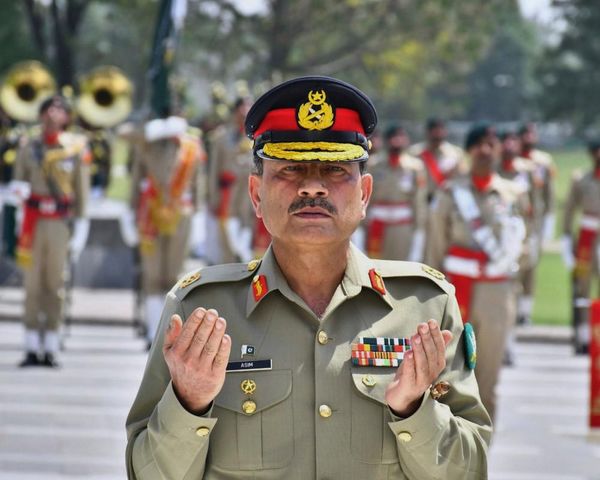

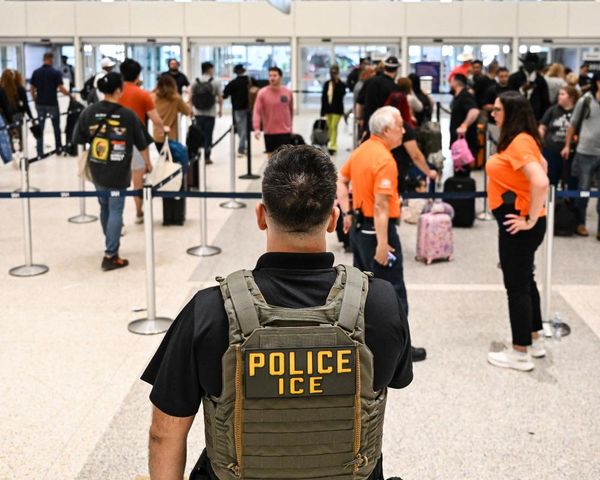





I've just seen the photographs of the women marching in many cities in Spain, my country, and they look just wonderful. So many young girls, I'm happy to say. I wish I were there myself.
The future is female!