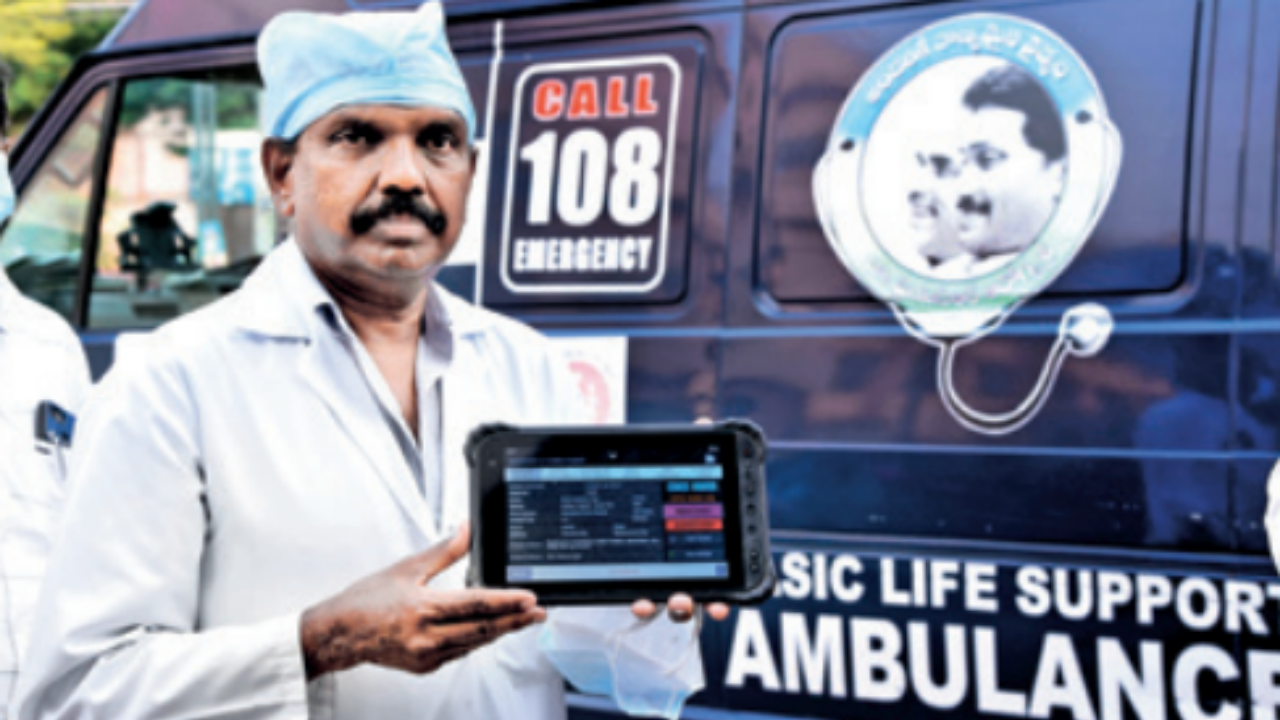
VIJAYAWADA: Interlinking of ‘108’ ambulance service with the emergency medicine and casualty wing of Vijayawada Government General Hospital (GGH) is showing positive results. The pilot project, started on February 18, has helped save at least 1,400 lives in the last one month.
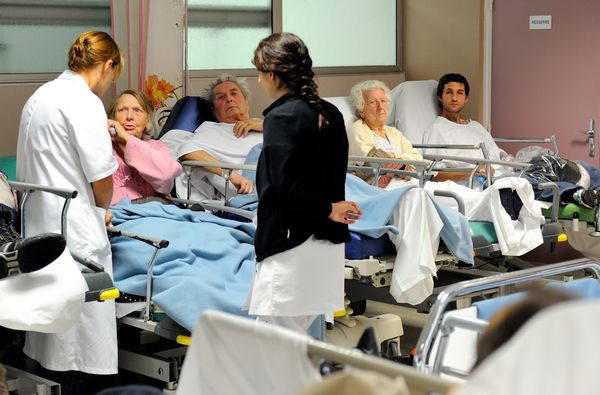
Around 60 to 80 emergency cases are reported in Vijayawada GGH through ‘108’ ambulances. Critical care and emergency cases reported by ‘108’ were being directly shifted to the hospital where casualty medical officers used to admit them based on the bed availability. Patients were made to wait for at least 30 minutes outside the casualty which badly impacted their chances of survival.
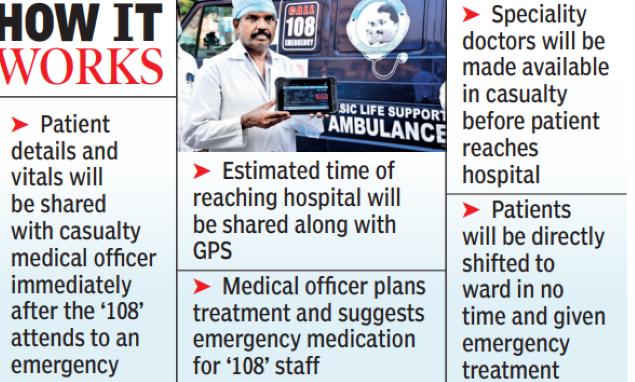
But GGH authorities have now integrated the ‘108’ with emergency ward by creating an online portal and a WhatsApp group. Whenever ‘108’ confronts a case, they will send the patient details, health condition and other vitals to GGH duty casualty officers. The movement of the vehicle is then tracked and a medical officer will wait along with a specialist doctor in the emergency ward.
Dr. Y Kiran Kumar, superintendent of Vijayawada GGH, told TOI: “Joint functioning of GGH and ‘108’ is giving best results. Expert doctors will guide emergency medical technicians (EMT) in ‘108’ vehicles to provide emergency treatment before a patient reaches the hospital. Duty doctors will assess the condition of patients based on vitals sent by EMTs. Treatment plan will be ready before the patient reaches the hospital.”
B Vinay Kumar, EMT at ‘108,’ said, “We are very happy that we are now able to save the maximum number of patients with the support or GGH staff. We are directly shifting the patient to casualty without any delay.”