Interior design ideas: In with the old - in pictures
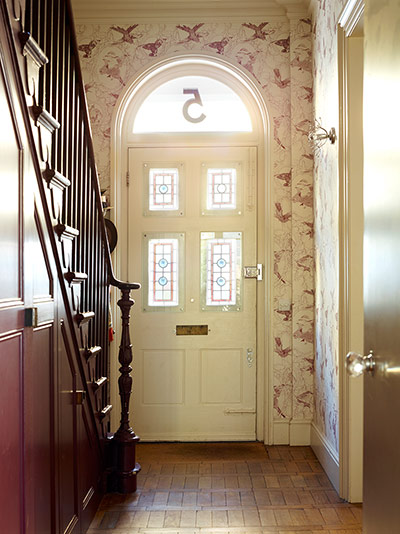
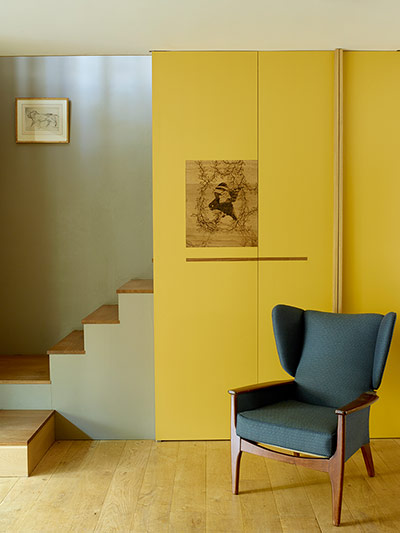
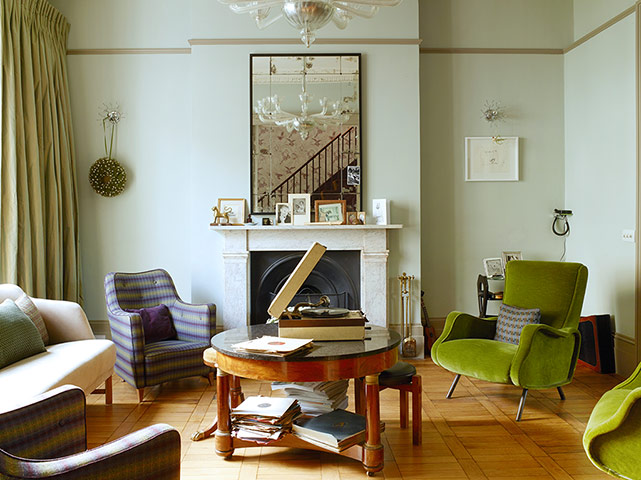
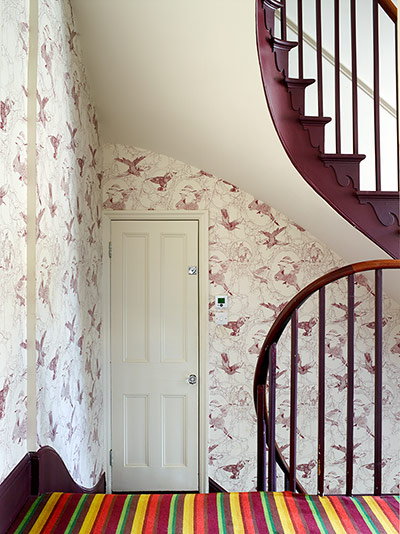
"I don’t live in the past,” says Guy Hills, who opens the door to his Victorian house in north London sporting plus fours, pointy slippers and Brylcreem. Once inside, it becomes clear his statement is at odds with his home, too: it’s furnished almost entirely with salvaged and vintage finds, revived and reinvented by Maria Speake, designer and co-founder of Retrouvius, a business devoted to saving and reusing the old. The four-storey house is in Primrose Hill, one of London’s most creative neighbourhoods (Nicholas Hytner and Helen Fielding live in the same street and every second house, it seems, sports a blue plaque). Regent’s Canal flows past the back garden: “We sometimes row to London Zoo with the kids, or to Camden Lock,” Hills says.Photograph: Rachael SmithThe building was divided into flats when he and his wife Natasha moved here in 2002. Having bought out the owners of the upper floors, they started work on creating a family home (the couple have three children, Amelia, 10, Hector, eight, and Rex, six), party pad and HQ for Hills’ textile and menswear company, Dashing Tweeds. They approached Retrouvius because Hills loves all things vintage (he has an impressive collection of snuff boxes). The company salvages materials and objects from schools, public buildings, wherever it can – anything from iroko-wood desk tops and flip-up church seats to factory lights – and its interior design arm works these timeworn pieces into homes. “I get a great deal of pleasure from being surrounded by things with history, things that were made to last,” Hills says.Photograph: Rachael SmithThe house is cosy and tactile, oak parquet flooring in the hallway and living room exuding a warmth and character you don’t get from new floorboards. Stained-glass panels in the front door cast a yellow glow, and woodwork here and in the stairwell is painted an autumnal claret. Speake opened up the ground floor, creating a kitchen/dining room at the canal-facing back of the house, and relocating the stairs to the basement to create more room in the hall. Two pairs of slim, barely there glazed sliding doors – found in a French hotel – separate the kitchen from the front living room. Here, elderly armchairs have been given new life with plum-coloured tweed and moss-green velvet upholstery, and an ancient gramophone sits on the coffee table.Photograph: Rachael Smith
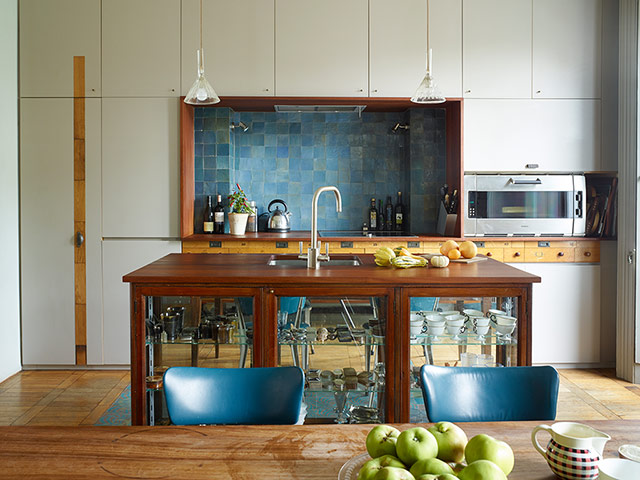
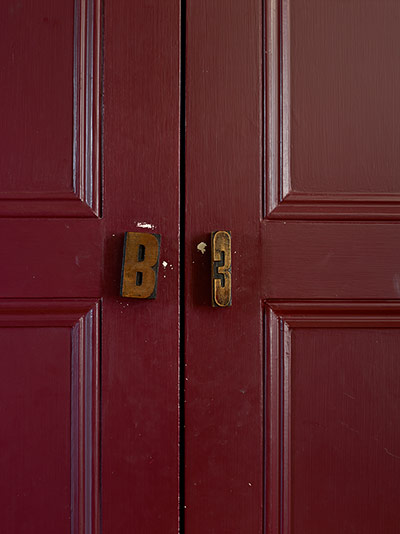
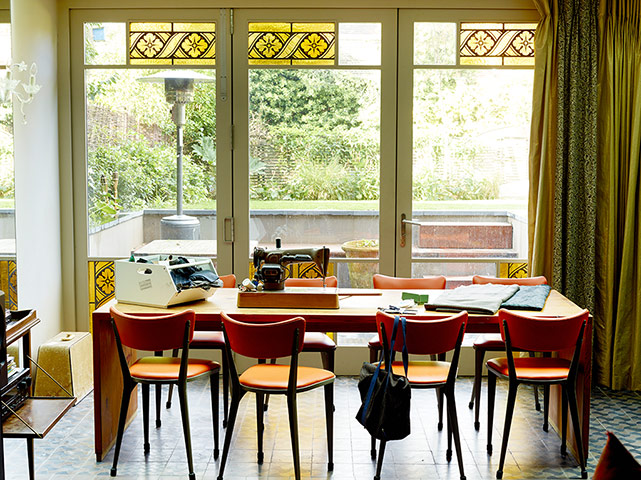
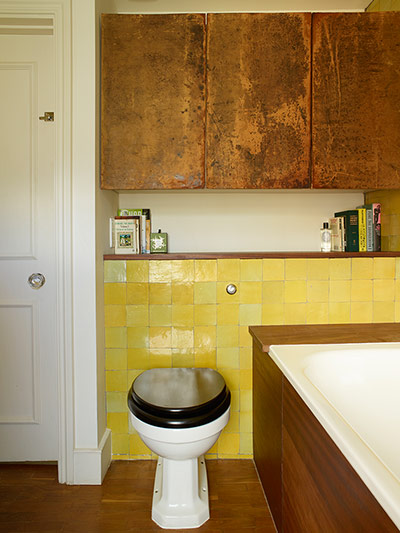
In the kitchen, a magnificent antique glass cabinet, salvaged from the National Museum of Scotland, cleverly houses a sink and dishwasher, as well as serving as a display case for Hills’ snuff boxes. Pendant lights started life as moulded glass funnels, and a sideboard and dining table are made from wood saved from a science laboratory. Kitchen cabinets have drawer fronts salvaged from the same museum, complete with numbers and handles.Photograph: Rachael SmithHills had just one request of Retrouvius: on no account was the kitchen to be in basement. “I was determined not to become a troglodyte,” he says. “So often in these conversions, people turn the basement into a kitchen/living area that opens on to the garden, but that means living underground. When, in fact, the nicest rooms are always on the ground floor. Having the kitchen at street level means that people walk straight into the heart of the house.” Speake created a balcony off the kitchen for storing bikes, so they don’t clutter up the hallway. Pictured: printers' blocks form unusual door handles in the hallway.Photograph: Rachael SmithThe basement – a garden-facing work space for Dashing Tweed, fabric storage rooms and a kids’ den – opens on to the garden through full-height doors with stained-glass panels; a tiled floor runs from inside to out, blurring the boundaries between house and garden. A long table used for cutting fabric doubles as a lunch table.Photograph: Rachael SmithOne of the couple’s favourite rooms is the upstairs bathroom: here, matching wall-mounted jurors’ desks reclaimed from the British Library are now reimagined as his-and-hers bathroom drawers; and the cupboard doors are made from leather-covered panels that once lined shelves in the British Library.Photograph: Rachael SmithNot having to worry about wear and tear is, for Hills, one of the chief joys of living with old rather than new. “All these materials and pieces were made by craftsmen, and they stand up to the rigours of modern life. We can have 200 people dancing in the living room, and the next day I just polish up the parquet and you’d never know they’d been there.”Photograph: Rachael Smith
Sign up to read this article
Read news from 100’s of titles, curated specifically for you.